
May 26, 2026
players ability test pga, pga pat, how to pass pat, pga of america, golf tournament software
Ace the players ability test pga. Our 2026 guide covers eligibility, format, and strategies to pass your PAT on the first try.
You've probably already had this thought: I can play well enough. So why does the Players Ability Test feel bigger than a normal tournament round? That reaction is common, and it's justified. The PAT sits in a strange space. It isn't just golf, and it isn't just paperwork. It's a career checkpoint that asks you to handle both at the same time.
Most players who struggle with the Players Ability Test PGA process don't fail because they don't know how to swing a club. They fail because they treat the PAT like a regular competitive round, or they get tripped up by section-specific registration details that should have been sorted well before the first tee shot. The official material tells you what the PAT is. It doesn't tell you much about how to manage the format under pressure.
That's where practical preparation matters. Passing is about decision-making, pace, damage control, and knowing exactly what kind of scorecard you're trying to build over a long day. If you're also trying to map out the broader path into professional golf, it helps to understand how early competitive reps fit into the process, especially through routes like minor league golf tours.
Your First Step Toward a PGA Career
A lot of aspiring professionals arrive at the PAT with the wrong internal script. They tell themselves they need to prove they're a “real player.” That mindset usually creates bad decisions. The PAT doesn't ask for hero golf. It asks whether you can post the required score in the required format and handle yourself like a professional while doing it.
The player I worry about most isn't the one with obvious swing flaws. It's the talented player who makes doubles trying to erase a bogey, or the player who starts chasing pins because the round “doesn't feel good enough” after six holes. That player often has the physical tools and still goes home frustrated.
What the PAT really tests
The PAT is a playing test, but in practice it also measures:
Score management: Can you keep a card alive when the swing isn't sharp?
Emotional control: Can you stay neutral after a penalty, lip-out, or bad bounce?
Endurance: Can you make the same disciplined decisions late in the day that you make on the opening holes?
Professional habits: Can you prepare correctly, read the conditions, and avoid procedural mistakes?
Practical rule: The PAT rewards players who can stack ordinary holes. It punishes players who insist on creating extraordinary ones.
That distinction matters. If you approach the Players Ability Test PGA with a tournament ego, you'll probably force shots that the format doesn't require. If you approach it like a scoring problem, your choices get cleaner fast.
Why this test feels different
A normal event has a field, a leaderboard, and plenty of uncertainty. The PAT gives you a number to beat. Some players like that clarity. Others hate it because every mistake feels immediately expensive. That's why strategy matters so much more than most first-time candidates expect.
You don't need vague motivation. You need a test-day model. You need to know which holes are automatic green lights, which holes are strict par holes, what kind of bogeys you can survive, and what kind of mistakes you absolutely can't compound. That's the difference between showing up hopeful and showing up prepared.
Understanding PAT Eligibility and Validity
A lot of PAT candidates prepare for the golf and get tripped up by the paperwork. I've seen players book travel, build a practice plan, and only then realize they misunderstood a deadline, a documentation rule, or whether an older score still counted. That mistake creates stress before the first tee shot, and it is avoidable.
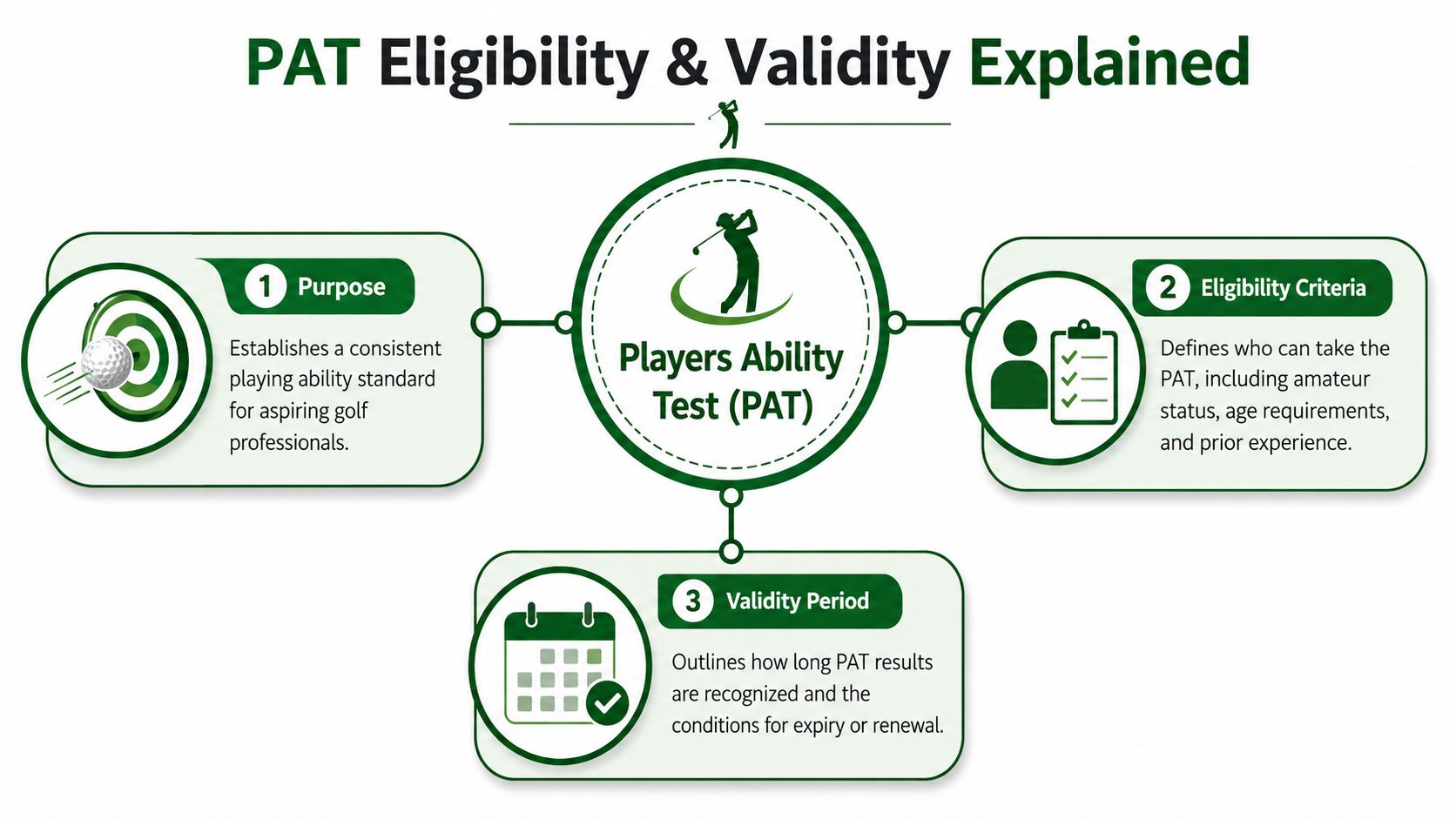
Start with one practical truth. The PGA sets the overall PAT framework, but your local section may handle registration details, accepted score documentation, and administrative language a little differently. A passed PAT is generally valid for eight years, and section-specific instructions can still affect how you enter, what records you need, and whether another score can satisfy part of the process, as outlined by the Northern California PGA PAT guidance.
That distinction matters more than players expect.
What to confirm before you register
Treat registration like a rules check, not a casual signup. Before you enter, confirm these points on your section page or directly with staff:
Entry deadline: Some sections post a firm cutoff several days before the event. Waiting until the last minute can leave you out, even if the field is not full.
Prior PAT scores: A previous attempt may help in some cases, but only if it falls inside the section's stated window and meets its conditions.
Tournament score substitutions: Some sections may accept scores from certain professional or collegiate events, but they usually want full documentation. That can include the score, course rating, yardage, and event details.
Status of your passed PAT: If you already passed, confirm the date your result remains valid and how your section wants that recorded.
Do not assume another candidate's experience in a different section applies to yours.
The process that keeps you out of trouble
Use a simple system:
Go to your local PGA section website first. Skip forum threads, old PDFs saved on someone's phone, and secondhand advice from a friend who took the test years ago.
Read the PAT entry language line by line. Deadlines, eligibility terms, and alternate-score rules are where the problems usually sit.
Ask for clarification early. A short email before registration is far better than arguing your case after the deadline passes.
Save every document. Keep confirmation emails, score records, yardage sheets, and anything else tied to eligibility.
Write down your dates. Track both event deadlines and the validity window of any passed PAT.
This is part of being a professional. Good players who handle the admin cleanly arrive at the event calmer and better organized.
Why eligibility details affect performance
The PAT already asks you to manage a number over 36 holes. You do not need extra pressure from uncertain paperwork, last-minute phone calls, or a dispute over whether a score counts. Clear up the eligibility side early, and your attention stays where it should, on preparation, course management, and execution.
The same mindset applies to score tracking across competitive golf. For a clearer look at how recorded scores and standards are handled, read this guide to handicap scoring in golf.
Decoding the PAT Format and Target Score
You finish the first round a few shots higher than you wanted, walk to the scoreboard, and start guessing what the second round requires. That is a bad time to learn how the PAT number works. Serious candidates know the target before they peg it on the first tee, because the PAT is a scoring test with a fixed standard, not a vague test of whether you played well that day.
The structure is straightforward. The PAT is 36 holes, and the passing score is built from the course rating, as outlined in the PGA PAT rules and regulations. What creates problems is not the formula itself. It is the way players misread what that formula means under pressure.
The formula that matters
The number discussed around PAT events is:
(Course Rating x 2) + 15
That gives you the 36-hole target score. It also gives you a practical framework for decision-making. Once the event number is clear, you can stop treating the day like a regular tournament round where you chase every birdie chance and react emotionally to every bogey.
For example:
Component | Example | Calculation |
|---|---|---|
Course Rating | 72.0 | Starting point |
Two-round total | 72.0 x 2 | 144.0 |
PAT adjustment | + 15 | 159.0 |
Target score | 159 | Score to beat across 36 holes |
On a course rated 72.0, your passing number is 159 for 36 holes.
Simple math. Harder execution.
What the target score actually means
A lot of players hear 159 and make the wrong assumption. They decide they have room for mistakes, then start giving shots away with poor clubs off the tee, low-percentage recovery shots, or impatient decisions after one bad hole. Others do the opposite. They play scared from the start and turn makeable pars into defensive bogeys.
The PAT usually rewards disciplined golf more than flashy golf. A candidate who keeps doubles off the card, manages energy for 36 holes, and understands where bogey is acceptable will often beat a more talented player who tries to force a score.
That is the practical side the rulebook does not spell out clearly enough.
How to use the number during the round
Know your total target before the event. Then break it into smaller checkpoints that help you stay calm and honest. I prefer players to track where they stand every few holes, after each nine, and again between rounds. That is enough to stay aware without turning the day into a math exercise on every green.
A useful question is not, “How many birdies do I need?” Ask:
Where can I hit a conservative tee shot and still leave a full scoring club?
Which holes bring double bogey into play if I challenge the wrong side?
Which par 5s are real scoring chances, and which are three-shot holes no matter what?
If I fall behind the pace, where can I get a shot back without pressing?
That is course management, and it matters more in the PAT than many candidates expect.
Keep the target in the right perspective
The number gives you structure. It should not control your emotions. If you make an early bogey, the job usually stays the same. If you make an early double, the answer is usually smarter golf, not aggressive golf. PAT rounds unravel when players try to erase mistakes immediately.
Treat the target score like a professional benchmark. It tells you what the course and format require. Your job is to build two controlled rounds that stay under that line.
Strategic Preparation for Passing Your PAT
You get one good look at the PAT course in practice, then the card starts counting. By the time a candidate realizes a hole demands restraint instead of aggression, the mistake is already on the scorecard. Good preparation fixes that before tournament day.
A lot of players prepare for the PAT like a normal competitive round. They work on swing feels, play a few rounds, and hope decent form carries them through 36 holes. That approach misses the actual purpose. The PAT is a scoring and decision-making test as much as a ball-striking test, so preparation has to be built around how you will get the ball around the course under pressure.
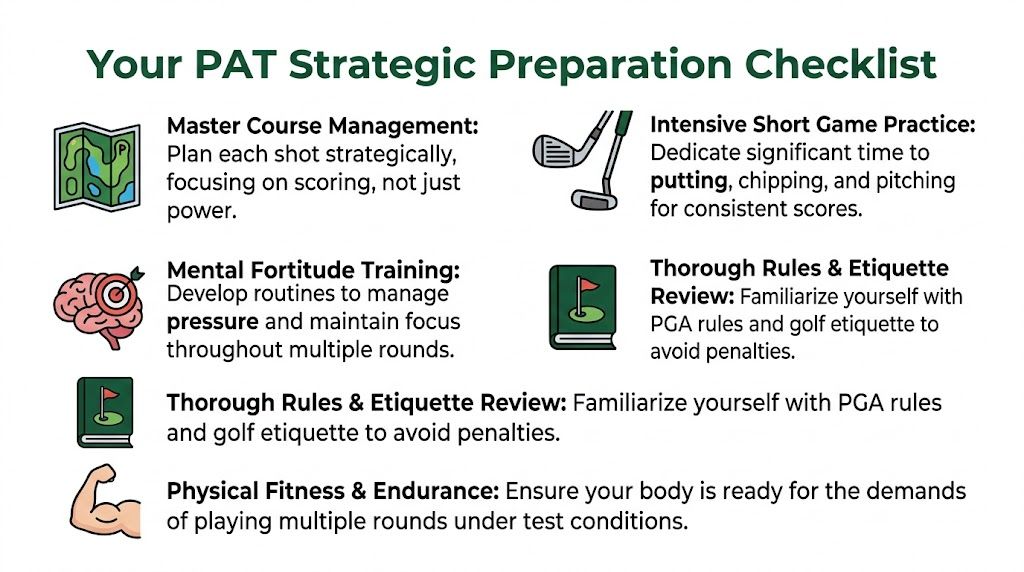
Build a two-round scoring map
Your practice round should produce a plan you can use. I want every hole sorted before the first competitive tee shot. If a player is still deciding whether a hole is aggressive or defensive during the round, he is late.
Put each hole into one of three categories:
Scoring holes: Holes where your stock pattern gives you a real chance to make birdie without bringing a big number into play.
Par holes: Holes where a steady par is a strong result and a stress-free bogey can still be acceptable.
Protection holes: Holes where the entire strategy is built around keeping double bogey out of play.
That simple framework helps more than any swing thought. It gives you a clear plan for where to press, where to stay patient, and where to take the middle of the green and move on.
What to record in the practice round
A useful PAT yardage book is part numbers and part judgment. Distances matter, but they are only the start.
Write down:
Preferred tee club: The club that keeps the ball in play and leaves a comfortable approach distance.
Best miss: The side of the hole that leaves an uphill chip, a simple bunker shot, or a clear putt.
Automatic lay-up spots: Distances or angles where laying back gives you a better chance to make par than forcing a heroic shot.
No-go targets: Pins, fairway lines, or carries that are fine when you are chasing a medal but foolish in a PAT.
Recovery patterns: The shot you will hit if you miss in the wrong place.
That last point separates prepared players from hopeful ones. The PAT punishes indecision after a mistake. If you already know the safest recovery, you stop giving away extra shots.
Practice PAT decisions, not just PAT swings
Range work has value, but PAT prep should include sessions where score and decision-making are the focus. Players who pass consistently usually do one thing well. They make the same disciplined choices in practice that they need on test day.
Use training games that force that habit:
Play a conservative ball only. During a practice round, choose the tee shot and target you would use if the PAT started that minute.
Track strategic errors separately. A pull into the rough is one issue. Choosing a club that brings water into play when it was unnecessary is another.
Rehearse the next hole after a mistake. If you make bogey in practice, the following tee shot has to be patient and disciplined.
Do short-game work when tired. Second-round PAT mistakes often come from poor touch and poor judgment late in the day, not from a broken swing.
I have seen plenty of candidates stripe it on the range and fail the PAT because they never practiced restraint.
Create a simple pressure routine
Pressure does not need a new mindset every hole. It needs a repeatable sequence.
Use the same steps on every important shot:
Choose the start line or landing area
Pick the club
Commit to one shot shape and trajectory
Start the routine
Accept the result and shift to the next shot
Keep it that plain. The worst time to get creative is after you have already made the decision. Extra thinking between club selection and motion usually leads to a half-committed swing.
Prepare for the full 36-hole day
Passing the PAT takes more than a good front nine. It takes enough control, patience, and energy to make sound choices deep into the second round.
Plan the day like a professional event. Know what you will eat. Know when you will warm up. Know how you will reset between rounds. Players often spend so much effort trying to post a number in round one that they lose sharpness by the middle of round two.
The candidates who give themselves the best chance are rarely the flashiest. They are organized, realistic, and willing to play boring golf when boring golf is the right answer. That is usually what gets the PAT done.
Common Pitfalls That Derail PAT Candidates
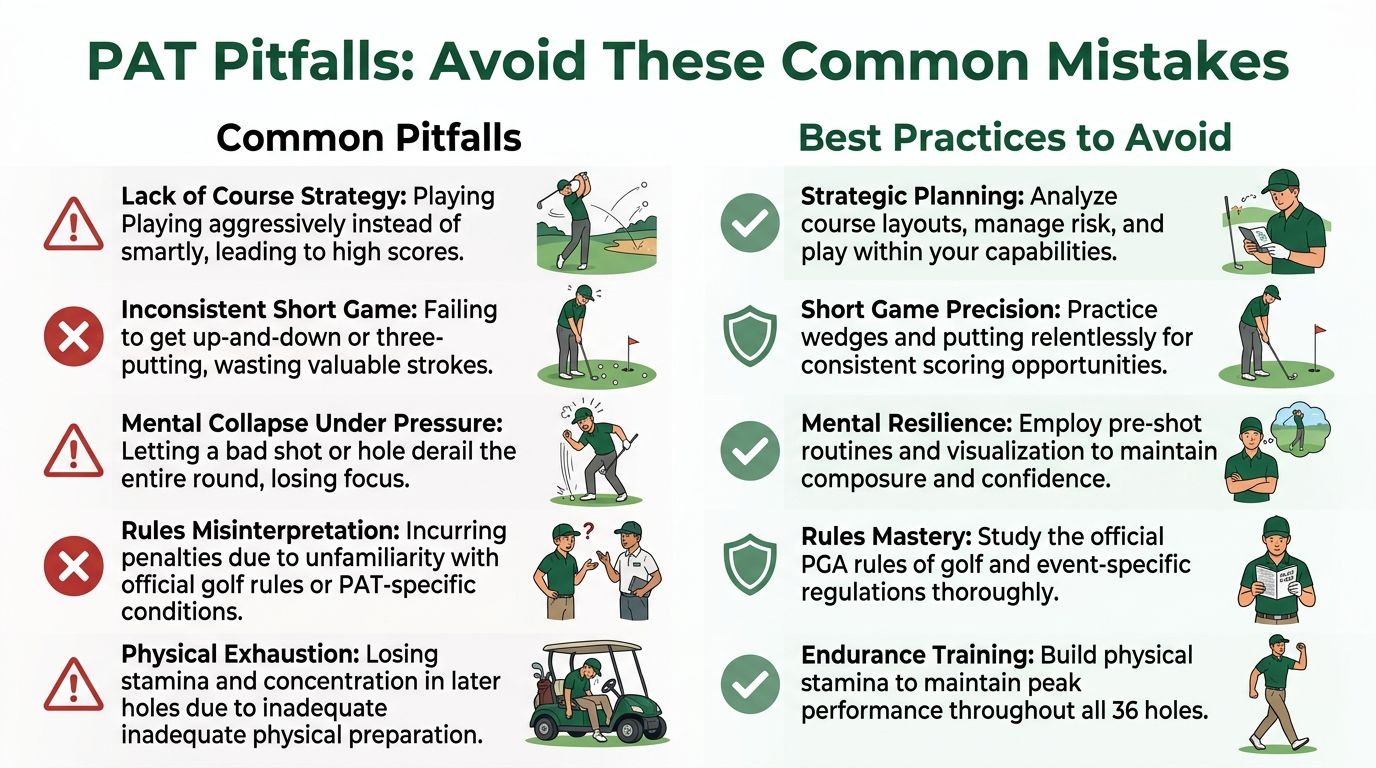
Most PAT failures don't come from one catastrophic swing. They come from a chain of ordinary mistakes. A rushed club choice. A poor emotional response. A loose interpretation of local procedures. A tired decision late in the second round.
The mistake after the mistake
The fastest way to ruin a PAT card is to react to a bogey like it has to be erased immediately. That mindset leads to forced carries, sucker pins, and driver choices that weren't part of the original plan.
The better response is boring. Bogey goes on the card. The next tee shot gets the same disciplined process as the opening hole. If your plan only works when you're under par, it isn't a plan.
Short game leaks that add up
Players often focus on full-swing sharpness and ignore the places where the PAT scorecard slips away from them. Poor speed on putts, careless chips, and low-quality wedge leave distances turn manageable pars into scrambling bogeys.
Use a simple test in practice: can you get the next shot easy? Not perfect. Easy. PAT short game prep should center on leaving simple second putts and simple par tries, not hunting highlight shots.
A three-putt in the PAT usually starts before the first putt. It starts with a poor leave, a lazy read, or a rushed first look.
Rules and procedure mistakes
Candidates also get hurt by details that have nothing to do with ball-striking. They don't know the local rules sheet well enough. They guess on a drop procedure. They fail to clarify something early and pay for it later.
Before the round, confirm:
Local rules: Read the sheet, not just the notice board headline.
Pace expectations: Know where your group needs to be and who is keeping the group moving.
Scorecard responsibility: Make sure you understand how scores are being recorded and verified.
Relief questions: If something is unclear, ask before it becomes costly.
Late-day fatigue and drifting focus
The second 18 is where disciplined players separate themselves. Not because they suddenly stripe every shot, but because they keep making adult decisions while others start freelancing.
Watch for these warning signs late in the day:
Club creep: You start taking one more club than the shot needs because your tempo is slowing.
Routine shortcuts: You stop fully committing to targets and start hitting “good enough” shots.
Mental scoreboard panic: You keep recalculating your status and lose the shot in front of you.
The fix is simple, but not easy. Slow your walk. Eat something. Rebuild the pre-shot routine. Pick the smallest useful target and commit to it. PAT candidates don't usually implode because they forgot how to swing. They implode because they stopped following the system that got them there.
A Guide for PAT Event Organizers
Running a PAT well is a different job from running a standard club event. The players aren't just competing against each other. They're trying to meet a defined passing standard over a long format, and that changes how staff need to think about administration, communication, and scoring control.

A smooth PAT starts before the event date. Organizers need clean registration workflows, clear pre-event communication, and a reliable way to make sure candidates understand check-in procedures, scorekeeping expectations, and any local rules that could affect the test. If that front-end work is sloppy, the event feels uncertain before the first group goes off.
Where PAT administration gets messy
PAT events create a few recurring pressure points for operators:
Registration oversight: Candidates often have questions about eligibility windows, prior attempts, and required documentation.
Round tracking: Staff need to monitor a full-day event without creating confusion around standing, pace, and status.
Communication gaps: If local rules, score-entry procedures, or timing notes aren't clear, staff spend the day answering preventable questions.
Manual reporting: Producing scorecards, tee sheets, and final records can turn into a scramble if the system isn't built for tournament operations.
For facilities that host these events regularly, consistency matters. Candidates notice when the operation feels polished. So do section administrators.
What good event software should solve
The right platform should reduce workload, not create another layer of it. For PAT organizers, that means a few things matter more than flashy extras:
App-free score entry: Players should be able to access scoring quickly on any device.
Live leaderboard visibility: Staff should be able to monitor progress without chasing paper or text messages.
Fast setup tools: Pairings, rosters, and event materials should be easy to build and adjust.
Back-office output: Tee sheets, scorecards, cart signs, and reports should be available without manual patchwork.
If you're evaluating event operations around scheduling and setup, this guide to the playing ability test schedule is a useful companion.
A practical fit for golf operations teams
For courses and tournament directors who want a cleaner PAT workflow, Live Tourney gives staff a modern way to run scoring, registrations, and event administration without forcing players into an app download. It's built for real golf operations, so teams can handle setup, communicate clearly, and keep the day organized while players focus on the test instead of the process.





