
Jan 2, 2026
Create a flawless playing ability test schedule. Our guide offers practical strategies for golf pros on PAT planning, automation, and live scoring.
Let's be honest, creating a playing ability test schedule often feels like just another task on a long to-do list. But it's so much more than a calendar of dates. Think of it as the strategic foundation for your entire season—the first step in running fair, competitive, and genuinely enjoyable events that keep players coming back.
When you get the schedule right, everything that follows just runs smoother.
Why Your PAT Schedule Is More Than Just a Calendar
A thoughtfully planned schedule directly addresses the core challenge every tournament director faces: running a smooth operation that doesn't feel chaotic. It's the first domino in a long line of event management tasks, and it impacts everything from handicapping and tee time allocation to your event's professional reputation.
With golf's popularity on the rise, getting these assessments right is more critical than ever. We're talking about a sport with more than 108 million players globally, a number that's still climbing. The whole reason standardized tests like the World Handicap System evolved was to bring accuracy and fairness to the forefront. A good schedule is your first commitment to that standard.
The Strategic Value of a Well-Planned Schedule
When you move from simply listing dates to strategically planning them, you start seeing real benefits:
A Better Player Experience: When players see a clear, organized schedule, it builds immediate confidence in your operation. No one likes uncertainty.
Smoother Operations: It lets you allocate resources—from staff to course maintenance—without the last-minute scramble.
A More Professional Feel: A published, well-thought-out schedule signals that your events are serious, professionally managed competitions.
A great PAT schedule doesn't just tell people when to show up. It tells them you're committed to a high-quality, competitive experience before they even register.
Ultimately, your schedule is the blueprint for the season. And with modern tools like Live Tourney, this whole process goes from a logistical headache to a real competitive advantage. By centralizing your information and automating the tedious parts, you can turn planning from a reactive chore into a strategic asset that sets the tone for every event you run.
Building Your Pre-Season PAT Planning Blueprint
A successful Playing Ability Test doesn't just happen on the day of the event. The real work is done months in advance with a solid, strategic plan. Think of it less like a simple checklist and more like a blueprint—a structured timeline that guides you from the initial idea to a perfectly executed event, ensuring nothing important gets missed. It’s all about doing the work upfront to avoid that last-minute chaos we all know too well.
The journey starts long before the first player even considers signing up. This pre-season phase is where you lock down your most critical assets and make the big-picture decisions that will define the entire experience.
Your 90-Day Planning Horizon
Three months out is the sweet spot for getting the fundamentals in place. First thing’s first: secure your venue and get the date confirmed on the master club calendar. This simple step prevents massive headaches later, like conflicts with other tournaments, member events, or essential course maintenance that could completely derail your PAT.
Once the date is locked in, you can start defining the test format. Will it be a standard 36-hole stroke play event? Are there specific local rules or conditions of play that need to be buttoned up? Getting these details documented early provides clarity for both your staff and the future participants.
This is also the time to start sketching out your budget. You’ll want to think through all potential costs:
Staffing: Will you need extra hands for registration, starting, or scoring?
Course Setup: Don't forget costs for special markings, signage, and any equipment rentals.
Marketing: Set aside some funds for promotional emails or flyers to get the word out.
Prizing: If you're offering prizes, map out the prize fund structure now.
With these core pieces in place, you can start building the event in your management software. Using a platform like Live Tourney, you can create a master event template that can be easily copied for future PATs. This is a huge time-saver that pays off all season long.
The best event organizers I know don't just plan a single event; they build a repeatable, scalable process. It’s a system that gets smoother and more efficient every single time they run it.
The way we schedule events has come a long way, moving from reactive planning to automated, forward-thinking strategies.
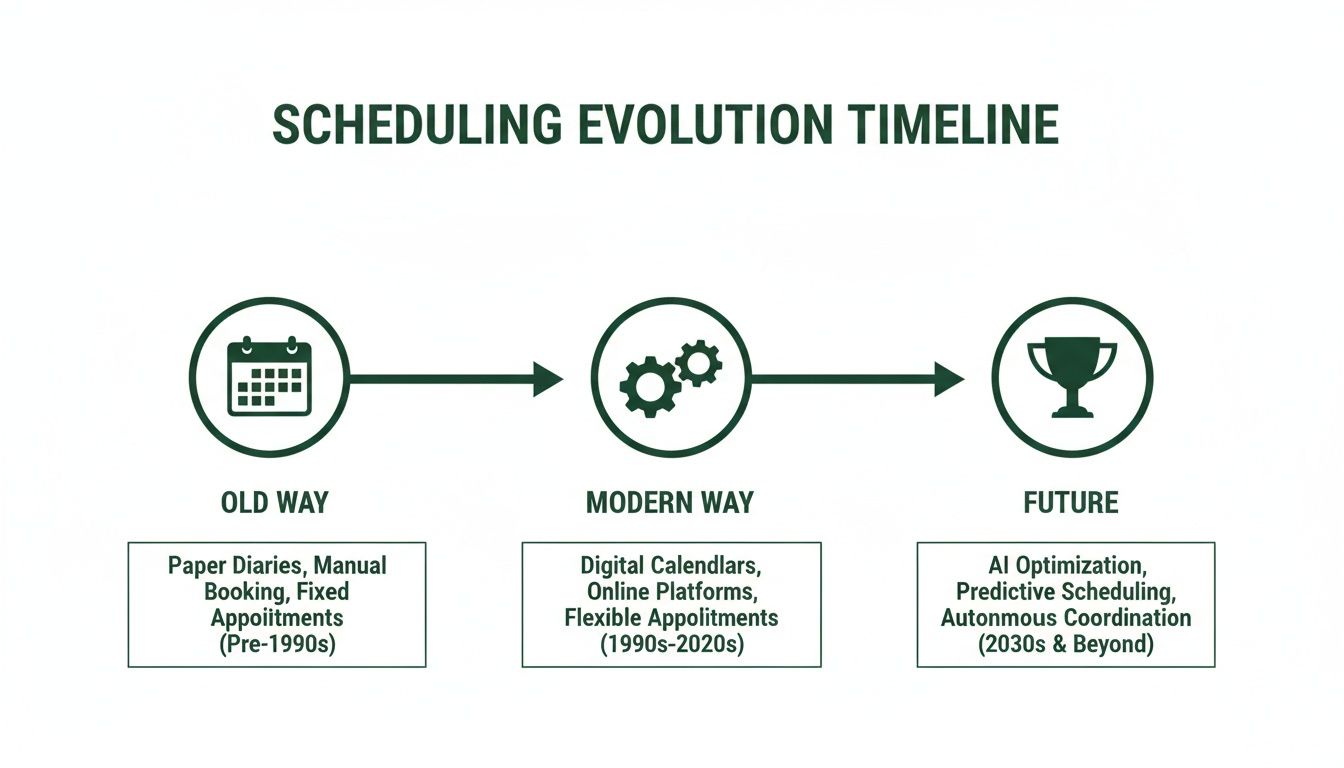
This just goes to show how modern tools have turned scheduling from a simple calendar entry into a much more dynamic, data-driven process.
From 60 Days Out to Event Week
As you get closer, your focus naturally shifts from high-level strategy to the nitty-gritty details of execution. At the 60-day mark, it’s time to finalize staffing assignments and start drafting your player communication plan. What key information do they need, and when should you send it?
A great way to stay organized is to break your planning into manageable chunks. The timeline below is a practical guide to keep you on track without feeling overwhelmed.
90-Day PAT Event Planning Timeline
Timeframe | Key Tasks | Live Tourney Action Item |
|---|---|---|
90 Days Out | Secure venue and date. Define PAT format and rules. Outline preliminary budget. | Create a master event template for the season. |
60 Days Out | Finalize staffing plan. Draft all player communications (emails, info sheets). Open registration. | Set up the specific PAT event page and configure online registration and payment options. |
30 Days Out | Finalize and order all event materials (scorecards, rules sheets, signage). Promote the event. | Send an initial confirmation and info email to all registered players through the platform. |
Week Of Event | Conduct staff briefing. Send final tee times and instructions to players. Prepare course markings. | Finalize and publish pairings and tee times. Prepare the live leaderboard for event day. |
Day Before | Final check of course setup. Double-check all supplies and equipment. Review weather forecast. | Send a "day before" reminder email with key details and a link to the event portal. |
Event Day | Execute the event! Manage check-in, starting, and scoring. | Activate the live leaderboard and manage scoring in real-time. Post final results immediately. |
Post-Event | Send thank you/recap email. Conduct a staff debrief to identify improvements. | Archive the event and use post-event analytics to plan for the next one. |
This timeline turns a complex project into a series of clear, actionable steps, setting you up for a smooth event day.
When you're building your PAT planning blueprint, it's worth exploring various event management platform features that can make your life easier. Many platforms have tools that automate communications and simplify tricky scheduling. For instance, if you run different types of competitions beyond a standard PAT, you might want to learn how to create a round robin schedule to handle those unique needs.
By 30 days out, your registration should be live and gathering entries. The week of the event is all about final checks: confirming the weather forecast, sending final instructions to players, and running a pre-event briefing with your staff. This methodical, phased approach sets the stage for a flawless event.
How to Automate Registration and Payments
Let's be honest, registration and payment collection can be a huge administrative headache. But moving away from manual, paper-based systems is less about fancy tech and more about getting your time back. It flips the script, shifting the burden from your staff to an efficient, self-service model that gives players a cleaner, more professional experience right from the start.
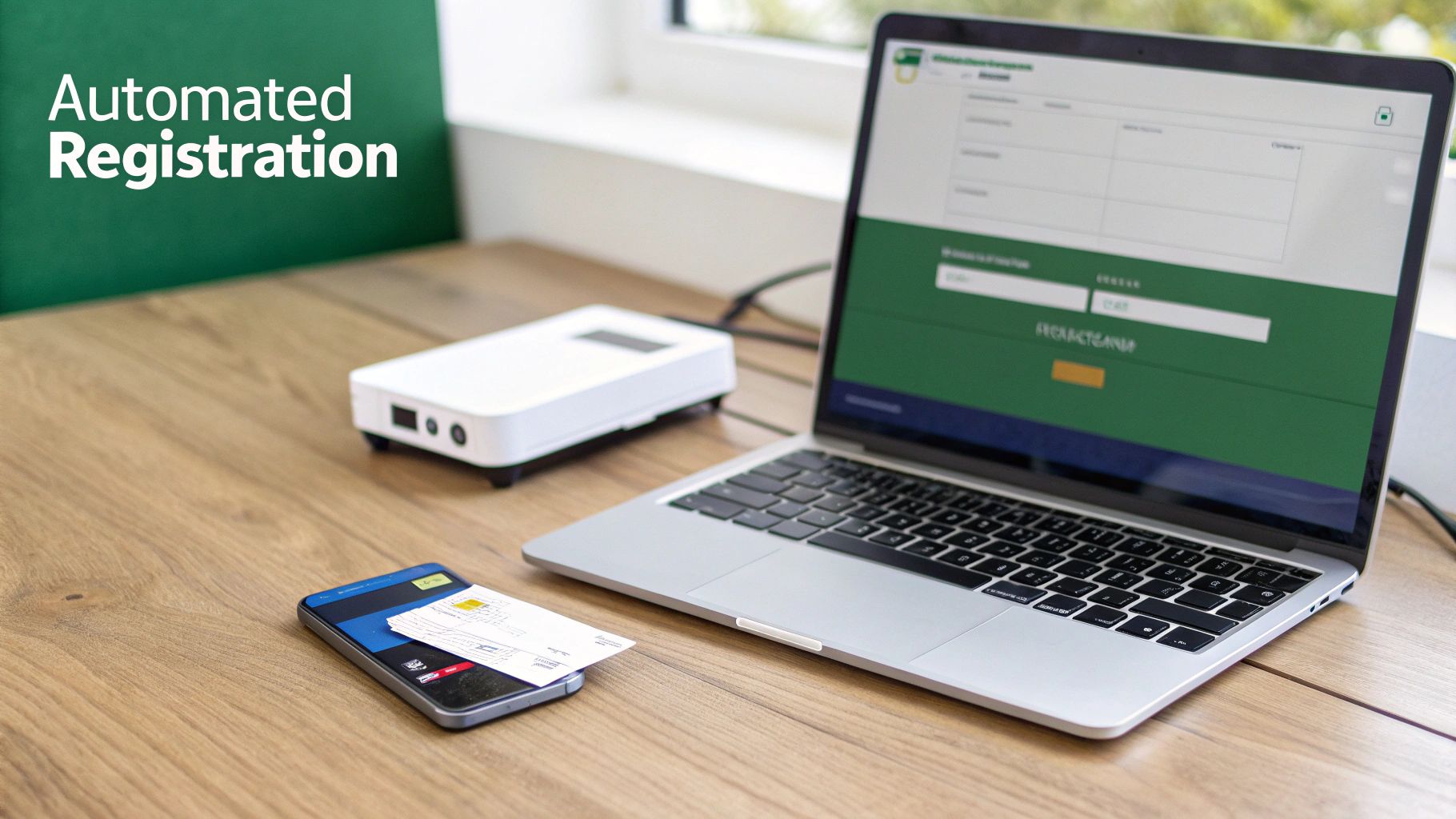
The goal here is simple: stop chasing down checks and manually punching in player data. A good online portal works like a 24/7 registration assistant, gathering all the information you need, cleanly and consistently, every single time.
Setting Up Your Custom Registration Portal
Building your registration form is the first real step. You need to think about every bit of information you’ll need down the road for pairings, communication, and scoring. Don't just stop at name and email; custom fields are your friend.
Handicap Verification: Make sure there's a field for a player's GHIN number or handicap index. This is absolutely critical for a Playing Ability Test and makes seeding and flighting a breeze later on.
Affiliation/Club: This little detail helps with grouping players and seeing where your participants are coming from.
Emergency Contact: It’s a simple field, but it’s often overlooked and absolutely crucial for event safety.
When you're setting this up, make sure the platform is dead simple for players to use. You'll want to improve website usability and accessibility to avoid a flood of confused emails and phone calls. The more intuitive the interface, the less work for your staff.
Streamlining the Player Journey
Once the form is built, the real magic is in the automation. Setting a clear registration window—say, opening 60 days out and closing one week before the event—creates a natural sense of urgency and makes your planning much easier.
The best registration systems do more than just collect names. They manage expectations, automate communications, and handle the tricky what-ifs—like a full field—without you having to lift a finger.
For those popular events that always fill up, an automated waitlist isn't just nice to have; it's a necessity. Once you hit capacity, the system should automatically kick off a first-come, first-served queue. If a spot opens up, it can instantly notify the next person in line and give them a short window to register. This keeps things fair, transparent, and completely off your plate.
Another simple tactic? Offer early-bird pricing that expires on a specific date. It’s a great way to drive prompt sign-ups and seriously improve your event's cash flow.
With golf participation continuing to climb, running a tight ship is more important than ever. Efficient tools are essential for head professionals managing multi-round events like PATs, helping to automate pairings and cut setup time from hours down to minutes. To get your processes dialed in, take a look at our guide on finding the right tournament manager golf software for your operation.
Mastering Event Day Logistics and Communication
All that careful planning leads to one place: event day. This is where your prep work really pays off, turning a long list of tasks into a smooth, professional experience for every player. The week leading up to your PAT is all about execution, starting with the critical job of creating fair and balanced pairings.
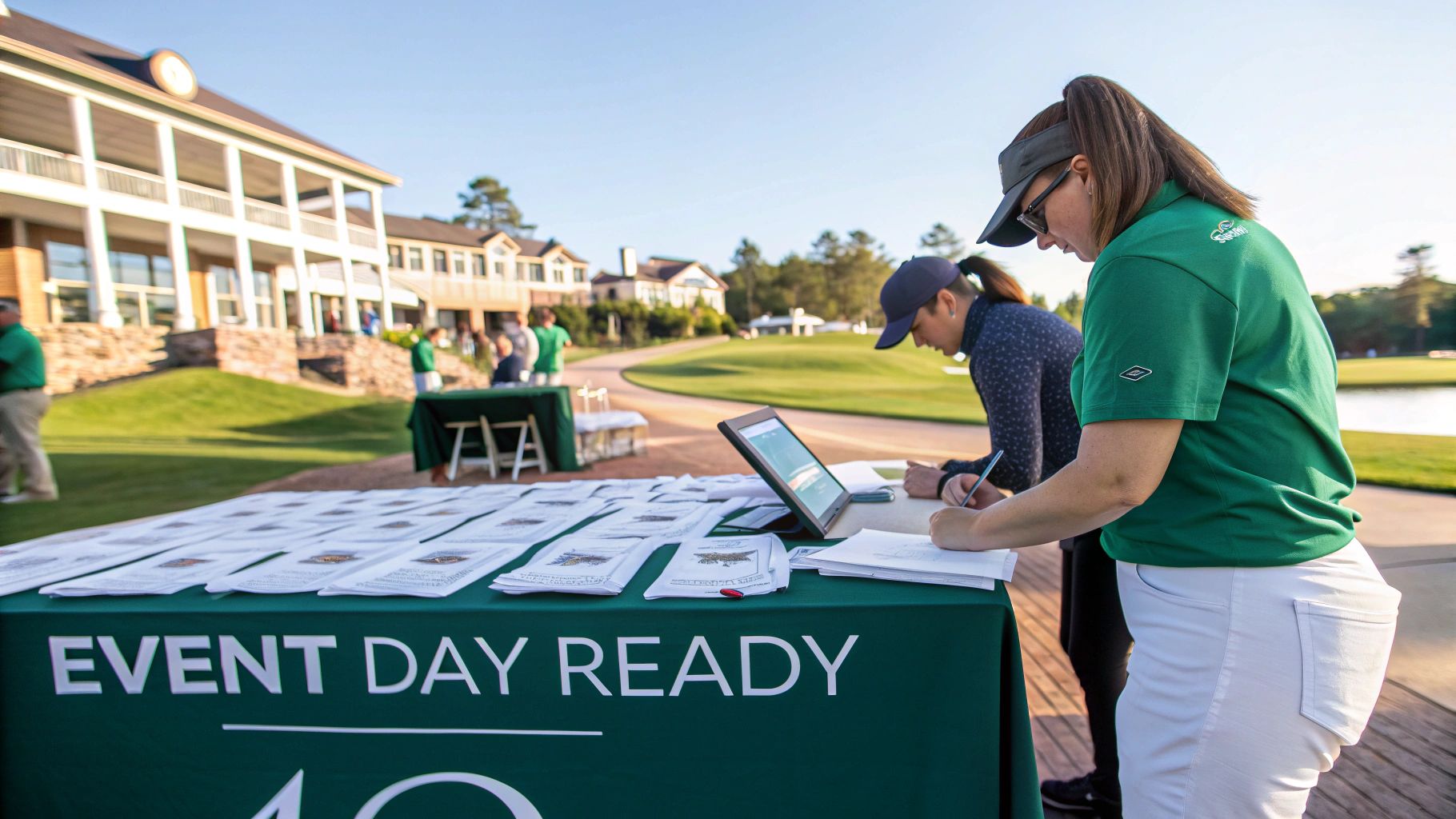
Let's be honest, the days of shuffling names on a spreadsheet are over. Using the verified abilities and handicaps collected during online registration, you can generate your tee sheets in minutes, not hours. It’s not just about speed, either. It’s about accuracy, ensuring players are grouped properly without the common errors or unintentional biases that sneak into a manual process.
From Digital Tee Sheet to On-Course Materials
Once your pairings are locked in, the next step is getting all your on-course materials ready. With a platform like Live Tourney, this is a simple one-click process. You can instantly generate professionally formatted documents that are ready to print, which seriously cuts down on your prep time.
Make sure you have these key items ready to go:
Custom Scorecards: Pre-filled with player names, handicaps, and course info.
Cart Signs: Clearly showing player names and their starting holes.
Official Rules Sheets: A simple summary of the day's conditions of play.
Bag Tags: A small touch that helps with organization and adds a professional feel.
Getting these materials printed and organized a day or two in advance is a game-changer. It eliminates a huge source of event-day stress and lets your staff focus on the players instead of scrambling to get documents printed at the last minute. That’s what separates a good event from a great one.
The smoothness of your on-site logistics is a direct reflection of your pre-event planning. When players see a well-organized check-in and receive clear instructions, it immediately builds their confidence in your entire operation.
Executing a Flawless On-Site Experience
On the day of the PAT, your focus shifts to managing everything on the ground. A well-staffed and clearly marked registration desk is your command center. This is your first impression, so make the check-in process quick and welcoming. It’s a good idea to have a staff member ready to answer common questions about the format, pace of play, and course conditions.
Before the first group heads out, hold a brief player briefing. Keep it clear and to the point. Cover the essentials: local rules, the scoring process (especially if you’re using live scoring), and the target pace of play. This simple step gets everyone on the same page and cuts down on confusion out on the course.
Good communication ties it all together. The day before the event, use your software’s email tools to send out final tee times and a link to the online event portal. This single email will drastically reduce the number of phone calls and questions you get. It gives players all the info they need, so they can show up prepared and ready for a great start to their Playing Ability Test.
Engaging Players with Live Scoring and Instant Results
Once a Playing Ability Test (PAT) kicks off, the experience shifts from logistics to what happens on the course. This is where you can create a modern, engaging atmosphere that finally moves past the era of paper scorecards. Introducing app-free live scoring is a critical upgrade for today's players, turning a passive round into a genuine competition.
The key is to make it dead simple. Before the round, just give players a link—no app downloads, no sign-ups, no friction. Make a quick announcement at the pre-event briefing and have staff ready to help the first couple of groups get started. As soon as players see how easy it is to punch in scores, they’ll catch on fast.
This shift isn't just a nice-to-have for the players; it makes your job dramatically easier. Real-time leaderboards update automatically as scores trickle in, which means you can finally ditch the tedious, error-prone task of collecting and manually entering dozens of scorecards. You can watch the event unfold, spot any pace-of-play issues, and manage everything from a single dashboard.
Turning Data Into Excitement
Live leaderboards do more than just display numbers—they build a sense of drama. Players can see exactly where they stand against the field and the target score at any given moment. That immediate feedback keeps them locked in on every shot, transforming what can feel like a long, lonely test into a dynamic event.
The post-round experience is completely different. Instead of that long, anxious wait while staff frantically adds up paper cards, the results are ready the moment the final putt drops. That instant conclusion makes any event feel more professional.
This approach also plugs into the larger trend of making golf more accessible. For instance, the recent surge in junior golf highlights just how important a well-run playing ability test schedule is for developing young talent. Using familiar digital formats and giving players immediate feedback is a great way to schedule juniors into programs that grow the game.
From Score Entry to Final Validation
The entire process is built for efficiency and accuracy, from the first tee shot to the final confirmed results. It’s a clean, professional flow that players will remember.
Player Score Entry: One player in each group gets the link and is tasked with entering hole-by-hole scores. It’s straightforward and takes just a few seconds per hole.
Real-Time Dashboard: From the pro shop or clubhouse, you can monitor all the incoming scores, making sure everything is running smoothly.
Instant Leaderboards: You can display the leaderboards on clubhouse TVs, the event portal, and right on the players' phones.
Final Validation: Once the last group is in, a quick review is all it takes to validate the scores, finalize the results, and figure out any payouts on the spot.
For a deeper look at how this technology streamlines tournament day, check out our complete guide on the best golf tournament scoring software.
Answering Common Questions About Your PAT Schedule
Even the best-laid plans hit a snag. Let's be honest, it's how you handle the curveballs that really defines the success of your PAT event. Thinking through these things ahead of time is what separates a smooth, professional operation from a frantic scramble.
Here are a few of the most common questions we hear from golf professionals running their Playing Ability Tests, along with some practical advice.
When Should We Publish Our PAT Schedule?
The sweet spot is three to four months before your first event. This gives aspiring professionals enough runway to plan their calendars, book time off work, and actually prepare. It also gives your marketing a much bigger window to work its magic, helping you fill every spot without a last-minute push.
A simple way to get ahead is to use a platform like Live Tourney to build out your event pages early. You can get the dates, formats, and registration details up on a public portal right away. This one small step cuts down on the constant "when is registration opening?" emails and immediately makes your operation look buttoned-up and professional.
How Do We Handle Weather Delays?
Weather is the one thing you can't control, but you can control how you react to it. The key is having a clear contingency plan and a fast way to communicate it. Your plan needs to spell out exactly what triggers a delay versus a full cancellation, and what your refund or credit policy is. Don't leave any room for interpretation.
A sudden weather delay can create chaos or showcase professionalism. The difference is having a plan and communicating it clearly. Your players will forgive the rain, but they won't forget being left in the dark.
This is where having the right tools makes all the difference. Instead of starting a messy and inefficient phone tree, a system with built-in email and SMS lets you send a single message to every registered player instantly. Clear, prompt communication turns a potential disaster into a minor hiccup.
What Is the Best Way to Manage a Waitlist?
Stop using a spreadsheet. An automated waitlist is the only fair and sane way to manage this. When you set up registration for a popular PAT, just flip on the waitlist feature so it kicks in automatically when the event fills up. This creates a transparent, first-come, first-served queue.
When a spot inevitably opens up—and it always does—the system can automatically email or text the next person in line. Give them a set amount of time to register, and if they don't, it moves on to the next person. This whole process runs on its own, prevents any hint of favoritism, and saves you from a major administrative headache.
Managing every detail of your playing ability test schedule—from registration to final results—is simpler with the right tools. With Live Tourney, you can automate waitlists, send instant communications, and manage event day logistics effortlessly. Start your free 10-day trial of Live Tourney today and see how easy it is to run a flawless event.





