
May 23, 2026
minor league golf tours, mini golf tours, developmental golf tours, how to become a pro golfer, golf tournament management
Explore the world of minor league golf tours. Our 2026 guide explains the pathway to pro golf, key tours, player costs, and how to run a successful event.

A lot of golfers think the hard part is getting good enough to turn pro. It isn't. The harder part starts after that, when the game becomes a travel schedule, an expense sheet, a scoring average, and a constant test of whether your golf can survive ordinary business reality.
That's where minor league golf tours sit. They are the proving ground between amateur success and meaningful professional status. They're where players learn whether they can post numbers when every round costs money, and where courses learn whether they can host competitive events without disrupting the rest of the operation.
The gap between televised tour golf and the rest of professional golf is wider than is commonly understood. There are more than 20 professional golf tours worldwide, and at least 95% of professional golfers earn their primary income as club or teaching professionals. That alone tells you what minor tours really are. They aren't a side note. They're part of the core structure of the sport.
For players, these tours are about repetition, status, and survival. For operators, they're about tee-sheet strategy, course fit, staffing, and whether the event can be run professionally enough that players want to come back. Both sides matter, because one side can't function without the other.
The Real Road to Professional Golf
Monday morning looks the same for a lot of new pros. They are booking a motel near the next event, checking whether the entry fee cleared, and figuring out if one missed cut means canceling the following week. That is how professional golf starts for far more players than the highlight reels suggest.
Early pro golf is a working circuit built on small margins. Players are not just trying to shoot lower scores. They are deciding which events fit their budget, which tours offer a field worth testing against, and how long they can stay on the road before results need to cover the costs. A player can have tournament ability and still fail at this stage because the schedule, travel, and cash flow were handled poorly.
Where careers are actually built
Developmental tours are the first serious proof of concept. They show whether a player can post scores while paying entry fees, adjusting to different courses, and competing without much room for a bad month. Good college results help. They do not pay for gas, housing, or another week on the road.
That matters to organizers too.
A strong event gives players a fair test and gives the host facility a reason to keep the date on the calendar. If the setup is inconsistent, scoring is late, or staff treat the tournament like a small local game, better players stop entering. Once that happens, the event loses credibility quickly, and the course loses one of the few tools it has to attract serious competitive traffic on purpose.
Practical rule: If a player cannot handle entry fees, travel planning, and disciplined scheduling on a mini-tour, the levels above it only get harder.
Players use these events to build habits as much as results. They learn when to arrive, how to prepare on unfamiliar turf, how to recover from a poor opening round, and how to manage a schedule that can punish bad decisions as much as bad swings. Those are professional skills, not side details.
Why facilities should care
For a course operator, hosting a developmental event is a business decision first. The upside is real. A weekday tournament can fill otherwise soft inventory, put the conditioning team on display, and connect the facility with coaches, aspiring pros, and local sponsors who care about competitive golf.
The trade-off is operational pressure. Tournament players expect clear tee times, defined policies, accurate payouts, reliable scoring, and a setup that rewards good golf rather than guesswork. Meeting that standard takes staff time, rules discipline, and a superintendent who knows what tournament conditions cost in labor and recovery. When those pieces are in place, a mini-tour stop can strengthen both the facility's reputation and its revenue mix. When they are not, the event becomes expensive noise.
What Are Minor League Golf Tours
A player turns professional, pays an entry fee, books a motel near the course, and shows up knowing one bad round can wipe out the week. At the same time, the host facility is trying to fill a weekday field, protect the golf course, satisfy sponsors, and run a tournament that players will trust enough to enter again. That is the operating environment for minor league golf tours.
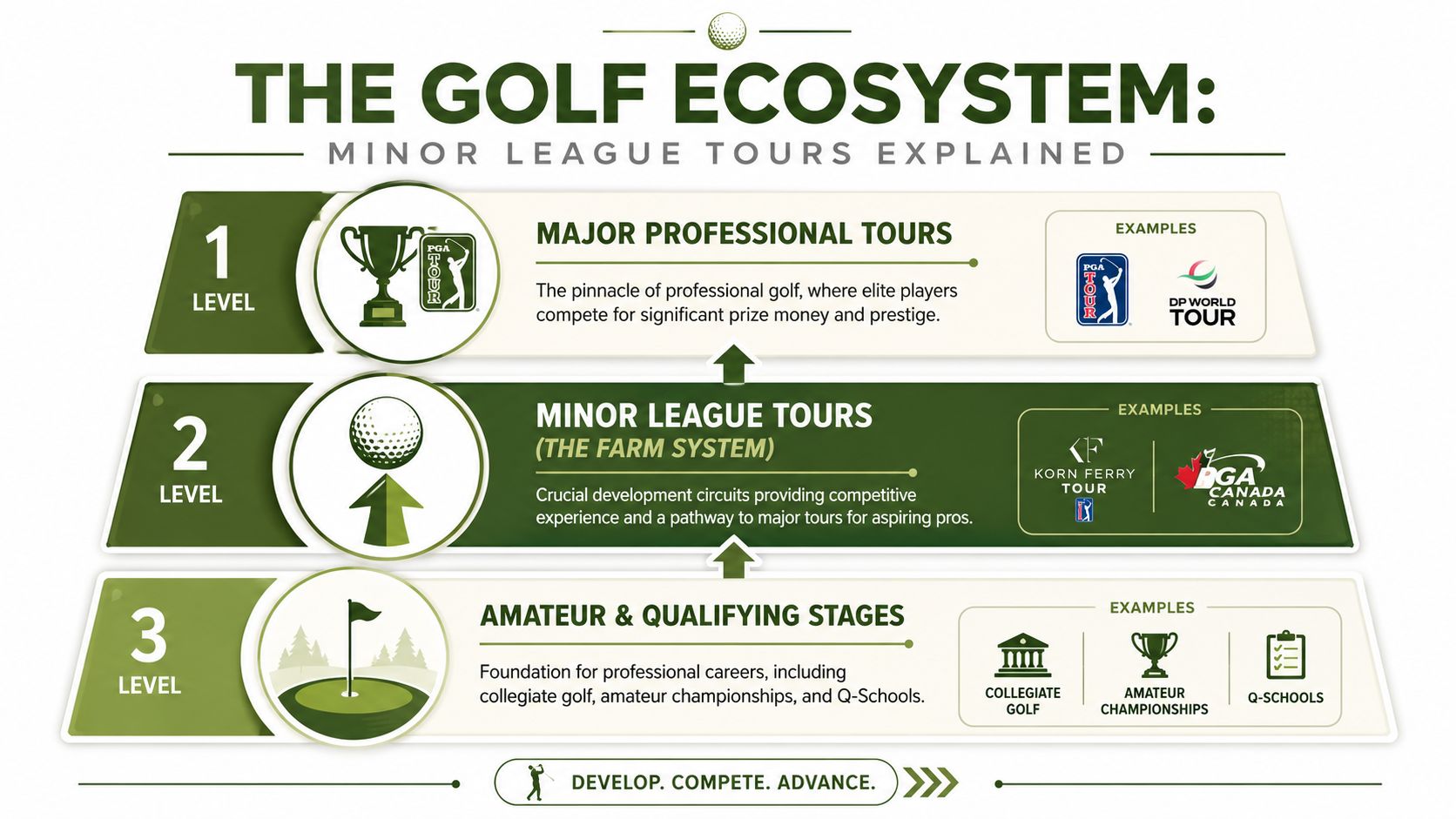
Minor league golf tours sit in the space between amateur competition and the established professional circuits. They give aspiring pros regular starts, tournament pressure, and a way to build a record over time. For organizers, they create a repeatable event product that can generate revenue, attract competitive players, and put a facility in front of coaches, sponsors, and serious local golf audiences.
The format is usually familiar to anyone who has worked around tournament golf. Events are often multi-round stroke-play competitions, sometimes with a cut, smaller fields, and purses funded largely through entry fees rather than large media or title-sponsor money. That structure keeps access more realistic than top-tier pro golf, but it also creates a hard truth. Players are often financing their own opportunity.
That financial model shapes behavior on both sides. Players do not enter these events for prestige alone. They enter to get reps, earn checks, test whether their game travels, and see if they can survive a schedule without wasting money. Course operators and tour directors have their own calculation. If the field is weak, the setup feels sloppy, or payouts are delayed, players stop coming back and the event loses value fast.
A good mini-tour stop serves several purposes at once:
It gives players a professional tournament setting with real consequences.
It lets tours build recurring fields and maintain calendar density in a region.
It gives host facilities a weekday event that can produce revenue and visibility.
It gives sponsors a cleaner story than a one-off local open because the competition sits inside a broader pathway.
That pathway matters. Developmental golf is where players learn whether they can live the job, not just dream about it. A score like this incredible golf achievement grabs attention, but week-to-week professional progress usually looks less dramatic. It looks like making enough starts, handling travel, and posting enough solid finishes to keep moving.
The same developmental logic shows up earlier in the pipeline too. Families tracking a junior PGA tournament schedule are often looking at the front end of the same system. Better junior scheduling leads to better amateur preparation, which leads to fewer surprises when players reach mini-tours and start paying for every competitive mistake themselves.
For players, the trade-off is simple. Mini-tours offer access, but not much financial protection. For organizers, the trade-off is just as clear. These events can be profitable and reputationally useful, but only if the operation is disciplined enough to deliver a fair competition and a field worth hosting.
Profiles of Key Developmental Tours
A player can shoot 67 on Monday, finish outside the meaningful money on Wednesday, and still leave the week in a financial hole. A course can host a full field, keep the shop busy, and still decide the event was not worth the operational strain. That is why tour selection is never just about purse size or name recognition. The right fit depends on how the tour runs, what kind of field it attracts, and whether the schedule works for both the player and the host facility.
The best-known operating model
The Minor League Golf Tour is one of the clearest examples of the high-frequency regional model. It has been around for years, built real name recognition, and established itself through a steady schedule rather than a single marquee event. For players, the appeal is simple. Frequent starts in one region reduce travel resets and make it easier to stay tournament sharp. For courses, that same density can help fill weekday inventory if the tour communicates well and brings a reliable field.
Its day-rate entry structure also reflects the economics of this level. Players are not buying status. They are buying reps, competitive access, and a chance to turn a narrow margin into a check. That setup rewards players who can stay nearby, recover quickly, and treat each start like part of a larger season plan instead of an isolated gamble.
Regional tours and player-fit decisions
Other developmental tours separate themselves through geography, field profile, and operating style.
The Dakotas Tour is a good example of a circuit that gets attention because the schedule can be more manageable for players trying to control weekly overhead. Host housing and a driveable route matter. They matter even more than a slightly larger purse if the larger purse comes with extra flights, hotel nights, and car rental days. I have seen players choose the stronger-looking event on paper, then burn through the difference before the first round starts.
The Asher Tour tends to appeal to players who want access to serious competition in western markets and are comfortable with the trade-off that stronger fields often bring. Better competition can sharpen a player quickly. It also means fewer easy checks and less room for a sloppy week.
That distinction matters for organizers too. A course hosting a compact regional tour often wants a repeatable operating model, predictable pace-of-play expectations, and staff demands that fit a normal weekday setup. A course hosting a stronger or more travel-heavy field may get better outside attention, but it also needs tighter tournament prep, cleaner player services, and less tolerance for operational mistakes.
Players entering this system from elite amateur golf often miss how early these sorting decisions begin. Families mapping out a junior PGA tournament schedule are already making choices about travel patterns, competition level, and scheduling discipline that show up again at the mini-tour stage.
Comparison of Major U.S. Minor League Golf Tours
Tour Name | Primary Region | Typical Entry Fee | Season | Primary Player Benefit |
|---|---|---|---|---|
Minor League Golf Tour | South Florida | Daily-fee format | Year-round | Frequent starts in one region and consistent competitive reps |
Dakotas Tour | Upper Midwest | Varies by event | Seasonal | Lower lodging pressure when host housing is available |
Asher Tour | Western U.S. | Varies by event | Seasonal and regional | Strong competition in established western markets |
The best developmental tour for a player is usually the one that fits budget, travel radius, and current ability level well enough to stay in competition for months, not weeks. The best tour partner for a facility is the one that can deliver a credible field, run on time, and leave the superintendent, golf shop, and food-and-beverage team willing to host again.
A reminder of how good developmental golf can be at its peak is this incredible golf achievement. Scores like that are the visible result. The less visible part is the long stretch of smaller events, tight budgets, and well-run tournaments that made that level possible.
The Player's Path Costs and Advancement
A player leaves Monday's qualifier feeling close. The swing is fine, the game is competitive, and the score was not far off. By Thursday, pressure shows up on the card statement. Entry fee, hotel, gas, meals, a practice round, and another week away from paid work can turn a decent result into a bad business decision.

What players usually underestimate
Mini-tour golf is a scheduling and capital-management test as much as a scoring test. Players usually plan for the posted fee and underestimate everything around it. The expensive part is rarely one line item. It is the full week.
Travel is the first leak. A regional circuit with short drives can keep a season alive. A scattered schedule adds fuel, extra room nights, late booking costs, and fatigue that shows up in the last six holes. Housing matters just as much. Host housing, splitting rentals, staying with family friends, and committing to one region for a stretch can be the difference between playing ten events and playing four.
The same logic applies a level below mini tours. Strong local golf tours that help players build reps without heavy travel spend often serve as a smarter proving ground than jumping straight into a bigger weekly budget.
There is also an income problem that players do not like to talk about. Many developmental players work between events, teach, caddie, or pick up flexible jobs because tournament golf rarely pays for itself early on. That choice has a trade-off. More work hours help cash flow, but they can reduce practice time and recovery.
What usually works
Players who stay out longer usually make boring decisions well:
Choose one region and stick to it: Fewer flights and fewer long drives protect both budget and energy.
Build the schedule backward from cash on hand: Start with what the season can support, then pick events.
Treat lodging like part of performance planning: Shared housing and stable weekly routines often produce better golf than constant moves.
Keep a work option available: Flexible income reduces the pressure to force starts that do not make financial sense.
Track return on each trip: A week that produces competition reps, contacts, and a chance to enter the next event can still be worthwhile. A week that burns cash with no clear upside usually is not.
Many careers stall. The player is good enough to belong, but not funded well enough to stay out there long enough to improve.
Advancement is earned in layers
Advancement at this level usually comes from repeatable weeks. Players move up by handling travel, keeping expenses controlled, getting into enough events, and posting solid finishes often enough to justify a stronger schedule. One hot tournament helps. A season with structure helps more.
The common mistake is ego scheduling. Players chase a bigger purse in a market they cannot afford, or they enter fields that do not match their current level and then spend the next month trying to recover financially. A better approach is to play where you can compete, afford the full week, and give yourself enough starts to learn something.
Organizers see the same pattern from the other side. Players return to tours that run on time, communicate clearly, and keep costs predictable. That matters because advancement is not only about talent. It depends on whether a player can survive the economics of developmental golf long enough to earn the next opportunity.
The Organizer's Playbook Hosting a Tour Event
A superintendent has the greens rolling well, the shop is fully staffed, and a Wednesday event slot looks open. On paper, hosting a developmental tour stop looks simple. In practice, the course only wins if the date, fee structure, staffing plan, and player experience all hold together.
That is the organizer's job. A mini-tour event has to work for two groups at once. Players need a fair, predictable competition week they can afford to enter. The facility needs an event that does not disrupt core revenue, strain the maintenance team, or create cleanup work that outweighs the upside.
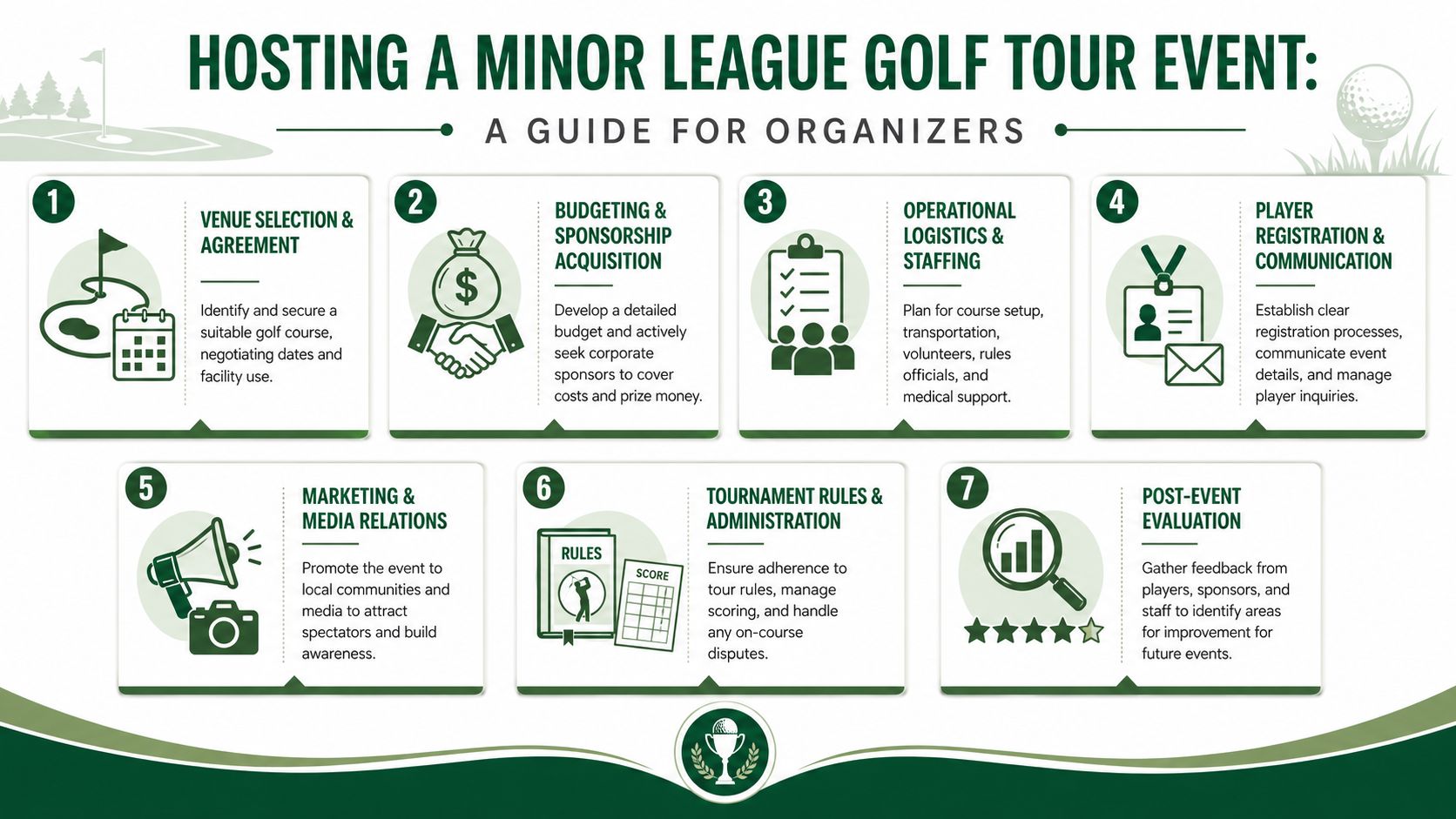
Start with the operating model, not the logo
The first decision is not which tour name sounds strongest. It is whether the event fits the way your course makes money. Developmental tours work best on dates where tee inventory is available, rate pressure is lower, and the staff can support a competitive setup without hurting regular play the rest of the week.
Regional tours with concentrated schedules usually make more sense than one-off events pulled into a busy calendar. They reduce travel friction for players and make scheduling easier for operators who may want to host more than once a year. If you are comparing formats, this overview of local golf tours gives useful context on how regional circuits fit public and private facility calendars.
Peak-season pricing is the hard reality. If your best winter and spring tee times already sell at full value, a developmental event has to justify displaced revenue. Many cannot. A weekday date in a softer demand window is often the cleaner play.
Player trust starts before the first tee time
Good players notice the details fast. If entry terms are vague, practice-round access is unclear, or payout timing feels uncertain, the event loses credibility before anyone hits a shot.
The cleanest host sites usually get four things right:
Clear terms in writing: Entry fees, withdrawals, cart rules, practice-round pricing, range access, and payout timing should be settled before registration opens.
A course setup players respect: Fair hole locations, defined local rules, and a pace plan matter more than expensive extras.
One decision-maker on site: Players and staff need to know who handles rulings, weather calls, pairings, and disputes.
Fast post-round processing: Scoring delays and payout confusion damage the event more than a modest purse ever will.
Reliability keeps players coming back.
Protect margins at the facility level
Operators sometimes underestimate where the actual cost sits. It is not only the tee sheet. It is carts, range usage, labor before first light, food-and-beverage timing, scoring space, and maintenance recovery after the field leaves.
That needs to be spelled out in the host agreement. Define who covers range balls, cart staging, rules materials, staff support, prize-fund administration, and any minimum revenue guarantee. If those items stay loose, the course usually absorbs the difference.
I have seen profitable host relationships built on modest purses and very plain operations. I have also seen events with bigger ambitions lose money because nobody priced the labor correctly.
Treat the event as both operations and marketing
A well-run developmental event can help a facility if the course uses it properly. It creates content, brings competitive players into the property, gives sponsors a local platform, and gives the club a reason to talk to its market. Courses that want more from the week should learn small business marketing strategies and apply the ones that fit golf. Local sponsor packages, player features, email promotion, and post-event recaps usually do more than generic social posts.
The right goal is a repeatable event. One the players trust, the staff can execute, and the course would host again without second-guessing the economics.
The Modern Toolkit for Tour Management
The difference between a smooth developmental event and a messy one usually isn't intent. It's systems. Many courses still rely on too many disconnected tools: one method for registration, another for pairings, paper for scoring, text messages for updates, and manual cleanup after the round. That creates errors and staff fatigue.
Where software actually helps
Modern tournament platforms solve a handful of problems that matter every single event:
Registration and payments: One system reduces back-and-forth with players and cuts down on spreadsheet cleanup.
Tee sheets and printed materials: Organizers need scorecards, cart signs, pairings, and reports without rebuilding the event each time.
Live scoring: Players and spectators expect timely leaderboard updates without a complicated app setup.
Communication: Weather changes, tee adjustments, and rules notices need to reach the field quickly.
For facilities that want a web-based option, Live Tourney's golf tournament software overview outlines the kind of workflow many operators now want: online setup, scoring, reporting, and communication in one place.
Better tournament tech also supports marketing
A mini-tour stop isn't just an operations exercise. It's also a local marketing opportunity. If the course is going to host serious players, publish results, involve sponsors, and attract repeat entries, the event should be presented like a professional product.
That's where ordinary business discipline matters. Courses that don't have a marketing process can borrow ideas from outside golf. This guide to learn small business marketing strategies is a practical reminder that consistent event promotion, sponsor visibility, and follow-up all influence whether an event gains traction.
Good software won't fix a bad date, a weak operator agreement, or poor service. It will fix a lot of administrative drag. At this level, that matters because staff hours are limited, players expect clarity, and repeat business depends on whether the day felt organized from start to finish.
Frequently Asked Questions About Mini Tours
Can a player make a full-time living on mini-tours
Some do for stretches, but it's a hard model to sustain. Developmental golf is usually a grind built on entry fees, travel control, and repeat performance. On tours with payout structures designed to spread checks more broadly, survival often depends on consistent finishes rather than one huge week.
On the Minor League Golf Tour, GolfLink reports an average winner's share around $1,500. That tells you the core truth. Mini-tour golf can support advancement, but it usually doesn't provide a comfortable cushion on its own.
Why do players talk so much about making cuts
Because making the cut often determines whether the week was productive or expensive. On developmental tours, more players can get paid than on a winner-heavy model, and that changes strategy. The same GolfLink overview of mini tours explains that prize structures are built to spread payouts, which rewards steady scoring.
What's the difference between a tour event and a Monday qualifier
A mini-tour event is part of a recurring circuit. A Monday qualifier is a single-shot opportunity to get into a bigger event. They require different planning. Mini-tours are about building form and staying active. Monday qualifiers are about capitalizing on form you already have.
Do pro-ams matter on the developmental side
Yes, when they're run well. They can support sponsor relationships, create facility exposure, and give the event a stronger local footprint. But the pro-am has to be organized around pace, communication, and player expectations. If it feels thrown together, it hurts the tournament more than it helps.
What should a course look for before agreeing to host
Start with three things: date fit, operational clarity, and player experience. If the event lands in the wrong part of your calendar, lacks clear financial terms, or forces your staff into unnecessary manual work, it probably won't be worth it.
What should a player look for before entering a tour
Look for a circuit you can afford to play properly, not just occasionally. Geography, housing options, schedule density, and field quality all matter. The strongest choice is usually the one that lets you compete enough to improve without blowing up your budget.
If you run competitive golf events and want a cleaner way to handle registration, pairings, scoring, and live leaderboards, Live Tourney is built for that job. It gives courses and organizers a web-based system for tournament management without requiring players to download an app, which makes it a practical fit for developmental tour stops, local circuits, and professional-style events.





