Feb 20, 2026
Explore how to launch and manage a twilight golf league with practical scheduling, formats, and marketing strategies to boost revenue and community.

A twilight golf league is more than just a casual after-work round. It's a powerful engine for boosting course revenue by turning your most underutilized tee times into gold.
These leagues transform quiet evening hours into a predictable, recurring stream of income. We're talking green fees, cart rentals, and—most importantly—a packed clubhouse spending money on food and drinks. When you create a fun, social atmosphere, you're not just hosting a league; you're building a loyal community that keeps players coming back week after week.
Why Twilight Golf Leagues Boost Course Revenue
For any forward-thinking golf facility, those hours between late afternoon and dusk represent a huge, often untapped, business opportunity. Let's be honest, the traditional 18-hole weekend round doesn't fit everyone's schedule anymore. The demand for flexible, social golf experiences has absolutely surged.
A twilight golf league directly answers that call, turning quiet evenings into a vibrant hub of activity and a reliable source of income. And the financial benefits go way beyond just the green fees. A successful evening league creates a captive audience that's ready to spend on food and drinks post-round, often making it one of the most profitable nights of the week for your clubhouse.
Monetizing Underused Inventory
Every empty tee time after 4 PM is a missed sale. Simple as that. A twilight league fills those slots consistently, week after week, for an entire season.
This kind of predictability is a game-changer. It allows for better staff scheduling, smarter resource allocation, and more accurate revenue forecasting. Instead of just hoping for walk-in players, you have a guaranteed block of golfers who have already paid.
This model is especially effective because it hits a specific sweet spot: the modern professional. These players are busy during the day and are actively looking for things to do that mix networking with a way to unwind. A 9-hole evening league fits their lifestyle perfectly.
Key Takeaway: A twilight league converts your most perishable inventory—late-day tee times—into a consistent, high-margin revenue stream. It's not just about filling slots; it's about building a predictable and profitable weekly event.
Driving Ancillary Spending
The real magic of a twilight golf league happens after the last putt drops. The social side of it is a massive driver for your food and beverage (F&B) sales. Players don't just finish their round and bolt for home; they hang out in the clubhouse to check the leaderboard, collect winnings from side games, and socialize over dinner and drinks.
This post-round gathering can easily double the revenue you generate per player. Here are a few things that work wonders:
Weekly Specials: Offer league-only food and drink specials, like a "Burger and a Beer" combo, to give players a reason to stay.
Social Atmosphere: Putting live leaderboards up on the TVs and having a casual prize ceremony creates an event feel that keeps people engaged and spending.
Pro Shop Sales: More foot traffic naturally leads to more opportunities for merchandise sales, whether it's a sleeve of balls, a new glove, or an impulse apparel buy.
The demand for these flexible formats is undeniable. Global reports show a massive 108 million golfers worldwide, with a significant 34% increase in on-course players since 2016. In the US alone, which accounts for 60.1 million golfers, these leagues are crucial for getting younger demographics hooked. In fact, 80% of young players say they prefer non-traditional formats like twilight sessions.
You can explore more about this golf boom and its industry impact. This shift confirms that offering a well-organized twilight league isn't just a good idea—it's an essential strategy for any modern course.
Laying the Groundwork for a Killer League
A great twilight golf league doesn’t just happen. It’s built on a solid plan long before the first player registers. Nailing down the fundamentals is the single most important thing you can do to create an experience that keeps people showing up week after week.
Getting these core details right from the start saves you from a world of headaches later. Think of it as setting the course layout for your entire season. You need to map out the schedule, pick formats that keep things fun and moving, and figure out a pricing structure that works for both you and your players.
Defining Your League's Schedule and Identity
First things first: you need a consistent, predictable schedule. This is the bedrock of your league. The most successful leagues I've seen pick a day and time and own it for the whole season—say, every Tuesday with a 5:30 PM shotgun start for 12 weeks. Consistency is what allows busy people to fit your league into their routine.
Beyond the calendar, you need to decide on the league's vibe. Who are you building this for?
A Hyper-Competitive League: This crowd wants individual stroke play, strict rules, and a focus on gross scores.
A Social Networking League: Think scrambles or best-ball formats. The goal here is camaraderie and fun, not grinding over every putt.
A Couples League: This calls for mixed-team formats and a more relaxed, date-night feel after the round.
Pinpointing this identity upfront makes every other decision—from your marketing to your format choices—infinitely easier.
Choosing Formats That Maximize Fun and Pace
The format you choose has a massive impact on player enjoyment and, most importantly, pace of play. With daylight fading, you need formats that are quick, engaging, and don't intimidate higher-handicap players. Slow rounds are the fastest way to kill a league's momentum.
A 2-person scramble is always a crowd-pleaser because it’s fast, social, and takes the pressure off any one person. Another fantastic option is a Stableford scoring system, which keeps things moving by letting a player pick up after a blow-up hole without ruining their whole night.
If you're running a season-long competition, you can get creative. Our guide on how to create a round robin schedule is a great resource for structuring multi-week events that build excitement.
The right format is crucial for pace of play and player enjoyment. This table compares popular 9-hole formats perfect for evening leagues.
Choosing the Right Twilight League Format
Format | Best For | Pace of Play | Skill Level |
|---|---|---|---|
2-Person Scramble | Social leagues, wide range of handicaps | Excellent | All levels |
Best Ball (Four-Ball) | Competitive but team-focused events | Good | Intermediate-Advanced |
Stableford | Individual competition, pace-of-play focus | Excellent | All levels |
Shamble | A fun twist on a scramble | Very Good | All levels |
Don't be afraid to change it up. Mixing in a "Shamble" one week and a "Best Ball" the next keeps the season from feeling stale and tests different team skills.
Structuring Your Pricing for Profit and Value
Finally, you need a pricing structure that's crystal clear. Your model has to cover green fees, cart fees, and the prize fund, all while leaving a little room for profit. At the same time, players have to feel like they’re getting a great deal.
A simple, effective model that I've seen work time and again has two parts:
A One-Time Entry Fee: This is an upfront cost, maybe $75 per player, collected at the start of the season. This money goes directly into the prize fund for the overall champions and season-end awards.
A Weekly Fee: This is what players pay each week they show up (e.g., $40 per player). It covers their 9-hole green fee, cart, and entry into the weekly side games like skins or closest-to-the-pin.
This hybrid approach secures commitment from players while keeping the weekly excitement high. Just make sure you communicate exactly what each fee covers. Transparency builds trust and shows players the value you’re providing, making your twilight league the event to play in.
Automating Operations from Sign-Up to Scoring
Let’s be honest: manual admin work is the fastest way to burn out and create a clunky, unprofessional experience for your players. Chasing down cash payments on the first tee and wrestling with spreadsheets to build pairings? Those days are over. Today’s tools can automate just about every time-sucking task that comes with running a great twilight league.
This isn't just about saving you a few hours. It’s about elevating the entire experience. When registration is a breeze, payments are handled online, and tee sheets show up in everyone's inbox looking sharp, your league immediately feels more organized and valuable. It frees you and your staff up to focus on what actually matters—hospitality and making sure everyone has a good time.
A smooth workflow is everything. Before you even think about opening registration, map out the entire player journey. What's it like from the moment they sign up to the second they check the final leaderboard? This is where you'll spot the friction points and figure out how to smooth them over with the right tools.
This flow chart nails the first part of the process: getting your schedule, format, and pricing locked in before you dive into the operational side of things.
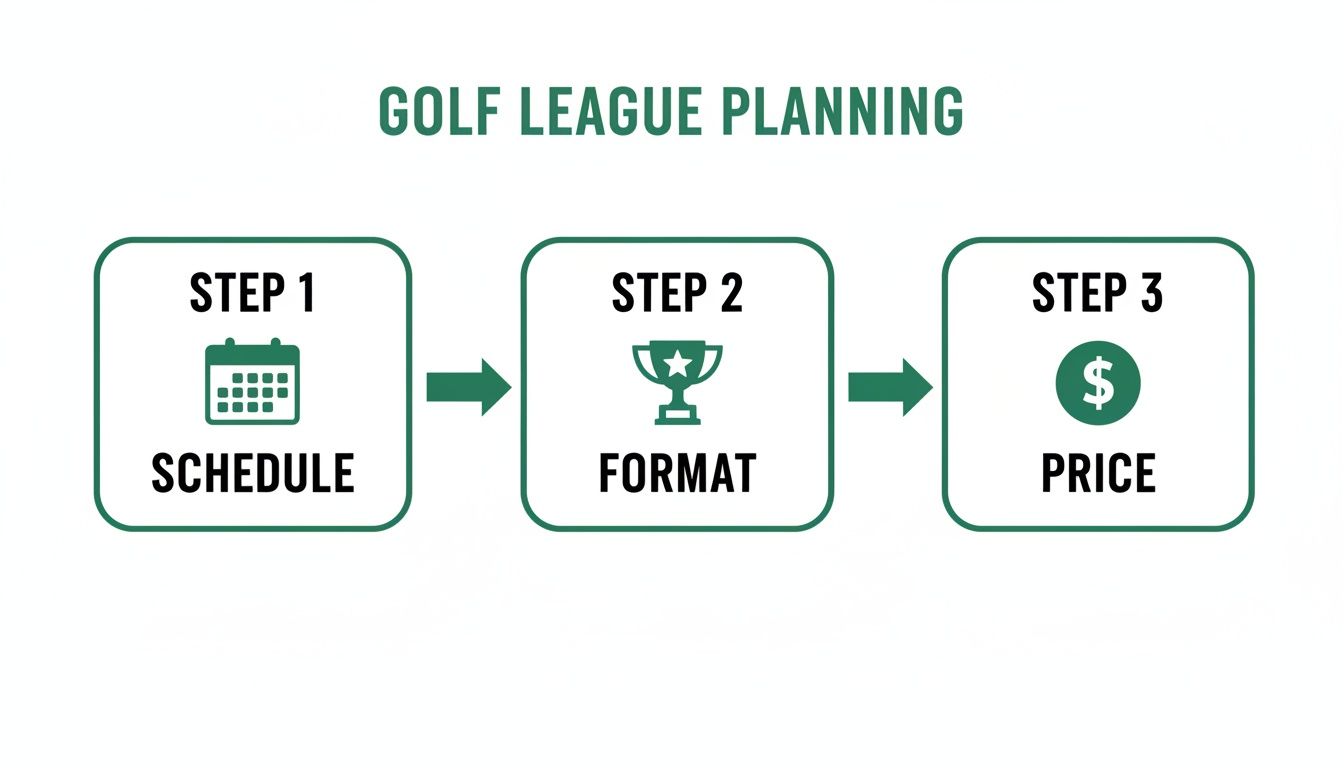
Think of it this way: a solid foundation (clear schedule, format, and price) is non-negotiable. Once that’s set, you can build an automated system that runs like clockwork.
Seamless Online Registration and Payments
Your first interaction with a player usually happens online, so a slick sign-up process is critical. A dedicated registration portal is your league's front door. It needs to be simple, work perfectly on a phone, and handle all the necessary info and payments in one clean step.
Stop the awkward chase for checks and cash. Integrating online payments means you collect all your league fees upfront, which is great for cash flow and eliminates those uncomfortable conversations. Players can securely pay their one-time entry fee with a credit card, and you get a crystal-clear record of who’s paid and who hasn't.
Modern golf league management software gives you a central hub to run everything. From a single dashboard, you can spin up a registration page, track payments, manage your roster, and send out updates effortlessly.
Getting this right from the start pays off all season. With a complete player roster in your system from day one, everything that comes next—like creating pairings and handling handicaps—becomes ten times easier.
Effortless Roster and Handicap Management
Once your players are signed up, managing their info is the next step. A digital roster is a living document you can update instantly. If a player’s email changes or they have to drop out for a week, you can adjust it in seconds. No more shuffling through stacks of paper.
And let's talk about handicaps—often the biggest headache for league admins. It doesn't have to be. Automation is your best friend here.
Integrated Handicap Services: Platforms like Live Tourney can pull official USGA handicaps directly, keeping things accurate for your more competitive players.
Automatic Calculation: For golfers who don't have an official handicap, the software can automatically calculate a league-specific one based on the scores they post each week.
Support for Various Systems: You can easily apply different calculation methods, whether it's a simple percentage of the course handicap or something more complex, ensuring a level playing field for everyone.
Automating handicaps doesn't just save you hours of math; it adds a layer of legitimacy and fairness that your players will definitely appreciate.
Generating Pairings and Professional Materials
With an up-to-date roster and accurate handicaps, creating weekly pairings goes from a complicated puzzle to a few quick clicks. You can automatically generate balanced foursomes based on skill, accommodate special requests, or just randomize the groups to help players meet new people.
This speed means you can get tee sheets out well in advance, giving everyone plenty of time to plan. But the benefits don't stop there. To really dial in your efficiency, mastering marketing automation workflows can be a game-changer for league communication.
The same platform you use for registration can also produce professional-grade materials that make your league feel like a premier event.
Custom Scorecards: Print scorecards that are already filled out with player names, handicaps, and starting holes.
Cart Signs: Generate professional cart signs to guide players right to their carts.
Tee Sheets and Alpha Lists: Create organized reports that make life easier for your pro shop staff and starters.
These small touches make a huge difference. They signal to your players that this isn't just any twilight league—it's a well-run, premium experience. That's what reinforces its value and keeps them coming back season after season.
Designing an Unforgettable Player Experience
What separates a good league from a great one? The experience. You can automate all the logistics in the world, but the real magic is in the atmosphere you build. This is where you turn a simple weekly round into the highlight of your players' week—an event they can't wait for and talk about long after it’s over.
Creating this vibe isn't about huge, expensive gestures; it’s about the thoughtful details. It's the thrill of watching your name climb a live leaderboard, the friendly smack-talk that comes with weekly side games, and the simple act of keeping everyone in the loop. When these pieces click, you create something special that keeps people coming back.
The Power of Real-Time Engagement
The days of taping a paper scoresheet to the pro shop wall are over. If you want to make one change that has the biggest impact on player engagement, it’s this: use a live, real-time leaderboard. It instantly transforms a bunch of separate matches into a dynamic, league-wide event everyone can follow.
App-free live scoring is a total game-changer here. Players just enter scores hole-by-hole on their phones, and the leaderboard updates for everyone to see. No download, no hassle. That single detail removes a massive barrier for players. This simple tech creates a buzz that carries from the first tee right into the clubhouse bar.
Live leaderboards are more than a convenience; they’re a core part of the entertainment. We've seen a 40% increase in live scoring participation at events that switched to modern, app-free systems simply because they’re so easy and fun to use.
This constant feedback loop keeps everyone locked in. A team that's two down with three to play feels the pressure, while the folks already in the clubhouse can watch the drama unfold on their phones. It brings a professional tournament feel to your weekly league.
Driving Excitement with Side Games
Beyond the main competition, side games are the lifeblood of a fun league. They give every player a shot at winning something each week, no matter their handicap. This keeps things interesting even for teams that might be out of the running for the season championship.
Here are a few proven side games that are perfect for a twilight golf league:
Skins: A classic for a reason. Each hole is worth a "skin," and if one player or team has the sole low score, they win it. If there’s a tie, the skin rolls over to the next hole, building the pot and the tension.
Closest-to-the-Pin (KP): Designate a par-3 for this. The player whose tee shot lands closest to the hole wins. It’s a simple game of skill that creates a great moment on the tee box.
Longest Drive: Pick a long, relatively wide-open par-4 or par-5. The player who hits the longest drive in the fairway wins. Always popular for bragging rights.
Longest Putt: A fun and more inclusive alternative. Stick a marker next to the cup on a specific green, and the player who holes the longest putt of the day takes the prize.
Don't make the payouts a headache. The best platforms have a built-in payout calculator. You just plug in the total prize pool and the winners, and it does the math for you, keeping everything transparent and fair.
Keeping Everyone Connected with Strong Communication
Finally, consistent, professional communication ties the entire experience together. It's not about spamming inboxes; it's about sending the right info at the right time. When players are kept in the loop, they feel valued and connected.
Using simple, clear templates makes this easy. A good league management platform will let you send personalized messages directly, saving you time and ensuring everyone gets the memo.
Here’s a simple but effective communication schedule to follow:
Communication Type | When to Send | Key Information to Include |
|---|---|---|
Pre-Round Update | Morning of the event | Tee times, pairings, course conditions, and rules for weekly side games. |
Post-Round Summary | The next morning | Final results, a link to the leaderboard, side game winners, and a quick, fun recap. |
Weekly Newsletter | 2-3 days before the next round | A look ahead to the next event, updated season standings, and any league news. |
These small touches make a massive difference. They reinforce the value of your league and show players you’re committed to giving them a top-notch experience. When you nail the on-course action and the off-course management, you create an event that builds a loyal community for years to come.
A Simple Marketing Plan to Keep Your League Full
An empty league is just a missed opportunity. Building a fantastic player experience is only half the battle; you also need a smart, consistent marketing plan to fill every spot and maybe even create a waitlist for next season. This doesn't require a massive budget, just a practical approach focused on reaching the right people with the right message.
Your marketing playbook should be a multi-channel effort, starting with your most valuable asset—your existing golfers—and expanding outward to social media and simple on-site signage. The goal is to communicate what makes your twilight golf league unique and build a community that players are eager to join.
Start with Your Warmest Audience
Your first marketing push should always target the people who already know and love your course. Your email list and customer database are goldmines. These golfers have already chosen to play at your facility, which makes them the most likely candidates to sign up for a league.
Craft a compelling email series announcing the new twilight league. Don't just list the details; sell the experience.
Highlight the social aspect: Emphasize the fun, after-work atmosphere where players can unwind and connect.
Stress the convenience: A 9-hole evening league is the perfect fit for busy schedules.
Showcase the value: Mention the friendly competition, weekly prizes, and any food and beverage specials.
This direct approach is incredibly effective. A well-timed email to a targeted list of past players can often fill a significant portion of your league roster before you even start marketing to the general public.
Expand Your Reach with Social Media
Once you've tapped into your existing audience, it's time to broaden your reach using social media. Platforms like Facebook and Instagram are perfect for visually showcasing what makes your twilight golf league special. You don’t need to be a social media expert, you just need to be consistent.
Create engaging posts that feature photos or short videos of your course during that "golden hour" light. Share testimonials from current players or run a poll asking what kind of side games people would like to see. The key is to create a sense of community and excitement online.
Pro Tip: Run a targeted ad campaign on Facebook aimed at golfers within a 15-mile radius of your course. You can narrow the audience by interests like "golf," "PGA Tour," and even target users who have visited your website. A small ad spend here can generate a huge return in sign-ups.
Use a clear call-to-action in every post, directing potential players straight to your online registration page. Make it as easy as possible for someone to go from seeing a post to signing up.
Don't Overlook On-Site Promotion
Never underestimate the power of marketing to the golfers who are physically at your facility every day. Simple, well-placed signage can be one of your most effective recruitment tools.
Place flyers and posters in high-traffic areas:
The pro shop counter
The clubhouse bar and restaurant
On golf carts
At the first tee box
Empower your staff to be your biggest advocates. When a player checks in for a regular round, your pro shop team should be trained to mention the upcoming twilight league. A personal invitation—"Hey, just wanted to let you know we have a new Tuesday night league starting up, it’s a lot of fun"—can be incredibly persuasive.
Build Loyalty and Drive Retention
Attracting players is the first step; keeping them is how you build a sustainable, profitable league year after year. Focus on simple retention tactics that make your players feel valued and eager to return.
Offering an early-bird registration discount for returning players is a powerful incentive. It rewards loyalty and helps you secure commitments well before the next season begins. As part of your marketing, offering digital golf gift cards can also be a great incentive for new sign-ups or as loyalty rewards, helping to keep your league full.
Finally, end the season on a high note with an awards party or banquet. This event solidifies the sense of community you've built all season. It’s a chance to celebrate the winners, hand out prizes, and, most importantly, start generating buzz and collecting sign-ups for next year.
Finishing Strong and Planning for Next Season
How you end your twilight league season is the single best piece of marketing you can do for next year. A great finish builds momentum and gets players excited to come back. It’s your chance to turn a weekly game into a real community and gather the insights you need to make the next season even better.
It all starts with sticking the landing. Before any celebration, make sure all the standings are finalized and 100% accurate. Use your league platform to double-check the final scores, verify all the handicap calculations, and confirm your winners for every season-long competition. When players see that you’ve handled the details professionally, it builds a ton of trust.
Hosting a Memorable Finale
An end-of-season awards dinner or party isn't just a nice-to-have; it's essential. This is the event that transforms your league from a simple series of golf matches into something more. It's where you celebrate the champions, hand out the prizes, and give everyone a chance to connect off the course.
You don't need a massive budget to make it special. A few simple touches go a long way:
Show a Season Recap: Put together a quick slideshow with photos from throughout the season. It’s a simple way to remind everyone of the good times they had.
Get Creative with Awards: Don't just recognize the league champs. Hand out fun awards for "Most Improved," "Best Team Name," or even the "Longest Putt of the Season."
Announce Next Season: Use the energy in the room to your advantage. Announce the registration dates for the next season and offer an exclusive early-bird discount for anyone who signs up on the spot.
Gathering Feedback for Next Year
While the season is still fresh in everyone's minds, it's the perfect time to ask for feedback. The goal is simple: find out what they loved and what you can do better. A quick, three-question digital survey sent out the day after the party is incredibly effective.
Your players are your most valuable source of information. A short survey shows you respect their opinion and are committed to improving their experience, which is a powerful tool for retention.
Keep the questions direct and easy to answer:
What was your favorite part of the league this year?
What is one thing we could do to make the league better next season?
What new formats or side games would you like to try?
This feedback, combined with the participation and financial data from your league software, gives you a clear roadmap for what's next. You can see which weeks had the highest turnout and which side games were the most popular. This data-driven approach doesn't just help you make smarter decisions—it helps you prove the league's value and grow this recurring revenue stream year after year.
Common Questions We Hear About Twilight Leagues
Even the most buttoned-up plan will have a few loose ends. When you're launching a new twilight golf league, questions are going to pop up—it's just part of the process. Having helped hundreds of courses get their leagues off the ground, we've heard just about everything.
Here are the most common things league managers and golf pros ask us.
What’s the Best Format for a Casual League?
For a laid-back, after-work vibe, a 9-hole, 2-person scramble is almost always the right call.
Why? It's fast, it takes the pressure off less-skilled golfers, and it keeps the focus on having a good time. A scramble format makes sure everyone feels like they can contribute to the team, which is exactly what you want in a social league.
A Stableford scoring system is another great option. It encourages players to go for it but stops one blow-up hole from wrecking someone's entire night. That's a huge plus for keeping the pace moving and the mood light.
How Much Should We Charge?
This is a balancing act. You need to make it profitable for the course without making players feel like they're overpaying. A two-part structure is usually the way to go.
One-Time Registration Fee: Think somewhere in the $50-$100 per player range. This covers your season-long prize fund and any admin costs, and just as importantly, it gets players invested from the start.
Weekly Fee: A fee of $30-$45 per player is pretty standard. This should cover their 9-hole green fee, cart, and buy-in for weekly side games like skins or closest-to-the-pin contests.
Pro Tip: Before you set your prices in stone, do a quick search to see what other leagues in your area are charging. Staying competitive on price makes the decision to join your league a whole lot easier for potential players.
How Should We Handle Handicaps?
Fairness is everything. If you don't get the handicaps right, the league won't be much fun for anyone.
If you have a lot of players with an official GHIN index, that's your best bet. Use a system that can pull those in automatically. But what about everyone else?
For players without an official handicap, you can easily create a league-specific one using their first few scores. Another simple solution is to use a daily system like Callaway or Peoria. These calculate a handicap based on that day's round alone, which puts everyone on a level playing field each week without needing any scoring history.
Running a professional, engaging twilight golf league doesn't have to be complicated. With a tool like Live Tourney, you can knock out registration, payments, pairings, and live scoring in minutes. That leaves you more time to hang out with your players.