
May 3, 2026
Struggling with Big Met tee times? Plan, pair, and publish tournament times fast using Live Tourney for smoother 2026 events.

If you're handling big met tee times for an outing, league day, or public-course tournament, the stress usually starts before the first player arrives. The field looks fine on paper. Then the calls begin. One group wants to stay together. Another player drops out. The shop is still selling public times. Someone asks if you can “just squeeze in” two more players without slowing everything down.
That gets harder at a course like Big Met because it isn't a quiet private-club sheet with endless flexibility. It's a historic, heavily used public operation. Every slot matters, every delay ripples, and every mistake lands on the tournament director first.
The Challenge of High-Volume Tournament Tee Sheets
Big Met is the kind of course that exposes weak process fast. It opened in 1926 and is recognized as Ohio’s most-played public golf course, with over 6,000,000 rounds played since opening. Through September 2020 alone, the course had logged 56,963 rounds, which tells you exactly what you're dealing with when you try to reserve part of that tee sheet for an event at a busy public facility, according to the Cleveland Metroparks course overview.

Where directors lose control
The failure point usually isn't effort. It's tool sprawl.
A director has one spreadsheet for pairings, another for payments, a text thread with volunteers, handwritten notes from the shop, and email chains full of player requests. None of that is terrible in isolation. Together, it creates a moving target. The tee sheet stops being a schedule and turns into a negotiation.
At a place built for public demand, that creates three predictable problems:
Pairings drift: A clean foursome plan on Tuesday becomes a patchwork by Friday after player swaps and late adds.
The shop and the event drift apart: Tournament blocks can get fuzzy when public demand stays high all week.
Pace starts breaking before the first tee shot: One weak group in the wrong spot can back up everything behind them.
Practical rule: If your tournament plan depends on staff remembering details from email, paper, and memory at the same time, the plan is already fragile.
Big Met makes the trade-offs obvious
This is why big met tee times require a different mindset than a casual club game. You're not just assigning people to times. You're balancing tournament needs against a live public operation.
That matters even more when you're deciding between assigned tee times and a mass-start format. If your event works better with everyone finishing together, it helps to understand the pros and cons of a shotgun start in golf. On a high-volume public course, though, assigned tee times are often the more practical choice because they preserve more structure and fit the operating rhythm better.
The directors who stay calm in this environment don't rely on heroics. They build one clear source of truth, protect it early, and stop treating the tee sheet like a document that can be fixed at the last second.
Laying the Foundation for Flawless Big Met Tee Times
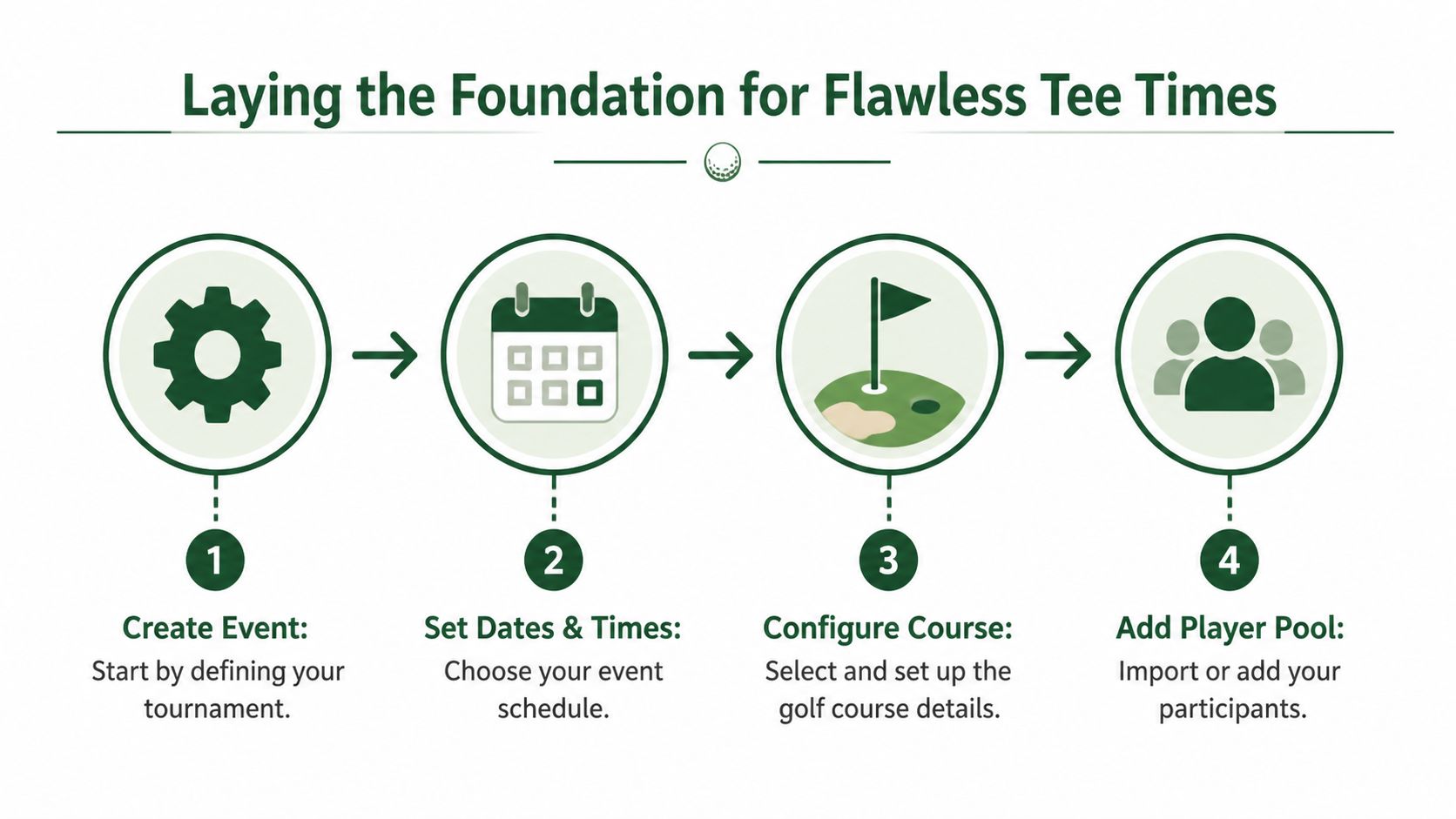
Good tournament days start with decisions that feel small when you're setting them up. Name, date, field size, start method, division structure. Get those right and the rest of the work stays mechanical. Get them wrong and every later adjustment becomes harder than it should be.
The biggest setup mistake is choosing a start format because it's familiar, not because it fits the course and the day. Big Met rewards practical planning, not default habits.
Start with the operating reality
Cleveland Metroparks sets the pace standard clearly. The target is 4.5 hours for 18 holes with a 5-minute maximum turn time, and those expectations should anchor your interval and format decisions, as shown in the Metroparks course policies and rules.
That means your setup isn't just about convenience. It's about whether your field can move inside the course's operating standard without creating friction for the shop, the starter, and the groups behind your event block.
Assigned tee times or shotgun start
For most public-course events at Big Met, I look at the decision this way:
Format | Best use | Main advantage | Main risk |
|---|---|---|---|
Assigned tee times | Outings, leagues, public-facing events | Fits naturally into a standard tee sheet | Weak spacing or poor pairings can create backups that last all day |
Shotgun start | Sponsor-heavy events, formats needing common finish | Everyone starts and finishes in a tighter event window | Harder to fit cleanly into public-course operations |
Assigned tee times usually win when public access matters. They let you control the flow with fewer moving parts, and staff can work within the normal cadence of the day. Shotgun starts can work, but only if the course and event logistics are aligned well in advance.
Build the event in the right order
A clean setup sequence saves you from rebuilding later. I keep it simple:
Create the event shell: Lock the event name, date, and check-in window first.
Choose the start style: Decide whether the course day supports assigned times or a coordinated start.
Set the course details: Confirm the tees and competition structure before adding players.
Load the player pool: Import the field only after the event rules are settled.
The fastest setup is the one you don't have to redo. Directors lose the most time when they add players before the event structure is fixed.
One more point matters at Big Met specifically. Tee selection and player fit aren't cosmetic choices. If you place too many players on tees that don't match the field, the day gets slower immediately. The cleanest tournament sheets come from realistic setup, not optimistic setup.
Mastering Pairings and Intervals in Live Tourney
Pairings are where tournament administration usually stops being tidy. A roster looks complete until real people enter the picture. Two coworkers want to ride together. A sponsor asks for a specific guest grouping. One twosome becomes a threesome, then somehow becomes a five-person problem you're expected to solve without changing anything else.
The only way to keep control is to treat pairings and intervals as one decision, not two separate tasks.
Pair the field with intent
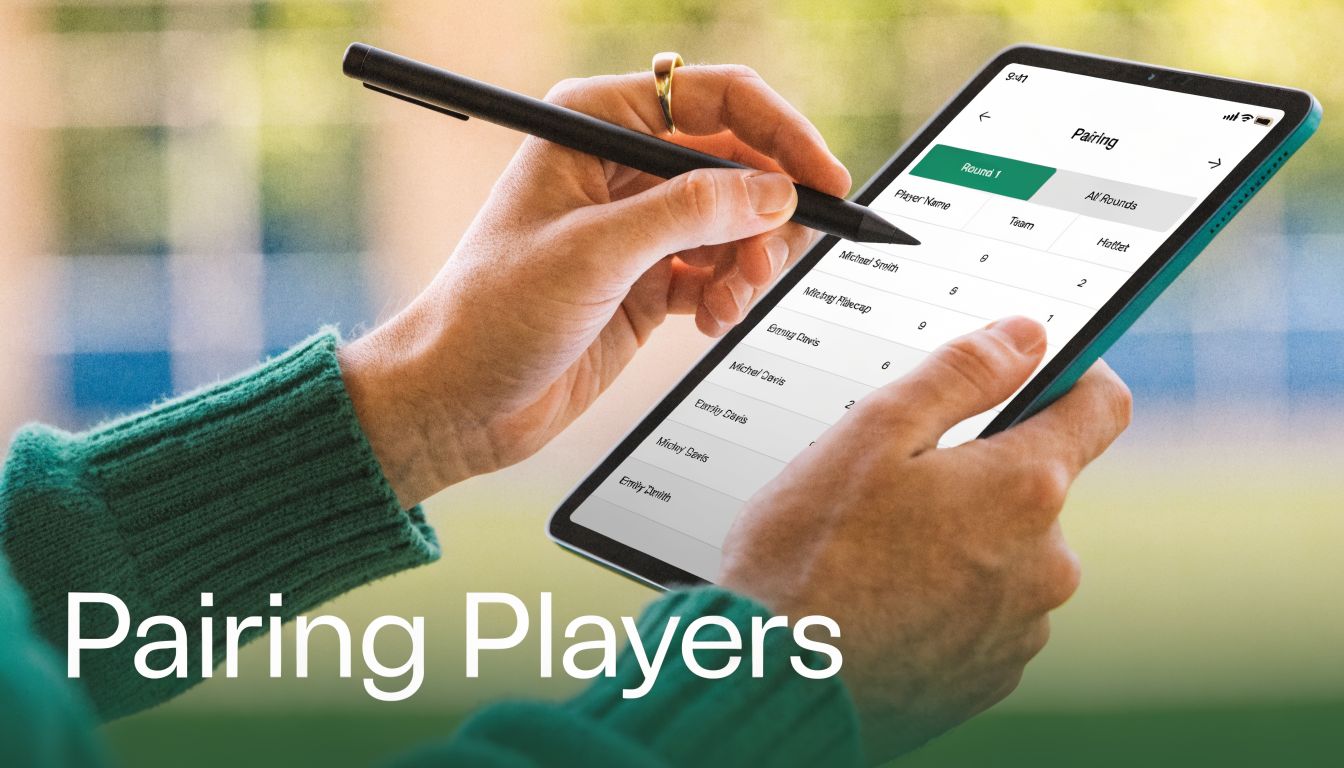
Most directors know how to make foursomes. Fewer know how to build a sheet that still works after the first late cancellation.
A stronger approach is to create pairings in layers:
Start with fixed relationships: Sponsors, family requests, and must-stay-together groups go in first.
Place your steady groups early: Reliable players help establish pace from the start.
Use flexible players to absorb changes: Leave room in the middle and lower half of the sheet for adjustments.
Keep one admin view current: If the latest pairing change lives only in a text or email, it isn't real yet.
Digital management invariably beats paper every time. Drag-and-drop editing is faster, but the value is that everyone can work from the same current version instead of arguing over whose copy is newest.
Intervals are your real control lever
Directors spend too much energy debating pairings and not enough on spacing. Intervals decide whether your event breathes or compresses.
At a public course, the wrong interval creates the worst kind of problem. The day looks organized on the page but falls apart in live play. A slightly slower group on the front side compounds into waits on every tee behind them.
What works best is context-based spacing. Use tighter intervals only when the field is predictable, the player ability is fairly even, and the check-in operation is disciplined. Open up the spacing when the event includes guests, newer players, sponsor groups, or lots of cart and scoring questions.
If you already know a group will need extra time, don't “hope pace improves.” Give that group a better position or add space around it.
Handle common pairing issues without rebuilding the sheet
A smart pairing workflow also accounts for the changes that always show up late:
Situation | Bad response | Better response |
|---|---|---|
Late player add | Rebuild half the sheet | Place them in the most flexible open spot |
Pairing request after publish | Manual edits across multiple files | Update one master sheet and republish |
Uneven skill distribution | Stack strong and weak groups randomly | Spread pace-sensitive groups across the day |
If you're also managing league rotations or recurring group logic, it helps to think like a scheduler instead of a shop clerk. The principles are similar to building a round robin schedule. Fairness, spacing, and repeatable structure matter more than last-minute improvisation.
Protecting Your Tee Sheet with Strategic Blocking
Once the pairings are built, the next job isn't cosmetic. It's protection.
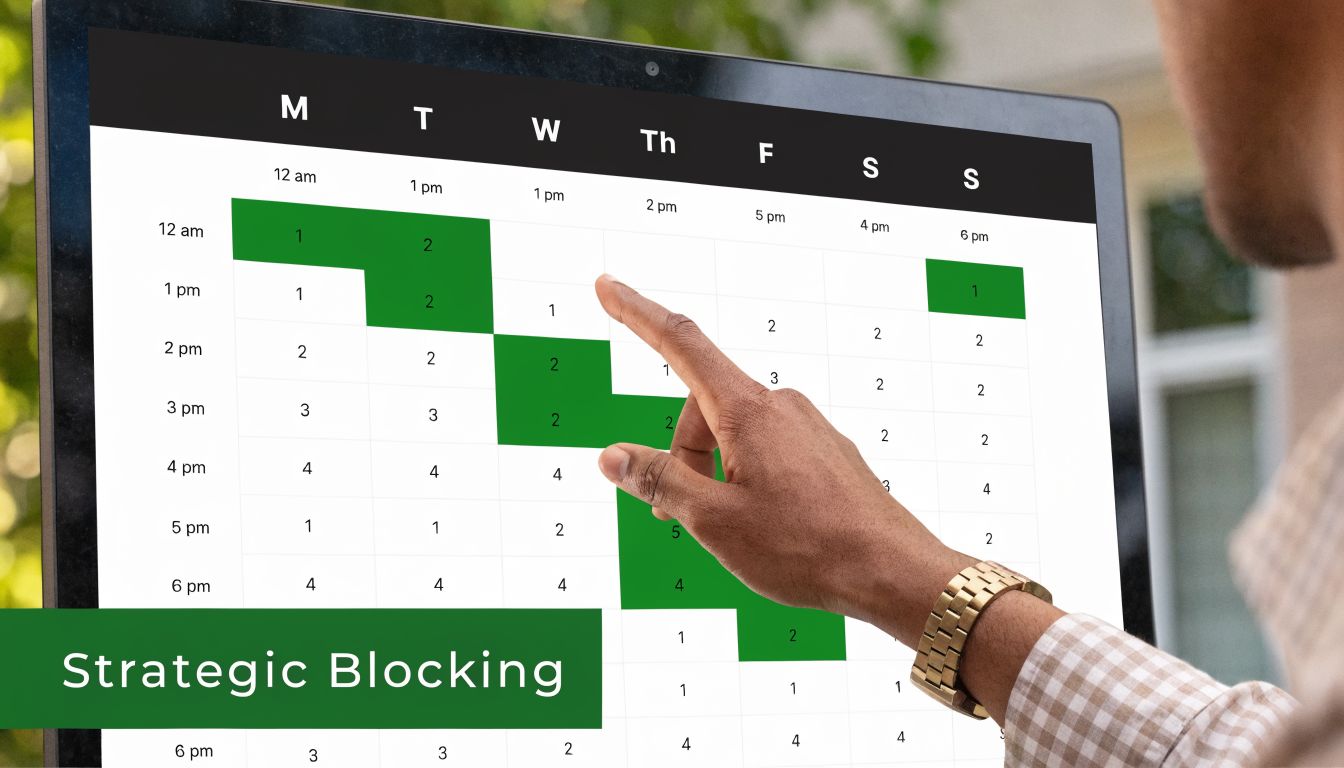
At a busy public course, a tournament block is only safe when it's visibly blocked, operationally understood, and treated as revenue that must not be resold by accident. That's where many directors get burned. They think the event is “on the sheet,” but the boundary between public play and tournament inventory is still too loose.
A tournament block is revenue, not just logistics
This is the shift that improves decision-making. Those tee times aren't placeholders. They're a protected inventory block with operational consequences if staff, public channels, or outside booking tools treat them as available.
That matters even more because projected 2025 benchmarks cited in the Big Met business context article say advanced systems that automate revenue optimization can increase utilization by 12-15%, while no-show losses in legacy systems can reach 40%. Even if your event isn't using every advanced revenue feature, the lesson is clear. Protected inventory performs better than loosely managed inventory.
What strategic blocking actually looks like
Good blocking is specific. It isn't “we need some times Saturday morning.”
Use this checklist instead:
Block the full competitive window: Include every tournament slot, not just the first and last visible times.
Add breathing room around the event: Buffer times reduce conflict at the front edge and back edge of the block.
Coordinate with the shop in writing: Staff should know exactly which times are protected and when they return to public inventory.
Define release rules early: If your field changes, decide who can release unused spots and when.
A lot of event damage happens at the seam. The tournament thinks a time is reserved. The public booking side thinks the same slot is open. Nobody notices until a customer is standing in the shop insisting they already booked it.
What doesn't work
Three habits create most of the avoidable blocking problems:
Soft holds without confirmation
If the event block isn't formalized, it will be challenged later.
No buffer at the edges
The first public group behind a slow tournament wave will feel every decision you made earlier.
Relying on memory
If one staff member “knows what's going on” but the rest of the operation can't see it, the block isn't protected.
The worst tee-sheet conflict is the one both sides think they own. By the time you discover it, you're already in customer-service mode.
Big met tee times go smoother when blocking is treated as part of tournament architecture, not an afterthought after pairings are finished.
Publishing Tee Times and Communicating with Players
A tee sheet isn't finished when the director is satisfied with it. It's finished when players, staff, and every booking touchpoint are all looking at the same version.
It is at this point that many events slide back into chaos. The schedule is built, but distribution is sloppy. Someone posts a PDF. Another person emails an older version. Players reply to the wrong thread. The shop fields avoidable calls all morning.
One published version wins
Big Met-style operations make this especially important because booking fragmentation is already part of the environment. Inventory can appear across platforms such as GolfNow, TeeOff, and the course's own channels, which creates a real risk of double-booking if tournament information isn't managed from a single source of truth, as noted in the GolfNow listing context for Big Met.
That means your communication process has to do two things at once:
tell players exactly where they belong
reinforce one official tournament version for staff and participants
If you miss either one, people start improvising.
What players actually need
Most participants don't want a detailed operations memo. They want clean answers.
Send only the information that changes behavior:
Tee time or starting assignment
Player pairing
Arrival expectation
Any event-specific instructions
Who to contact for a real change
That last point matters. If players don't know where changes go, they'll text whoever they know personally. Then updates spread unevenly and the published sheet loses authority.
A practical model is to publish one official page and push players to that page every time. If a swap happens, update the master version once and point everyone back to it. That's the same logic behind broader customer-facing systems built around integrated technology for customers. Consistency lowers confusion because people stop hunting for answers in multiple places.
Keep late changes contained
Last-minute edits aren't the problem. Uncontrolled late edits are.
Use a simple communication rule set:
Change type | Best handling method |
|---|---|
Player withdrawal | Update the master sheet once and notify only affected groups |
Pairing swap | Republish the current version and point all questions to that version |
General event reminder | Send one concise update, not a fresh copy-paste of the full sheet |
For organizers who want that process tied directly to scoring, pairings, and event administration, it helps to work from a dedicated golf tournament management software workflow instead of disconnected email and spreadsheet tools.
A published tee sheet should reduce calls, not trigger them. If players still need to ask where they stand, the communication wasn't finished.
From Stressful Scramble to Smooth Operation
The difference between a rough tournament morning and a smooth one usually isn't effort. It's whether the operation was built to survive normal disruption.
Big Met makes that obvious. A high-volume public course doesn't give you much room for vague planning, loose pairings, or casual communication. If your event structure is weak, the course exposes it immediately. If your setup is tight, the day feels surprisingly manageable.
What the better process changes
When directors tighten the workflow, the biggest improvements show up in everyday moments:
Fewer morning surprises: Players know where to go and when to arrive.
Less pro shop friction: Staff aren't guessing which times belong to the event.
Cleaner pace from the start: Pairings and spacing support the day instead of fighting it.
Better late-change control: One update replaces a chain of manual corrections.
The point isn't perfection. Public-course tournament work will always have moving parts. The point is that the work becomes controlled instead of reactive.
The real payoff
The old model depends on memory, patchwork files, and constant rescue work. The better model uses a clear setup sequence, disciplined pairings, protected inventory, and one authoritative communication path.
That's what turns big met tee times from a weekly headache into a repeatable operation.
You stop chasing errors. Staff stop translating conflicting versions. Players stop calling for basic answers. The event starts to feel professional because the system behind it is professional.
If you're running outings, leagues, or tournaments at a busy public course, that's the standard worth aiming for.
If you're ready to replace spreadsheets, scattered texts, and last-minute tee sheet chaos, Live Tourney gives you a faster way to run tournaments from setup through scoring. It’s built for organizers who need clean pairings, simple publishing, live updates, and less stress on event day.





