
Apr 16, 2026
Master golf events with our tournament bracket maker round robin guide. Learn scheduling, tie-breakers, and manage it effortlessly with Live Tourney.

If you're running a weekly league, member game, or club event, you've probably felt the same friction. The format sounds simple. Everyone plays everyone. Then the complex work starts. Pairings, byes, score entry, standings, tiebreaks, late withdrawals, and the steady stream of players asking who they face next.
That’s why the phrase tournament bracket maker round robin matters more than it used to. For golf professionals, this isn't just about generating a grid of matchups. It's about building a round robin event that fits your time window, respects handicaps, keeps players informed, and doesn’t turn the golf shop into a control room.
Why Round Robin is the Gold Standard for Fair Competition
Round robin remains the cleanest format when your goal is to identify the strongest performer across a group, not just the last one standing. Every player or team faces every other participant. Nobody gets knocked out early because of one bad opening match or an unlucky draw.
That matters in golf. If you're using a round robin for league standings, member match play pods, interclub pairings, or Ryder Cup style group stages, you want complete results. You want the head-to-head record. You want a ranking that feels earned.

Why players trust the format
Single elimination is efficient. It’s also unforgiving. A strong player can exit after one poor stretch, and some competitors never face each other at all.
Round robin solves that. Because everyone meets everyone, the standings have more depth. Head-to-head comparisons are available across the field, which makes final rankings and seeding decisions easier to defend in the shop and easier for players to accept.
Practical rule: Use round robin when fairness and full-field comparison matter more than speed.
The real trade-off is volume
The strength of round robin is also its operational burden. Match count climbs fast because every entrant plays all the others.
The scaling challenge is simple math. The total matches equal n(n-1)/2. That means a 6-team event requires 15 matches, while a 16-team event requires 120 matches, which is why larger round robins usually require software and careful scheduling rather than a spreadsheet and good intentions (Brackets Ninja on round robin math).
For golf professionals, that’s the line that matters. A small pod is easy. A full club competition with several groups, tee-time constraints, and live scoring expectations is not.
Why manual planning breaks down
The old workflow is familiar. Someone builds pairings in a spreadsheet. Someone else checks for duplicates. Then a player count changes, a foursome drops, or you realize one side of the course is overloaded while another group waits.
A modern tournament bracket maker round robin tool changes the job. You stop spending time on pairings logic and start focusing on event operations. That’s the core value. Not theory. Execution.
Understanding Round Robin Formats and Scheduling
If you understand the structure behind round robin scheduling, it becomes much easier to choose the right setup for your event. You don’t need to build the rotation by hand every time, but you do need to know what the software is doing and why.
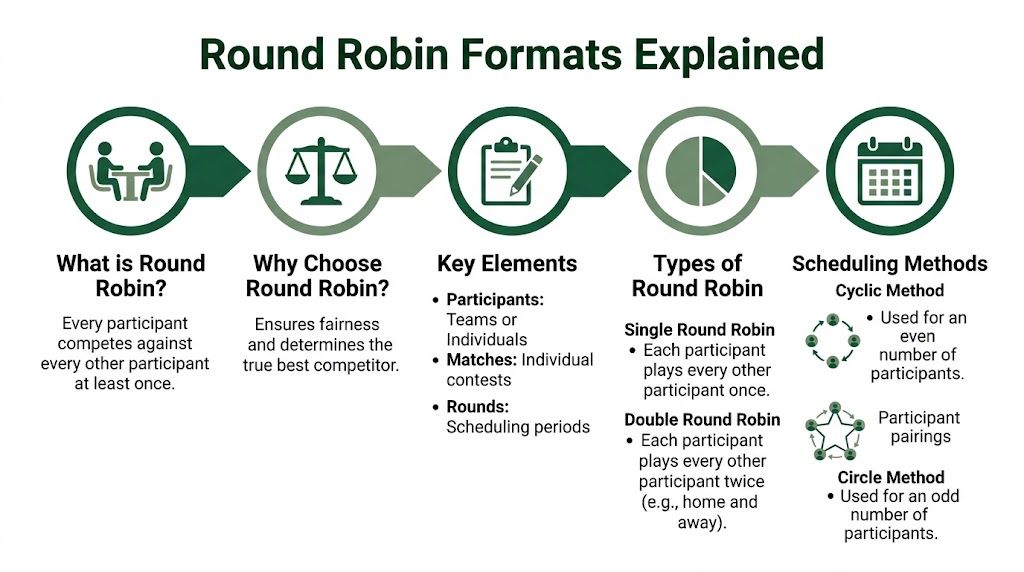
Single round robin and double round robin
A single round robin means each participant faces every other participant once. In most club and facility settings, this is the default because it keeps the schedule manageable and still gives you a fair set of results.
A double round robin means each pairing happens twice. That works better when you need more competitive depth, want to reduce the impact of one off-day, or are running a season-long format where repeat matches make sense.
For golf, the decision usually comes down to calendar and pace.
Use single round robin when you're fitting pod play into limited dates or a compact league window.
Use double round robin when the format stretches over a season and repeat matches add value.
Avoid forcing double round robin into a short schedule. It creates operational drag fast.
The rotation logic behind fair scheduling
Most round robin schedules rely on a rotation method. One participant stays fixed. The others rotate between rounds so that new pairings appear without duplication.
The underlying logic is straightforward. In a single round robin, total matches equal n × (n − 1) / 2. The same framework scales to double round robin by doubling that total. Examples in standard bracket generation include 4 teams producing 6 matches, 6 teams producing 15, and 8 teams producing 28.
A simple four-team rotation looks like this:
Round | Match 1 | Match 2 |
|---|---|---|
1 | A vs B | C vs D |
2 | A vs C | B vs D |
3 | A vs D | B vs C |
That rotation is why good software feels effortless. The tool isn’t guessing. It’s applying a balanced schedule pattern consistently.
If you want a practical view of how these schedules are built before you automate them, Live Tourney’s guide on how to create a round robin schedule is useful for seeing the mechanics in plain terms.
Balanced scheduling isn't only about who plays whom. It's also about making sure the event feels orderly to the people running it.
Handling odd numbers and byes correctly
Odd player counts are where manual planning usually starts to wobble. The clean solution is a bye. In each round, one participant sits out so the rest of the field stays balanced.
This matters more than people think. A bad bye setup creates uneven rest, confusion in match order, and complaints that are hard to dismiss later. A proper rotation assigns byes consistently and preserves fairness across the whole schedule.
For golf operators, byes can also become a useful administrative slot. A player not in action can post scores, help confirm pairings, warm up, or avoid bottlenecks on the first tee. The main point is that the bye should be planned, visible, and neutral, not improvised on the day.
Seeding still matters
Even in round robin, seeding has a role. Ranked placement helps avoid awkward opening pairings and can improve the flow of the event, especially when you’re feeding results into a knockout stage later.
If your competition uses handicap, prior standings, or qualifying scores to place players, do that upfront. Don’t wait until after the schedule is public. Once players see pairings, changes feel political even when they’re logical.
Building Your Round Robin Bracket in Minutes
The biggest improvement in tournament operations isn't theoretical. It’s the shift from building pairings manually to generating the whole structure from a clean roster. That’s where software saves time and removes avoidable mistakes.
Tournament organizers see a 3x improvement in setup speed when using automated tools like Live Tourney, which has powered over 10,000 golf events and driven 40% higher live scoring participation by reducing manual errors and delays (WareSport on round robin automation).
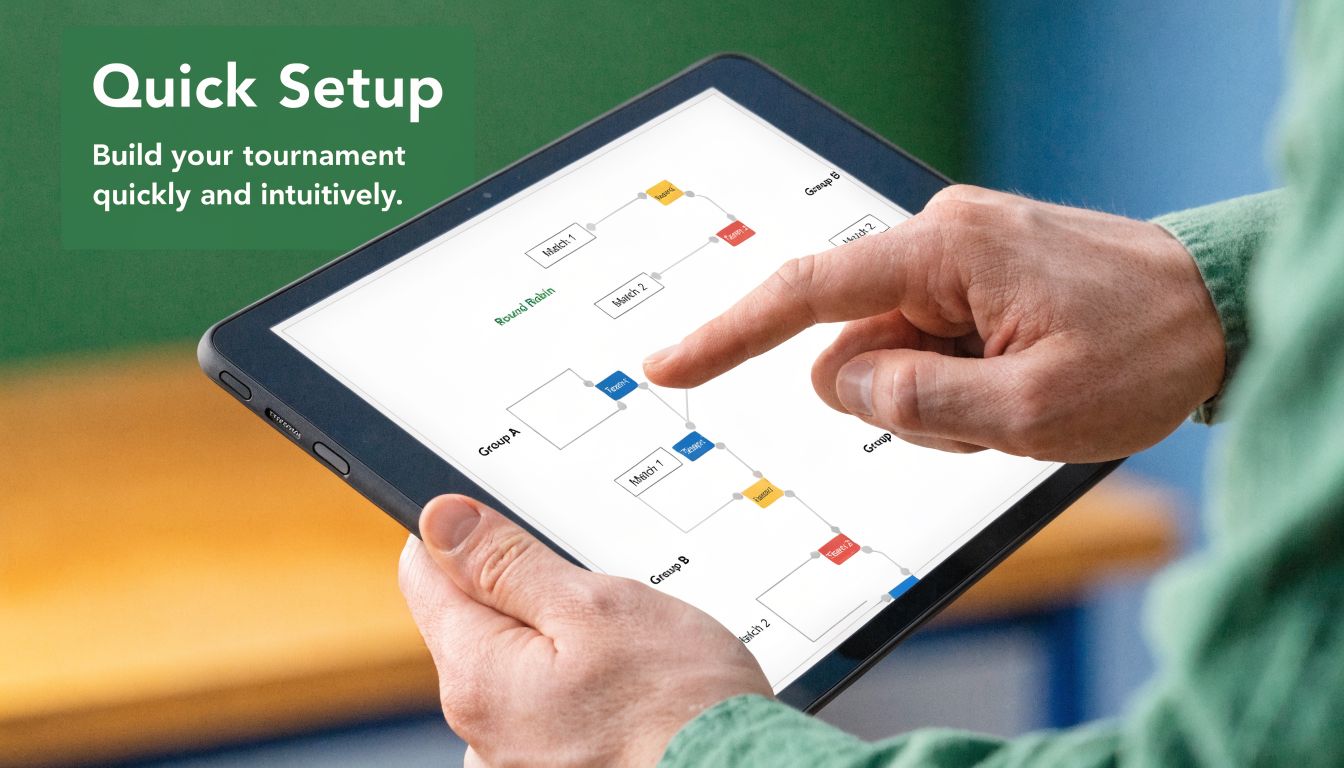
Start with the roster, not the bracket
Most setup problems begin when directors try to sketch the format before the field is clean. The better workflow is the opposite.
Finalize the player list first. Confirm names, divisions, pods, and any pairing restrictions.
Decide the competition unit. In golf that could be singles, pairs, teams, or mixed formats.
Choose single or double round robin based on your calendar and available tee sheet.
Set your scoring rules before publishing. That includes points, match outcome logic, and tiebreak order.
Once those decisions are in place, the bracket maker can do its job without forcing edits later.
What a fast setup process should include
A good tournament bracket maker round robin workflow should handle these jobs in one pass:
Roster upload: Bring in the field without retyping names one by one.
Automatic pairings: Generate every matchup without duplicates.
Bye management: Place odd-numbered participants into a balanced schedule.
Round structure: Show clear rounds so staff and players know the event flow.
Publishing tools: Push schedules where players can see them.
That’s the difference between software that generates a chart and software that supports an event.
A six-team example
A six-team round robin is a good model because it’s common and easy to visualize. Each round has three matches. Over the full schedule, everyone plays everyone once.
Round | Match 1 | Match 2 | Match 3 |
|---|---|---|---|
1 | A vs B | C vs D | E vs F |
2 | A vs C | B vs E | D vs F |
3 | A vs D | B vs F | C vs E |
4 | A vs E | B vs D | C vs F |
5 | A vs F | B vs C | D vs E |
Automation delivers significant benefits. The pairings appear instantly, the rounds are balanced, and the event team can spend its time on tee assignments, scorecards, communication, and pace control instead of repairing a schedule.
The golf-specific setup questions that matter
Golf events add operational detail that generic bracket makers often ignore. Before publishing the round robin, check these items:
Starting format: Shotgun, tee times, or hybrid.
Scoring basis: Gross, net, or both.
Group movement: Whether players stay in pods or rotate fully.
Communication method: Email, text, printed sheets, or live link.
Contingency plan: What happens if someone withdraws after round one.
Those decisions shape the event more than the bracket itself.
If the schedule is technically correct but awkward on the course, players will still experience it as a bad format.
Where the tool should disappear
The best software setup feels almost invisible. You upload the field, choose the round robin format, review the generated pairings, and publish. That’s the goal. Less time wrestling with structure, more time directing the event.
If you want a general walkthrough of bracket creation before adapting it to round robin golf play, this guide on how to create a tournament bracket is a practical reference point.
Managing Live Scores and Automatic Standings
Generic bracket software usually falls short for golf. It can generate pairings. It can show wins and losses. But once scores start coming in, golf asks for more than a simple bracket can handle.
Generic round robin tools often fail golf tournaments because they cannot process handicap-adjusted net scores in real time. They usually rely on a simple win/loss/tie scoring model, which misses the handicap layer that golf needs for fair competition (BracketMaker on round robin limits).
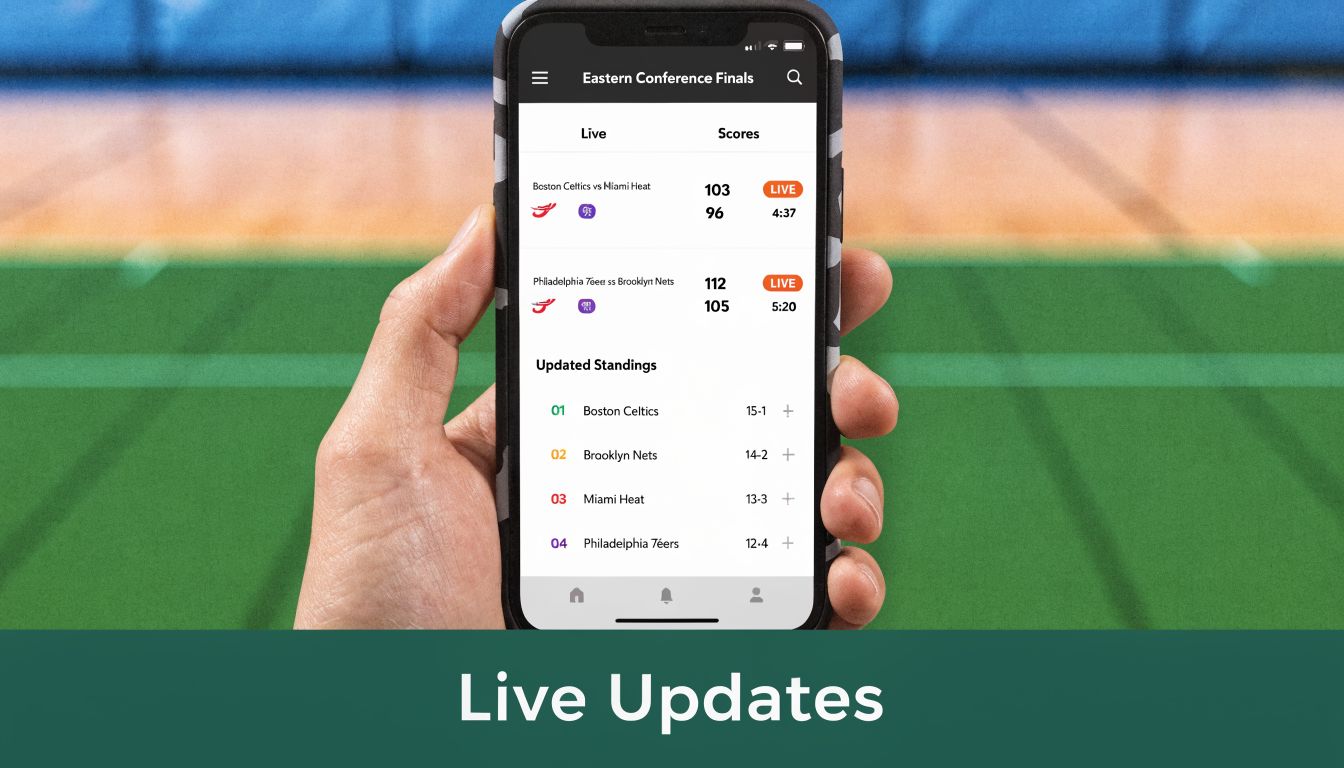
Why golf scoring changes the equation
In many sports, a round robin table is straightforward. Enter the result. Award points. Update the standings.
Golf often requires multiple views of the same competition:
Gross results
Net results
Match points
Side game outcomes
Pod or flight standings
That complexity is exactly why basic bracket generators stop being useful once play begins. They weren’t designed for handicap logic or for the reality that golfers care about more than one leaderboard at a time.
What live scoring should do
A modern golf scoring workflow should let players enter scores from their phones without forcing an app download, then update the visible standings as results come in. That keeps players engaged and reduces the volume of “where do I stand?” questions landing at the shop counter.
The operating standard is simple:
players can access scoring easily
staff can monitor entries without chasing paper
standings update as matches finish
tie scenarios are visible before the final hole, not debated after the awards
If you’re evaluating the operational side of that stack, this overview of golf tournament scoring software lays out the core functions to compare.
The moment scores update live, the tournament stops feeling manual. Players trust what they can see.
Tiebreakers need to be set before the first score posts
Round robin gives you more complete data than elimination play, but you still need a rulebook. Head-to-head is usually the first place to look. After that, many organizers use a secondary scoring measure tied to their competition format.
The mistake isn’t choosing one tiebreaker over another. The mistake is choosing it late.
Publish the tiebreak order before round one. Put it in the player notice, the rules sheet, and the scoring hub. If you wait until a tie happens, even a good decision feels improvised.
The handicap gap in generic tools
This is the problem most non-golf software still hasn’t solved cleanly. A generic bracket maker can tell you who beat whom. It usually can’t manage the nuance of handicap-adjusted competition as scores arrive and standings shift.
For golf professionals, that isn’t a small limitation. It goes to the core of fairness. If the field expects net competition, your event platform has to reflect that from the first posted score through the final leaderboard.
Avoiding Common Round Robin Management Pitfalls
Most round robin failures are predictable. They don't come from the concept. They come from operations that looked manageable on paper and became messy once the field showed up.
Organizer surveys show that 40% of manually run events run into issues like uneven venue allocation, and 25% of disputes come from poorly defined tiebreakers. The same benchmark says automated generators achieve 95% error-free brackets compared with 70% for manual spreadsheets (round robin organizer survey benchmarks).
Pitfall one is underestimating the load
A round robin can look compact until you map it onto real tee times, turnaround gaps, scoring windows, and player movement. In golf, the format has to work with the course, not just with the matchup list.
Do this instead:
Map pairings to actual capacity: Don’t approve the format until you’ve tested it against your tee sheet or shotgun structure.
Build buffer into the day: A clean schedule on paper can still fail if one delayed group backs up the entire rotation.
Think in operational rounds: Staff need to know when one segment ends and the next begins.
Pitfall two is vague tiebreak language
“Head-to-head first, then something else” isn’t a rule. It’s a future argument.
Write the tiebreak procedure exactly as it will be applied. Then publish it in every player-facing location. That one step prevents a remarkable amount of friction.
Clear rules feel strict before the event. They feel fair during the event.
Pitfall three is poor communication
Players don’t need every detail. They need the right detail at the right time.
A reliable round robin communication plan should answer four questions:
Question | What players need to know |
|---|---|
Who do I play? | Opponent, group, and round |
When do I play? | Start time or order of play |
How do I score? | Link, method, and rules |
How do I advance or place? | Standings logic and tiebreaks |
If one of those answers is missing, players start filling the gap with guesses.
Pitfall four is the late withdrawal
Manual brackets often unravel. One no-show can affect pairings, byes, and standings logic.
The fix is to define your replacement policy before the event. Decide whether you’ll substitute, award a default result, or rebalance only future rounds. The right answer depends on the competition, but the principle is the same. Don’t invent your policy after the player has already withdrawn.
Pitfall five is using a generic format for a golf problem
Golf brings its own moving parts. Handicaps, flights, side games, and pace on the course all affect how the event is experienced. A bracket that looks fine in a browser can still create confusion on the first tee if it wasn’t built around golf operations.
That’s why experienced tournament directors treat scheduling, scoring, and communication as one system. The round robin format is only one piece of the job.
Elevate Your Tournaments with Seamless Round Robin Events
Round robin gives golfers something players notice immediately. A fair structure. Everyone gets meaningful competition. The standings reflect the full group, not a lucky path through a bracket.
The catch is that fairness creates admin work. More pairings. More scheduling pressure. More scoring complexity. That’s why modern bracket tools matter. They’ve made advanced scheduling widely accessible, with support for up to 32+ teams, automatic byes for odd numbers, free tiers, and hybrid formats that don’t require expensive legacy systems (Brakto on modern round robin bracket makers).
What this means for golf facilities
For a course operator or head professional, the win isn't only cleaner pairings. It’s a smoother day in the golf shop.
You save staff time. You reduce avoidable schedule errors. Players get live visibility instead of waiting on printed updates. The event feels current, organized, and easier to trust.
That carries over into member retention, outing experience, and how your facility presents itself to outside groups. If you're packaging events for companies, sponsors, or client entertainment, the event experience and the promotion around it matter together. This guide to corporate golf day marketing is a useful companion if you're trying to connect tournament operations with a stronger business-facing event strategy.
The practical standard now
A tournament bracket maker round robin tool shouldn't just draw pairings. It should support the entire competitive workflow, from setup through scoring through final standings.
That’s the modern standard in golf. Not more complexity. Better control.
If you want to run round robin golf events without juggling spreadsheets, paper scorecards, and manual standings, take a look at Live Tourney. It gives courses and tournament directors a web-based way to build events, manage scoring, and keep players updated in real time without adding more work to the shop.





