
Jul 14, 2026
taylormade invitational, pebble beach golf, pro golf tournaments, live scoring, golf event management
Get your complete guide to the 2026 TaylorMade Invitational Pebble Beach. Discover history, format, players, and how to attend this legendary golf event.

The first thing a tournament director notices at Pebble Beach isn't the ocean. It's the pace of movement. Players, staff, carts, starters, scoring volunteers, and guests all need to hit their marks, because at a prestigious event, small delays become visible fast.
That's what makes the TaylorMade Invitational at Pebble Beach so interesting from an operator's perspective. Fans see names, views, and leaderboards. Organizers see format design, field management, scoring accuracy, and the challenge of making a complex event feel effortless.
What Is the TaylorMade Invitational at Pebble Beach
A tournament earns its reputation long before the first tee shot. At Pebble Beach, that starts with a format strong enough to justify the setting and clear enough that players, sponsors, volunteers, and guests all understand what kind of week they are walking into.
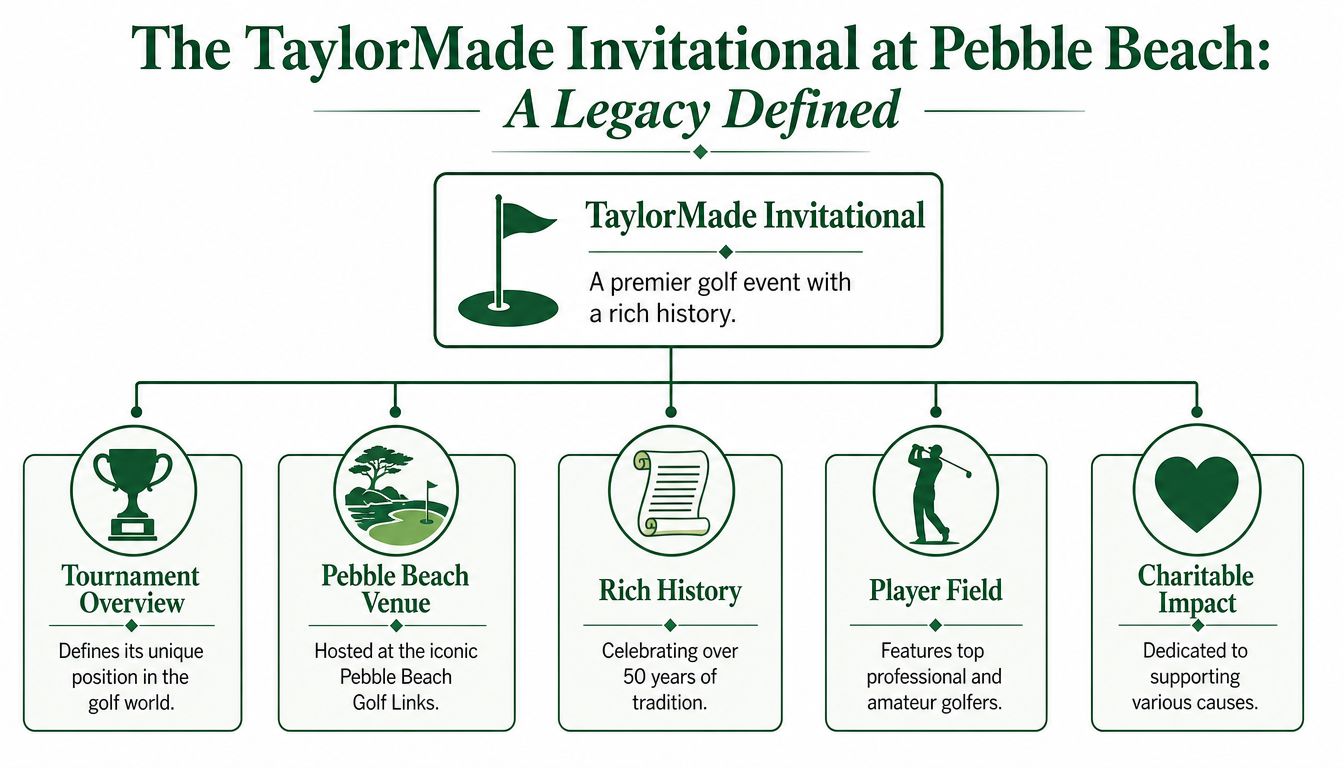
The TaylorMade Pebble Beach Invitational has that kind of identity. It began in 1972 and has built a long run as a respected professional event outside standard PGA Tour sanctioning. It also stands apart because the field draws from multiple tours, including the PGA Tour, LPGA Tour, PGA Tour Champions, and Korn Ferry Tour, a mix summarized in the TaylorMade Pebble Beach Invitational overview.
Why the format stands out
From an operations chair, the mixed field is the main story.
Running players from different tours in one competition sounds attractive on a poster. Running it on the ground is harder. Yardages have to be set with intent. Pace expectations have to be managed group by group. Scoring and pairings staff need rules that are simple enough to execute under pressure and fair enough that players accept them without debate.
That is why this event matters to tournament directors. The format asks organizers to balance competitive integrity with show value. If the setup is too uniform, one segment of the field is put at a disadvantage. If the setup gets too segmented, the event loses the shared-contest feel that makes it interesting in the first place.
Practical rule: Mixed-division invitationals work only when the course setup, scoring procedures, and player communications are aligned before tournament week starts.
The purse has also carried enough weight to keep the event relevant for professionals, with the tournament's reference history noting a $300,000 purse in 2019 and $60,000 to the winner. For operators, that matters less as a headline number than as a signal. Serious players show up when the format is credible, the venue means something, and the compensation matches the effort.
What organizers should notice
The strongest lesson here is not tradition by itself. It is control of position.
This tournament has stayed recognizable for years because the organizers did not try to make it everything at once. They kept a distinct lane: an invitational, a famous host site, and a field composition that few events can copy well. That clarity reduces friction across the whole operation, from invitations and sponsor sales to caddie logistics and scoring setup.
There are practical trade-offs behind that identity:
History helps, but it raises the standard. Returning players expect a polished week, not nostalgia.
A mixed field creates interest, but it increases setup complexity. Teeing grounds, competitive balance, and pace policies need more planning than a single-tour event.
Pebble Beach adds prestige, but it also shrinks your margin for error. Guests forgive very little at a venue with this profile.
A differentiated format attracts attention, but only if staff can explain it clearly. If players or spectators need a long rules lecture, the format is too muddy.
For clubs and event teams studying premium invitationals, that is the useful takeaway. Distinct identity beats generic prestige. A good companion example is this breakdown of how the Jones Cup Invitational builds stature through tradition and field design.
The operational upside is clear. When the concept is tight, modern tournament tools can improve execution without changing the character of the event. Better registration workflows, cleaner scoring controls, and tighter communication systems help protect the part that matters: making a complicated tournament feel well run.
2026 Event Format Dates and Notable Players
A November tournament week at Pebble Beach asks different questions than a spring or summer date. Staff are watching daylight, marine weather, guest transport, and pace from the first tee time onward. Players feel it too. Preparation shifts when the event sits late in the calendar and the venue still demands tournament-level focus.
The practical upside is calendar position. The TaylorMade Invitational is held annually in November at Pebble Beach Golf Links, according to the Pebble Beach event page. For organizers, that timing can create room in a crowded schedule, but it also puts more pressure on contingency planning and concise player communication.
How the competition is structured
From an operations chair, the format is the first thing to get right. This event runs both an individual competition and a team competition. That gives the week more commercial and competitive value, but it also adds real administration work. Pairings have to serve two leaderboards. Scoring staff need clean procedures for each result stream. Rules messaging has to stay simple enough that players and guests understand the stakes without a long explanation.
The structure works well because each layer serves a different purpose:
Element | Why it matters |
|---|---|
Individual competition | Keeps the professional result clear and credible |
Team competition | Adds partner value, player interaction, and another storyline |
November timing | Shapes scheduling, pace expectations, and contingency plans |
Pebble Beach setting | Increases player interest while reducing tolerance for operational mistakes |
That format discipline is a useful lesson for clubs building invitationals of their own. A dual competition can succeed, but only if registration, pairings, and live scoring are set up to support it from the start. Teams planning a similar mix can learn a lot from how golf pro-am tournaments are typically structured.
The kind of players it attracts
Field quality is never an accident. It comes from fit, timing, and a venue players want on their schedule.
Pebble Beach noted in its tournament materials that the event has featured names such as Armour, Cook, and Triplett. That matters less as a nostalgia point than as a field-building signal. Invitational players talk. If the golf is credible, the week runs on time, and the host site carries weight, strong names keep taking your call.
For tournament directors, that is the takeaway. Recruiting a respected field is not just about status. It is about giving players a format they understand, a schedule they can trust, and an experience polished enough that they will recommend the event to the next group you want to invite.
Exploring the Legendary Pebble Beach Golf Links
At Pebble Beach, the course starts running the tournament before the first group goes out. The address is simple enough. 1700 17-Mile Drive, Pebble Beach, CA 93953. The operational reality is not. A venue with this much history raises the standard for every detail, from shuttle timing to leaderboard visibility to where guests naturally stop and create congestion.
That pressure is part of the value. It is also part of the workload.

Where the course shapes the event
Pebble Beach gives a tournament instant credibility, but it also exposes weak planning fast. Signature holes pull spectators toward the coast, and that changes how an organizer has to place volunteers, hospitality access points, rope lines, and directional signage. If those choices are off by even a little, backups form in the exact places players and guests came to enjoy.
The routing matters here. On some courses, movement problems stay local. At Pebble, one crowded crossing or poorly timed cart movement can affect pace, viewing, and the feel of the entire day. Tournament teams have to map foot traffic as carefully as they map pairings.
That is one reason iconic venues reward operators who prepare early. The scenery handles the atmosphere. Staff still have to handle the flow.
The conditions that matter most
November on the Monterey coast asks for flexible operations. Wind shifts. Marine air changes club selection and comfort. A light mist can leave scoreboards, radios, and walking routes working differently than they did an hour earlier.
On a course like this, weather delays are only part of the problem. Small changes in conditions can slow scoring, stretch marshal response times, and push spectators into tighter spaces near the most photogenic holes.
From an organizer's standpoint, the fix is not guesswork. It is contingency planning. Staff assignments need overlap. Signage has to stay readable in dimmer light and damp air. Mobile scoring tools help because they reduce the lag that shows up when paper processes meet bad weather.
For readers comparing nearby resort layouts, this guide to the Links at Spanish Bay scorecard gives useful context on how differently the Monterey Peninsula can play from property to property.
Pebble Beach remains the centerpiece because the course itself creates consequence. Players feel it on the tee. Guests feel it walking the property. Organizers feel it in every decision that has to look polished under pressure.
How to Watch and Attend the Invitational
If you're planning to attend, start with the basics. The event is held in November at Pebble Beach Golf Links, so lodging, transportation, and daily timing matter more than they do at a local club event. Monterey Peninsula travel gets tighter when golf visitors and regular resort traffic overlap, and the 17-Mile Drive approach can slow down at the exact times spectators prefer to arrive.
The smartest move is to treat attendance like a premium golf trip, not a casual drop-in. Book rooms early, give yourself extra arrival time, and assume that the most scenic route may not be the fastest route on tournament mornings.
What to check before you go
Public event pages are the first place to confirm the current access details, schedules, and any attendance guidance. That's especially important because invitational-style events don't always follow the same public-facing ticket model as major tour stops.
Before leaving for the course, verify:
Access details: Check the official Pebble Beach event listing for current attendance information and schedule guidance.
Arrival plan: Build in extra time for entry through the Pebble Beach area.
Mobile readiness: Keep confirmations, maps, and event info easy to access on your phone.
Weather gear: November on the coast can shift from comfortable to damp quickly.
Following from home
If you can't attend in person, the best approach is to monitor official event updates and resort communications close to tournament week. Invitational events don't always have the same broad broadcast footprint as a major championship, so flexibility helps. Look for official postings, leaderboard information, and social coverage tied to the host venue and tournament partners.
The other practical point is expectation-setting. This event's appeal is heavily tied to place. Watching from home works best when you follow it as a prestige invitational at Pebble Beach, not as a fully packaged tour broadcast product.
Travel realities around Pebble Beach
Staying nearby improves the experience. It reduces stress, gives you more freedom to arrive early, and lets you move with the rhythm of the event instead of fighting it.
A sound attendee plan usually looks like this:
Stay close if possible. The less you depend on a long morning drive, the better.
Arrive earlier than you think you need to. Prestigious venues create their own congestion.
Dress for movement. You'll walk more than you expect.
Keep the day flexible. Weather and crowd flow can change where the best viewing is.
The people who enjoy Pebble Beach most are usually the ones who don't overpack the day. They pick a few priority viewing spots, allow time to move, and let the course do the rest.
Practical Tips for Attendees and Amateurs
Pebble Beach in November rewards practical people. If you dress for postcard weather, you'll end up buying an extra layer or wishing you had one. If you wear shoes that only work on dry pavement, the walk gets longer every hour.
That applies to amateurs too. A prestigious invitational setting can make people prepare like they're going to a gala instead of a golf event. Comfort and movement matter more than appearance once the round starts.
What spectators should do differently
The best spectators usually make three good decisions before the first tee time.
Layer up: Coastal mornings can feel very different from midday, and conditions can turn again late.
Walk with intention: Don't chase every group. Pick a few holes or zones and stay long enough to understand the rhythm.
Respect quiet areas: At a professional event, basic etiquette still matters. Phones, movement during shots, and crowd bunching all affect the experience.
A lot of people make the mistake of standing only where the famous photo is. Better viewing often comes from a spot that lets you see decision-making, not just scenery.
Course-side advice: The best vantage point isn't always the most iconic one. It's the place where you can watch an entire hole unfold.
What amateur participants should expect
Playing alongside professionals changes the day. Pace feels sharper. Decision-making is quicker. The atmosphere is still friendly, but it has a different edge than a member-guest or corporate outing.
Amateurs usually get the most from the experience when they simplify everything:
Keep routines short: Be ready when it's your turn.
Bring a conservative game plan: Prestigious venues punish emotional golf.
Ask logistics questions early: Know where to go, when to report, and how scoring will work.
Treat the pro as a partner, not a celebrity: Good pro-am experiences come from smooth group dynamics.
Small habits that improve the day
There are a few habits I wish more guests and amateurs adopted at high-end invitationals:
Habit | Why it works |
|---|---|
Carry less | Extra gear becomes dead weight over a long day |
Check the map once, not five times | Course flow is easier when you commit to a route |
Eat before you're hungry | Coastal events can run longer than expected |
Stay patient near signature holes | Congestion is part of the deal at famous venues |
People remember Pebble Beach for the setting, but they enjoy it more when they handle it like a working golf environment. That's the difference between visiting a legendary course and moving through it well.
The Organizer's Playbook for a Premier Invitational
Essential work at a premier invitational starts before the first tee time is posted. By the time players arrive at Pebble Beach, the tournament office has already made a hundred small decisions that determine whether the day feels controlled or chaotic. Registration rules, pairing logic, pace expectations, volunteer assignments, shuttle timing, scoring checks, sponsor requests. None of it is glamorous, and all of it shows.
That pressure gets sharper at a venue with Pebble's profile. Players expect first-class treatment. Sponsors expect visibility. Staff has less room to recover from a mistake because every delay is more visible at a high-prestige event.

Where premium events get difficult
An invitational of this caliber usually breaks down in the same few places. The field may look polished from the outside, but operations get strained when too many tasks still rely on manual handoffs.
The pressure points are predictable:
Registration and roster control: Late changes happen. If updates live in inboxes and spreadsheets, staff spends the morning reconciling versions instead of serving players.
Multi-format scoring: Invitationals often mix individual and team components. That creates more opportunities for posting errors, disputes, and delays on the board.
Segmented communication: Players, guests, sponsors, volunteers, and media do not need the same message. Sending one blanket update usually creates follow-up questions.
Weather and timing adjustments: Coastal golf can change a round plan quickly. A system that cannot push updates fast turns a minor adjustment into a check-in problem.
I have seen good events lose their polish over details like these. Not because the staff lacked experience, but because the workflow forced them to patch together answers in real time.
What modern operators should choose
Tournament directors do not need more software. They need fewer points of failure.
That usually means choosing tools that reduce setup time, simplify scoring, and make communication easier for people who are not tech-focused. Modern platforms like Live Tourney report 3x faster setup and 40% higher live scoring participation based on internal data. Those numbers matter because they address the two places invitationals burn staff hours fastest. Pre-event configuration and on-course score entry.
If score entry is clumsy, the golf shop becomes a help desk. If pairings take too long to publish, every stakeholder starts texting for updates. A link-based, app-free system is often the better fit for invitationals because it removes one of the biggest sources of friction. Players and guests can access what they need on the device already in their pocket, and staff spends less time explaining the tool.
The broader event standard
Well-run invitationals are judged on more than the leaderboard. Printed materials need to be clean. Signage has to direct people without confusion. Awards should match the stature of the event. Sponsor elements need to feel integrated instead of added at the last minute. For teams refining that part of the operation, this guide for event and HR managers is a useful reference on recognition items and presentation standards.
That is the lesson organizers can take from an event like the TaylorMade Invitational at Pebble Beach. Prestige is built backstage. Clear systems, faster scoring workflows, and better communication do more than help staff. They shape how players, partners, and guests judge the entire tournament.
Conclusion Elevate Your Next Golf Event
The TaylorMade Invitational at Pebble Beach leaves a strong impression long before the trophy presentation. The field matters. The venue matters. From an operator's standpoint, though, the event earns its reputation through the details that guests never need to think about.
That is the main takeaway for tournament directors, club teams, and resort operators.
Prestige comes from control. Pairings go out on time. Scoring stays accurate. Players know where to be and when to move. Sponsors see their presence handled with care. Staff can solve real issues on site instead of chasing preventable ones. That is how an invitational feels polished, even for people who never see the work behind it.
You do not need Pebble Beach to apply that standard. A clear format, dependable scoring, clean communication, and tools that cut staff friction will raise the quality of any pro-am, member-guest, or invitational. The best events are built in the days and weeks before the first tee time, not just in the final results.
If you're running invitationals, pro-ams, leagues, or member events and want a cleaner way to handle registration, live scoring, pairings, and player communication, Live Tourney is worth a close look. It gives tournament staff a modern, app-free system that works on any device and helps events feel more professional from setup through the final leaderboard.





