
Apr 3, 2026
Find the perfect scoreboard for golf tournament success in 2026. Explore options, features, and tips to make your event a hole-in-one. Get insights here!

From a classic handwritten board to a real-time leaderboard on every player’s phone, the scoreboard for a golf tournament can take many forms. The right one for you comes down to your event's budget, size, and the kind of experience you want to create. But these days, web-based systems are offering the most bang for your buck.
Choosing the Right Golf Tournament Scoreboard
Picking the right scoreboard is one of the first, and most important, decisions you'll make. It’s not just a detail; it sets the entire tone for your event. This choice impacts everything from player excitement to how much work your staff has on tournament day.
Think of it as the nerve center for the competition. It’s what builds the drama, shows everyone where they stand, and ultimately defines that post-round buzz in the clubhouse.
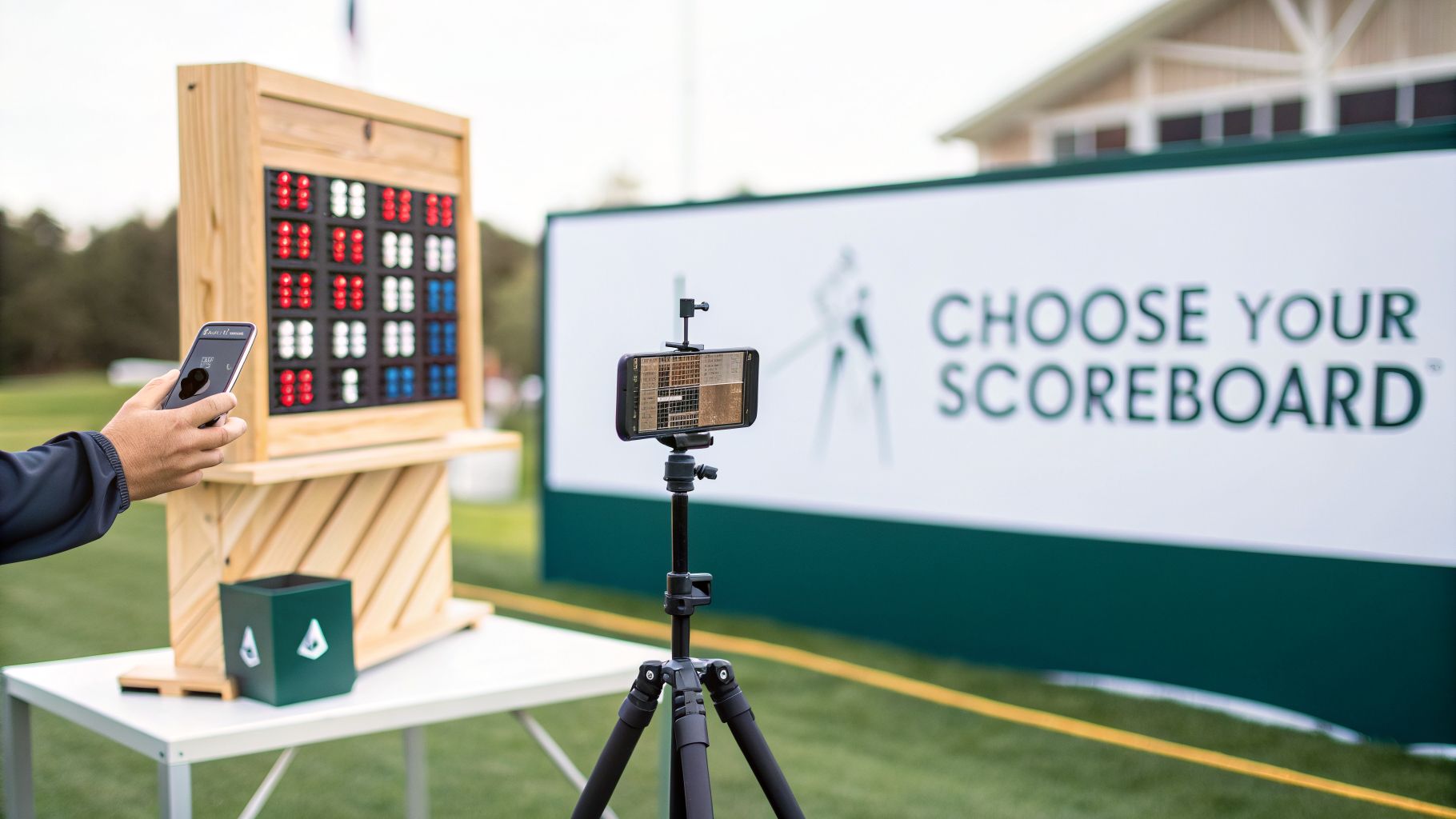
Are you aiming for the nostalgic feel of a club championship, where a classic, hand-updated board just feels right? Or is this a high-stakes corporate outing where you need the “wow” factor of big digital screens? The scoreboard is a huge part of that experience.
Understanding Your Core Options
To figure out what’s best, you first need to know what’s out there. Each option comes with its own set of pros and cons, and they all fit different types of tournaments.
You're really looking at three main choices:
Classic Physical Leaderboards: These are the traditional, manually updated calligraphy boards. They have a timeless appeal but demand a lot of hands-on work from your staff.
On-Course Digital Displays: Think big LED screens or TVs set up in the clubhouse or near the first tee. They’re highly visible and impressive but come with a much bigger price tag and more setup headaches.
Web-Based Live Scoring: The modern approach. This uses software to push a real-time leaderboard directly to players' phones and any screen with a web browser. It’s convenient, engaging, and requires almost no hardware.
A great scoreboard isn't just about showing scores—it's a feature of the event. It makes the day more exciting, feels more professional, and gets everyone more involved.
For a charity event, for example, the ability to show sponsor logos and give everyone instant updates on their phone might be the top priority. But for a prestigious member-guest, the main goal might be the status symbol of a giant digital leaderboard in the dining room.
This guide will walk you through the pros and cons of each, so you can find the perfect fit for your tournament.
Let's take a step back and think about how we got here. To really get why a modern golf tournament scoreboard is so important, you have to understand just how much of a headache scoring used to be.
For decades, the whole process was a logistical nightmare of paper, pencils, and people running around a golf course. It was a slow, painstaking system that was always a few steps behind the actual play, leaving everyone in suspense.
Think about the very first Open Championship back in 1860. There were no live updates or digital screens—just handwritten sheets of paper. The fundamental challenge was the same as it is today: getting accurate scores to anxious players and spectators. The journey from Willie Park Snr's winning 174 to the instant leaderboards we have now is a story of a lot of trial and error.
From Paper to Pixels
The first big leap forward was moving from those small sheets to huge, physical leaderboards. These were often staffed by a team of volunteers who would manually post scores as runners brought them in from the course.
While it was a more visible system, it was still a massive effort. It required a ton of coordination and a whole lot of patience from everyone involved. This manual process was the industry standard for more than a hundred years. The main goal was simply to get the final scores right—engagement during the round was a complete afterthought because the technology just wasn't there.
The evolution of scoring isn't just about technology; it's about a fundamental shift in the tournament experience. What was once a slow, post-round administrative task is now a live, interactive feature that drives excitement from the first tee to the final putt.
The Digital Transformation
Then, digital technology arrived and changed everything. Early electronic boards were an improvement, but the real game-changer was the internet and the phone in everyone's pocket. Suddenly, scoring went from being a logistics problem to a powerful engagement tool.
In fact, we've seen a 40% increase in live scoring participation when courses switch to real-time digital solutions. It shows how tournament management has grown from a simple administrative chore into something that can genuinely improve the player experience. You can dig into more historical golf statistics and records to see just how far things have come.
This shift means a modern scoreboard is no longer just for showing who won. It's a living part of the event itself—building drama, showcasing sponsors, and connecting everyone involved, whether they're on the course or following along from home. This is the foundation for all the great options you have available today.
Comparing Golf Scoreboard Options Head-to-Head
When you're picking a scoreboard for your golf tournament, you’re really weighing tradition against technology. It’s a choice that directly impacts your budget, setup time, and—most importantly—the player experience. Your main options boil down to three: the classic physical board, on-course digital displays, and modern web-based live scoring.
Let's start with the old school. A big physical LED board in the clubhouse has a certain gravitas. It feels professional and creates a central hub for the post-round hangout. But that professional feel comes with a hefty price tag and zero flexibility. Once it’s installed, it’s static. It’s a statement piece, but it’s a one-trick pony.
On-course kiosks are a step up, offering digital updates at key spots like the turn or the first tee. They look impressive, no doubt. The downside? They can create bottlenecks as groups huddle around to check scores. Plus, they need reliable power and Wi-Fi, which can be a real headache to arrange across the sprawling landscape of a golf course.
The Rise of Web-Based Flexibility
This is where web-based systems come in and change the game entirely.
Their biggest advantage is the sheer flexibility and engagement they offer. Platforms like Live Tourney push real-time updates straight to players' phones—no app download required. That last part is huge. Removing the friction of an app install means more people will actually use it.
This approach also opens up the tournament to a wider audience. Friends, family, and members back at the clubhouse can follow the action from anywhere, turning a local event into a more dynamic and watchable experience.
The evolution is pretty simple when you look at it. We’ve gone from scribbling on paper to a live leaderboard in every pocket.
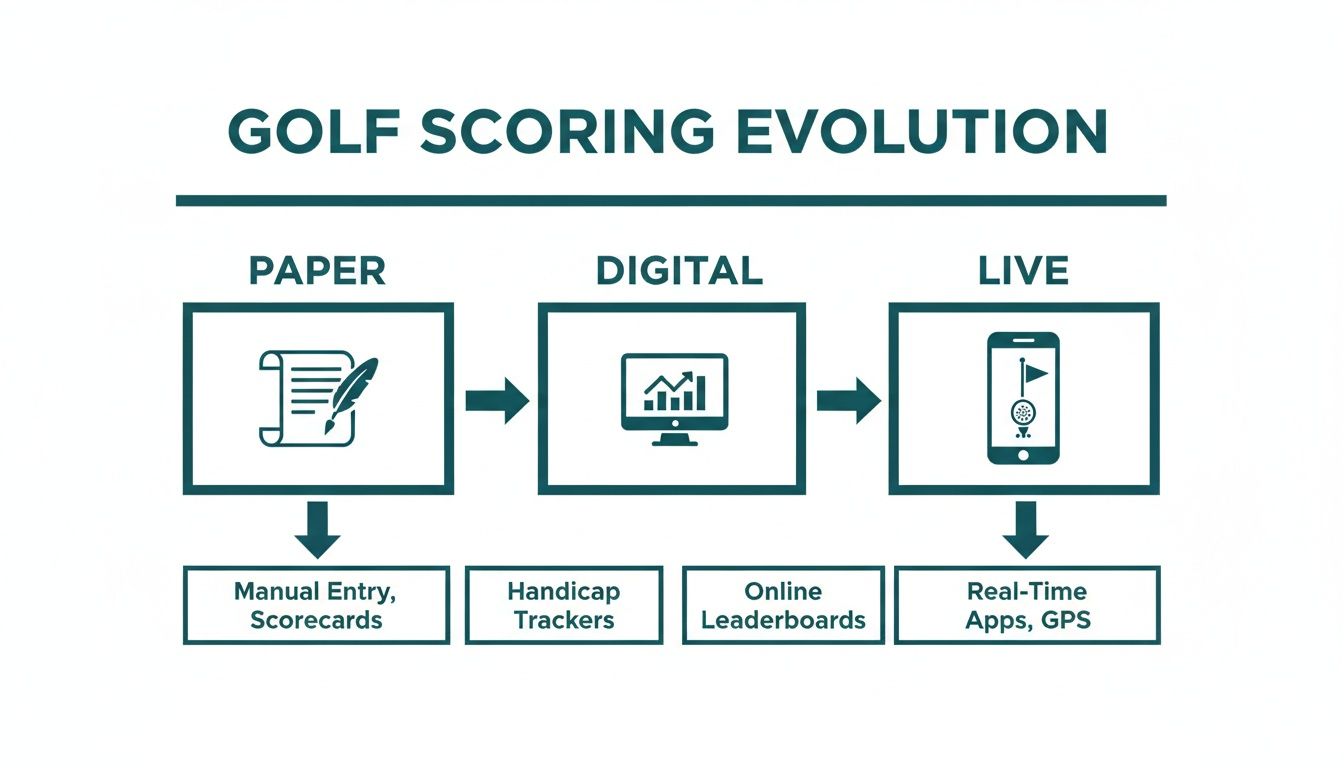
The scoreboard is no longer a fixed object. It has moved from one central location into the hands of every single player and spectator.
Direct Comparison of Scoreboard Types
So, how do you make the right call? Seeing the options laid out side-by-side really helps. The best choice depends on balancing your budget with the experience you want to create. If you're looking for a deeper dive into picking the right platform, our guide on the best golf tournament software is a great place to start.
For now, here’s a quick breakdown of how the three main scoreboard types stack up across the factors that matter most to any tournament organizer.
Golf Tournament Scoreboard Comparison
This table gives you a clear, at-a-glance look at what you get—and what you give up—with each type of scoreboard.
Feature | Physical Scoreboard (Manual/LED) | On-Course Kiosks/Displays | Web-Based Live Scoring |
|---|---|---|---|
Upfront Cost | High (for LED); Low (for manual) | High | Very Low (often subscription-based) |
Setup Complexity | Moderate to High (requires power, mounting) | High (power, weatherproofing, connectivity) | Low (just share a link or QR code) |
Player Engagement | Low (only visible in one location) | Medium (visible at specific points) | High (real-time updates on personal devices) |
Staffing Needs | High (for manual updates); Low (for LED) | Low to Medium (initial setup and monitoring) | Very Low (scores entered by players) |
Sponsor Value | Limited (fixed logos) | Good (digital ads on a loop) | Excellent (dynamic logos on all screens) |
Flexibility | Very Low | Low | High (updates and changes are instant) |
When you look at it this way, the value of web-based systems becomes crystal clear. Their low cost and minimal setup make professional-level scoring accessible for any event, from a charity scramble to a serious club championship.
Ultimately, this shifts your focus away from managing hardware and toward what really matters: creating a better, more engaging experience for your players.
Must-Have Features in a Modern Scoring System
Let's be honest, not all digital scoreboards are built the same. When you're picking one for your tournament, you aren't just buying a leaderboard. You're investing in a system that should make your entire event run smoother for everyone involved.
The right platform goes way beyond just tracking scores and becomes the central hub for players and your staff.
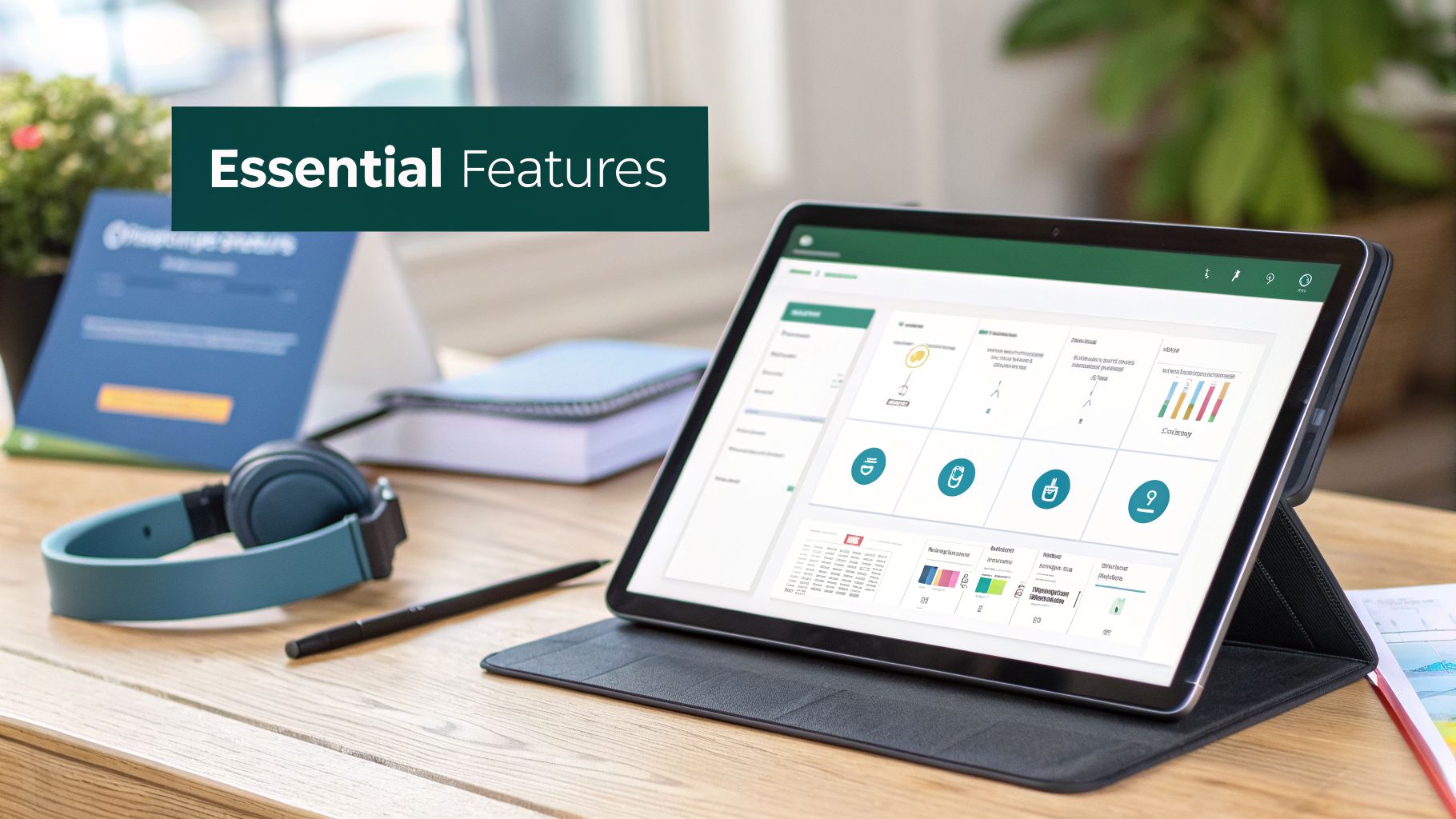
The single most important feature? Real-time, app-free scoring. Forcing players to download an app is a huge barrier that kills participation. A web-based system that works from a simple link or QR code means everyone can jump in, enter scores, and follow the action without any hassle.
This is the key to creating a fun, competitive atmosphere where players are constantly checking the standings. It also means scores are tallied automatically, saving your team from hours of manual work after the round.
Core Scoring and Format Support
A good system has to be flexible enough to handle all the different ways people play golf. You need a platform that can manage a variety of tournament formats, from a simple individual Stroke Play event to more complex team games.
At a minimum, it should support:
Scramble: The go-to format for almost every charity and corporate outing.
Best Ball: Perfect for team competitions like member-guests.
Ryder Cup-style Match Play: A must for club rivalries and special events.
Stableford and Quota: Points-based games that are a fun change of pace.
The best systems take it a step further by calculating side games for you. Look for features like automated skins, closest-to-the-pin contests, and long drive winners built right into the leaderboard. This adds extra layers of fun without adding any work for your staff.
With pro tournament purses now topping $9 million, the need for perfect, real-time scoring is more critical than ever. The same goes for your club championship or charity event—a modern scoreboard prevents the kind of errors that can mess up prizes and final standings.
Essential Back-Office and Communication Tools
A truly great scoreboard system does more than just what you see on the course. It should also have powerful tools in the back end that save your staff a ton of prep time. The ability to print professional-looking cart signs, scorecards, and tee sheets directly from the software is a huge time-saver.
You also want a system that handles registration and payments smoothly, so you don't have to juggle multiple platforms. And don't forget built-in communication tools that let you email or text players with updates. To see how all these pieces fit together, check out our guide on choosing the right golf tournament scoring software.
Setting Up for a Seamless Event Day
Picking the right scoreboard is one thing, but a smooth event day is what really makes a tournament feel professional. A great system is useless if the setup is a mess. The good news is, with a little prep, you can turn hours of old-school manual work into just a few minutes of clicking.
It's all about having a plan. We’ll break down the setup into what you can do before the event and what to handle on the day of. This way, you and your team will feel confident and in control.
Pre-Tournament Preparation Checklist
A successful tournament day starts long before the first golfer tees off. Getting your digital house in order ahead of time is the key to a calm, organized check-in. Most of the heavy lifting can be knocked out days or even weeks in advance.
Here’s what you should focus on:
Upload Player Rosters: Just import your player list from a spreadsheet (CSV). Any decent system will automatically create player profiles for you, saving you from having to type everything in by hand.
Prepare Printed Materials: Use your software’s built-in tools to generate and print professional cart signs, tee sheets, and bag tags. This gives everything a consistent, branded look.
Finalize Tournament Details: Lock in your format, handicaps, and any side games like skins or closest-to-the-pin. Getting this done early prevents last-minute scrambling and confusion.
Think of this as your digital "mise en place." Just like a chef preps all the ingredients before service, you’re getting all your tournament data organized so that on event day, everything is ready to go.
Logistics on the Day of the Event
With all your prep work done, tournament day is all about execution. Your main goal is to make it dead simple for players to get involved with live scoring. For a super smooth day-of experience, platforms like the lunabloomai Starter App can help pull everything together.
Here are your key actions:
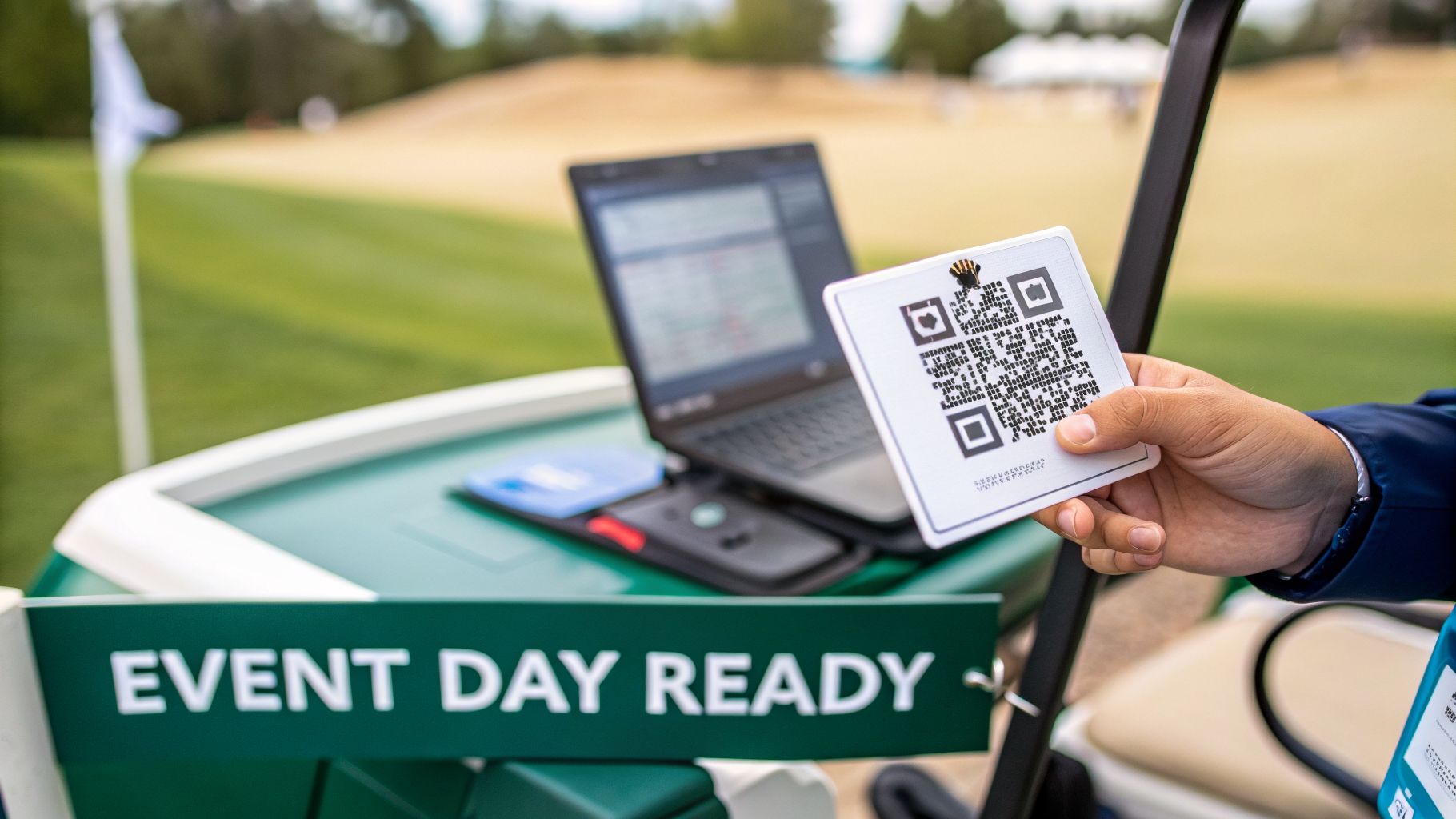
Share the Scoring Link: The absolute easiest way to do this is with a QR code. Print it big and bold on your cart signs and scorecards. Players just scan it with their phone, and they’re in—no app download required.
Display the Leaderboard: Get the live leaderboard up on TVs around the clubhouse, in the bar, and at the pro shop. All you need is a smart TV with a web browser or a laptop connected with an HDMI cable. It’s that easy.
Manage Score Entry: Even though players can enter their own scores, have a volunteer or staff member on standby. They can help anyone who’s struggling or enter scores from paper cards if needed. To see how this works across different formats, check out our guide on scoring in a golf tournament.
Train Your Team: Before check-in starts, do a quick huddle with your staff. Make sure they know how to answer common questions and where to send players for help. A confident team makes for a relaxed atmosphere.
Best Practices for Scoring and Display
A scoreboard isn't just a place to dump numbers—it’s the heartbeat of your tournament. Get it right, and you create an energy that makes the entire day more memorable. Get it wrong, and it’s just a glorified spreadsheet.
The easiest way to build that energy is to put the live leaderboard everywhere. Get it on the TVs in the clubhouse bar. Put it on a big screen near the scoring area. When players see their names moving up and down in real-time, the competitive spirit kicks in. It turns a passive round of golf into a dynamic event.
Ensuring Accuracy and Clear Presentation
While the fun stuff is great, nothing matters more than getting the scores right. Scoring integrity is non-negotiable.
So much of the post-round headache comes from simple typos when entering scores. The best way to fix this is to put the responsibility back on the players. Use a system that lets them check and sign off on their scores right from their phones before anything is made final. This one step will save you from countless arguments later.
How you show the scores is just as important. A cluttered leaderboard is a confusing leaderboard. Keep it clean.
A modern scoreboard should do more than just show raw scores. By clearly presenting different formats and side games, you create more winners and more moments of recognition, making the event more memorable for everyone involved.
For example, a simple toggle between Gross and Net scores is a game-changer for handicap events. Players want to see exactly where they stand in both competitions, and you should make it easy for them.
Showcase More Than Just the Leaders
To keep every single player hooked, your scoreboard needs to celebrate more than just the race for first place. This is where displaying side games in real-time really shines.
Live Skins: Show who currently has a skin on each hole. This adds a whole other layer of drama to the round.
Closest-to-the-Pin: As soon as a new best shot is recorded, update the leaderboard. It gives everyone instant feedback.
Long Drive: Put the current leader’s name and distance up in lights. It gives everyone else a target to beat.
When you showcase these smaller wins, you give more people a reason to stay glued to the leaderboard. It stops being a tool for the top few and becomes an engaging feature for every single person at the event.
Still Have Questions?
Picking the right scoreboard for your golf tournament can feel like a big decision. Let's tackle a few of the most common questions that pop up, so you can feel confident you're making the right call for your event.
What's the Best Scoreboard for a Charity Golf Tournament?
For almost any charity event, a web-based live scoring system is your best bet. It’s affordable, easy to set up, and—most importantly—doesn't require players to download an app, which is a huge barrier to getting everyone involved.
When scores update in real time on everyone's phone, you build a fun, competitive vibe that lasts all day. Plus, you can splash sponsor logos all over the digital leaderboard. This gives them constant exposure and makes your sponsorship packages way more valuable. The scoreboard literally becomes a money-maker.
The best systems just blend into the day. A simple QR code on a cart sign is all it takes to get players and sponsors plugged into the live scoring experience. It should feel that effortless.
How Much Does a Digital Golf Scoreboard Cost?
The cost really depends on what you mean by "digital scoreboard." The big, physical LED boards are a serious investment, often running into thousands of dollars just for the hardware and setup.
On the other hand, modern web-based software is a completely different story. These platforms usually run on a subscription model, priced per player or per event. This means there's no expensive hardware to buy, making professional-grade live scoring accessible even for tournaments with a tight budget.
Can I Integrate Live Scoring with My Registration Process?
Yes, and the best platforms are built specifically for this. Many modern tournament software options include their own registration and payment tools, letting you run everything from a single dashboard.
But if you already have a registration system you love, that's no problem. Most software makes it dead simple to import your player list. As long as you can export a spreadsheet (like a CSV file), you can get your player list uploaded and ready for live scoring in just a few minutes.
Ready to bring modern, no-fuss live scoring to your next event? Live Tourney is an app-free, web-based platform designed to make running your tournament simple and professional. Give it a try today at https://livetourney.com.





