Apr 27, 2026
Get the complete Lakewood Golf Course scorecard, with hole-by-hole yardages, ratings, and a printable layout. Learn tips for event setup and customization.

If you're searching for a lakewood golf course scorecard while trying to build pairings, assign tees, and avoid handicap disputes before players arrive, the name alone can slow you down. There are several notable Lakewood clubs in the U.S., and pulling the wrong scorecard into your event setup is an easy way to create problems you don't need.
For tournament work, scorecard data isn't just reference material. It's operating data. It drives tee assignments, score entry, printed materials, local rules sheets, and the fairness of every net result you publish. A clean setup starts with using the right Lakewood and understanding what those numbers do in competition.
Your Guide to the Lakewood Golf Course Scorecard
This guide focuses on Lakewood Golf Club in New Orleans, Louisiana, the historic former PGA Tour venue designed by Ron Garl. That's the Lakewood most organizers mean when they need championship-level scorecard data tied to a recognizable tournament site.
The useful part isn't knowing total yardage. Its true value is knowing how to apply the scorecard correctly when you're running a charity outing, member event, corporate day, or league round. Tee selection affects pace. Ratings affect handicaps. A mismatch between the printed card and your live scoring setup creates confusion fast.
Use this guide as your working reference for:
Tee selection: Decide which set fits your field and format.
Handicap setup: Apply ratings and slope properly for fair net competition.
Player materials: Build clean scorecards, rules sheets, and hole assignments.
On-course decisions: Choose contest holes and set expectations before the shotgun starts.
Practical rule: The scorecard should be finalized before pairings, not after. Once pairings are built around the wrong tee data, every correction becomes manual.
Official Lakewood Golf Course Scorecard Data
For tournament operations, this is the core reference. Lakewood Golf Club in New Orleans has four tee sets: Gold at 7002 yards with a 74.1 Course Rating and 139 Slope Rating, Blue at 6430 yards with 71.1/130, White at 5917 yards with 68.6/124, and Red at 5432 yards with 71.5/127, according to the official Lakewood course page.
Those numbers matter because they're the baseline for every fair event decision you make. Yardage alone tells players how long the course is. Rating and slope tell the golf operation how the course should be scored across different abilities and tee choices.
Lakewood Golf Club scorecard summary
Tee | Yardage | Course Rating | Slope Rating |
|---|---|---|---|
Gold | 7002 | 74.1 | 139 |
Blue | 6430 | 71.1 | 130 |
White | 5917 | 68.6 | 124 |
Red | 5432 | 71.5 | 127 |
What to do with this data
A tournament director should use this scorecard data in three places right away:
Registration setup: Assign available tee options before players choose divisions or flights.
Printed materials: Make sure the same tee labels appear on scorecards, cart signs, and rules sheets.
Scoring system configuration: Enter the exact rating and slope for each tee being used.
If your field is mixed by age, skill, or format, Lakewood's four-tee setup gives you flexibility. What doesn't work is treating all tees as interchangeable. The scorecard has to drive the event structure, not just decorate the welcome packet.
Decoding the Course Rating and Slope
Most event problems tied to handicaps don't come from bad intent. They come from organizers using yardage as a shortcut for difficulty. That's where Course Rating and Slope Rating matter.
Course Rating estimates what a scratch player is expected to score from a specific tee. Slope Rating reflects how much harder that tee plays for a bogey golfer relative to a scratch player. If you're running net stroke play, match play, or a team event with mixed tees, those values aren't optional inputs. They're the backbone of fair scoring.
A useful comparison comes from Lakewood Country Club in Rockville, Maryland, where the championship layout carries a 74.2 Course Rating and 133 Slope Rating, and that slope figure indicates the course is 33% more difficult for bogey golfers than scratch players, as noted by GolfLink's Lakewood Country Club listing. The principle carries over directly to tournament setup at New Orleans Lakewood. Slope tells you how much the course separates players who don't hit it like scratch golfers.
How organizers should use these numbers
Use rating and slope in practical terms:
Set the tees first. Don't let players self-sort into random yardages without a plan.
Load the exact tee data into your scoring platform. Close is not good enough.
Review net allocations before publishing pairings. That's where mistakes show up.
Explain mixed-tee fairness to players in plain language. It reduces first-tee debates.
For a plain-English refresher, this guide to golf slope rating definitions is a helpful reference for staff and committee members.
The fairest event is usually the one where players never need to ask how the strokes were calculated.
What works and what doesn't
What works
Assigning tees by division, age group, or competition type
Using the official ratings for every tee in play
Checking stroke allocations before the event opens
What doesn't
Building a one-tee-fits-all net event
Using only total yardage to judge fairness
Changing tee assignments after scorecards are printed
A Legacy of Champions at Lakewood
Lakewood's scorecard carries more weight because the course has been tested at the top level. From 1963 to 1988, Lakewood Golf Club in New Orleans hosted PGA Tour events, and during that run eight World Golf Hall of Famers won there. Those champions collectively held 53 Major Championship titles, according to Lakewood's historical record.
That history matters to organizers because players respond to context. A round feels different when the field knows it's playing a course that hosted elite competition for a quarter century. You don't need to oversell it. Just use the history well.
How to put the history to work
Tournament directors can turn that legacy into better player experience:
Registration email copy: Mention the PGA Tour era and Hall of Fame winners.
Opening announcements: Give players one strong historical note before the start.
Printed materials: Add a short sidebar on the course's competitive heritage.
Awards presentations: Tie the winners back to a venue with a proven tournament pedigree.
That approach works because it adds meaning without slowing operations. Good event management isn't only about logistics. It's also about framing the day so players feel they're part of something with golf credibility.
Strategic Insights for Key Holes
Strategy at Lakewood should be practical, not theatrical. Ron Garl's work rewards commitment more than half-swings and half-decisions. For event staff, that matters just as much as it does for players, because hole character helps you choose better contest locations and pace-of-play messaging.
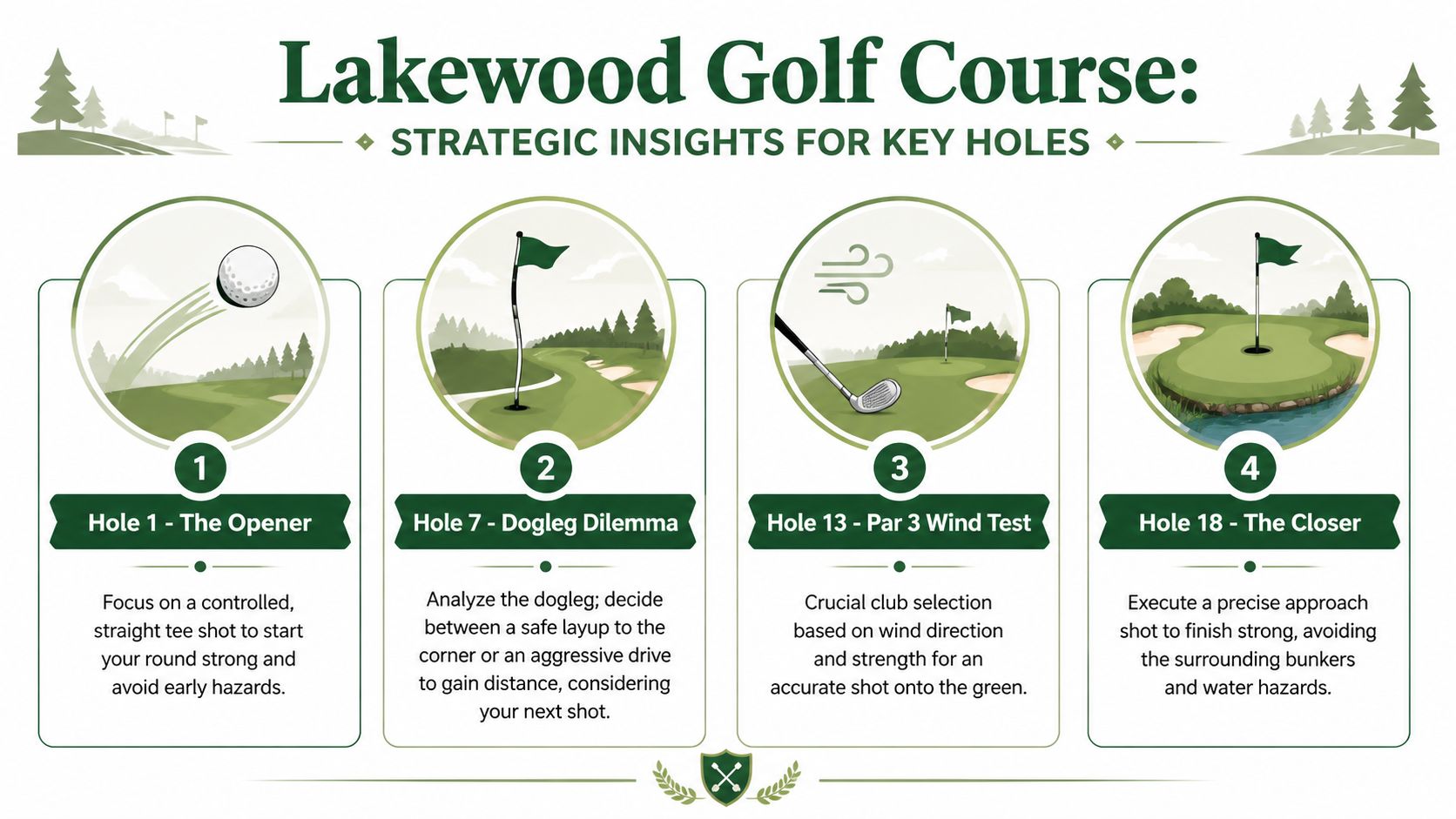
Four holes that shape the day
Hole 1
A clean opener should calm the field, not punish players who haven't settled in. The best advice here is simple. Favor a controlled tee shot that gets the group moving and keeps the first green clear. That's also why opening holes rarely make good contest holes in larger events.
Hole 7
Doglegs create indecision, and indecision slows play. Players need to choose between position and aggression before they step onto the tee. For directors, this type of hole can be a poor fit for longest-drive contests if the landing area encourages too many recovery shots.
Hole 13
Par 3s expose bad club selection quickly. If the wind is up, the hole becomes more about discipline than distance control. That's the kind of hole where proximity contests can work well if the green complex gives players a clear result and volunteers can measure efficiently.
Hole 18
Closing holes decide skins, team points, and final impressions. Ask players to commit to an approach number and miss in the safer place, not at the flag by default. If your event uses printed hole notes, the finish is where that guidance earns its keep.
For a sharper read on approach planning around hole locations, this article on how to read pin sheets is worth sharing with competitive players and staff.
Navigating Local Rules and Course Etiquette
A smooth event usually comes down to what players knew before they teed off. If the committee leaves local rules vague, groups start making their own interpretations, and pace suffers.
Use a one-page rules sheet and keep it blunt. Include the items your players need on the course:
Teeing ground policy: State exactly which tees each division or group will use.
Score posting method: Clarify whether the player, marker, or staff enters and verifies scores.
Pace expectations: Tell groups to keep up with the group ahead, not just ahead of the clock.
Relief procedures: Confirm that players should follow the day's posted local rules sheet for abnormal conditions and committee guidance.
Cart and turf conduct: Remind players to follow daily cart restrictions and repair ball marks, bunkers, and divots.
Send rules in advance, but also hand them out on-site. Players forget emails. They rarely ignore the card sitting in the cart.
Etiquette is part of operations. The more predictable player behavior is, the easier it is to keep the field moving and the scoring clean.
Your Printable Lakewood Scorecard PDF
Printed scorecards still matter. Phones die, volunteers change, and players often want a physical backup during registration, rules review, or a shotgun start. A printable version also gives your staff one stable reference when someone questions tee assignments or hole order.
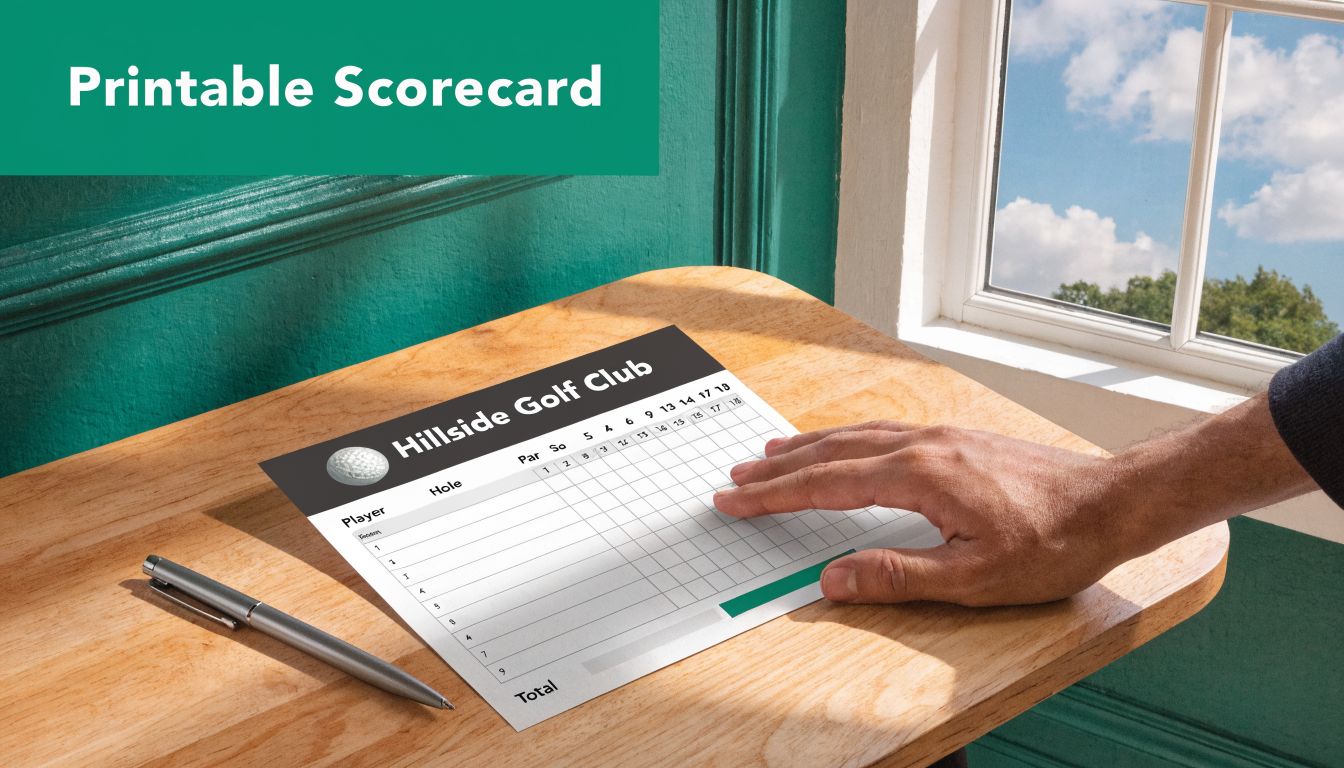
The cleanest approach is to create a one-page event scorecard PDF using the official tee data already confirmed for your field. Include:
Course identity: Lakewood Golf Club, New Orleans
The tees in play: Only show the tee sets your event is using
Essential competition notes: Format, score verification, and any contests
Space for manual scoring: Enough room for hole-by-hole marks and signatures if needed
Don't print the generic public card if your event uses only selected tees or custom divisions. A tournament scorecard should reflect the event players are playing, not every possible setup the course offers.
Customizing Scorecards for Your Tournament
Generic course cards are fine for casual play. They're not enough for a well-run event. Custom scorecards save staff time, reduce player questions, and make the event look organized before the first score is posted.
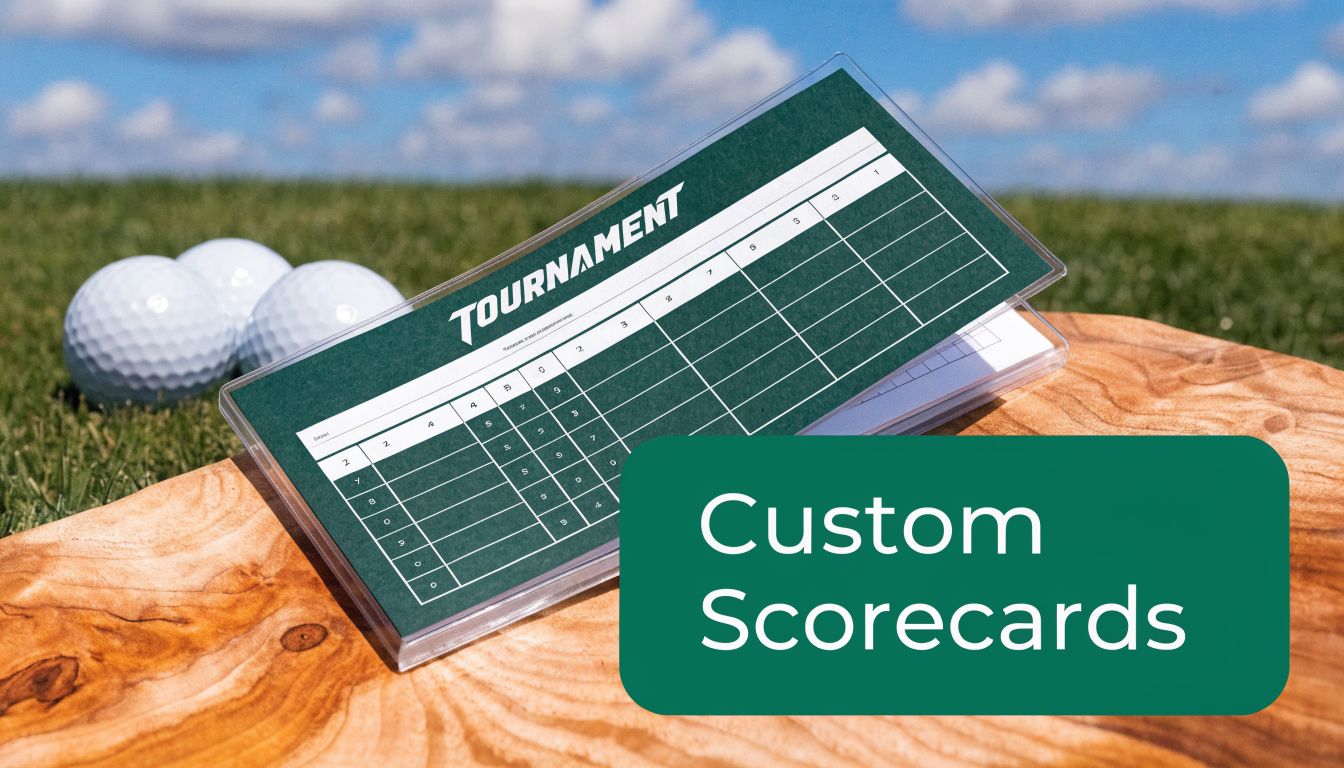
What belongs on a tournament scorecard
A useful custom card usually includes more than hole numbers and par. Add the items players ask about repeatedly:
Player or team names
Assigned tee
Course handicap
Event format
Sponsor placement
Scoring instructions
Any side-game references that need to stay visible
That setup cuts down on registration-table explanations and keeps the golf staff out of repetitive correction work.
Where custom cards help most
Custom scorecards matter most in events with mixed tees, net scoring, sponsor pressure, or volunteer support. Those are the days when one bad data transfer creates a chain reaction across pairings, cart signs, and leaderboard setup.
They also help align your golf operation with the rest of the event plan. If you're running a fundraiser, the golf side should match the professionalism of the registration, sponsor recognition, and donor communication. That's where these Ticketsmith event planning insights are useful. They frame the outing as an experience, not just a tee sheet.
A good design reference also helps staff avoid cluttered cards that bury the scoring line under logos and extra text. This guide to the best golf scorecard formats is a smart benchmark when you're deciding what to include and what to cut.
If a player can't understand the scorecard in a few seconds, the card is serving the committee, not the field.
The trade-off to manage
The temptation is to add everything. That usually backfires. Every extra field on the card competes with the score entry area. The best custom scorecards carry only the details that improve play, scoring, or sponsor visibility.
A Note on Other Notable Lakewood Courses
Search confusion around "Lakewood" is real, and it's one reason tournament staff end up with the wrong data. The New Orleans course is the focus here, but two other Lakewood properties come up often enough that they deserve a quick distinction.
In New Jersey, the Golf Club of Lakewood was organized in October 1894 and later redesigned by Walter J. Travis in 1920, establishing it as one of the foundational resort-era courses in American golf history, as documented on the Lakewood Country Club New Jersey history page.
That New Jersey club matters historically. The Rockville, Maryland Lakewood matters for a different reason. It's a private club setting with its own championship profile and a very different operational context from a public-facing tournament venue in New Orleans.
The practical takeaway
Before you import any scorecard, confirm all three items:
Check | Why it matters |
|---|---|
City and state | Multiple Lakewood clubs share the name |
Tee labels | Gold, Blue, White, and Red are not universal across facilities |
Ratings source | Wrong ratings create bad handicap outputs |
That quick verification step prevents the most common setup error tied to this course name.
Frequently Asked Questions
Question | Answer |
|---|---|
Which Lakewood does this guide cover? | It covers Lakewood Golf Club in New Orleans, Louisiana. |
What's the most important part of the lakewood golf course scorecard for tournament setup? | The tee assignment paired with the correct Course Rating and Slope Rating. That's what keeps handicaps and net scoring fair. |
Should every player use the same tee? | Not always. Mixed fields often run better when tees are assigned by division or event type rather than forcing one yardage on everyone. |
Do I need a printed scorecard if the event uses digital scoring? | Yes. A printed backup helps at registration, supports rules review, and protects the event if devices or connectivity become an issue. |
What's the biggest scorecard mistake organizers make? | Using the wrong Lakewood course data or loading incomplete tee information into the event setup. |
When should custom scorecards be created? | After tee assignments and competition rules are final, but before pairings and player materials are published. |
If you want to turn course data into polished tournament execution, Live Tourney gives golf operators a practical way to manage pairings, score entry, live leaderboards, and custom event materials without adding complexity for staff or players.