Apr 11, 2026
Explore Iron Horse Golf Course in North Richland Hills, TX. Discover its challenging layout, fees, amenities, and expert tips for hosting flawless events.

You search for iron horse golf course, and the first problem isn’t your tee shot. It’s figuring out which Iron Horse someone means.
There’s a private Tom Fazio club in Montana. There’s a public course in Nebraska. There’s a Troon-managed facility in Kansas. But if you’re planning a round, an outing, or a tournament in the Dallas-Fort Worth area, the Iron Horse that matters is the municipal course in North Richland Hills, Texas.
That distinction matters because this one plays differently, operates differently, and asks different things from golfers and tournament staff. It’s a public course with a reputation for making players think on every swing. At a place where water shows up almost everywhere and positional golf beats reckless aggression, the experience depends as much on setup and communication as it does on turf and tees.
An Introduction to the Iron Horse Challenge
Iron Horse Golf Course in North Richland Hills has the kind of reputation that sticks. Players talk about it as tough, but not unfair. That’s usually the sign of a strong design.
The course was designed by Dick Phelps and opened in 1990, and its challenge comes from placement, angles, and decision-making more than sheer yardage. The defining trait is simple. Water keeps asking questions.
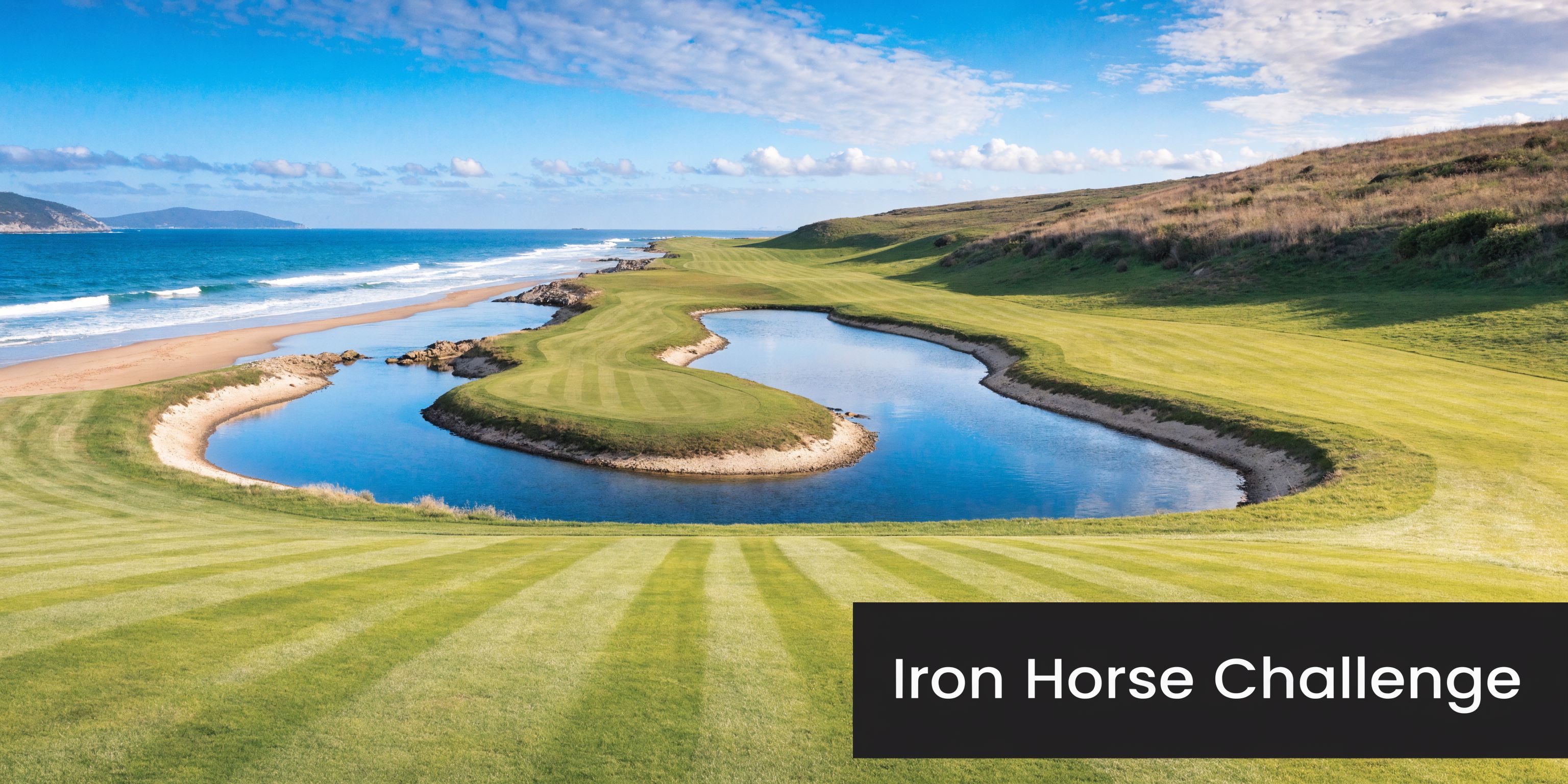
Why this Iron Horse stands apart
A lot of golfers arrive expecting a standard city course. That’s the wrong mindset.
This is the Iron Horse where two creeks affect play on 17 of 18 holes, and that changes everything. Club selection changes. Miss patterns change. Pace of play changes. Tournament administration changes.
Other Iron Horse courses deserve their own attention, but this guide is about the Texas layout that puts precision first. If you’re a player, that means choosing targets carefully. If you’re a superintendent, head pro, or event director, it means building an experience that keeps players informed, moving, and engaged when scores start swinging.
Practical rule: At Iron Horse, the round usually turns on restraint, not heroics.
Who gets the most from this course
Iron Horse works for several groups at once:
Everyday public golfers who want a serious test without joining a private club
League players who enjoy a course that rewards course management
Corporate and charity organizers who need a venue people remember
Tournament staff who understand that challenging golf needs tighter operations
That last group is where the course becomes especially interesting. A demanding layout exposes weak event planning fast. Good signage, smart tee assignments, live scoring, and clear rules handling aren’t extras here. They’re part of delivering a good day.
The Legend and Layout of a Dick Phelps Masterpiece
Dick Phelps built a course that proves an old truth. A golf course doesn’t need extreme length to be difficult.
According to the Iron Horse Golf Course details page on TeeOff, designed by Dick Phelps in 1990, the par-70 layout measures 6,679 yards from the Black tees with a rating of 72.6 and a slope of 127, primarily due to two creeks that influence play on 17 of the 18 holes.
The design idea that still works
That single fact tells you almost everything important. The scorecard doesn’t intimidate with yardage alone. The architecture does the heavy lifting.
Phelps used three pressure points repeatedly:
Creeks that affect alignment and second-shot decisions
Doglegs that punish drivers hit without a plan
Mature trees that make recovery shots harder than they first appear
The result is a layout where the correct play often looks conservative from the tee, but opens the hole from the fairway. Golfers who insist on forcing distance bring the creek, overhanging limbs, or blocked angles into play.
How to approach it properly
If you want to score at iron horse golf course, use a three-part decision process before every full shot.
Pick the safe miss first Don’t start with the flag. Start with the place you can afford to miss.
Choose the club for the landing area Driver isn’t the automatic play when water and doglegs squeeze the fairway.
Accept the boring target On this course, center-green golf often beats short-sided aggression.
That’s what works. What doesn’t work is trying to overpower a design built around restraint.
What gives the course its identity
The routing asks for repeated adjustments. One hole may ask for a controlled tee ball to a corner. The next may ask for a full carry over or near water. Then you get a hole where the main problem is the approach angle through tree corridors.
The strongest rounds at Iron Horse usually look quiet on the card. Fewer penalties, fewer recovery shots, fewer doubles created by one impatient swing.
For operators, that same identity matters. A course with this many strategic pinch points needs clear setup standards. Tee markers, hole-location philosophy, marshal positioning, and player communication all have to support the design instead of amplifying frustration.
Mastering the Course A Hole-by-Hole Strategy Guide
Iron Horse isn’t a bomb-and-gouge venue. It’s a placement course disguised as a public muni. The players who score best understand where the hole begins, not just where the green sits.
Front nine tendencies
The front side introduces the theme early. You’re asked to shape tee shots into position and avoid bringing the creek into play with needless aggression.
The common mistake is trying to “get ahead” on the easier-looking openings. At Iron Horse, that mindset often creates a defensive round by the third or fourth hole because one penalty changes how players swing the rest of the day.
What works on the front:
Clubbing down off selected tees when the landing area narrows
Favoring wider sides of fairways even if the angle isn’t ideal
Playing approach shots under control instead of forcing back pins
Back nine pressure points
The inward nine exposes discipline. By then, players know the water is real, and they start either steering the ball or chasing mistakes.
That’s where tournament setup matters. Hard hole locations plus aggressive tees can turn a good competitive challenge into a day of penalties and backups. A better approach is to use hole locations that reward a quality shot without making every miss catastrophic.
If you’re setting up an event, pair your hole locations with the audience you have. A corporate scramble can handle more visual drama than a net event full of mid-handicaps trying to post stable scores.
Scorecard reference
Below is a clean planning table for the course based on the verified scorecard details available.
Iron Horse Golf Course Scorecard (North Richland Hills, TX)
Tee | Yardage | Par | Course Rating | Slope |
|---|---|---|---|---|
Black | 6,679 yards | 70 | 72.6 | 127 |
White | 5,713 yards | 70 | 69.0 | 115 |
Only limited verified tee data is available publicly in the provided source, so this table includes the confirmed sets rather than filling gaps with assumptions.
Strategy for players and event staff
Players need a target plan. Staff need a flow plan.
For players, the best pre-round prep is to identify holes where par is a good score before you reach the tee. For event organizers, the best prep is to identify where backups are likely, where rulings may arise, and which holes can create the biggest leaderboard swings.
If you’re assigning hole locations for a competition, a good companion skill is understanding daily setup documents and pin sheets. This guide on how to read pin sheets is useful for staff and players who want cleaner decision-making before the first group goes out.
A well-run event at Iron Horse starts before the first swing. It starts with matching tees, pins, and expectations to the field you’ve invited.
Beyond the 18th Hole Amenities and Recent Upgrades
Players remember more than greens and bunkers. They remember whether the property feels organized from arrival to departure.
Iron Horse functions as a public facility, so the support pieces matter. Practice space, check-in flow, staging areas, food and beverage coordination, and post-round gathering spots all shape whether the day feels smooth or patched together.
What the recent work means on site
The course recently completed a major 10-month renovation project, reopening with celebratory events and upgrades to the course and facilities, as noted in this reopening coverage. That’s meaningful for players, but it’s especially meaningful for operators.
A renovated course gives you three immediate opportunities:
Better first impressions through cleaner visual presentation
More reliable playing surfaces when conditioning stabilizes
Stronger event appeal because planners want facilities that feel current
What doesn’t automatically happen is operational clarity. Renovation improves the asset, but staff still have to manage grow-in realities, player expectations, maintenance windows, and event scheduling intelligently.
Amenities that matter in practice
A golfer arriving for a casual round wants straightforward access. A tournament group needs more.
Useful support features include:
Practice areas for warm-up and player check-in timing
Pro shop operations that can handle public play and group traffic
Clubhouse and seating areas that support pre-round briefing and scoring wrap-up
For organizers thinking beyond the scorecard, gathering space matters more than many people realize. If you’re designing a comfortable post-round footprint for guests, sponsors, or hospitality, looking at practical outdoor event furniture ideas like these outdoor lounge sets can help you think through flow, seating density, and atmosphere without overcomplicating the setup.
The operational trade-off after renovation
Freshly improved facilities raise expectations. That’s good for demand, but it also means the course has less margin for sloppy communication.
If a practice area is restricted, tell players early. If cart staging has changed, mark it clearly. If conditioning priorities affect daily setup, explain the reason. Renovation gets attention. Consistent operations keep it.
Booking Your Round Public Access Green Fees and Tee Times
The biggest advantage of iron horse golf course is access. It’s a municipal facility, which means the course serves both community recreation and the demands of running a serious golf operation.
As noted by the City of Fort Worth ARPA infrastructure page, Iron Horse Golf Course is part of the City of North Richland Hills' infrastructure, allowing it to balance public recreation with the financial demands of operating a top-tier course.
What that means for golfers
It means the course isn’t built around private-club exclusivity. You can plan a normal public round, bring guests, join a league environment, or build an event around a venue that still feels substantial.
If you’re trying to book smart, focus on timing instead of hunting for rumored loopholes or stale fee charts online. Public-course pricing and availability can shift, and the safest move is to use the course’s current booking channels directly.
Best way to book without headaches
Use a simple checklist:
Book early for peak times if you want morning weekend access
Call the golf shop for group needs because public tee sheets rarely tell the whole story online
Ask about event windows if your round includes prizes, contests, or sponsor setup
Confirm cart and practice options before arrival, especially for larger groups
Why the difficulty helps, not hurts
Some planners avoid hard courses because they assume players only want easy scoring. That’s usually a mistake.
A memorable event needs holes people talk about afterward. Iron Horse gives you that. The key is format selection and setup discipline. If the course is asking players to think, the event should support that with clear rules, visible scoring, and proper pacing. Done well, the challenge becomes the reason the outing feels distinctive instead of generic.
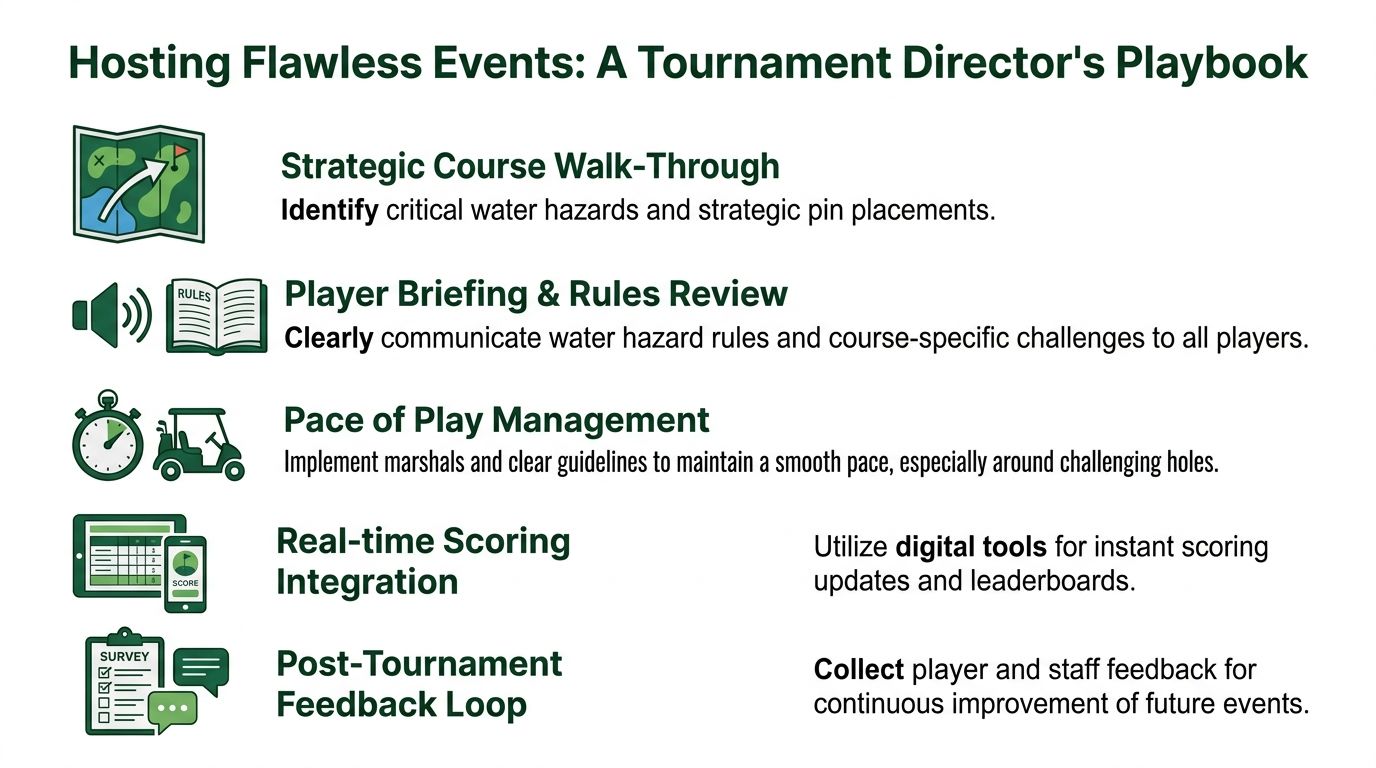
Hosting Flawless Events A Tournament Director's Playbook
A difficult golf course can create a great event, but only if the format respects the architecture. Iron Horse rewards the tournament director who plans around decision points instead of ignoring them.
Start with the right format
This course can punish weak formats. Individual stroke play for a mixed-skill charity field creates slow rounds, lost balls, and frustrated guests. That doesn’t mean stroke play is wrong. It means it needs the right audience.
Formats that fit better on a water-influenced public course:
Scrambles for sponsor days and charity groups
Shamble formats when you want some individual accountability without full punishment
Match play pods for competitive groups that enjoy momentum swings
Ryder Cup style team play when you want engagement to last all day
What doesn’t work is copying a standard outing template from an easier course and hoping players adapt. They won’t. Iron Horse exposes mismatches fast.
Build operations around pressure holes
The holes that create strategy also create administration.
Think through these in advance:
Rules communication around penalty areas and drop procedures
Marshal placement near common backup zones
Spotters or volunteer positioning where sightlines are poor
Pin placement restraint if the field includes occasional golfers
Don’t let architecture become a customer-service problem. Strong communication makes a hard course feel fair.
Real-time scoring changes the tone of the day
On a course where one swing can shift a match or a team total, leaderboard visibility matters. Players stay more engaged when they can see movement rather than waiting until dinner to learn what happened.
That’s why digital scoring is no longer optional for many events. It helps in three places at once:
Player experience Groups know where they stand without chasing paper updates.
Staff workload The shop doesn’t have to rebuild the tournament by hand after the round.
Rules and payout confidence Fewer transcription errors means fewer disputes at the end.
For tournament directors who want a broader planning framework before setting pairings and score entry rules, this guide on how to run a golf tournament covers the operational basics well.
What skilled directors do differently here
The strongest event leaders at a course like this do the same things:
They simplify the player briefing. No long speeches. Just local rules, pace expectations, and where trouble lives.
They choose tee sets based on the field. Ego tees create slow golf.
They protect the middle of the round. Once backups start, the day gets long quickly.
They treat scoring as part of hospitality. Players enjoy the event more when results feel live and visible.
That combination matters more at Iron Horse than at a wide-open layout. The design already supplies tension. The director’s job is to turn that tension into fun competition instead of operational drag.
Streamline Your Iron Horse Tournament with Live Tourney
Paper scorecards and manual recap work fine until the course starts producing penalty strokes, rulings, side games, and scoreboard swings. Then the cracks show.
At iron horse golf course, admin problems appear in familiar places. Someone enters the wrong gross score. A skins game takes too long to settle. Staff members spend the end of the round behind a counter instead of with players.

What better workflow looks like
A modern setup should handle four things cleanly:
Registration and roster building
Pairings and cart-sign output
Live score entry without app friction
Automatic leaderboard and payout handling
That’s where software earns its keep. One option is Live Tourney, a web-based platform for tournaments, leagues, and outings that supports app-free live scoring, roster uploads, scorecards, cart signs, side games, and payout calculations. If you want to evaluate that category, this overview of golf tournament management software is a practical starting point.
Why this matters more on a course like Iron Horse
Some courses produce steady scores and very few rulings. Iron Horse isn’t that kind of place.
The strategic design creates more moments where players want immediate clarity. That doesn’t mean the course is a headache. It means the operation needs to keep up with the golf.
A cleaner event stack gives you:
Faster check-in because pairings and materials are ready
Cleaner communication when players need links, rules, or updates
Less end-of-round chaos because scoring isn’t trapped on paper
A more professional feel for sponsors, guests, and members of the field
Good tournament software doesn’t change the course. It changes how calmly your staff can run the day.
The simple decision test
If your current process depends on handwritten cards, spreadsheet cleanup, and one exhausted employee reconciling everything after the round, you’ve already outgrown it.
At a course that asks players to make disciplined choices all day, event directors should hold themselves to the same standard.
Location Contact and Visitor Information
If you’re headed to the Texas course, make sure you’re using the right Iron Horse details and not the Montana, Nebraska, or Kansas properties.
Iron Horse Golf Course Details
Detail | Information |
|---|---|
Course name | Iron Horse Golf Course |
City | North Richland Hills |
State | Texas |
Design architect | Dick Phelps |
Opened | 1990 |
Access | Public municipal facility |
Black tees | 6,679 yards |
Par | 70 |
For current tee times, fees, and daily operations, contact the North Richland Hills course directly through its active public booking channels rather than relying on third-party summaries.
Frequently Asked Questions About Iron Horse
Is this the same Iron Horse as the private Montana club
No. The Montana property is Iron Horse Golf Club in Whitefish, a Tom Fazio signature design founded in 1999 with estimated annual revenue of $29.5 million, according to Prospeo’s company profile. That’s a different market, different ownership model, and different golf experience.
Is Iron Horse Golf Course in Texas public
Yes. The North Richland Hills course is a municipal public facility.
What makes the Texas course difficult
Its challenge comes from strategy, not just length. Water influences most of the round, and the design forces players to think about landing areas, angles, and misses.
Is it good for tournaments
Yes, especially if the format fits the field. Scrambles, team events, and well-managed competitive formats work better than one-size-fits-all outing templates.
Should better players automatically play the back tees
Not always. The smart tee choice is the one that preserves pace, keeps the event competitive, and lets players engage with the architecture instead of surviving it.
If you run outings, leagues, or club events and want a cleaner scoring experience at courses like Iron Horse, Live Tourney is worth a look. It gives staff a web-based way to manage pairings, live leaderboards, score entry, and event materials without adding app friction for players.