Dec 20, 2025
Learn how to organize a golf tournament with this comprehensive guide. We cover everything from planning and budgeting to day-of execution and sponsorships.
Before a single player steps onto the tee box, the real work of a successful golf tournament has already begun. The foundation isn't built on the day of the event, but in the months leading up to it, starting with a clear and compelling vision.
This initial planning phase is all about defining your "why."
Are you trying to raise serious money for a charity you care about? Maybe you're putting together a high-end networking event for corporate partners. Or perhaps it's just about hosting a fun, relaxed outing for your club members.
Nailing down this core purpose will guide every single decision you make from here on out. A charity fundraiser, for instance, will lean heavily on sponsorship packages and on-course fundraising games. A corporate event, on the other hand, might focus more on premium player gifts and creating opportunities for people to connect.
Define Clear and Measurable Goals
Once you know why you're hosting the tournament, you need to set some real, tangible goals. Vague ideas like "raise money" or "have a good turnout" aren't going to cut it. You need specific targets to aim for.
Think in concrete terms:
Fundraising: Instead of "raise money," set a hard target like "Raise $25,000 for the local animal shelter."
Attendance: Don't just hope for a lot of players. Aim to "Secure 120 registered golfers by the early-bird deadline."
Sponsorship: Go beyond "get sponsors." Your goal should be to "Secure 10 hole sponsors and one title sponsor."
Having these numbers gives you a clear roadmap. They directly influence your budget, your entry fees, and how hard you need to push your marketing. For example, if you want to attract top-tier players, you’ll need a prize purse to match. It’s worth noting that on professional tours, 70-80% of the entire budget often comes from corporate partners who are drawn in by that high-stakes visibility.
To get the ball rolling, here's a simple framework to organize your initial thoughts.
Initial Tournament Planning Framework
Planning Area | Key Objective | Action Items |
|---|---|---|
Vision & Purpose | Define the "why" behind your event. | Decide if it's for charity, corporate networking, or community fun. This will shape all future decisions. |
Measurable Goals | Set specific, quantifiable targets. | Establish hard numbers for fundraising, player registration, and sponsorship levels. |
Target Audience | Identify who you want to attend. | Determine if your players are competitive golfers, casual players, or business professionals. |
Initial Budget | Create a preliminary financial outline. | Estimate major costs (course, food, prizes) and potential revenue streams (fees, sponsors). |
This table isn't exhaustive, but it covers the non-negotiable first steps that set the stage for everything else.
Build Your Master Timeline
Timing is everything. A well-thought-out timeline is your best defense against last-minute chaos. For any decent-sized tournament, you should give yourself a runway of at least nine to twelve months. This timeline breaks down the crucial first moves.
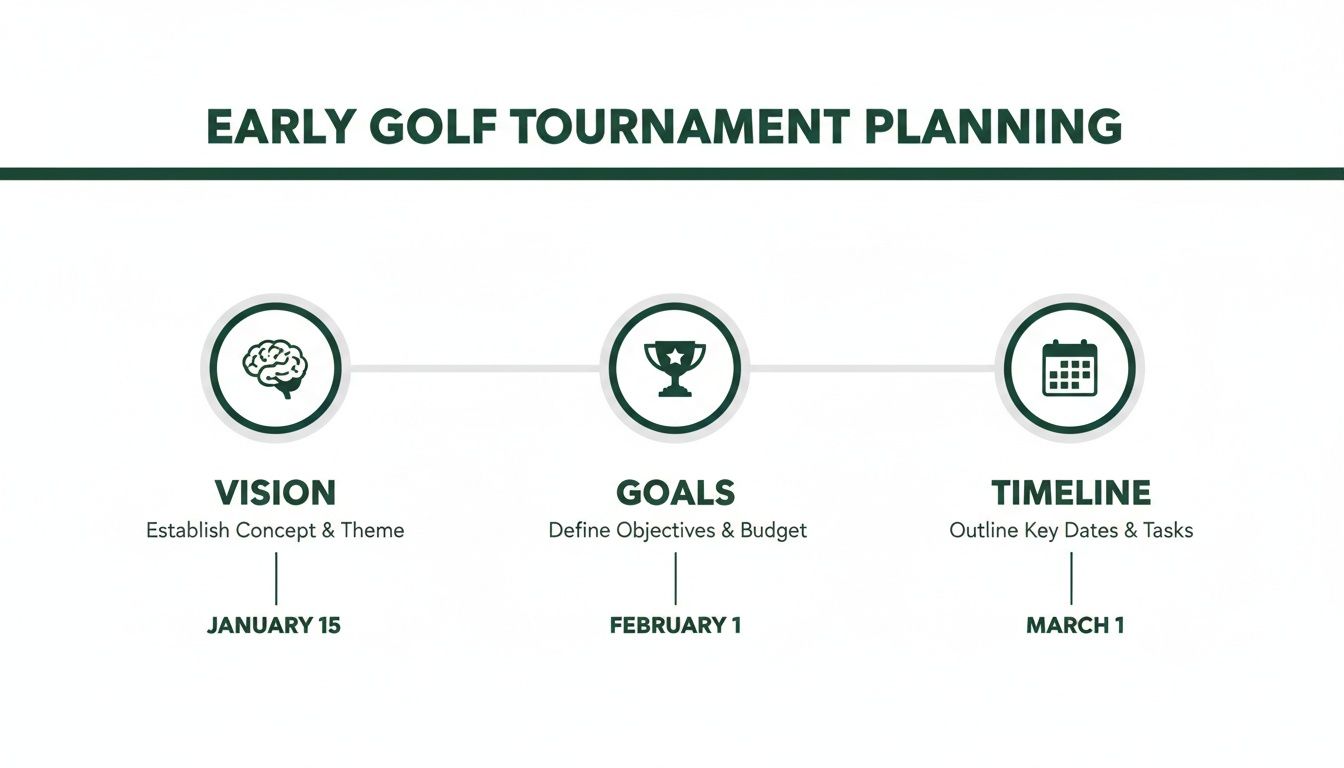
As the visual shows, getting your vision, goals, and timeline sorted out are the first plays in your book. Honestly, the fundamental principles for organizing a great golf event aren't all that different from learning how to plan a corporate event—it’s all about methodical planning and making sure no detail slips through the cracks.
Key Takeaway: Your timeline is your most critical tool. Map out the big deadlines—securing the venue, launching registration, confirming sponsors, ordering swag—and then work backward from your event date. This turns a mountain of tasks into a series of manageable steps.
Crafting a Winning Budget and Sponsorship Strategy
A successful golf tournament doesn't just happen—it's built on a rock-solid financial game plan. Before you even think about raising money, you need a crystal-clear picture of what it's going to cost. That means getting granular with a budget that accounts for every single expense, so there are no nasty surprises waiting for you down the road.
Your budget is your roadmap. Start by listing everything out, separating your fixed costs (like the golf course rental) from your variable costs (like catering, which depends on player count). Nailing this down prevents you from underpricing your entry fees or blowing your budget on things that don't matter.
Building Your Tournament Budget
Think through every line item. It's easy to remember the big stuff like course fees, but the small expenses are what sneak up and sink your profitability if you aren't paying attention.
Your expense list should cover all the bases:
Venue Costs: Green fees, cart rentals, and any other facility charges.
Food and Beverage: Breakfast, lunch, dinner, on-course snacks, and those crucial beverage stations.
Player Gifts: Welcome bags, branded balls, shirts, or towels.
Prizes and Awards: Trophies for the winners and prizes for on-course contests like Longest Drive or Closest to the Pin.
Marketing and Promotion: Website costs, flyer printing, and any social media ads.
Day-Of Materials: All the signage, banners, scorecards, and registration supplies.
Once you've got a total for your estimated expenses, divide that by your target number of players. This gives you your cost per player. For example, if your total costs are $15,000 for 100 players, your cost per player is $150. That number is your break-even point—the absolute minimum you have to charge each player just to cover your costs.
Designing Sponsorship Packages That Sell
Sponsorships are the lifeblood of any profitable tournament. This is how you go from just covering your expenses to actually generating significant revenue or donations for your cause. The trick is to create tiered packages that offer real, tangible value to businesses. A logo on a sign isn't enough anymore.
You have to think like a sponsor. What do they want? Exposure, networking, and a positive brand association. Your packages need to deliver that ROI.
Here’s a sample tiered structure you can adapt:
Title Sponsor ($10,000+): This is the top dog. Their company name gets baked into the event title (e.g., "The Acme Corp Charity Classic"). They get premium logo placement on everything, a speaking spot at the dinner, and multiple foursomes.
Dinner or Lunch Sponsor ($5,000): This sponsor "owns" the post-round meal, with exclusive branding on banners, table tents, and a shout-out from the podium.
Beverage Cart Sponsor ($2,500): Always a popular one. This puts a company’s logo on the cart that travels the entire course, interacting with every single player throughout the day.
Hole Sponsor ($500 - $1,000): The classic, accessible option. A business gets exclusive signage at a tee box, making it a great entry point for smaller local companies.
To add a unique touch, consider incorporating custom golf team apparel. You can co-brand shirts or hats with a sponsor's logo, giving them walking billboards all over the course. If you want to go deeper on building these relationships, check out our guide on unlocking profitable partnerships for your golf tournament.
Pro Tip: Don't just send a generic email blast. Do your homework. Identify local businesses that align with your audience, find the right person to talk to, and hit them with a personalized proposal that spells out exactly what's in it for them.
Setting the Right Player Entry Fee
Now that you have your cost per player and your sponsorship goals, you can finally land on an entry fee that makes sense. The formula is pretty simple: Cost Per Player + Fundraising/Profit Goal Per Player = Entry Fee.
So, if your cost is $150 per player and your fundraising goal is another $100 per player, your entry fee should be $250. This way, every single registration is directly contributing to your financial goal, making your tournament a success before the first ball is even in the air.
Choosing the Right Format to Maximize Fun and Engagement
The tournament format you choose is the heart and soul of your event. Seriously. It dictates the entire vibe of the day—from how competitive things get to the pace of play—and it's the biggest factor in how much fun everyone has.
Get this part right, and everyone leaves happy, regardless of what their scorecard says.
The decision really comes down to your audience. Are you hosting a bunch of scratch golfers for a club championship, or is it a corporate outing with a wild mix of skill levels? The answer will point you straight to the perfect format.

Unpacking the Most Popular Tournament Formats
Let's break down the go-to options. Each one creates a totally different experience, so getting the nuances is key to pulling off an event that clicks with your players.
Scramble: The Crowd-Pleaser
This is the undisputed champion for charity and corporate events for a reason. In a scramble, everyone on the team tees off, the group picks the best shot, and everyone hits their next one from that spot. You just repeat that until the ball is in the hole.
Best For: Any event with a wide range of skill levels. It takes all the pressure off beginners and keeps the pace of play moving.
Why It Works: It’s all about teamwork. Everyone contributes to one score, so it feels collaborative and fun, not intimidating.
Best Ball (Fourball): The Balanced Approach
In a Best Ball, players compete as a team (usually pairs or foursomes), but everyone plays their own ball from tee to green. After each hole, the team just writes down the lowest score from one of its members.
Best For: Groups that want a bit of competition but still love the team dynamic. It lets skilled players go low without penalizing less experienced golfers for a blow-up hole.
Why It Works: It's the perfect middle ground, blending individual play with team strategy.
Stroke Play: The Purest Competition
This is the classic format you see on TV. Every player is on their own, counting every single stroke over 18 holes. The person with the lowest total score wins. Simple as that.
Best For: Serious, competitive tournaments where individual skill is everything—think club championships or local qualifiers.
Why It Works: It’s a true test of a golfer's ability. There's nowhere to hide.
Key Insight: For 90% of charity or corporate outings, the Scramble is the way to go. It maximizes fun, speeds up play, and ensures even the highest-handicap players have a great time and feel like they contributed.
Creating Balanced Pairings and Tee Sheets
Once you've landed on a format, it’s time to build the pairings. This isn't just about sticking names on a list; you're basically engineering the on-course experience. The goal is to create balanced foursomes that are both competitive and fun to be in.
The best way to do this is by using the player handicaps you collected during registration. A classic strategy is to create "A-B-C-D" teams. Each foursome gets one low-handicap player (A), two mid-handicap players (B and C), and one high-handicap player (D). This keeps one team from getting stacked with all the ringers.
Of course, you’ll always get requests from people who want to play together. It’s a bit of a balancing act between creating fair competition and making sure friends or business partners can enjoy a round in the same group.
Crafting a good field composition is a big deal. The pros have this down to a science, often aiming for 144-player fields and mixing pros, sponsors, and qualifiers to create a dynamic environment. Many of these events also use a cut after 36 holes—like the top 70 and ties—to keep the pace moving for the final rounds, a practice used in over 90% of PGA TOUR events.
Finally, you’ll build the tee sheet, which shows every group, their players, and their starting hole and time. If you're doing a shotgun start where everyone tees off at once, make sure each group knows exactly which tee they're starting on. Different formats can have unique scheduling needs, too. If you're looking for other ways to structure pairings, check out our guide on how to create a round robin schedule for your event.
An empty course is the last thing you want. Once you’ve nailed down the venue, budget, and format, it’s time to pivot hard into marketing. Your goal is to build so much buzz that every spot fills up fast. This isn’t just about sending a single email; it’s about creating an invitation that people can’t wait to accept.
First things first, you need a home base for your promotion—a central hub where players and sponsors can get all the info and, most importantly, sign up. This means setting up a dedicated event website or a clean, simple landing page. It doesn't need to be fancy, but it absolutely has to look professional and be dead simple to use.
Make sure this digital storefront hits all the key points:
The Essentials: Date, time, venue, and a clear schedule for the day.
The "Why": Tell a compelling story about the charity or cause you’re supporting.
The Format: A quick, friendly explanation (e.g., "4-Person Scramble - perfect for all skill levels!").
The Cost: Clearly list the entry fees for individuals and foursomes. No one likes hunting for prices.
The Hook: Shout out any special contests, big-ticket prizes, or unique things you have planned.
And this is non-negotiable: your website must have a seamless, secure way for people to register and pay online. The fewer clicks it takes to sign up, the more people will actually finish the process.
Your Digital Marketing Playbook
With your website live, it's time to send people to it. The best approach is to hit them from multiple angles, meeting them where they already are. For most tournaments, your two biggest weapons will be email and social media.
Email Marketing That Actually Works
Email is direct, personal, and still one of the most effective ways to promote a tournament. But don't just send one blast and cross your fingers. You need a sequence of emails that builds momentum and a little bit of urgency.
A simple campaign might look like this:
The "Save the Date" (3-4 months out): A quick heads-up to introduce the event, share the main details, and let people know when registration will open.
Registration is Open! (The big launch): This is your main push. Drive everyone to your website with a huge, clear call-to-action to "Register Now."
The Reminder (1 month out): Send a follow-up that highlights something cool—maybe a premier sponsor, a great prize, or a special guest you’ve lined up.
The "Last Call" (1 week before closing): This is where you create some friendly urgency. A subject line like "Only a Few Spots Left!" can be just the nudge procrastinators need.
Using Social Media to Build a Vibe
Social media is where you can let the personality of your event shine. Post great photos from last year's tournament. Create a short video announcing a new sponsor. Run a poll asking what on-course contest people are most excited about.
Pro Tip: Create a unique hashtag for your event (like #AcmeCharityClassic2024) and plaster it everywhere. Encourage your players and sponsors to use it, too. It’s a simple way to build community and collect all your event content in one easy-to-find place.
Don't Sleep on Old-School Tactics
While digital is king, don't forget about the real world, especially for a local event. A professionally designed flyer can still work wonders. Leave a stack at the host golf course, local businesses, sponsor locations, and community centers. Just make sure it looks sharp and has your event website URL and a QR code that goes straight to the registration page.
Another powerful tool is the classic press release. Write up a short, newsworthy announcement about your tournament, but lean heavily on the charitable angle. Send it to local newspapers, community blogs, and radio stations. Highlighting the good your event is doing for the community makes it a story they’re more likely to cover, giving you some fantastic—and free—publicity.
Mastering Tournament Day Logistics and Execution
After months of planning, the big day is finally here. This is where all your hard work pays off, and it's the execution that separates a decent event from one people talk about for years. A well-run tournament day is all about being one step ahead, making sure the experience is seamless from the moment the first volunteer shows up until the last award is handed out.
The energy on tournament day is contagious, but it can turn to chaos without a solid game plan. Your job is to make everything feel effortless for your players and sponsors. And that all starts with a smooth, welcoming check-in process.
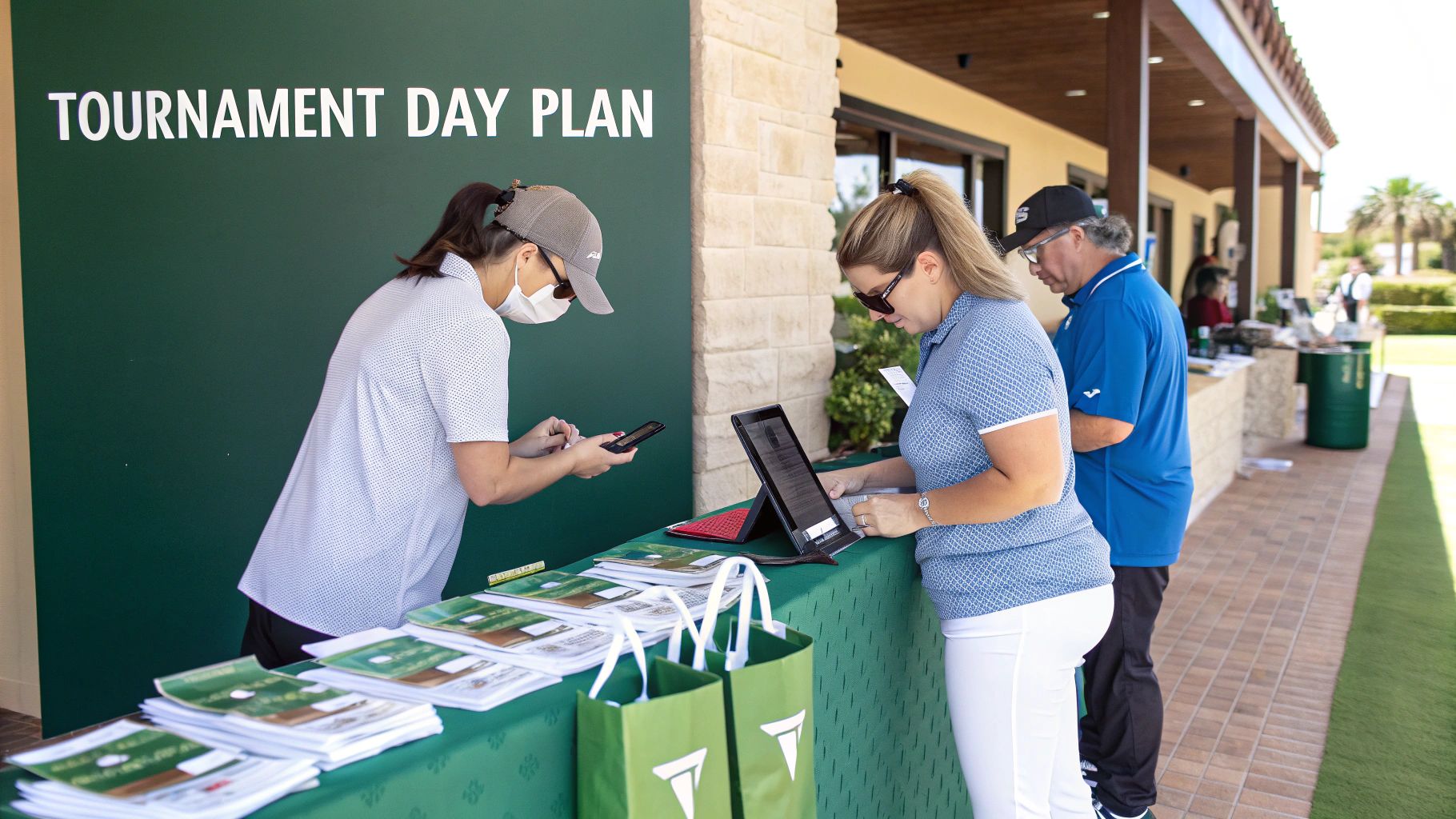
Running a Flawless Check-In Process
The registration table is your event's first impression. Get it right. Long lines and confused volunteers are an easy way to start the day with a dose of frustration. The secret is to be over-prepared, with clear roles and everything players need right at their fingertips.
Set up multiple check-in lines, ideally organized alphabetically by last name. Each station needs a player list, pre-packaged welcome gifts (swag bags), and any add-ons like drink tickets or mulligan cards. This isn't just about moving people through; it's about setting a professional, organized tone from the get-go.
A well-briefed volunteer team is your biggest advantage here. Huddle with your registration crew before anyone arrives and walk them through the entire flow. Make sure they know who to find with questions and feel empowered to solve minor issues on their own. For a detailed breakdown of everything that needs to happen, our comprehensive golf tournament checklist can be an invaluable playbook for your team.
Pro Tip: Designate a "problem-solver" volunteer who isn't stuck behind a registration desk. This person can handle walk-ups, payment issues, or special requests, letting the main check-in lines keep moving smoothly.
Managing On-Course Logistics and Signage
Once players are checked in, their experience shifts to the course itself. Your goal is to make navigation and participation completely intuitive. That means professional, easy-to-read signs guiding players to the driving range, putting green, their starting holes, and the restrooms. No one should have to ask where to go.
Sponsor signage is just as critical. Before the tournament, map out exactly where each sponsor sign will be placed—from tee boxes to the dinner area. Send a volunteer out early in the morning to get them all in the ground. This guarantees every sponsor gets the visibility they paid for and prevents a last-minute scramble.
And don't forget about the contest holes. Make sure your "Longest Drive" or "Closest to the Pin" competitions are clearly marked with instructions and a way to measure. It's best to assign a dedicated volunteer to each contest hole to verify winners and keep things clean and simple.
It takes a small army to pull this off. Here’s a look at the key roles your volunteers will play on tournament day.
Key Tournament Day Volunteer Roles
Volunteer Role | Key Responsibilities | Location | Success Tip |
|---|---|---|---|
Registration Crew | Greet and check in players, distribute gift bags, and answer initial questions. | Clubhouse/Entry Area | Pre-sort registration packets alphabetically to make the process lightning-fast. |
Contest Monitor | Oversee on-course games like Closest to the Pin, measure shots, and record winners. | Designated Contest Holes | Have a clipboard, marker, and measuring tape ready to go before the first group arrives. |
Course Rover | Drive a cart to monitor the pace of play, restock water stations, and assist players with minor issues. | On the Golf Course | Carry a small first-aid kit and a list of emergency contacts for the course. Be friendly! |
Scoring Assistant | Collect scorecards as groups finish and input scores into the system for the leaderboard. | Clubhouse/Scoring Area | If using physical cards, double-check the math on each one before finalizing scores. |
Having every volunteer understand their specific role and how it contributes to the bigger picture is the key to a stress-free day.
Handling Scoring and Contingency Plans
How you manage scoring can make or break the post-round atmosphere. Old-school paper scorecards work, but tallying them up is a manual, time-consuming slog. Modern solutions like live scoring apps completely change the game. Players enter scores on their phones, and a real-time leaderboard in the clubhouse builds excitement as the final groups come in.
Finally, even the best plans need a backup. What’s your protocol for a rain delay? How will you handle a group that's fallen two holes behind? Figure these things out with the course staff well in advance. For weather, know the course's lightning policy and have a simple way to communicate with every player on the course. For slow play, empower your course rovers to politely encourage groups to pick up the pace. A little proactive management ensures a great day for everyone.
It's Not Over 'Til the Last Thank You Is Sent
The final putt has dropped and the trophies are in hand, but don't pack it in just yet. The work you do after the tournament is what separates a one-and-done event from an annual tradition everyone looks forward to. This is your chance to lock in goodwill and build serious momentum for next year.
The clock starts ticking almost immediately. Your first move should be sending out thank-you messages within 24 to 48 hours. Resist the urge to send a generic email blast. A little personalization goes a long, long way.
Acknowledging the People Who Made It Happen
A quick, specific follow-up shows you respect everyone's time and investment. It's a small touch that makes a huge impact and reinforces the great experience they just had.
Here’s a simple breakdown:
Players: Thank them for coming out! Be sure to include a link to the final leaderboard, a gallery of photos from the day, and a "save the date" for the next tournament.
Sponsors: This is your top priority. Send a personal email highlighting their impact. Mention the total funds raised and share a few high-quality photos of their branding in action—on the tee signs, the carts, or the step-and-repeat banner.
Volunteers: These folks are the lifeblood of your event. A genuine, heartfelt message thanking them for their hard work is non-negotiable. It’s the key to getting them back next year.
The Venue: Don't forget the course staff. A quick thank you to the pro and the management team helps build a strong relationship, making it that much easier to book again.
This isn’t just about being polite; it’s a powerful retention strategy. When people feel valued, they come back.
Gathering Feedback and Sharing the Success
While the good vibes are still fresh, it’s the perfect time to ask for feedback. Send out a simple, anonymous survey to get honest opinions on everything from the registration process and pace of play to the food and format. This kind of direct feedback is pure gold for making next year's event even better.
Pro Tip: Your post-tournament report isn't just a wrap-up; it's your #1 sales tool for next year. Use it to show sponsors a clear ROI and prove the event's success to your key stakeholders. It builds the case for their continued support without you having to say a word.
Finally, tie a bow on everything with a comprehensive summary report. This document should cover the event highlights, final attendance numbers, and the financial bottom line. If it was a charity tournament, put the total amount raised front and center. Share this report with your sponsors and organizing committee.
Then, take the good news public. Post a summary of the event's success on your social media channels, making sure to tag sponsors and thank the community. This public celebration does more than just end the current event on a high note—it’s the very first piece of marketing for your next one.
Common Questions from First-Time Organizers
Jumping into your first golf tournament can feel like a big lift, and a few questions always seem to come up right at the start. Getting these sorted out early will save you a ton of headaches later and make the whole planning process feel much more manageable.
How Far in Advance Should I Plan a Golf Tournament?
For any event with 100 or more players, you really need to give yourself a 9 to 12-month runway. The best courses get their calendars locked in way ahead of time, especially for those prime weekend dates.
This longer timeline also gives you a fighting chance to line up corporate sponsors. Most of them finalize their marketing and community outreach budgets toward the end of the calendar year, so you need to be on their radar early.
If you're planning a smaller, more casual outing—say, fewer than 75 players—you can usually pull it off in about 4 to 6 months.
What Is the Best Format for Inexperienced Golfers?
The "Scramble" is the hands-down winner here, especially when you have a wide range of skill levels. In a Scramble, everyone on the team tees off, the group picks the best shot, and they all play their next shot from that spot.
A Scramble is the go-to format for charity and corporate events. It takes the pressure off individual players, keeps the game moving, and lets everyone—from a scratch golfer to a total beginner—feel like they contributed to the team's score.
How Do I Set the Right Entry Fee?
Figuring out your entry fee is a straightforward but crucial piece of the puzzle. First, you need to calculate your total cost per player. Just add up all your expenses—the course, food, drinks, prizes, gifts, you name it—and divide that total by your expected number of players.
Once you have that number, decide on your fundraising or profit goal for each player. The entry fee is simply those two numbers added together.
For example:
Cost per Player: $150
Fundraising Goal per Player: $100
Total Entry Fee: $250
Ready to streamline your event and give your players a professional experience? With Live Tourney, you can handle registrations, payments, pairings, and live scoring all in one place—no app downloads required. See just how easy it is to run a top-notch golf tournament at livetourney.com.