Apr 18, 2026
Discover 10 creative golf tournament ideas for your next charity, corporate, or club event. Get formats, scoring tips, and setup steps to wow your players.

A lot of golf days start losing momentum before the first tee shot. The registration table backs up. Players are asking where to go. Staff are chasing scorecards and answering the same rules question six times. Then the round ends and everyone stands around waiting for results while somebody adds totals by hand.
Good golf tournament ideas fix those problems at the planning stage. The format matters, but the setup matters just as much. A strong event gives players clear starting assignments, simple scoring, fair side games, and fast results. That is what they remember. It is also what gets them to sign up again.
I have found that organizers usually overfocus on the theme and underprepare the operations. A scramble, match, league night, or junior event can all work well if the rules are tight and the scoring process is easy to manage. The best formats are the ones you can explain in one minute and run without confusion four hours later.
That is where modern tournament software earns its keep. Live Tourney lets organizers publish pairings, scoring, leaderboards, and contests without forcing every player to download an app. For events that use team play, a practical setup guide to the golf scramble format is a good example of the difference between knowing the format and knowing how to run it well.
The ideas below are not just a list of tournament types. They are a working blueprint for choosing the right format, setting rules that hold up, and giving players a cleaner experience from check-in through payouts.
1. The Classic Scramble

If you run charity outings or corporate golf days, scramble should still be near the top of your list. It keeps weaker players involved, protects pace of play, and lowers the intimidation factor for guests who don’t play often. That’s why it remains one of the safest golf tournament ideas when your field includes a mix of handicaps, sponsors, and first-timers.
The format is simple. Everyone tees off, the group picks the best shot, and everyone plays from there until the ball is holed. What makes it succeed or fail isn’t the concept. It’s the guardrails.
What makes a scramble work
The best scrambles have one or two rules that force real team participation. A minimum-drive requirement keeps the strongest player from carrying the whole group. Handicap adjustments matter too, especially when one team is stacked and another is mostly social players.
For setup help, Live Tourney’s guide to the golf scramble format is useful because it gets into the operational side instead of just the definition.
Practical rule: Require a set number of drives from each player. It keeps the round social, but it also keeps the event credible.
I’d also preload teams before players arrive. Nothing slows check-in like rebuilding foursomes at the counter while carts line up outside. With Live Tourney, staff can upload rosters ahead of time, apply custom scoring rules, and push pairings out fast.
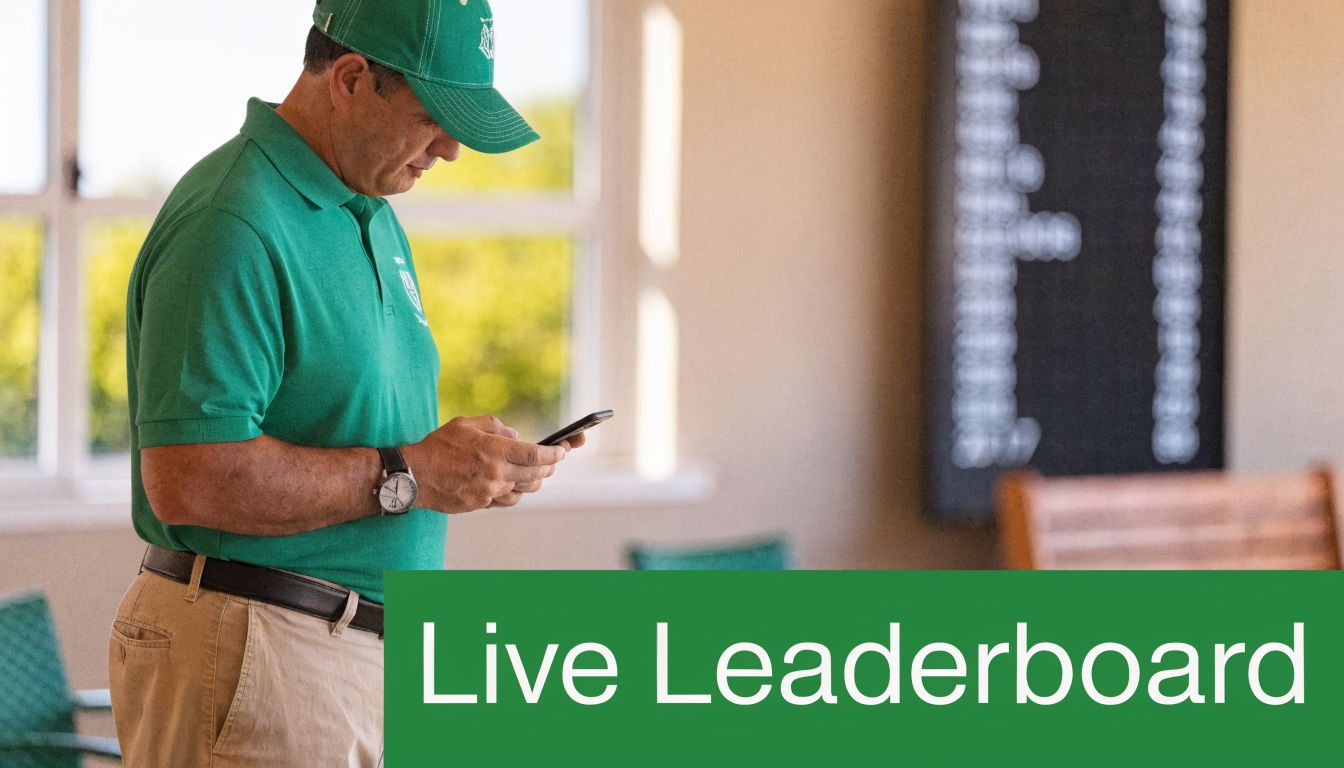
A scramble also benefits more than almost any other format from live leaderboard visibility. Teams want to know whether that birdie on 16 matters. If they can see where they stand on their phones or on a TV in the clubhouse, they stay engaged through the finish instead of treating the last few holes like a casual loop.
Use this format for:
Charity fundraisers: It welcomes occasional golfers without making them feel exposed.
Corporate outings: It gives clients and employees a shared team result, not four separate struggles.
Family or social events: It keeps the day light and fast.
Beginner programs: It lets new players contribute without worrying about every swing.
2. Head-to-Head Drama
Stroke play rewards consistency. Match play creates tension. That’s why club players who say they want “something different” usually respond well to a bracket.
You don’t need the whole field chasing one total score. Put players or teams into direct matches and every hole suddenly matters. A player can make triple on one hole and still have a great day if they win the next three. That keeps more people alive emotionally, which is exactly what a lot of member events need.
Best uses for a bracket event
This format shines in club championships, member-guests, season-long knockout events, and internal team competitions. It’s also one of the most spectator-friendly golf tournament ideas because the scoreboard language is easy to follow. Up, down, tied. People get it immediately.
The administrative problem is obvious. Brackets get messy fast when organizers try to track everything by hand. Late finishes, ties, concessions, and next-round assignments can turn a good idea into a shop headache.
That’s where software matters more than format. Live Tourney can build the bracket, track hole-by-hole results, show live match status, and keep consolation play organized so first-round losers don’t just head to the bar. That last part matters. If players lose early and have nothing left to do, the day feels shorter than it should.
The easiest way to ruin match play is to make players ask the golf shop who they’re playing next.
One other point is worth remembering. Team golf at its best has always been compelling because it creates direct rivalry and momentum swings. Live Tourney’s support for match play sits well with that tradition, especially since the platform also handles Ryder Cup-style events and round robins, which are ideal when you want more guaranteed games and more social interaction.
3. The Best Ball
The first time a best ball event gets messy, it usually happens on the 15th green. One player says the team made net 3, another says gross 4, and nobody is fully sure whose score counted on the last two holes. The format is simple. The administration is where organizers lose control.
That’s why best ball remains one of the strongest golf tournament ideas for clubs that want real competition without forcing every player into match play or scramble strategy. Each golfer plays their own ball, so better players feel their round matters. At the same time, a partner can still save the team with one good hole, which keeps mixed-skill pairings competitive.
Why best ball works
Best ball is a strong fit for member-guests, couples events, association days, and season-long leagues. It gives you a cleaner test of golf than a scramble, and it usually moves better than formats that require more explanation on every tee. Players understand it quickly because the scorecard still looks familiar.
The trade-off is score integrity. Every player holes out, but only one score counts for the team on each hole. If the group is not disciplined, they remember the low number and forget who made it. That creates problems with handicap application, skins, and any individual side game tied to the same round.
Run it well, and best ball feels polished.
A good setup usually includes:
Published pairings with handicaps: Put partners, indexes, and tees on cart signs, printed sheets, and the player link before anyone arrives.
One scoring checkpoint per group: Assign one person to enter scores and one person to verify them after each hole.
Clear gross and net rules: State whether the event pays gross team, net team, or both. Confusion here causes more scoring disputes than the format itself.
A live leaderboard: Teams play differently when they can see they’re one hole away from jumping three spots.
Live Tourney helps on the parts that usually bog down the golf shop. You can set handicap allowances in advance, give players a simple app-free scoring link, and show live team standings without chasing paper cards across the property. That matters in best ball because the format depends on accurate hole-by-hole entry, not end-of-round cleanup.
I also like best ball when an event may grow into team match play later in the season. Organizers can keep the same pairings and scoring habits, then shift into cup formats once players are comfortable. If that’s on your roadmap, this guide to Ryder Cup format and scoring for club events is a useful next step for structuring teams and points correctly.
Best ball is not hard to explain. It is hard to run cleanly if the scoring process is loose. Get that part right, and the format gives you competitive golf, fair results, and a better player experience without adding work for the staff.
4. The Ryder Cup Experience
Friday night, the teams are posted in the clubhouse. By Saturday morning, players are checking pairings, talking strategy, and asking where they stand before they even reach the first tee. A Ryder Cup-style event creates that kind of buy-in because every match means something to the whole side, not just the group on one hole.
Set it up with two clear teams and a point structure players can understand in under a minute. Local naming helps. North vs. South, Staff vs. Members, Captains vs. Challengers. Then build the weekend in sessions such as foursomes, four-ball, and singles. The format works best when each session has a purpose and the scoring stays visible all day.
Players remember this format because it gives them roles. Captains make lineup decisions. Partners have to manage risk together. Singles matches turn into pressure spots that draw a crowd. A regular tournament can produce a good winner. A team cup creates stories that get talked about for months.
The hard part is administration. Session changes, substitutes, half-points, and tiebreak rules can get messy fast. If those details are unclear, the golf shop spends the day settling disputes instead of running matches. I have seen good cup events lose momentum because nobody knew the live team total after the morning round.
For a clean setup, use a scoring system built for match play rather than forcing a stroke-play tool to do extra work. Live Tourney’s guide to Ryder Cup format and scoring for club events is a solid starting point if you need help setting points, sessions, and pairings correctly.
Live Tourney handles the jobs that usually slow this format down. You can build team rosters, assign each session format, publish pairings, and update team standings without chasing paper or rewriting a board in the grill room. Players get a simple app-free score link. Spectators and non-playing members can follow the cup on their phones or on a TV in the clubhouse.
This format fits especially well for:
Inter-club rivalry matches
Member-member cup weekends
Corporate events with department teams
Season-ending league finals
The trade-off is simple. A Ryder Cup event creates more energy than almost any one-day format, but it also asks more from the organizer. If the pairings, point totals, and communication are handled well, it feels polished and competitive. If they are not, the day drifts into confusion. That is why the right software matters more here than in almost any other tournament setup.
5. The Shotgun Start
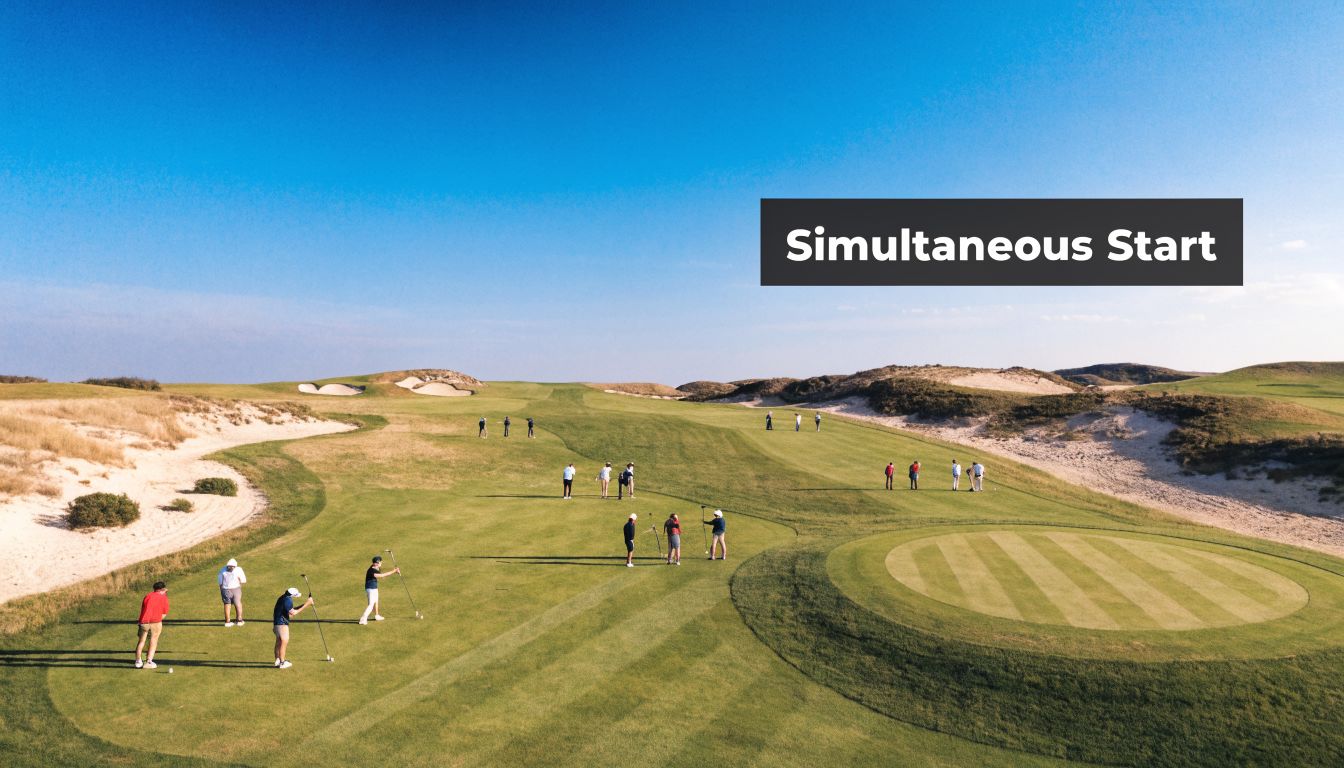
The parking lot is full, breakfast is running long, and 120 players are supposed to be on the course at once. In that situation, the start method decides whether the day feels organized or rushed. A shotgun start gives you control over timing, which is why I use it for big charity events, corporate outings, and any tournament built around lunch, awards, raffles, or a sponsor program afterward.
Every group starts on a different hole at the same time, so the field finishes in a much tighter window. That helps the kitchen, the scoring table, and the sponsor schedule. It also avoids the usual complaints that come with late tee times and a long wait for dinner.
Shotgun starts work best when the post-round schedule matters as much as the golf.
Execution is the hard part. The scoring format can be simple, but the logistics are not. If players are unclear on their starting hole, if cart signs do not match the pairings, or if a volunteer sends two groups to the same tee, the first twenty minutes get messy fast.
A well-run shotgun start usually includes:
Clear starting assignments: Send hole numbers before event day, print them at check-in, and place them on each cart.
One person controlling staging: A starter or lead volunteer should direct traffic and answer last-minute questions.
A real check-in cutoff: Do not let late arrivals keep every other group waiting.
Simple score entry from any hole: Players need the same scoring access whether they start on 1, 7, or 18.
Live scoring improves a shotgun event because action happens everywhere from the opening horn. The board updates early, sponsors see movement right away, and players stay engaged even if they never pass the clubhouse turn. For organizers who also run recurring outings or league-style events, this guide to golf league program setup and administration is useful because the same operational discipline applies here. Clear assignments, visible standings, and fast communication save staff time.
Live Tourney makes the day easier to run without asking players to download an app. You can assign holes, publish pairings, share a simple score link, and keep the leaderboard live for players, guests, and clubhouse screens. That is the difference between a shotgun start that feels polished and one that feels like controlled chaos.
6. The Golf League
Leagues are less flashy than a one-day invitational, but they’re often better business. A weekly or season-long league brings players back repeatedly, builds routines, and creates a social anchor for the property.
That’s why I’d put leagues near the top of practical golf tournament ideas for operators. They don’t just fill one date on the calendar. They create a reason for players to keep showing up, bringing guests, and caring about standings.
The right way to build a league
The biggest mistake is making a league feel like an endless copy of the same event. Keep the season structure steady, but vary the weekly format. One week can be individual net. Another can be partner best ball. Another can be a points game. The season standings tie everything together.
Live Tourney’s page on golf league programs is especially relevant here because league administration is where manual systems really start to wear staff down. Rosters shift. Subs show up. Weekly payouts need tracking. Season points need to stay accurate.
A good league setup usually includes:
Recurring templates: Save the event skeleton so weekly setup is fast.
Visible season standings: Players care more when every week rolls into something bigger.
Simple payout logic: If the payout process feels murky, players lose trust.
The inclusivity side matters too. One of the biggest gaps in tournament content is that many event ideas assume a confident, competitive golfer. The broader opportunity is to use leagues to welcome newer players, women, juniors aging into adult play, and golfers who might prefer nine holes or mixed formats over a serious weekend competition. Flexible league design does that better than a rigid one-day medal event.
7. Nine and Dine
A lot of golfers want an event. They just don’t want to give up a full day for it. That’s where Nine and Dine works so well.
Nine holes after work, a simple format, and food or drinks after the round is one of the easiest ways to create a social golf product that feels modern. It suits young professionals, couples, parents, new golfers, and members who like the club experience as much as the competition.
Why shorter events fill a real need
Nine-hole formats reduce the commitment and the pressure. Players know they can get in, play, socialize, and still be home at a reasonable hour. That alone makes this one of the most practical golf tournament ideas for busy markets.
The format doesn’t need to be serious. A two-person scramble, casual best ball, or mixed-team points game usually works better than a strict individual event. Keep the entry and rules simple. Build the appeal around convenience and atmosphere.
A nine-hole event succeeds when players feel they can say yes without reorganizing their whole day.
This format also serves a wider access goal. A lot of novelty content in golf focuses on weird games but ignores how to make events feel welcoming to beginners and non-traditional golfers. Nine and Dine solves a real barrier. It asks less time, less experience, and less emotional investment than a full-day tournament.
Use Live Tourney’s quick scoring setup and app-free score entry here. That matters because the social side of the evening only works if results are ready quickly. Nobody wants to wait around while staff enters scorecards after dinner service has already started.
8. On-Course Contests and Side Games
A standard leaderboard only rewards the best overall round. Side games give more people a reason to care. That’s why they work so well in fundraisers, sponsor events, and member days with mixed ability levels.
Closest to the pin, longest drive, beat the pro, putting contests, and skins all add energy without changing the main event. The trick is to avoid turning them into an administrative mess. Paper markers blow away. Handwritten distance notes get lost. Volunteers disagree on who won.
Keep side games simple enough to finish cleanly
Pick only the contests you can explain in one sentence and settle without debate. Players should know the rule, know where to enter a result, and know when it counts. If it needs a five-minute explanation on the tee, skip it.
Live Tourney’s side games tools are useful here because they let players or staff enter distances and outcomes directly into the scoring flow. That removes a lot of the old clipboard friction and makes the winners easier to verify when prize time comes.
A few side-game rules that work:
Limit the menu: Two or three well-run contests beat eight confusing ones.
Separate divisions when needed: Men’s and women’s long drive can make sense depending on the field.
Tie prizes to sponsors: A contest feels more real when a sponsor owns it visibly.
For merchandise or giveaway planning around these extras, even small operational details matter. If you’re packaging contest prizes, registration kits, or sponsor handouts, it helps to think through practical eco-friendly packaging options instead of adding more one-day waste than the event needs.
9. Junior Golf Tournaments
A junior event usually goes off track before the first score is posted. One group is on the wrong tee. Parents are asking where to stand. A volunteer is trying to sort age divisions with a paper sheet on the hood of a cart. Good junior tournaments solve those problems early and keep the day clear, friendly, and easy to follow.
The format matters, but setup matters more.
Junior players need clear tee assignments, simple rules, and a pace that keeps them engaged. Families need to know where to check in, how scoring works, and when awards will happen. If any of that feels vague, the day gets tense fast. Live Tourney helps by giving organizers one browser-based scoring flow that staff, parents, and volunteers can use without asking everyone to install an app at registration.
What junior players need from the format
Start by dividing the field in a way that feels fair on the course, not just tidy on a spreadsheet. Age bands are a good starting point, but tee yardage, experience level, and round length matter just as much. A 9-hole division for newer players often produces a better experience than forcing everyone into the same 18-hole structure.
Keep the scoring process simple. Younger players should not be carrying the full administrative load during the round. In practice, the cleanest setup is to assign score entry to a parent, walking volunteer, or staff member in each group. That cuts down on mistakes and keeps kids focused on playing.
Stroke play still works for experienced juniors, but it is not the only option. Team scrambles, parent-junior formats, and short-course competitions are often better for entry-level events because they lower pressure and keep more players involved hole to hole. The right choice depends on the goal. If the day is about player development, use a format that builds confidence. If it is a ranking or championship-style event, make the structure stricter and communicate that clearly before anyone arrives.
One point is easy to miss. Parents judge the event as much as the players do. Clear pairings, visible leaderboards, and a short, well-run awards presentation make the tournament feel organized. That matters if you want families to come back for the next one.
Junior events should leave kids wanting another start time, not feeling like they survived an exam.
The best junior tournaments feel welcoming without feeling sloppy. That is the balance to aim for. Good structure, fast scoring, and less confusion around check-in and results will do more for the player experience than adding extra complexity ever will.
10. App-Free Live Scoring
The round ends. Half the field is in the clubhouse asking who won, two groups still have cards to turn in, and someone from the sponsor table wants an updated leaderboard for the raffle. That is the moment when a well-run event separates itself from a chaotic one. App-free live scoring fixes that better than almost any format tweak.
The idea is simple. Give each group a scoring link that opens in a phone browser, assign one person to enter scores, and let the leaderboard update during the round. No app download. No password reset on the first tee. No stack of cards waiting to be added up while players stand around.
That changes more than the scoring table. Players can follow the board while they play. Staff can spot missing scores before they become a post-round cleanup job. Sponsors and guests can track the action without chasing updates from the tournament desk.
From an operations standpoint, this is one of the easiest ways to make an event feel more professional. A charity scramble, member-guest, junior event, or league night all benefit from the same thing. Clear scoring, fast results, and fewer manual handoffs. Live Tourney is built for that workflow. Organizers can send a scoring link by text or email, keep the field on one live board, and close out results quickly without pushing every player into another app.
A few setup choices make the system work in practice:
Assign one scorer in each group: Pick a captain, volunteer, or staff walker before the round starts.
Test the link before players tee off: Catch service issues on the range, not on hole 6.
Show the leaderboard where people gather: TVs in the bar, patio, or golf shop keep energy up after the round.
Keep paper cards as backup: Phones fail, batteries die, and wet days happen.
There is a trade-off. Live scoring only helps if the input is consistent. If nobody owns score entry, the board gets spotty and players stop trusting it. Set that expectation early, give groups a 30-second scoring demo at check-in, and the whole event runs cleaner. That is usually all it takes.
10 Golf Tournament Ideas Compared
Format | 🔄 Implementation complexity | 💡 Resource requirements & tips | ⚡ Speed / Efficiency | 📊 Expected outcomes & ideal uses | ⭐ Key advantages |
|---|---|---|---|---|---|
The Classic Scramble: Perfect for Fun and Fundraising | Low, simple team rules and scoring | Moderate, teams, basic handicapping; preload rosters in Live Tourney | High, fast-paced play, fewer shots per hole | Inclusive, high participation; ideal for charity, corporate outings, beginner events | Great for mixed-ability groups, social fun, fast rounds |
Head-to-Head Drama: The Match Play Bracket | Medium–High, bracket and hole-by-hole tracking | High, scheduling, brackets; use Live Tourney match module and consolation bracket | Moderate, close matches can slow pace | Intense, spectator-friendly; best for club championships and knockouts | Direct competition, strategic play, keeps hole-by-hole drama |
The Best Ball: A Blend of Team and Individual Play | Medium, per-player scoring with team aggregation | Moderate, individual score entry and handicaps; auto-calc best ball in Live Tourney | Moderate, faster than full-field stroke play | Competitive balance for member-guest and pro-ams; suits two-person teams | Encourages aggressive play with team safety net; individual accountability |
The Ryder Cup Experience: An Unforgettable Team Event | Very High, multiple formats and sessions to manage | Very High, team rosters, pairings, multi-session scheduling; use Ryder Cup module | Variable, multi-session event across day(s) | High engagement and rivalry; ideal for inter-club, large team events | Creates unmatched excitement and sustained player engagement |
The Shotgun Start: Maximize Efficiency for Large Groups | Medium, careful tee-sheet management required | High, precise start assignments, cart signs, communications; automate with Live Tourney | Very High, entire field finishes together within set window | Efficient for large fields and post-round banquets; best for charity or corporate events | Maximizes course use, simplifies post-event logistics |
The Golf League: Build Community and Consistent Revenue | Medium, recurring setup and season tracking | Medium, rosters, recurring events, standings; use templates and automation | Variable, ongoing cadence, weekly rounds | Builds loyalty and predictable revenue; ideal for seasonal membership programs | Drives repeat business, community, and long-term engagement |
Nine & Dine Events: Perfect for Modern, Busy Players | Low, short-round formats and simple scoring | Low–Moderate, 9-hole templates, F&B coordination; market as package | Very High, 2–2.5 hour rounds, quick turnaround | Attracts busy players and boosts F&B; ideal for twilight events and beginners | Low commitment, higher participation, strong F&B revenue potential |
On-Course Contests and Side Games | Low, add-on to any format with designated holes | Low–Moderate, markers, measurement tools; use Side Games feature for automation | Variable, can slow contest holes if unmanaged | Adds engagement and sponsor value; suits charity and fun-focused tournaments | Broad participation, sponsor opportunities, extra prize pools |
Junior Golf Tournaments: Growing the Next Generation | Medium, age divisions and modified rules | Moderate, staff/volunteers, custom tees, scheduling around schools | High, shortened yardages speed play | Developmental focus; best for junior programs, camps, PGA Junior League | Encourages participation, builds future players and family loyalty |
The Game Changer: App-Free Live Scoring | Low, quick setup, web-based links | Moderate, reliable cell signal, smartphones; brief one person per group on scoring | Very High, instant leaderboard updates, automates scoring | Modernizes events; ideal for charity, competitive, and sponsor-driven tournaments | Dramatically reduces manual work, increases engagement and professionalism |
Putting It All Together
A tournament usually feels won or lost before the first tee shot. Pairings go out late, players are unclear on the format, staff are fielding basic scoring questions, and the awards table is still being sorted when groups make the turn. The format is rarely the problem. Execution is.
The best golf tournament ideas are the ones a staff can run cleanly from registration through payouts. A simple scramble with fast scoring and clear side games will outperform a creative format that takes three pages to explain. Players notice the basics. They notice whether pairings are accurate, whether contests are easy to follow, whether the leaderboard updates quickly, and whether results are ready when they finish.
Good organizers choose the format based on the job the event needs to do. A charity outing needs pace, sponsor visibility, and a social feel. A member event may need fair competition and a clean playoff process. A junior tournament needs age-appropriate setup, shorter yardage, and communication that keeps parents informed. Weekly leagues need repeatable setup and standings that do not create extra office work every Tuesday night.
That is the practical thread running through every idea in this list. Scrambles help mixed-skill groups enjoy the day. Match play creates head-to-head pressure. Best ball gives stronger players room to compete without losing the team element. Ryder Cup formats build season-long identity. Shotgun starts protect timing. Nine and Dine brings in players who do not want a five-hour commitment. Side games add sponsor value and keep more of the field engaged. Live scoring supports all of it if it is easy for players to use.
The trade-off is straightforward. The more format complexity you add, the more your operation needs structure. If you want flights, side games, skins, live leaderboards, and multiple divisions, you need a system that keeps those pieces connected. If you are running a casual nine-hole event, the goal is speed and clarity, not extra features nobody will use.
Live Tourney helps courses and event teams run that operation without adding software headaches. Players score through a link instead of downloading an app. Staff can handle pairings, cart signs, scorecards, side games, payouts, leagues, match play, Ryder Cup setups, and round robins in one place. That cuts down on duplicate data entry, paper shuffling, and the usual end-of-round scramble in the golf shop.
Use the final planning check I recommend to every organizer. Pick a format that fits the audience. Then confirm exactly how scoring, communication, contests, and results will be handled on the day. If those answers are clear, the event is easier to staff, easier to sell, and better for players.
A memorable tournament feels organized from the first email to the final leaderboard.
If you want your next outing, league, member event, or fundraiser to feel more professional without adding more admin work, take a look at Live Tourney. It gives you app-free live scoring, fast event setup, clean pairings, side games, payouts, and real-time leaderboards in one place, so your staff can spend less time chasing scorecards and more time running a great golf day.