
Mar 3, 2026
Learn how to run a successful golf league US with expert tips on formats, live scoring, scheduling, and promotion to boost engagement and grow your revenue.

A great golf league US courses can be proud of isn't just about a full tee sheet. It's about building a community that drives steady revenue, brings energy to the course, and keeps players coming back long after the season ends.
But a successful league doesn’t just happen. The best ones are built on a solid foundation of clear goals and smart planning—all done before the first ball ever leaves the tee.
Laying the Groundwork for a Thriving Golf League
Too many league organizers jump straight into formats and prize funds. But before you even think about handicaps or schedules, you have to define the soul of your league. This is easily the most critical part of the process, and it's where most new leagues go wrong.
Get this right, and everything else—your audience, your pricing, your marketing—falls into place. Get it wrong, and you'll struggle to fill spots all season.
So, let’s start with the one question that shapes every other decision: who is this league actually for?
A laid-back, 9-hole after-work league for networking is a completely different animal than a competitive 18-hole weekend series for single-digit handicaps. You can't be everything to everyone.
Defining Your League's Core Identity
Every good league has a distinct personality. Think of it as a brand that tells players exactly what to expect. This "brand" is a mix of its competitive vibe, social scene, and the type of player it’s designed to attract.
What's your league's identity?
The Social Club: All about fun and networking. Think 9-hole scrambles or best ball formats, usually followed by beers and burgers on the patio. The golf is almost secondary to the social scene.
The Competitive Series: This is for the serious golfers who live for the leaderboard. It’s often individual stroke or match play with season-long points races and bragging rights on the line.
The Corporate League: A fantastic way to fill tee sheets on slower weekday afternoons. You're catering directly to local businesses looking for a weekly team-building outlet.
The Developmental League: This could be a junior program or a series for new golfers, much like the Fall Junior Golf League hosted at Walt Disney World® Golf, where the focus is on learning and improvement in a low-pressure setting.
Your league's identity has to support your course's business goals. Are you trying to boost slow weekday afternoons? Drive more F&B sales? Or cultivate a core group of regulars who will book tee times outside of league play?
Once you nail down the identity, give it a name that sells the experience. "The Thursday Night League" is fine, but "The Sundowner Social" paints a much better picture for the casual player you're targeting.
Financial Planning and Setting Entry Fees
This is another common tripwire for new leagues: underpricing. Your entry fee needs to cover all your costs, fund a respectable prize pool, and still feel like a great value to your players.
Don't just pull a number out of thin air. Your entry fee should carefully account for:
Greens Fees: The biggest piece of the puzzle. Will it be a one-time seasonal fee or a weekly pay-as-you-go rate?
Prize Pool: This is a huge motivator. A healthy prize fund—whether it's cash or pro shop credit—is what keeps the competition interesting week after week.
Administrative Costs: Your time is worth money. Factor in the hours you'll spend on scheduling, managing payments, and sending communications.
Food & Beverage: If post-round hangs are part of the deal, decide if you'll bundle this into the fee or offer it as an optional add-on.
Software/Platform Fees: In this day and age, a tool like Live Tourney isn't a luxury; it's a necessary cost for running a professional-feeling league without pulling your hair out.
As you build this foundation, you should also be thinking about how you’ll grow. A crucial part of this early stage is planning for how you'll get the word out, much like you'd consider how to advertise a small business. A solid plan for attracting and keeping members is just as important as getting the operational details right.
Designing Your League Format and Season Schedule
Get the format and schedule right, and your league practically runs itself. Get it wrong, and you’re in for a season of headaches, slow play, and unhappy golfers. The choices you make here are the foundation for the entire league experience.
It all boils down to knowing your players. A laid-back, after-work league just wants to have fun, so a fast, low-pressure team game is perfect. On the other hand, a weekend league for serious sticks needs a format that rewards great golf over the long haul.
This decision tree can help you map out the right path based on what kind of vibe you're aiming for.
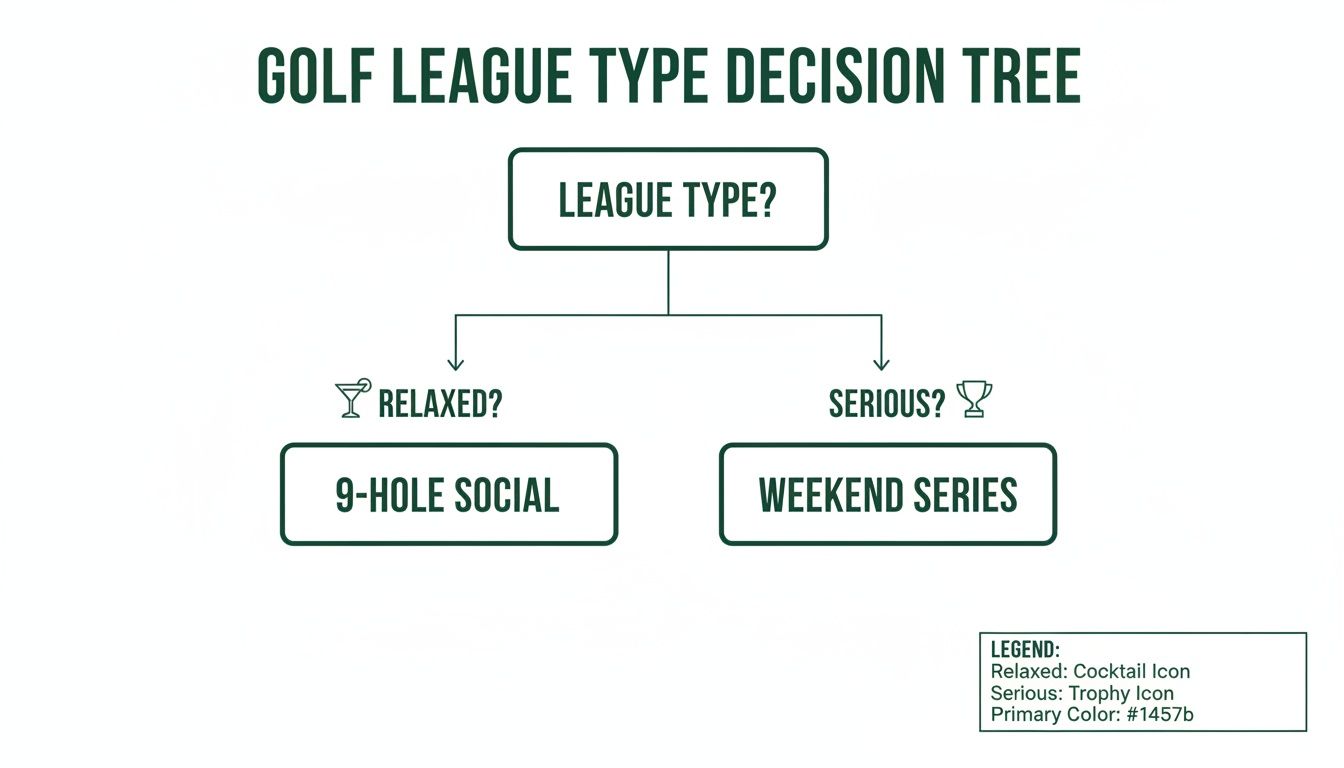
Think of it as a starting point. Are you building a relaxed social club or a competitive series? Your answer to that one question will point you toward the formats that make the most sense.
Matching Formats to Player Expectations
Picking a format isn't about what's trendy; it's about what fits your members. I’ve seen courses try to run a full-field individual stroke play event for a casual 9-hole evening league, and it’s a disaster every time. It’s a surefire recipe for 5-hour rounds and frustrated golfers.
To help you choose, here's a quick look at some of the most popular formats and where they really work best.
Comparing Popular Golf League Formats
Format Type | Best For | Pace of Play | Skill Level Suitability |
|---|---|---|---|
Two-Person Scramble | Social leagues, corporate outings, beginners. | Fast. Players pick up, which speeds things up. | All levels. Great for mixing high and low handicaps. |
Best Ball (Four-Ball) | Competitive team play where individual scores still matter. | Moderate. Faster than stroke play, slower than a scramble. | Intermediate to advanced. High-handicappers can struggle. |
Match Play | Creating head-to-head rivalries and season-long brackets. | Fast. Conceded putts and holes speed up the round. | All levels. A high-handicapper can still win holes. |
Stableford / Points | Keeping more players in the game, even after a blow-up hole. | Moderate. Same as stroke play, but scoring keeps it interesting. | All levels. Rewards aggressive play and prevents DNFs. |
These are the building blocks. You can get creative from here.
A great way to keep things fresh is to mix it up. Run a season-long points race based on individual scores but throw in a few two-person team events. It breaks up the monotony and helps build some real camaraderie.
Building a Rock-Solid Season Schedule
Consistency is everything for a golf league. Your players plan their entire week around league night, so a predictable, clearly communicated schedule is non-negotiable. You want to build a calendar they can set their watch to.
First thing’s first: block out your dates for the entire season. This means every weekly play day, any special mid-season tournaments, and a firm date for the end-of-season championship. When players can see the whole schedule upfront, they can fully commit.
When it comes to the tee sheet, you have to balance your league with your regular daily-fee players. A shotgun start is usually the most efficient way to get everyone on the course at once, freeing up the tee sheet before and after. If you're using sequential tee times, blocking off a consistent two-hour window is the next best thing.
Finally, you absolutely must have a rainout policy. Decide before the season starts how you'll handle cancellations. Will the event be rescheduled? Skipped entirely? Will you credit the entry fees? Putting this in writing and communicating it clearly from day one will save you a world of frustration when the weather inevitably turns.
For more complex match play brackets, a round-robin schedule can be a lifesaver. You can find a great guide on how to create a round robin schedule that makes the setup process much easier.
Getting Registration and Communication Right
Let's be honest: chasing down cash payments and wrestling with messy spreadsheets is a nightmare. The first impression of your league happens long before anyone tees off—it starts with registration. A clunky, disorganized sign-up process just screams "amateur hour" and creates a mountain of work for you and your staff.
If you want to run a modern golf league US courses can be proud of, you need a modern back office. Moving away from paper forms and manual data entry is the single most impactful change you can make. It creates a smooth, professional experience that builds player confidence right away and, more importantly, frees up your time.
Designing a Simple, Flawless Registration
Your registration form is your best friend for gathering all the essential player info. The goal is to get everything you need in one clean shot, so you're not stuck chasing people down with follow-up calls and emails. A poorly designed form is a one-way ticket to incomplete data and frustrated members.
Using an effective event registration form template can give you a solid head start, providing a proven structure for capturing the right details from the get-go.
Make sure you're collecting the essentials:
Player Contact Info: Full name, email, and phone number. This is non-negotiable.
Handicap Information: Ask for their official USGA/GHIN number or an estimated scoring average to set up a fair league handicap.
Team Details: If it's a team league, you'll need fields for a team name and the partner's information.
Emergency Contact: This is a small but professional touch that shows you’re on top of things and care about player safety.
By integrating payments directly into your online registration, you can finally stop hounding players for their league dues. They sign up and pay in one simple, secure transaction. This instantly cleans up your cash flow and slashes your administrative headaches.
Putting Your Communication on Autopilot
Once players are signed up, clear and consistent communication is what keeps the league running like a well-oiled machine. A solid communication plan makes sure everyone knows where they need to be and when, keeping them plugged into all the league action. The real trick is to automate as much of this as you can.
Platforms like Live Tourney let you build automated email campaigns that trigger based on your league schedule. You can literally set up your communications for the entire season in just a few minutes.
This kind of clean, inviting portal is what your members should see.
A dedicated online portal gives players a central spot for all league information, which just reinforces that professional and organized vibe you're going for.
Here are a few automated emails you absolutely need to set up:
The Welcome Email: Send an automated message the moment someone registers. It should confirm their spot, give a quick schedule overview, and link to the league rules.
Weekly Pairings & Tee Times: A few days before each event, send an email with their specific tee time and playing partners. No more frantic calls to the pro shop.
Event Reminders: A quick reminder the day before an event is a simple way to reduce no-shows and keep the league top-of-mind.
Weekly Results & Standings: This is the one everyone's waiting for. Send it the morning after league night with results, updated standings, and highlights like skins winners. To get a deeper look at streamlining these processes, check out our guide on golf league management software.
This proactive approach to communication does more than just share information; it builds a connected community. When players feel informed and engaged, they become more invested in the league’s success—and much more likely to come back next season.
This level of organization really mirrors the professionalism you see at the highest levels of the sport. While your club might not be chasing the $1.8 billion in revenue the PGA Tour hit in 2023, adopting these kinds of efficient tools creates a similar professional feel that players notice and appreciate.
Using Live Scoring to Elevate the Player Experience
Want to turn your weekly league night into something that feels like a stop on a professional tour? The secret isn't complicated. While things like smooth registration set a professional tone, nothing gets players talking like the thrill of live scoring.
This is what closes the gap between a casual round and a true competitive event. The buzz it creates is real.

Forget asking players to download clunky apps or deal with a steep learning curve. The best live scoring platforms are built for one thing: simplicity. Everyone from your least tech-savvy member to the club champ should be able to jump right in.
The Power of App-Free Scoring
One of the biggest roadblocks to using new tech at the course is friction. Forcing players to download an app, create an account, and learn a new system is a quick way to get them to tune out. That's where an app-free, web-based system like Live Tourney changes everything.
Players just get a unique link sent right to their phone. They tap it, and a simple scoring portal opens in their browser. No downloads. No passwords. No hassle.
This is a game-changer for getting everyone on board. When scoring is this easy, people actually do it. Instead of having just one person keep score for the group, anyone can pull up the link and punch in scores right after a hole is finished. It’s faster and way more accurate.
Bringing the Leaderboard to Life
The real magic happens when those scores instantly light up a live leaderboard. All of a sudden, every single shot matters, and everyone knows it. A player finishing on 18 can see exactly what they need to shoot to win a skin or move up the standings.
This energy extends way beyond the course itself. Here’s how to make the leaderboard the center of attention:
Clubhouse TV Display: Throw the live leaderboard up on a big screen in the clubhouse or on the patio. It instantly becomes a gathering spot where players can grab a drink, watch the results roll in, and give each other a hard time.
On-Demand Access: Players can pull up the exact same leaderboard on their phones, whether they're still on the course, at the 19th hole, or already driving home.
Multiple Leaderboard Views: Good software lets you flip between different views. Show the gross leaderboard, the net leaderboard with handicaps applied, and the running results for all your side games.
This immediate feedback transforms a standard league night into a dynamic, living event. It’s the difference between seeing your name in an email two days later and watching it climb to the top of the board while you’re enjoying a beer.
Live scoring isn't just about convenience—it's about engagement. You're creating a shared experience where every player feels connected to the action, which builds a much stronger sense of community and competition.
Effortless Management of Games and Formats
A great live scoring system does more than just add up numbers; it handles all the complicated math that used to give league managers a massive headache. This is especially true for the kind of diverse golf league us players have come to expect.
Imagine having all these popular games managed for you, without touching a single spreadsheet:
Skins Games: The system finds the "skin" winners (the only low score on a hole) for both gross and net, calculates what each skin is worth, and puts the winners right on the leaderboard.
Closest-to-the-Pin: On your designated par 3s, players enter their distance right into the scoring portal. The leaderboard instantly shows who's currently holding the top spot.
Handicap Application: Whether you're running a simple net total or a complex team game like a Chapman Scramble, the software should apply the strokes automatically and correctly based on your rules.
This level of automation doesn't just save you hours of work; it adds a layer of professionalism that players really notice and trust. When the payouts are instant and the math is always right, you eliminate disputes and build confidence in how the league is run. For a deeper look at what to look for, you can read more about golf tournament scoring software and the features that matter most.
Managing Payouts and End-of-Season Awards
How you end your league season is just as important as how you start it. When the last putt drops, your players really only care about two things: getting paid fairly and having a great time at the awards party. Get this right, and you’ll cement your league’s reputation for next year.
This is your final chance to prove that their investment of time and money was worth it.
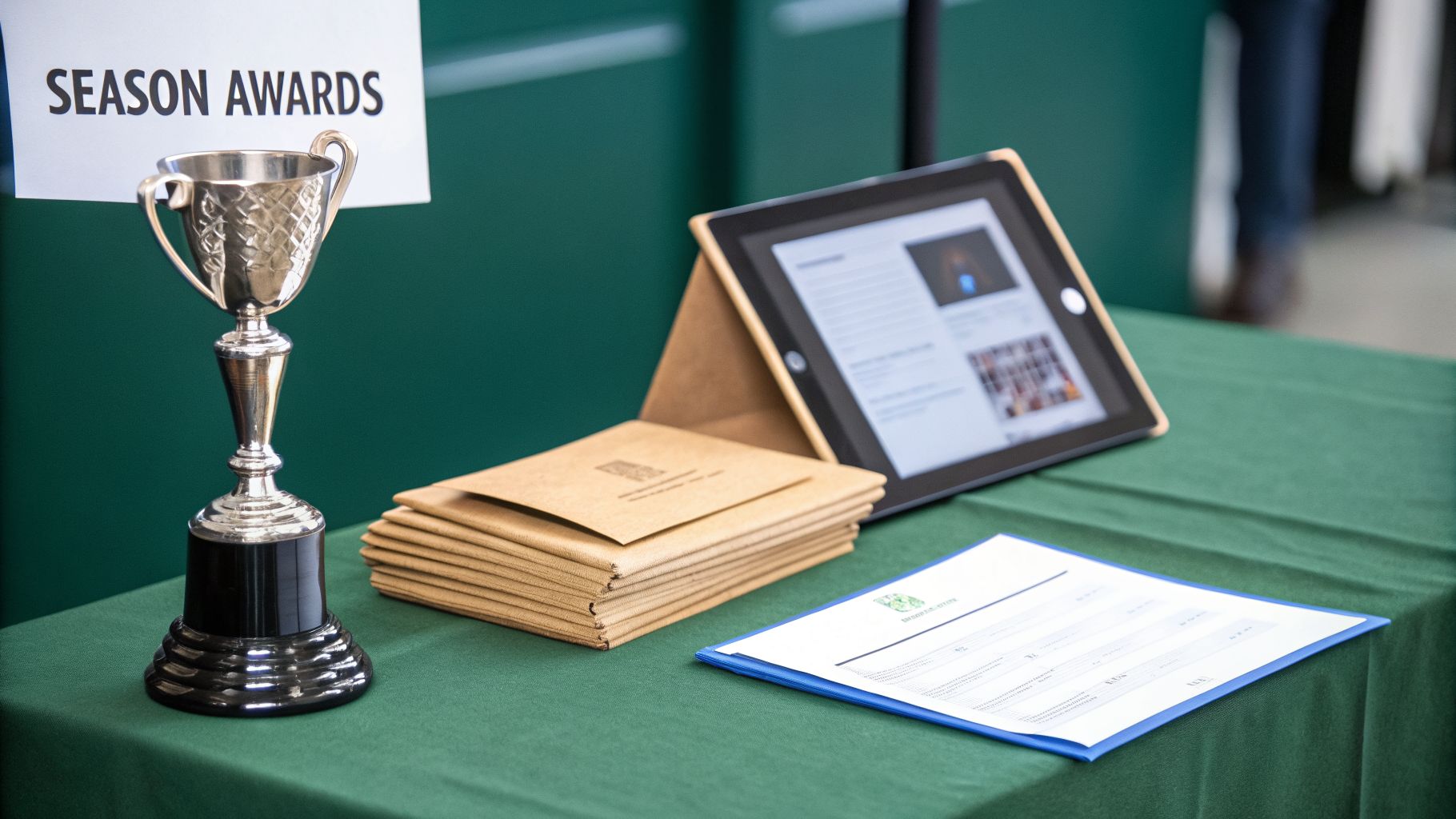
Let's be honest, the days of calculating skins on the back of a napkin are over. Or at least, they should be. Trust is the currency of any successful golf league US courses run, and nothing destroys that trust faster than sloppy math with the prize fund. Automating your payouts isn’t just a nice-to-have anymore; it's a must.
Automating Payouts for Total Transparency
Software like Live Tourney has a payouts calculator built right in, which completely eliminates the guesswork and human error. The tool takes the results straight from your live scoring and instantly figures out who won what. It’s a massive time-saver and ensures every penny is accounted for.
You can set up payouts for all your league’s different games, including:
Weekly Contests: Low net, best ball, Stableford—whatever the format, the system finds the winners and calculates their cut of the prize pool.
Skins Games: It automatically identifies gross and net skins, calculates their value, and lists the winners. No more poring over scorecards with a highlighter.
Season-Long Standings: The software tabulates the final points or money lists to crown your overall league champions without you lifting a finger.
The real magic here is transparency. When you can click a button and generate a report showing every player, every score, and every dollar won, you shut down disputes before they even begin. It just looks professional and builds a ton of confidence in how you're running the show.
This approach brings a level of polish you usually only see at high-stakes pro events. Even major organizations like PGA Tour Inc., which reported a massive $3.86 billion asset base in 2024, depend on meticulous financial tracking. Tools like Live Tourney give any club pro that same professional capability—with proven features like instant leaderboards and automated payout calculators—for everything from a 100-person outing to a charity scramble. You can dig into the numbers yourself by checking out the PGA Tour Inc.'s public filings on ProPublica.
Creating a Memorable Awards Ceremony
The end-of-season banquet is more than just handing out cash. Think of it as your single best marketing event for next season. A fun, well-run awards night creates a lasting good vibe and gets people excited to come back. Don’t just tack it on as an afterthought.
Try to structure the event to build a little excitement. Maybe start with a casual, non-competitive team scramble before dinner to get everyone loose and laughing. Then, when it’s time for the awards, build the drama.
Here’s a simple flow that works well:
Start with the fun stuff: Kick things off by announcing the weekly winners for closest-to-the-pin, long drives, and any other side games.
Recognize the grinders: Hand out a "Most Improved Player" award based on handicap reduction. It's a fantastic way to reward effort, not just raw talent.
Announce flight winners: If you run multiple flights, give each division’s champions their moment in the spotlight.
Crown the overall champs: Save the biggest prize for last. Announcing your season-long points or match play winners is the perfect way to cap off the night.
By celebrating your members and making sure every payout is handled with complete integrity, you aren't just closing out one season. You're laying the groundwork for an even bigger and better one next year.
Your Questions Answered About Running a Golf League
Even the most meticulously planned golf league will throw you a few curveballs. As a league administrator, you quickly learn you're not just a scheduler—you're a problem-solver, a rules official, and the go-to person for just about everything.
This is your playbook for handling those tricky, in-the-moment situations that can make or break a great season. Getting these details right from the start is what keeps your league fun, fair, and running like a well-oiled machine.
How Do I Fairly Handicap Players with Different Skill Levels?
This is the big one. Without a fair handicap system, your league just becomes a weekly showcase for your best sticks, and that’s a quick way to kill participation. The gold standard, of course, is requiring every player to have an official USGA Handicap Index.
But let's be real—most players in a social league won't have one. That means it's on you to create a simple, transparent league handicap. A tried-and-true method is to average a player's first three to five 9-hole or 18-hole scores against the course rating to establish a starting point.
This is where modern league software saves you a massive headache. A platform like Live Tourney can automatically calculate and adjust these handicaps every single week as new scores roll in. For team games like a scramble, just be clear about the formula (e.g., 25% of the 'A' player's handicap plus 15% of the 'B' player's).
The #1 rule of handicapping is transparency. Whatever method you pick, write it down, share it before the season kicks off, and stick to it. When players understand the system, they trust the results.
What Is the Best Way to Promote a New Golf League?
Forget expensive ad campaigns. Your best marketing tool is the community you already have. Start with the golfers who are already walking through your doors and trust your operation.
Here are a few tactics that just plain work:
Go Old School: Put up simple flyers in the pro shop, grill, and locker rooms. More importantly, make sure your staff are your biggest cheerleaders, personally mentioning the league to regulars.
Use Your Digital Megaphone: Blast the news out to your club’s email list and social media followers. Don't just announce it—show them what they'll get. Post about the fun format, the social scene, or the thrill of a live leaderboard.
Light a Fire: Offer an "early bird" registration discount. It’s a great way to build momentum and get a solid base of players committed early.
Team Up Locally: Ask a local restaurant or business for a small sponsorship. They get some exposure, and you get a little extra cash to sweeten the prize pool.
And for goodness sake, make signing up easy. Every flyer, post, and email should point players to a dead-simple online registration page where they can sign up and pay in under a minute.
How Should I Handle No-Shows and Rules Disputes?
The secret to handling both of these headaches is to have your policies in writing before the first ball is in the air. A simple, one-page document with your league-specific rules and procedures will save you from becoming a full-time mediator.
For on-course rules disputes, you need a final authority. That's usually the league administrator or a small rules committee. The USGA Rules of Golf should be your foundation, but you'll want to add local rules that fit your course and league (think preferred lies, what to do with lost balls, etc.).
No-shows demand a firm-but-fair policy. Maybe a player who ghosts their group forfeits the match, or their team has to play shorthanded. Some leagues even use a "three-strikes" policy for players who make it a habit.
Consistency is everything. When the rules are clear upfront and you enforce them fairly for everyone, you protect the league's integrity and stop small frustrations from turning into big drama.
Ready to run a league that players can't wait to join? Live Tourney gives you app-free live scoring, automated registration, and all the tools you need to run a professional and ridiculously fun league without the usual stress. See for yourself how easy it can be to save time and give your players an experience they'll talk about all year. Start your free trial at https://livetourney.com.





