
Feb 28, 2026
Build a golf course hole by hole guide that boosts revenue and player loyalty. Learn photo tips, strategy writing, and engagement tactics from experts.

A top-tier golf course hole by hole guide is one of the most powerful digital assets you can have. It’s so much more than a digital yardage book—it’s an interactive preview that gets golfers excited, sets the right expectations, and tells your course's story before they even set foot on the property.
Why a Digital Guide Is a Business Essential
Let's be honest: in an age where golfers research every course online before booking, a basic scorecard PDF just doesn't cut it anymore. A dynamic, hole-by-hole guide has become a non-negotiable tool for standing out. It's your best shot at showcasing the unique character of your layout and giving you a real edge over the competition.
Think of it as your course's 24/7 digital ambassador.
A well-crafted guide lets you do more than just list distances. It’s a chance to narrate the experience the architect intended, offering strategic insights that a printed map could never convey.
Attract and Prepare Eager Golfers
A detailed guide is a magnet for search traffic. When local golfers are looking for a place to play, a rich hole-by-hole overview helps ensure your course pops up. This single asset becomes a key part of their planning process.
It also helps manage expectations by visually communicating the course's difficulty and unique features. For instance, a player can study the ideal landing area on a tricky dogleg or see the subtle breaks of a green complex, all from their phone. This prep work leads to a more enjoyable round and can even help with pace of play.
Want to see how other tech can streamline your operations? Check out how modern golf tournament management software is changing the game.
From First Click to Five-Star Review
The journey from a curious visitor to a loyal advocate often starts with a single click. A compelling digital guide is a central part of that journey, turning initial interest into a booked tee time.
An interactive guide doesn’t just show the course; it sells the experience. By offering insider tips and beautiful visuals, you transform a simple search into a golfer's commitment to play your course.
The infographic below breaks down how a digital guide fits into the entire player lifecycle—from that first impression to the final, glowing review.
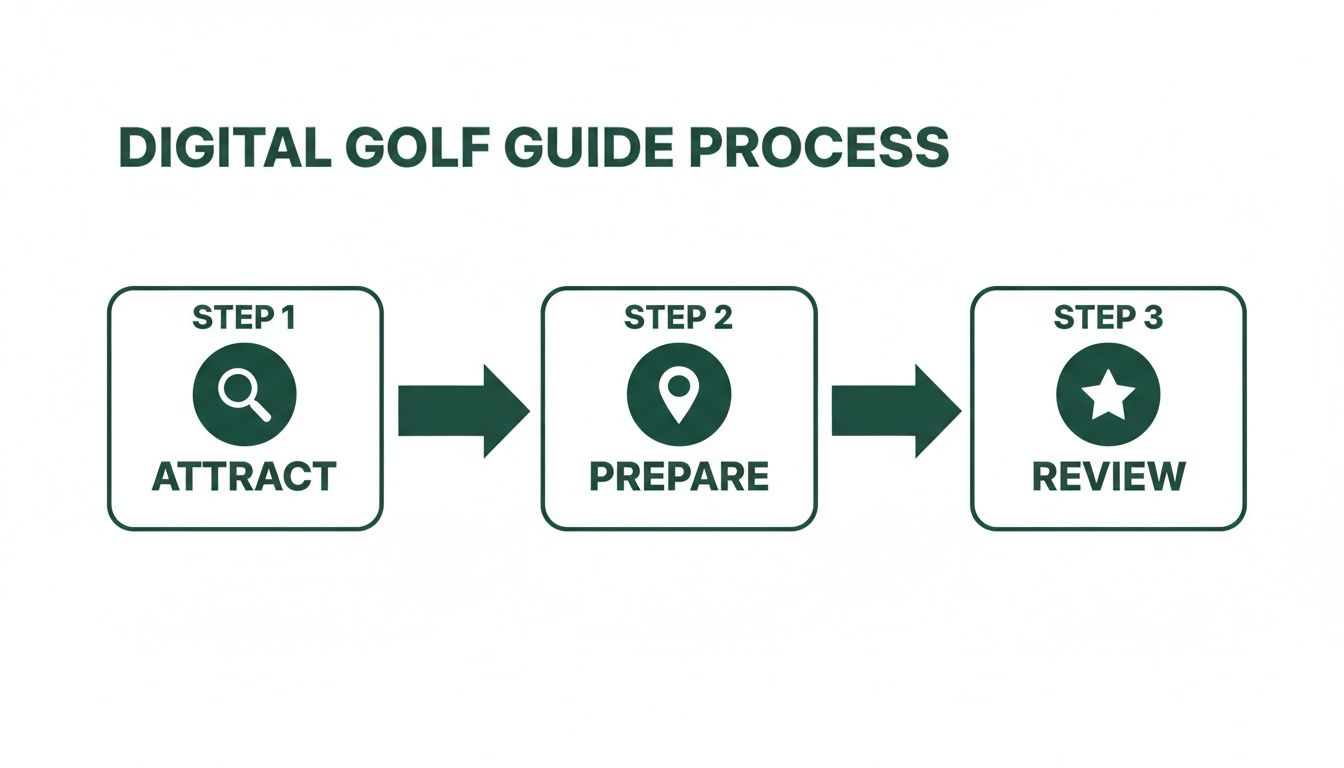
This whole process shows how one digital asset can attract new players, help them prepare for their round, and ultimately inspire them to share their great experience. By providing real value upfront, you build a relationship with golfers that pays off in repeat bookings and powerful word-of-mouth marketing.
Capturing Visuals That Tell a Strategic Story
Great visuals are the heart of any compelling golf course hole by hole guide. Forget generic, flat snapshots taken at midday. We’re talking about photography that is both beautiful and strategically useful—images that don't just show the hole, but actually explain how to play it.
Stunning course imagery really comes down to timing. The absolute best light for photography is during the “golden hour”—that first hour after sunrise and the last hour before sunset. This soft, angled light highlights every contour of the fairways, accentuates the shape of bunkers, and gives the entire course a premium, almost magical feel. I've seen it make even an ordinary hole look spectacular.
Essential Shots for Every Hole
To build a complete visual narrative, you need a consistent set of photos for each hole. This structure helps golfers quickly size up the challenge ahead. I like to think of it as a "visual trilogy" that tells the story from tee to green.
Your shot list should always include:
The Tee View: A panoramic shot from the primary tee box that shows the hole's overall layout, landing area, and general shape.
The Approach Shot: A perspective from the typical landing zone, about 150-175 yards out. This image needs to clearly display the green complex, greenside bunkering, and any trouble protecting the pin.
The Green Complex: A close-up view of the putting surface itself, highlighting its undulations, tiers, and surrounding runoff areas.
This disciplined approach ensures your guide is a functional tool that helps golfers plot their way around the course, not just a gallery of pretty pictures.
Adding Another Dimension with Drones
While ground-level photography is essential, drone footage provides a perspective that nothing else can. A slow, cinematic flyover gives players a true sense of the hole's layout, elevation changes, and strategic options. It’s the closest thing to playing the hole before they even arrive.
For example, a drone can reveal a hidden creek that isn't visible from the tee box or show the ideal angle to approach a heavily bunkered par 5. These flyovers transform your golf course hole by hole guide from a static page into a dynamic, immersive experience. A single aerial view often communicates more strategic information than paragraphs of text ever could.
A well-executed drone flyover provides instant clarity on a hole's design. It helps golfers understand the architect's intent, identify risk-reward opportunities, and plan their shots with confidence.
The Power of High-Quality Maps
A great guide combines photography with clear, easy-to-read course maps. A simple satellite image from Google Maps can work in a pinch, but a professionally designed graphic map adds a serious layer of polish and clarity.
For a truly strategic overview, learning how to make a map with multiple pins on your WordPress site is a game-changer. It allows you to visually annotate your maps with tee box locations, carry distances over hazards, and preferred lay-up zones.
By integrating these maps alongside your photography, you create a comprehensive visual resource that players will actually study before their round. You aren't just showing them the course; you are giving them the tools to score better. While you’re thinking about visual tools, you may also find our post on designing the best golf scorecard helpful for completing the player experience.
Crafting Hole Descriptions Players Actually Read

Here's where your guide goes from a simple photo gallery to a golfer's most trusted partner. The stunning photos and maps get their attention, but your descriptions are what will keep them coming back. This is your chance to share the kind of insider knowledge that actually helps people play better and enjoy their round more.
The goal is to stop writing like a surveyor and start talking like a seasoned course pro giving a personal tip.
Don't just state the yardage and par. Explain the why behind the strategy. Why does a tee shot down the left side open up a better angle to this green? How does that one greenside bunker dictate the entire approach shot for everyone but the longest hitters? This is the context that separates a generic yardage book from a truly valuable golf course hole by hole guide.
Speak the Language of a Golfer
The best descriptions feel like they're coming from a real person. They anticipate the questions a player has standing on the tee box and give clear, actionable answers. Think about the common mistakes you see golfers make on a specific hole and give them a simple tip to avoid it.
Use language that paints a picture. A short par 4 isn't just "348 yards"—it's a "classic risk-reward hole where big hitters might be tempted to go for it." A well-bunkered green isn't just a hazard; it’s a "daunting complex that demands a precise iron shot to find the surface."
This approach makes your guide far more engaging. Of course, it's not just about creative writing. Learning how to write SEO-friendly articles is also key. It ensures your hole-by-hole guide doesn't just impress players, but also shows up in search results when they're planning their next round.
From Basic Facts to Strategic Insights
Let's break down how to build a great hole description. It's all about layering the information so it's useful for everyone, from the weekend golfer just trying to break 100 to the serious competitor.
The Vitals: Always start with the hole number, par, and yardages from each set of tees.
The Game Plan: Explain the ideal tee shot. Where should they aim? What trouble should they absolutely avoid?
The Approach: Break down the second shot. What's the challenge? Offer some advice on club selection.
The Green: Is it tiered? Does it have a nasty slope or a tricky runoff area? Let them know.
This gives you a consistent, scannable framework for every hole, making it easy for golfers to quickly find the information they need.
Think of your voice as a trusted caddie. Offer tips that reveal the hole's secrets, like, "The smart play here is an iron off the tee, leaving a full wedge into a green that slopes a lot more than it looks from the fairway."
Incorporating Architectural Nuance
For the real golf nerds out there, adding a layer of architectural insight can make your guide a must-read. If your course has holes based on classic design templates, pointing them out shows a deep appreciation for the game and its history.
Take the "Redan," for example—a famous par-3 template where the green slopes hard from right to left and is guarded by deep bunkers. USGA data shows par-3s in the 140-160 yard range are quite popular, which happens to be the sweet spot for many Redan holes. Observed play on these holes shows a 62% success rate for players who aim for the high right portion of the green, compared to just 28% for those who attack the pin directly. This is the kind of strategic gold that serious golfers love.
You might also have a few other classics on your course:
Hole Template | Key Feature | Strategic Implication |
|---|---|---|
Cape Hole | A fairway that doglegs around a hazard (water or sand). | Dares the golfer to cut off as much of the corner as they can chew for a shorter approach. |
Biarritz | A long par 3 with a deep swale bisecting the green. | Puts extreme pressure on distance control to land on the correct portion of the green. |
Short | A very short par 3 with a complex, heavily defended green. | A test of precision and nerve, where a lapse in focus leads to a big number. |
Weaving these details into your golf course hole by hole narrative adds a rich layer of depth. You're creating content that's not just useful for a single round but also teaches players about the art of golf course design, making them want to study your guide long before they even arrive at the first tee.
Structuring Your Guide for Search Engines and Golfers

Let's be honest—a brilliant guide with stunning photos and pro-level tips is useless if golfers can't find it. The way you structure your golf course hole by hole guide is the invisible foundation that dictates whether it gets seen by players or buried on page ten of Google.
Getting this right is everything. It’s the difference between someone finding your guide with a search like "Pine Valley hole 7 strategy" or just giving up. Once they land on your page, the structure determines if they stick around or get frustrated and leave.
There are really two effective ways to build these guides: a single, comprehensive page for all 18 holes, or a main "hub" page that links out to individual pages for each hole.
The Single-Page Powerhouse
This approach is exactly what it sounds like: you put all 18 holes onto one long, scrollable page. It's a powerful way to go because it concentrates all your content—and therefore your SEO authority—onto a single URL. From our experience, they're also quicker to build and feel natural for users scrolling on their phones.
The key to making this work is using jump links (also called anchor links) at the top. Think of it as a clickable table of contents. A player can tap "Hole 14" and instantly jump down to that section without getting a sore thumb from scrolling.
Pros: All your SEO juice is focused on one page, making it a strong authority on your course. It's also dead simple for users to share the entire guide with one link.
Cons: These pages can get long. If you're packing it with high-res images and videos for all 18 holes, it can start to feel slow to load.
This is a great fit for courses that want a straightforward, powerful asset that’s easy to manage.
The Multi-Page Hub and Spoke Model
The other way to go is creating a main "hub" page for the guide that links out to 18 separate "spoke" pages—one for each hole. The big advantage here is that it gives you 18 different chances to show up in search results for super-specific searches.
For example, a golfer Googling "Farm Neck Golf Club 14th hole" is far more likely to find a page dedicated only to that hole. It’s more work upfront, for sure, but it gives you incredibly granular control over your search presence.
The multi-page model turns each hole into its own SEO asset. You can write unique meta descriptions and titles for every single hole, targeting long-tail keywords and capturing very specific search intent.
This approach is perfect for premier courses that want to completely dominate search results for every aspect of their layout and give players a deeply focused look at each hole.
Optimizing Your URLs and Metadata
Whichever structure you pick, don't sleep on the technical details like URLs and metadata. Clean, descriptive URLs are gold—they're loved by search engines and just make more sense to people.
URL Structure Examples:
Single-Page:
yourcourse.com/course-guide/Multi-Page:
yourcourse.com/course-guide/hole-1/
See how simple and readable those are? They tell you exactly what you're getting. Avoid the generic, computer-generated junk like yourcourse.com/page-id-123.
Your meta descriptions are the short text snippets under the title in search results. They are your sales pitch. Each one needs to be unique and compelling enough to make someone click.
Image Alt Text: A Final Touch
And one last thing: don't forget image alt text. This is the text that describes an image if it fails to load, but more importantly, it's what search engines use to understand what your image is about. It's a perfect, natural place to reinforce your keywords without stuffing them in.
Element | Good Example | Bad Example |
|---|---|---|
Image Filename |
|
|
Alt Text |
|
|
By spending a little time structuring your guide and dialing in these technical elements, you make sure all that hard work you put into creating a great golf course hole by hole guide actually reaches the golfers it was made for.
Taking It to the Next Level with Interactive Features
A static guide with beautiful photos and sharp writing is a great start. But let's be honest, a modern golf course hole by hole guide should do more. It needs to be a living, breathing tool that players actually use before, during, and after their round. This is where you go beyond a simple digital yardage book and create a true hub for the entire player experience.
Picture a tournament player studying your toughest par 5. On that same screen, they see the live leaderboard update as scores from other groups roll in. This isn't some far-off idea; it's a completely achievable way to keep everyone plugged in and make your event feel like a professional tour stop.
Embedding Live Scoring for Maximum Engagement
If there's one thing you do, it should be integrating live scoring directly into your hole-by-hole guide. It's the most powerful way to boost interaction. When leaderboards live alongside the strategic content, players have a constant reason to come back to the page all round long. Suddenly, your guide transforms from a pre-round reference into an in-round necessity.
This creates a completely seamless experience. Players don't have to download a separate app or click away from the hole descriptions they're studying. It all happens in one place, on any device with a web browser.
By embedding live scoring, you’re not just providing information; you’re building a community around the event. Players can track their friends, check the skins pot, and see where they stand, all while getting tips on the next hole.
This is especially helpful for the people running the show. For example, Live Tourney's dynamic tee sheets and payouts calculator can handle tricky multi-tee events smoothly, even automating pairings for lengthened holes. This kind of tech has driven 40% live scoring uptake across more than 10,000 tournaments, which shows you just how much players and staff value the no-app approach. You can dig deeper into how modern course management has changed by reading this analysis of global golf course trends.
More Than Just Scores: Other Valuable Add-Ons
Live scoring is the main event, but you can make your interactive guide even more valuable by adding other practical features. The goal is to make it the one-stop shop for everything a golfer needs during their visit.
Think about adding these powerful elements:
Video Flyovers: Embedded videos give an aerial tour of each hole, offering a dynamic perspective that static photos just can't capture. It gives players a true sense of elevation and layout.
Printable Scorecards: Offer a nicely designed, branded scorecard as a PDF download. It's a small professional touch that's still useful for players who prefer paper.
Direct Tee Time Booking: Put a big "Book a Tee Time" button right on the page. When a golfer is excited about your course after looking through the guide, you want to make it dead simple for them to book their round.
These features turn your golf course hole by hole guide from a simple content piece into a powerful business tool that directly drives revenue and makes for a better customer journey. You can also explore our detailed breakdown of the top golf tournament scoring software to see how these features stack up across different platforms.
By combining sharp strategic descriptions, high-quality visuals, and dynamic interactive elements, you create a resource people can't do without. It’s a tool that helps golfers play better, keeps them engaged during events, and ultimately makes them want to come back to your course again and again.
Common Questions About Digital Course Guides
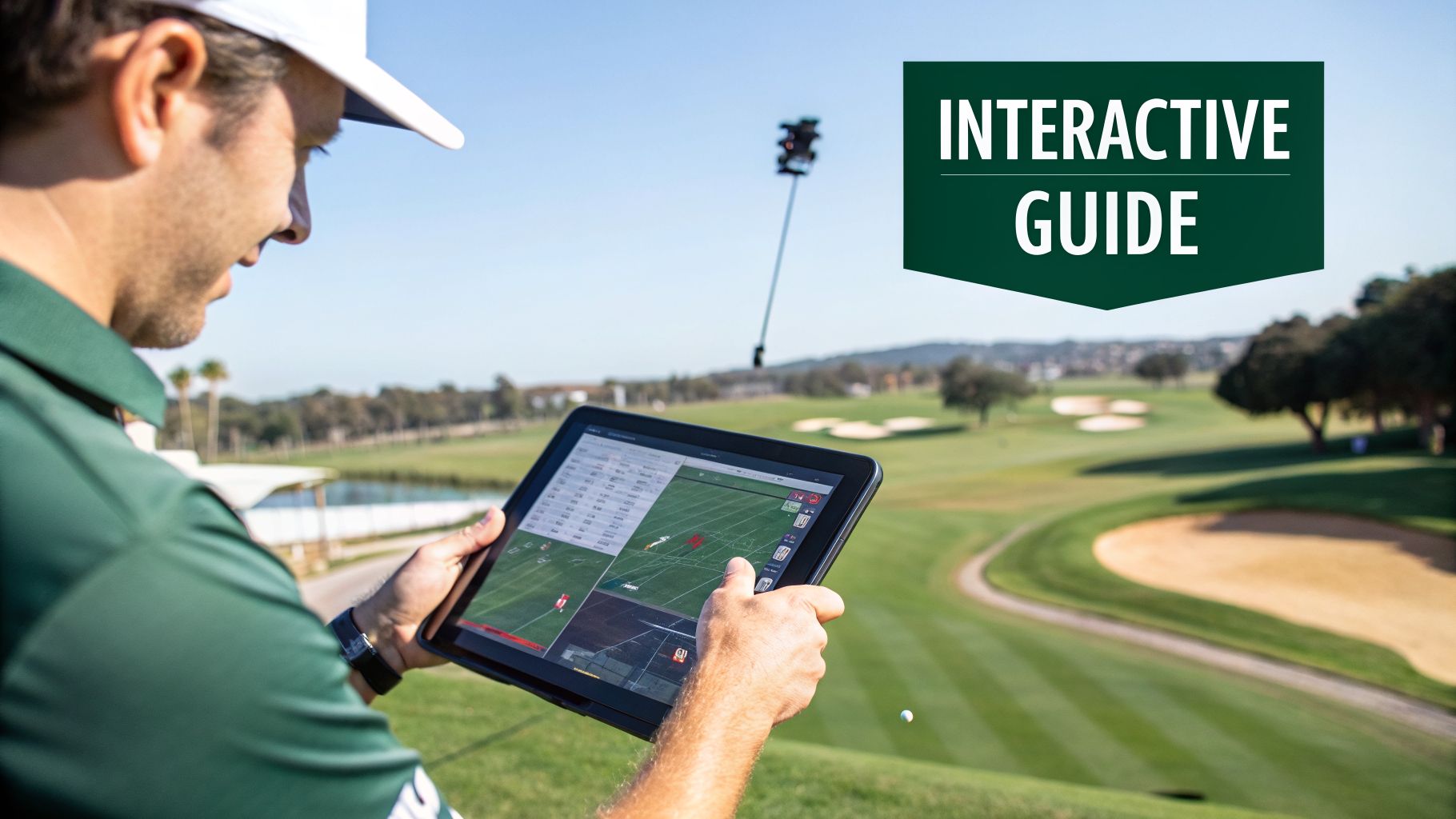
As you start thinking about building out your own golf course hole by hole guide, it’s natural for a few practical questions to pop up. We hear the same concerns from course operators and tournament directors all the time, so let’s get them answered and clear the way for you to get started.
How Much Technical Skill Is Required?
Honestly, far less than you might think. Modern website platforms and specialized golf software are built for people who don't write code. If you can write a blog post for your course’s website, you have all the skills you need to manage a digital guide. The trick is to pick tools with a simple, intuitive interface for things like uploading photos and embedding interactive features.
A digital guide isn't meant to replace on-course signage but to complement it perfectly. It provides in-depth strategy and visuals that physical markers can't, helping players prepare in advance and access information on their phones during the round.
How Do You Get Players to Actually Use It?
You have to promote it. It's that simple. Start by linking to the guide in your tee time confirmation emails. Feature it prominently on your homepage, and make sure the pro shop staff mentions it when players check in.
For tournaments, the absolute best way to drive engagement is by integrating live scoring. Players will naturally head to the guide to check the leaderboards, and from there, they'll start exploring the hole-by-hole strategy.
This is especially true for classic risk-reward holes like a "Cape Hole," which can lead to 22% higher scoring variance and are perfect for side games. To add another layer of interest, you can learn more about these classic golf hole designs and highlight them in your guide.
Ready to create a guide that actually boosts engagement and makes tournament day easier? Live Tourney offers app-free live scoring and simple management tools that fit perfectly into your digital course guide. You can start your free trial today at https://livetourney.com.





