
Apr 28, 2026
Get the complete Bethpage Red scorecard with pars, yardages, and ratings. Learn how to use it for tournament setup with our expert guide and tips.
You’ve got tee sheets to build, players asking which tees they should play, and someone on your committee just sent over a blurry photo of a scorecard from who knows when. That’s usually how Bethpage Red planning starts.
For tournament directors, the bethpage red scorecard isn’t just yardage data. It’s the backbone of pairings, flights, contest placement, printed materials, and live scoring setup. If the card is off, everything downstream gets harder, from handicaps to pace to payout logic.
Bethpage Red rewards organizers who treat the scorecard as an operating document, not a souvenir. This guide does that. It gives you the hole data, explains what the numbers mean in a tournament context, and shows how to turn a static card into a working event setup.
Your Complete Bethpage Red Tournament Planning Guide
Bethpage Red asks for clean planning before anyone hits a shot. The course has enough length, enough strong par 4s, and enough scorecard nuance that casual setup usually creates avoidable problems. Players end up on the wrong tees, side games land on poor holes, and staff spend the morning fixing errors that should’ve been handled the day before.
The better approach is simple. Start with verified course data, decide tee usage by field strength, then build all tournament materials from the same source. That means scorecards, cart signs, score entry, and leaderboard settings should all match.
For most organizers, the practical checklist looks like this:
Confirm the tee set first: Blue, White, and Yellow don’t serve the same field.
Map the hard stretch early: Bethpage Red doesn’t ease players into the round.
Choose contests carefully: Long par 4s and exacting par 3s affect where side games are most effective.
Standardize your reports: Everyone on staff should work from one approved version of the card.
Practical rule: If your printed card, your scoring system, and your starter sheet don’t match, players will find the mismatch before your staff does.
Bethpage Red Course An Overview
Bethpage Red sits inside one of public golf’s most recognized properties. Bethpage State Park has five 18-hole courses and has been one of America’s most popular public golf venues since its development in the 1930s. The complex’s status rose further after hosting elite events like the 2002 U.S. Open on the property’s Black Course, according to the Bethpage State Park Golf Course overview.

Why the Red works for events
For organizers, Red is a strong tournament course because it’s demanding without being one-dimensional. The routing gives better players enough challenge to take it seriously, but it still offers recovery options and strategic choices that keep the round playable for a mixed field.
That matters. A course can be famous and still be poor for outings if the field spends all day searching for balls and posting big numbers. Red is tougher than a casual municipal track, but it’s more usable for leagues, member-style events, and corporate fields than courses that rely purely on punishment.
What stands out in practice
The design is associated with A.W. Tillinghast, and that shows in the way holes ask for positioning rather than just brute force. Tree-lined corridors, well-placed bunkering, and greens that demand a committed approach all show up in the card and in tournament operations.
Bethpage Red is the kind of course where setup discipline matters. The more mixed your field is, the more important your tee assignment decisions become.
Bethpage Red Scorecard Data Hole By Hole
Below is the practical version of the bethpage red scorecard. Use it as your event reference for pairings, contests, and print materials.
Bethpage Red Official Scorecard
Hole | Par | Blue Yards | White Yards | Yellow Yards | Men's Handicap | Women's Handicap |
|---|---|---|---|---|---|---|
1 | 4 | 471 | 439 | 387 | 3 | 5 |
2 | 4 | 401 | 386 | 354 | 11 | 13 |
3 | 4 | 495 | 455 | 403 | 7 | 7 |
4 | 3 | 181 | 159 | 159 | 17 | 17 |
5 | 5 | 528 | 502 | 468 | 5 | 9 |
6 | 4 | 383 | 367 | 319 | 13 | 15 |
7 | 3 | 184 | 177 | 165 | 15 | 11 |
8 | 4 | 403 | 371 | 326 | 9 | 1 |
9 | 4 | 320 | 335 | 304 | 1 | 3 |
10 | 4 | 451 | 426 | 389 | 12 | 4 |
11 | 4 | 462 | 449 | 402 | 8 | 8 |
12 | 3 | 208 | 181 | 171 | 18 | 18 |
13 | 4 | 390 | 367 | 325 | 14 | 16 |
14 | 4 | 435 | 415 | 345 | 4 | 10 |
15 | 4 | 394 | 367 | 317 | 16 | 14 |
16 | 3 | 209 | 191 | 166 | 2 | 12 |
17 | 5 | 565 | 530 | 455 | 6 | 2 |
18 | 4 | 419 | 412 | 385 | 10 | 6 |
How to use the table
Don’t just scan yardages. Read the sequence. The card shows where scoring pressure builds, where your field gets a breather, and where on-course contests are likely to hold up play.
For tournament setup, the handicap columns matter as much as par and yardage. They help with equitable allocation in net formats and make your printed scorecards more than a cosmetic item.
Understanding Course Rating And Slope On The Red
If your field asks whether Bethpage Red is “hard,” the best answer is in the rating and slope. The Red Course plays to par 70 and reaches 7092 yards from the blue tees, with a 74.4 course rating and 133 slope, according to the GolfPass Bethpage Red listing.
What the numbers mean for organizers
Blue tees are a serious test. That setup works when you’ve got a stronger field, a competitive league day, or a small group that wants a demanding championship-style round. It’s usually not the default choice for a broad charity or corporate event.
White tees are the practical middle ground on this course. They keep the character of Bethpage Red intact while giving more players a fair chance to finish holes cleanly and keep pace. Yellow tees are the better play when inclusivity matters more than brute yardage, especially in mixed-ability events.
If you want a quick refresher on how to interpret those numbers for event setup, this explanation of what course rating means in golf is useful.
What works and what doesn’t
Here’s what usually works on Red:
Competitive gross event: Blue for top flight, if the field can handle it.
Standard mixed field: White is the safest operational choice.
Beginner-friendly or inclusive outing: Yellow protects pace and morale.
What doesn’t work is choosing tees based on ego. On Bethpage Red, a tee that’s too long doesn’t just affect scores. It affects timing, decision-making, and the quality of the whole event.
The right tee choice doesn’t make the course easier. It makes the competition fairer.
Download A Printable Bethpage Red Scorecard PDF
A printable scorecard still matters. Committees mark up contest holes, staff note cart assignments, and volunteers need something they can review without logging into a scoring platform on the fly.
The simplest approach is to build your own clean event sheet from the verified hole data above and export it as a PDF. That gives you one planning document for meetings, sponsor reviews, and player packet prep. It also lets you add the details organizers need, such as shotgun hole assignments, note space, local rules, and contest markers.
What to include in your printable version
Official hole data: Par, yardage, and handicap should match your event setup.
Event notes: Space for pairing changes, hole hosts, and prize reminders.
Branding elements: Logo, date, and sponsor placement if it’s a public-facing outing.
If you want ideas on how customized PDFs can improve consistency across operational documents, this piece on custom PDF generation for e-commerce is a useful parallel. Different industry, same workflow problem: teams need accurate, repeatable documents that are easy to generate and distribute.
Key Hole Strategies And Playing Tips
Bethpage Red doesn’t beat players with one gimmick. It does it by stacking demanding decisions across the round. That’s why a useful tournament briefing should focus on a few holes that shape scoring and momentum.
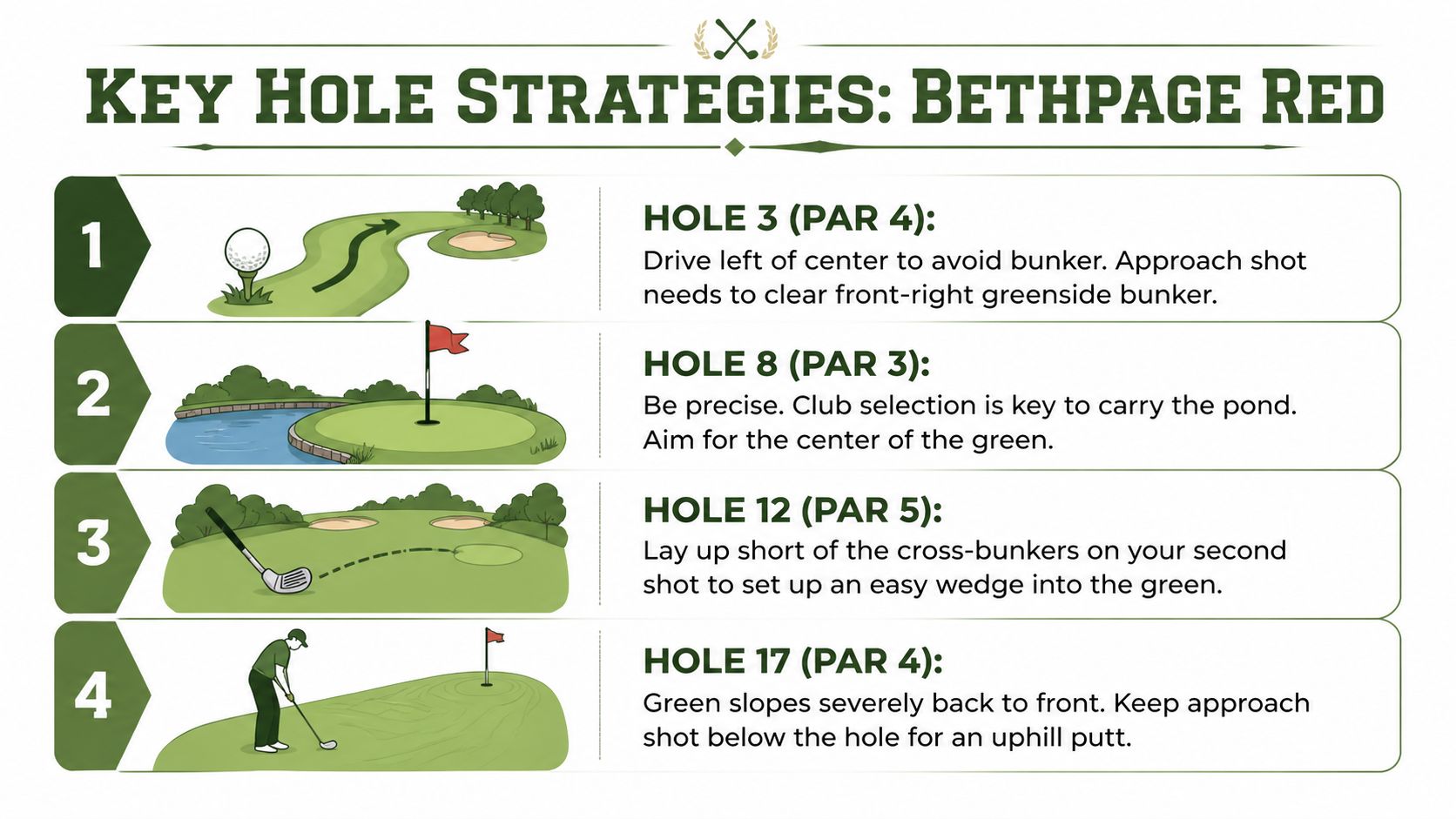
The opening side already asks for control. The front nine features the 471-yard par-4 1st and the 466-yard par-4 9th, which is handicap 1, as noted in the Golfify Bethpage Red scorecard. That tells you something important as an organizer. Your players won’t settle in automatically. The card starts asking questions right away.
Holes to mention in your player talk
Hole 1 sets the tone. A long par 4 early in the round punishes players who arrive cold or overswing off the first tee. For events, remind players that bogey isn’t a disaster here. That one sentence can calm a field and improve pace.
Hole 5 is one of the clearest strategy holes on the property. At par 5, it can tempt longer hitters into forcing position on the second shot. In mixed events, that’s where players make doubles trying to chase birdies. The safer message is simple: get to a preferred number and attack with the third.
Hole 9 is where scorecards often turn. A handicap-1 par 4 near the turn can wipe out a solid front side if players press after earlier mistakes. Good players should treat it as a precision hole. Mid-handicap players should treat it as a hole where par is gained on the field and bogey is acceptable.
What to watch late in the round
The back side has enough length to expose tired swings and rushed club selection.
Hole 12: On a demanding par 3, center-green strategy usually beats flag hunting.
Hole 17: The par 5 creates movement on the leaderboard because players see opportunity and often bring trouble into play.
Hole 18: A closing par 4 asks for one more committed drive and one more controlled approach.
Tell players where patience matters. Most event fields don’t need swing tips. They need better decision-making.
Setting Up Your Tournament Using Live Tourney
Once your course data is final, the software setup should mirror the actual tournament, not force you into workarounds. That’s where having a clean Bethpage Red profile matters. You want the tee sets, pars, and handicap structure loaded correctly before you touch pairings.
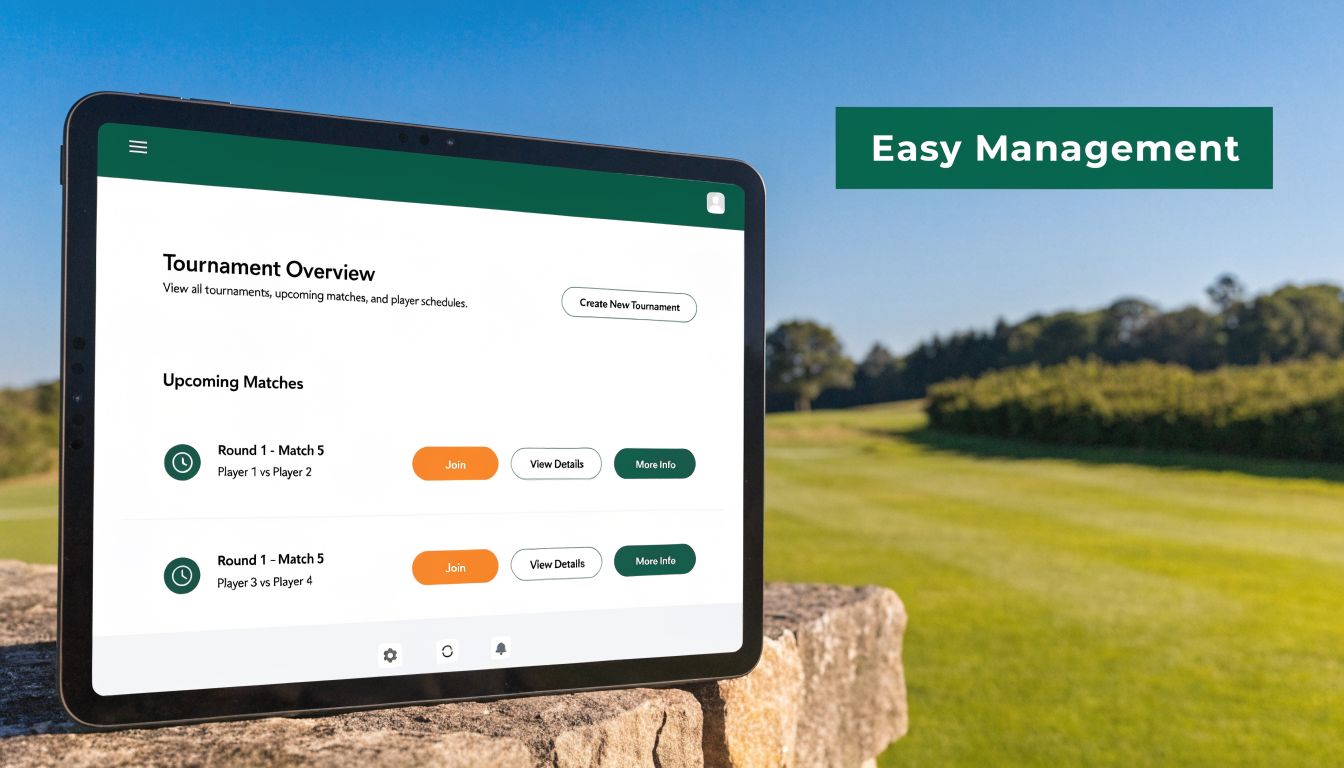
A practical setup starts by importing the course and confirming that the card reflects the tees you’re using. On Bethpage Red, importing the scorecard with its five 400-plus-yard par 4s and handicap distribution supports automated tee sheets, cart signs, and formats such as round robin, with a 3x faster setup, according to the ProVisualizer Bethpage Red course data.
Clean setup sequence
A good operating flow looks like this:
Import the course profile and verify hole order, pars, and tee assignments.
Assign tees by division instead of trying to force one setup on the whole field.
Build pairings after tees are fixed, because scorecard outputs depend on that decision.
Generate operational materials such as tee sheets and cart signs from the same event file.
If you’re comparing systems or tightening your internal process, this overview of golf tournament management software gives a solid operational frame.
Common setup mistakes
The biggest one is manual override after the fact. Staff import the course, then start editing reports separately. That’s how scorecards stop matching pairings and why starters end up fielding basic questions on the first tee.
Another mistake is ignoring division-specific tee needs. On a course like Red, mixed fields usually run better when the software reflects reality rather than tradition.
Customize Scorecards And Reports For Your Event
Players notice the details before the golf starts. If they get a generic sheet with handwritten pairing changes and a scorecard that looks disconnected from the event, the day already feels improvised. That’s avoidable.
Custom reports matter more on a course like Bethpage Red because the card itself carries weight. The yardages, par distribution, and handicap structure aren’t filler. They shape strategy, side games, and scoring. When your event materials present that information clearly, the tournament feels organized before the first group goes out.
What a polished report package should include
Branded scorecards: Event logo, sponsor marks, and the correct tee set.
Readable tee sheets: Names, starting assignments, and divisions in one clean layout.
Cart signs and bag tags: Useful for staff and visible to players.
Results sheets: Gross, net, and side game outputs that are ready to post.
A modern organizer should expect all of that to come from the same event file, not from separate spreadsheets and rushed edits. If you’re reviewing what a good event card should contain, this guide to the best golf scorecard is worth reading.
Professional presentation isn’t fluff. It reduces confusion, helps sponsors feel visible, and cuts down on avoidable questions from players and volunteers.
Displaying Live Scoring For A Bethpage Red Event
Live scoring changes the mood of a Bethpage Red tournament. On a demanding municipal course with a real reputation, players pay more attention when they can see movement on the board as it happens.
The effect is strongest late in the round. A group makes the turn in good shape, then someone posts a number on a difficult closing stretch and the leaderboard shifts. Another team reaches the final holes knowing par has value because scores are already visible back at the clubhouse. That changes how players think, especially on holes where patience matters more than aggression.
Where live scoring helps most on Red
It’s most useful in three situations:
Mixed-format outings: Staff can keep the main competition and side games visible without chasing paper totals.
Competitive leagues: Players respond better when the board updates while the round is still alive.
Corporate events: Guests who aren’t used to tournament golf engage faster when scoring is simple and visible.
The operational benefit
From the staff side, live scoring shortens the post-round scramble. You don’t want volunteers hunched over paper cards trying to settle ties while players wait near the prize table. A clean scoring flow lets the event finish with momentum.
On a course where pars feel earned, a live leaderboard gives every closing hole more meaning.
Frequently Asked Questions About Bethpage Red
Is Bethpage Red suitable for a corporate outing
Yes, if you choose tees carefully and set expectations clearly. Red is a strong venue for outings because it has stature and strategic interest, but it’s not a course to overset for a casual field.
Which tees should most organizers use
For many mixed fields, White is the safest operational choice. Stronger divisions can move back, while more beginner-friendly groups should move forward to protect pace and enjoyment.
Is the course too difficult for net events
No, but net formats work better when handicaps, tees, and scorecard settings all line up correctly. Problems usually come from setup mistakes, not from the course itself.
Which holes work best for contests
Use holes that fit the skill level of your field and won’t create backups. On a course like Red, not every dramatic hole is a good contest hole.
Should I rely on a photo of the scorecard
No. Use a verified card and lock your event materials from that version. Random photos often create small errors that become tournament-day headaches.
Do I need custom event materials
If the event matters to sponsors, members, or guests, yes. Clean scorecards, readable pairings, and polished reports make the day run better and look more credible.
If you're running an outing, league, or competitive event at Bethpage Red, Live Tourney is built for exactly this kind of job. It helps organizers manage pairings, scorecards, reports, and app-free live scoring without the usual spreadsheet mess, so your Bethpage Red event feels organized from the first tee to the final leaderboard.





