
May 22, 2026
tournament hills las vegas, tpc summerlin, las vegas golf events, corporate golf outings, golf tournament planning
Your complete guide to hosting premier golf events at Tournament Hills Las Vegas. Discover course details, booking tips, and how to run a flawless tournament.

Your phone rings, and the ask sounds simple until you hear the venue. You're responsible for a golf event at Tournament Hills in Las Vegas. Not a casual outing. A client entertainment day, a donor tournament, or an executive field that expects polished details, smooth timing, and zero visible mistakes.
That changes how you plan.
At a venue tied so closely to TPC Summerlin and the early identity of Summerlin itself, people arrive with expectations before the first cart leaves the staging area. They expect a premium setting, tight operations, and a player experience that feels deliberate rather than improvised. If you treat it like a standard corporate scramble at a high-end course, you'll miss the mark. Tournament Hills requires cleaner logistics, better communication, and more disciplined event flow.
An Introduction to Las Vegas's Premier Golf Destination
The assignment changes the moment the venue is Tournament Hills.
This is not just a desirable Las Vegas address. According to Summerlin's history, Tournament Hills sits within the community's first 725-acre mixed-use residential village, alongside early custom-home neighborhoods and major civic amenities. For an event organizer, that history matters because it shapes guest expectations before check-in, before carts are staged, and before the first sponsor banner goes up.
The venue carries golf credibility, social cachet, and a standard of presentation that leaves very little room for operational sloppiness. That combination is what makes Tournament Hills and neighboring TPC Summerlin different from a typical premium outing site. You are not only booking a respected setting. You are producing an experience inside one of Summerlin's most established golf environments, and guests read every detail against that backdrop.
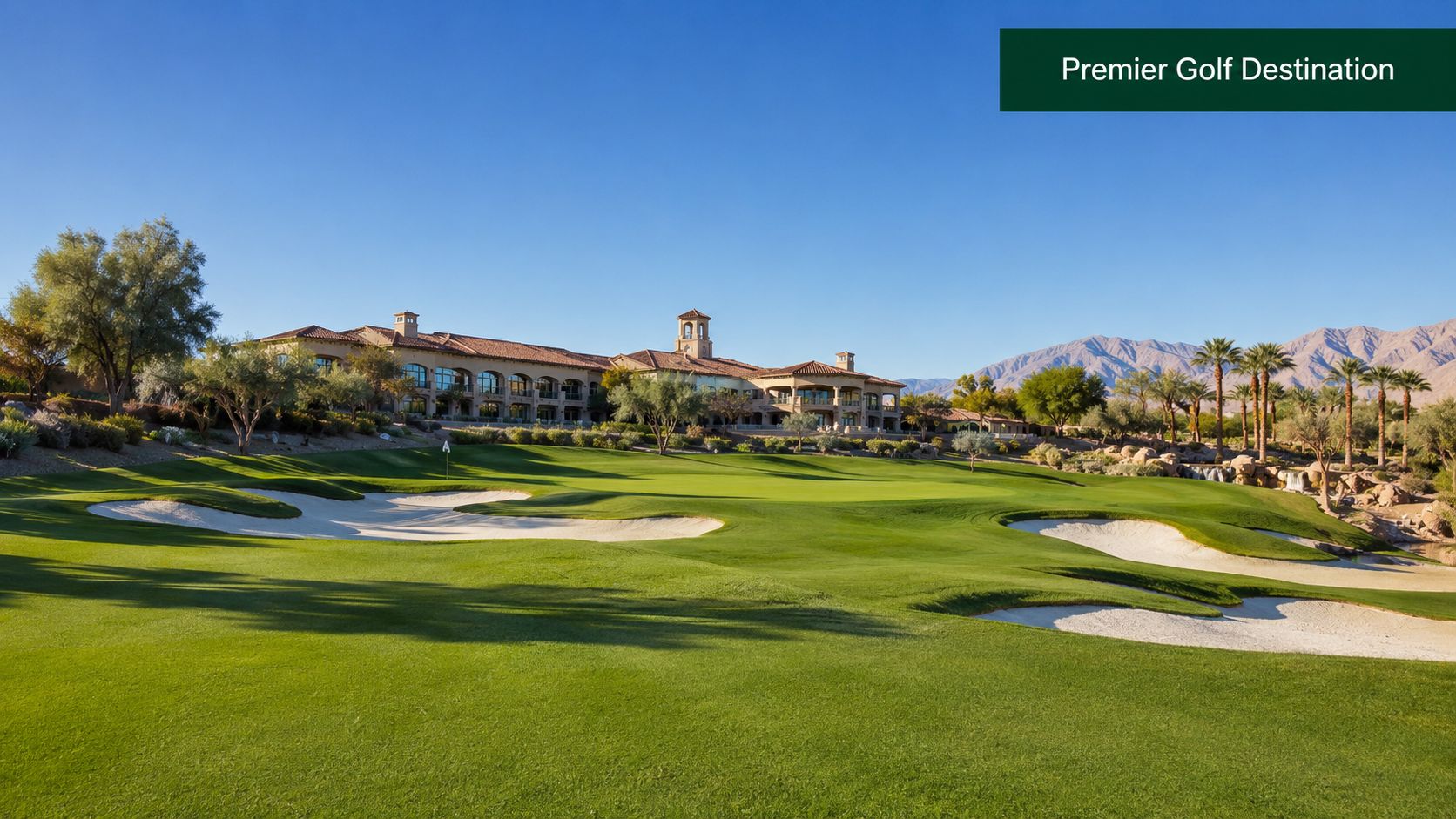
That distinction changes the organizer's job.
At this level, the venue should feel polished without looking overproduced. Registration has to move quickly. Signage has to be selective. Sponsor presence has to look intentional, not crowded. I have found that prestige venues punish extra clutter faster than modest venues do. A table in the wrong place, a delayed shotgun announcement, or a confused valet queue stands out immediately because the setting is otherwise so controlled.
A better approach is disciplined restraint. Keep the branding clean. Use on-course activations only where they improve sponsor value or player enjoyment. Build the day around pace, visibility, and guest confidence rather than trying to fill every open space with something branded.
Practical rule: At a prestige venue, every extra element has to justify itself through player flow, hospitality quality, or sponsor return.
If you are comparing this event to public outings or regional charity fields, it helps to study how organizers shape schedules, formats, and player expectations in guides to local golf tournaments near me. The mechanics carry over. The margin for error does not.
What high-stakes groups usually care about
High-stakes groups consistently prioritize the same four outcomes:
Guest confidence: Players need clear arrival instructions, quick answers, and a day that feels organized from the parking area onward.
Brand fit: Corporate hosts, private groups, and charities want the event to match the caliber of the invite list and the venue.
Operational control: Staff need a format, timeline, and communications plan that still work when weather, pace of play, or VIP movement changes the schedule.
A strong finish: Awards, dining, and closing remarks usually determine what guests remember and what sponsors judge afterward.
Get those right, and the venue supports the event. Miss them, and the prestige of Tournament Hills makes every mistake easier to see.
The Course and Community a Closer Look
Before you can design the day, you need to understand the setting your guests are entering. Tournament Hills isn't a busy master-planned subdivision with constant circulation and interchangeable homes. It's an intentionally limited enclave.
Independent neighborhood reporting describes Tournament Hills as a guard-gated community with about 132 custom homes in a low-density setting adjacent to TPC Summerlin (Tournament Hills neighborhood profile). That scale changes the feel of arrival. Guests don't approach a tournament through visual clutter or heavy internal turnover. They enter a quieter, more controlled environment.
What the community setting means on event day
For event organizers, privacy isn't just a selling point. It's an operating condition.
A small custom-home enclave creates a more composed atmosphere, but it also rewards discipline. Signage has to be more selective. Vendor timing has to be more exact. Guest instructions need to be clearer because there's less room for casual overflow behavior. You can't rely on brute-force staffing and cones to solve every issue.
Three practical implications stand out:
Access matters more than volume: In a private, controlled setting, who arrives when is more important than how many bodies you can absorb at once.
Visuals carry more weight: Premium neighborhoods punish sloppy staging. A cluttered sponsor village or crowded bag-drop area will feel out of place faster here than at a resort course.
Noise discipline helps: Announcements, music, and activation footprints should suit the environment. A refined event usually lands better than a loud one.
The venue already provides the prestige. Your job is to protect it, not overpower it.
How to talk about the course without sounding scripted
Your guests don't need a rehearsed architecture lecture. They do appreciate a host who understands what makes the round interesting. That means speaking to playability, challenge, and presentation in practical terms.
When I brief event staff, I keep the course narrative simple:
Conditioning sets expectations early. Players notice the first tee, the practice areas, and the transition from clubhouse to cart staging.
Desert golf punishes casual decision-making. Strong players enjoy that. Mid-handicap guests need confident guidance on format and pace.
Finishing holes shape the memory. Awards timing and leaderboard drama should build toward that finish, not distract from it.
For planners who want a better framework for presenting the round hole by hole, a guide to golf course hole-by-hole strategy is useful because it helps translate course features into guest-facing talking points instead of generic hype.
Why the environment feels so upscale
Tournament Hills feels premium because scarcity is visible. The homes are custom, the surroundings are mature, and the route in signals privacy before anyone checks in. That doesn't guarantee a great event. It does mean the baseline impression is strong.
Use that to your advantage. Keep your materials minimal, your registration footprint efficient, and your sponsor placements intentional. In this setting, elegance usually comes from subtraction.
Tournament Hosting Capabilities and Booking
When clients ask whether a venue like this can handle a serious corporate or charity tournament, the short answer is yes. The better question is whether your event concept fits the setting, the guest list, and the operational style of a championship environment.
Tournament Hills sits in an ultra-luxury context. Independent market tracking cited in listing-related neighborhood analysis places the median sales price at about $2.92 million in Q1 2026 for the enclave, which reinforces how premium the surrounding market is (Tournament Hills pricing context). That doesn't just affect real estate. It shapes guest expectations around hospitality, service recovery, and presentation.
Start with event fit, not just date availability
A common mistake is leading with calendar questions before you've defined the event properly. At a venue of this caliber, booking works best when you can answer five things clearly:
Who's playing
Why the event exists
How competitive it should feel
What hospitality level you need
Whether the format supports the guest mix
If you're fuzzy on those, you'll spend too much time revising details later. A private event director or club-side coordinator can help, but they can't rescue an organizer who hasn't decided whether this is a donor relationship event, a sponsor entertainment day, or a serious competition with hospitality layered around it.
For teams that need a broader operational framework before drilling into golf-specific details, this complete guide to event management is a useful outside reference. It's especially helpful when your golf event sits inside a larger corporate or nonprofit program.
Choose a format that matches the field
The format should support your guest list, not your personal preference. That's where many premium events lose momentum. A difficult format can make average players feel exposed. An overly casual one can make strong players check out.
Here's a practical comparison.
Format | Best For | Pace of Play | Skill-Level Friendliness |
|---|---|---|---|
Scramble | Client entertainment, sponsor-heavy fields, mixed-ability charity groups | Usually the easiest to keep moving | Very friendly |
Best Ball | Member-guest style events, stronger amateur groups | Moderate if pairings are balanced | Moderate |
Stableford | Competitive corporate groups that still want some forgiveness | Can move well if players understand scoring | Moderate to friendly |
Stroke Play | Serious competition, club-caliber fields, qualifier-style events | Most demanding operationally | Least friendly for mixed fields |
What usually works best here
At a polished Las Vegas venue, I've found these models travel well:
Executive and client events: A scramble or modified team format keeps the day social and reduces pressure.
Charity fields: Team scoring works better when sponsors bring non-golfers.
Competitive invitationals: Best ball or an individual format can work if pace control is staffed properly.
Hybrid events: Use team scoring on course, then add skill contests and a sharp awards program to preserve energy.
If the field includes guests who haven't played together before, pick the format that keeps everyone engaged by the fourth hole, not the one that sounds best in the invitation copy.
Booking discipline prevents expensive revisions
Luxury venues magnify late changes. Menu revisions, sponsor table additions, pairings shifts, and guest-count swings all get harder once the event is in motion. Lock your core decisions early:
Date and start structure
Guest count range
Tournament format
Hospitality plan
Awards and sponsor footprint
That order works because it prevents the downstream chaos that usually hits premium events first.
Mastering Event Day Logistics and Operations
A clean event day at Tournament Hills depends less on improvisation and more on sequencing. The low-density, guard-gated setup means arrivals and vendor movement need tighter coordination, but that same environment also reduces internal traffic and creates a more controlled flow when you plan it correctly (Tournament Hills logistics context).
That trade-off is a good one. You just have to respect it.
Arrival and access need a command plan
The first operational decision is whether guests should self-arrive, rideshare, or come in waves from a nearby host hotel or staging point. In an open-access venue, you can sometimes tolerate staggered confusion. In a controlled-access environment, confusion backs up faster because each mistake compounds at the entry stage.
Use one arrival plan. Not three.
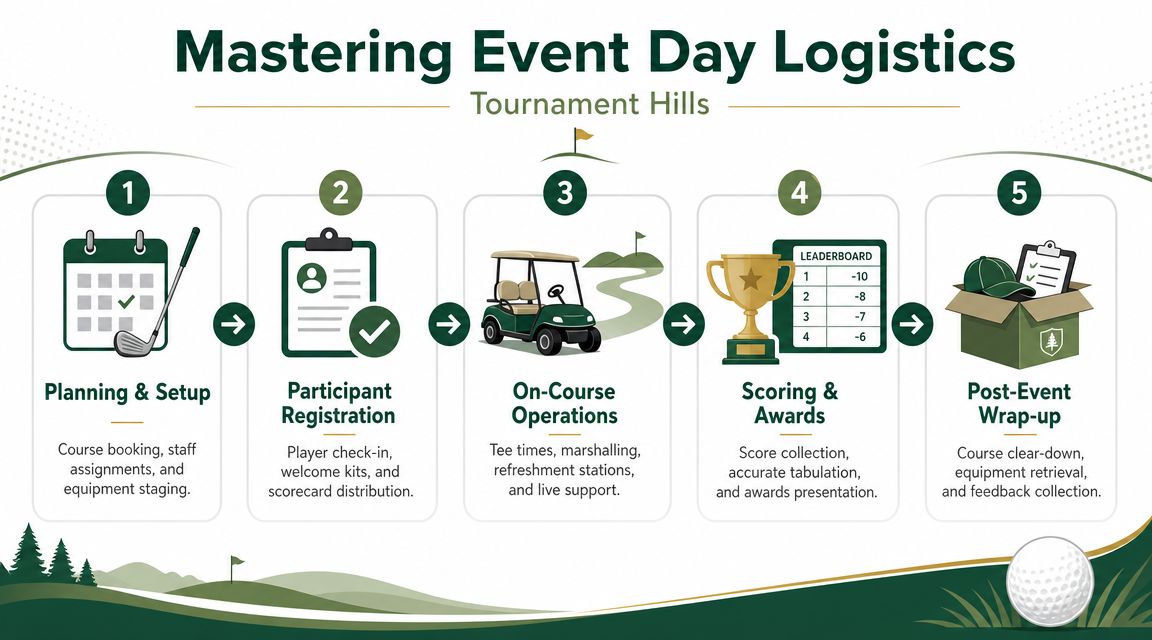
I recommend building guest communications around a simple sequence:
Pre-arrival message: Send one concise logistics note with gate instructions, arrival window, dress expectations, and a contact number.
Entry control: Give security and event staff the same final guest and vendor lists.
Landing zone: Separate bag drop, registration, and hospitality so the first crowd doesn't congeal in one place.
Cart movement: Stage carts by wave, sponsor priority, or alphabetically. Don't let players self-sort in a premium environment.
Late arrivals: Assign one staff member to discreetly resolve them.
Registration should feel fast, not busy
Many organizers overbuild check-in because they assume more tables signal professionalism. They usually don't. More tables often create more questions, more paper, and more visible waiting.
A better setup looks like this:
One clear welcome point
One staffed issue desk
One lane for sponsor or VIP handling
Pre-packed player materials
Visible signage limited to what guests need next
Field note: If a guest has to ask where breakfast is, where the range is, and where their cart is, registration didn't do its job.
Food and beverage timing can rescue or ruin pacing
Hospitality should support the round. It shouldn't fight it.
The strongest event-day rhythm usually includes a light pre-round offering, on-course beverage support, and a post-round finish that starts only when scoring is under control. Problems start when organizers turn breakfast into a linger point or place too much sponsor activity near the first tee.
Use food and beverage with intent:
Before the round: Coffee, simple breakfast, and fast service.
During the round: Predictable refreshment points and clear service responsibilities.
After the round: A defined transition into results, remarks, and awards.
If your guest profile requires heightened security coordination because of sponsors, executives, or controlled access concerns, this outside resource on professional guidance on event venue security is worth reviewing. The principles transfer well to private golf environments where guest movement and vendor access need tighter control.
The operations mistakes I see most often
At luxury venues, the same errors repeat:
Too many on-course extras: Every contest tent, tasting station, or sponsor stop slows something down.
No real-time command role: Someone has to own the clock, not just the guest experience.
Awards before score certainty: Nothing drains a room faster than a delayed leaderboard.
Poor volunteer placement: Volunteers need jobs with clear authority boundaries.
Good tournament operations look calm because decisions were made early, staffing roles were narrow, and nobody treated logistics as an afterthought.
Elevate the Player Experience with Modern Technology
Tournament Hills deserves better than clipboards, spreadsheet sprawl, and a scoring table buried under paper scorecards. At a premium venue, outdated tournament operations don't feel charming. They feel cheap.
Players notice faster than organizers think. They notice when pairings change and nobody can update them cleanly. They notice when scores disappear into a back room for too long. They notice when the only way to learn the standings is to wait for a microphone announcement in the clubhouse.
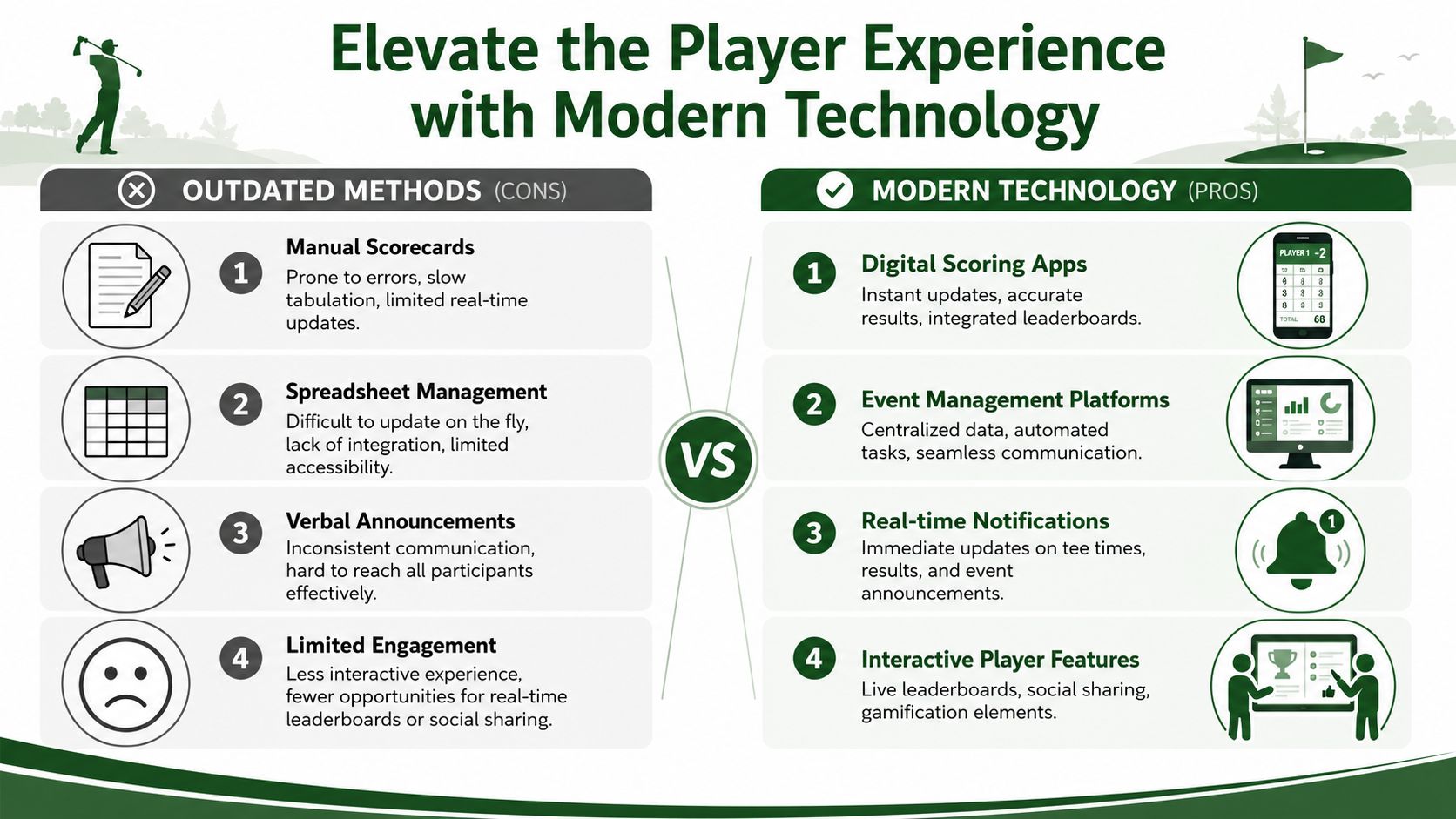
Manual systems break at the exact wrong moment
Paper-based events usually look manageable during setup. The failure points hit later:
Registration edits create version control problems
Handwritten scores require extra verification
Leaderboard delays flatten energy after the round
Staff end up tied to admin work instead of guest-facing service
That's the core issue. Technology isn't there to look modern. It's there to remove avoidable friction so the staff can focus on hospitality and pace.
What a modern setup should actually do
A strong tournament system should handle the basics without drama:
Registration and player management
Pairings and tee-sheet updates
Score entry from players' phones
Live leaderboard visibility
Fast, accurate post-round scoring review
That last point matters more than people admit. At a venue like Tournament Hills Las Vegas, the post-round window is where your event either tightens up or drifts. If scores take too long, the room cools off. Sponsors lose the audience. Guests start leaving before awards.
One useful reference point is how digital golf scorecards change both staff workflow and player participation. The biggest win isn't novelty. It's that digital scoring reduces the handoff points where mistakes and delays usually happen.
Better tournament tech doesn't replace hospitality. It protects it by taking repetitive admin work off your staff's plate.
The luxury standard has changed
Years ago, paper scorecards and a manual board could still feel acceptable if the venue was strong enough. That's less true now. Guests are used to smooth digital experiences in travel, dining, and events. Golf tournaments aren't exempt.
If you're hosting executives, donors, or premium clients, the event should give them:
Clear mobile access to relevant information
Real-time visibility into standings
Fewer waits at check-in and after play
Cleaner communication throughout the day
Notice what's not on that list. Gadgets for their own sake. A premium event doesn't need gimmicks. It needs systems that remove uncertainty.
What doesn't work
I'd avoid three habits completely at a venue like this:
Running registration in one tool, pairings in another, and scoring by paper
Using staff runners as your primary update system
Waiting until the event week to test your scoring process
Those approaches create hidden fragility. Everything seems fine until one sponsor swaps players, a cart assignment changes, or a guest asks for standings during the round.
Then the scramble begins, and everyone sees it.
Your Blueprint for a Flawless Tournament Hills Event
The cleanest way to run a Tournament Hills event is to think in decision gates. Each gate should resolve a category of risk before the next one begins. That keeps premium events from turning into a string of partial approvals and late-stage revisions.
Step one through three
Define the purpose first. Don't call the club until you know whether the event is meant to entertain, raise money, reward clients, or identify winners. The answer affects format, food timing, staffing, and how competitive the round should feel.
Build the guest profile next. A field of scratch players needs a different pace plan than a donor group with occasional golfers. This step determines whether the event should feel polished and social, competitive and fast-moving, or a blend of both.
Lock the event skeleton. Choose your preferred date range, start style, hospitality level, and awards footprint before you start debating signage and gifts. Organizers waste a lot of time polishing details on an event structure that hasn't been settled.
Step four through six
At this stage, move from concept to execution.
Confirm the venue plan: Align with the club's event contact on timing, access, food and beverage, and where your footprint begins and ends.
Select your scoring and registration workflow: Keep it simple, centralized, and tested before invitations go out.
Map the guest journey: Arrival, welcome, range, cart staging, round, scoring, reception, and departure should read like one connected experience.
This is also when you should finalize vendors. Prize partners, signage providers, photographers, and any specialty activations need exact load-in expectations and clear limits. Premium venues don't absorb loose vendor behavior well.
The best event plans answer small questions before guests have a chance to ask them.
Step seven through nine
Event week is about compression. You're not designing anymore. You're confirming.
Send one final logistics message to players, sponsors, and vendors.
Freeze pairings at a clear deadline and define who can approve last-minute exceptions.
Hold a short operations briefing with everyone who touches the guest experience.
On event day, the priorities narrow further. Protect arrival. Protect pace. Protect scoring. Those three pressure points decide whether the day feels expensive in the right way or expensive in the wrong way.
The final standard to judge against
A flawless tournament at Tournament Hills doesn't mean nothing changed. Something always changes. A player is late. A sponsor adds a guest. Weather shifts. A cart issue appears at the worst moment.
The standard is whether your team absorbs those changes without exposing the machinery.
If the check-in feels easy, the round flows, the hospitality lands on time, and the awards finish while the room still has energy, you've done your job. That's what a high-stakes event at this venue should feel like. Not frantic. Not overproduced. Controlled, warm, and professionally run.
If you want to run a Tournament Hills event with less admin and a smoother player experience, Live Tourney gives organizers a simple way to manage registration, pairings, and app-free live scoring without adding complexity for staff or players.





