
Feb 12, 2026
Discover a proven system to build, promote, and manage successful golf league programs with practical formats, actionable tips, and modern tech.

Successful golf league programs aren't just a nice-to-have amenity anymore. They've become a core part of a modern golf facility's business strategy. A good league gives you structured, regular play for groups of golfers over a whole season, turning those casual weekend players into a loyal, predictable revenue stream and building a real community right at your course.
Why Modern Golf Leagues Are Your Biggest Opportunity
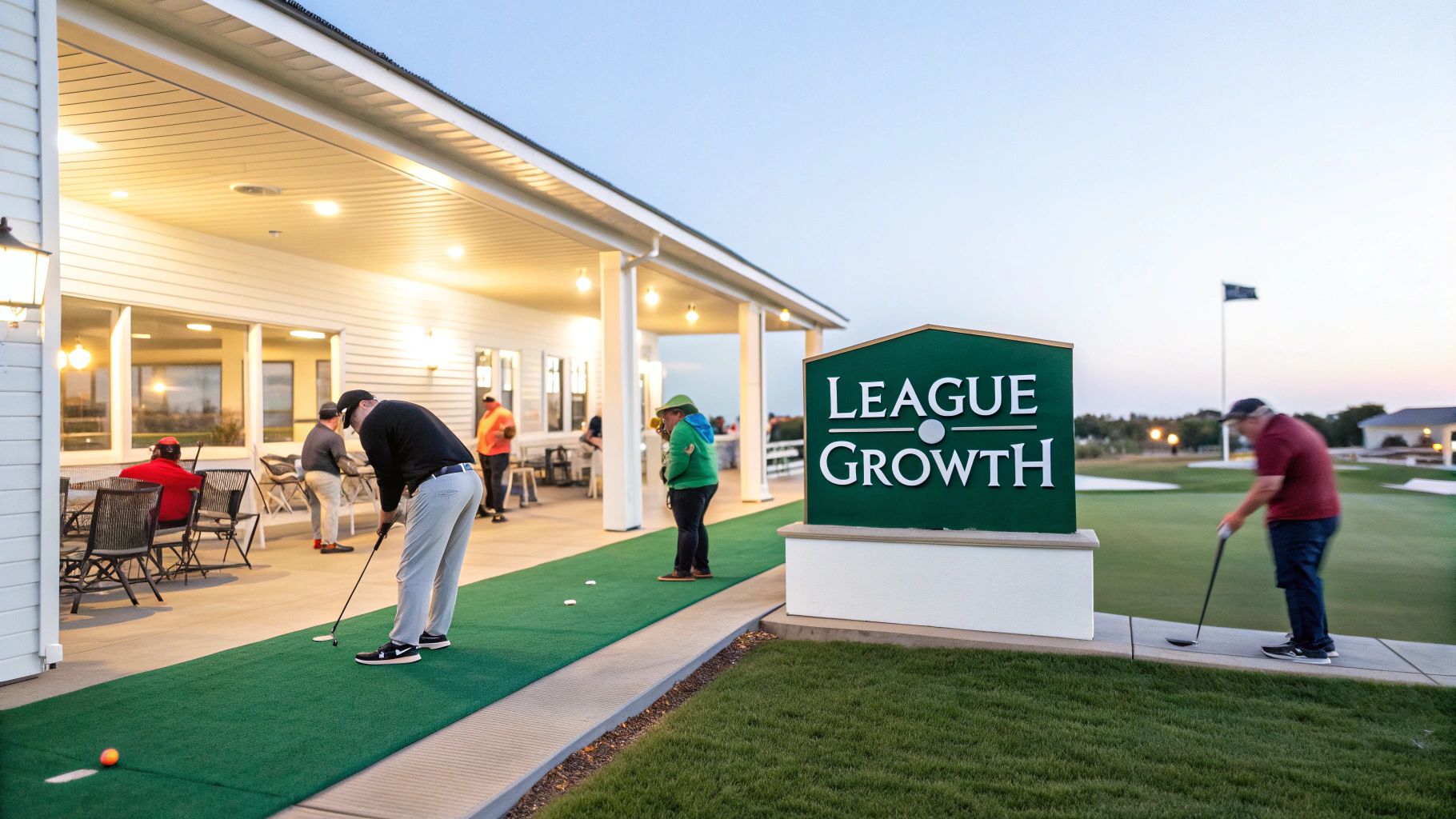
The way people play golf is changing. The traditional 18-hole weekend round is still there, but it's now joined by more social, flexible, and honestly, more fun formats. This shift is a huge opportunity for course operators who are ready to adapt. Golf leagues are right at the center of this change, giving players the organized-but-relaxed environment they're looking for.
And the numbers back it up. The growth in golf league programs worldwide has been incredible. Global participation shot up to over 108 million adults and juniors in The R&A's affiliated markets as of 2024. That’s a jump of nearly 3 million players from the year before, and it’s mostly driven by non-traditional formats like league play, which are now growing faster than conventional rounds.
The New Face of Golf Participation
Today's golfers want more than just a quiet four hours on the course. They’re looking for connection, a bit of friendly competition, and convenience. A well-run league hits all three, bringing in a diverse crowd of players who might otherwise play sporadically or, worse, at one of your competitors.
This new wave of players includes:
Young Professionals: They're looking for a consistent after-work activity and a great way to network.
New Golfers: They need a low-pressure environment to learn the game and meet other players without feeling intimidated.
Corporate Groups: Companies are booking recurring tee times for employee events and client entertainment.
Social Clubs: These are groups of friends who already play together but want to make it official with scoring and standings.
When you cater to these groups, you stop chasing one-off green fees and start building a sustainable business on recurring visits.
A great league isn't just about filling the tee sheet on a Tuesday afternoon. It's about creating a club-like atmosphere where players feel like they belong, making your course their home base.
From Cost Center to Profit Center
A thriving league program turns your facility into a bustling hub of activity. It creates predictable foot traffic, which means consistent revenue from green fees and cart rentals. But the real kicker? Food and beverage sales.
The post-round hangout is often just as important as the golf itself. That’s where a $50 green fee easily turns into a $100+ spend per player.
Ultimately, when you invest in your golf leagues, you're investing in your course's future. You build a loyal community that sticks with you through the slow seasons and becomes your best marketing tool. To get this done right, looking into dedicated golf league management software is the logical next step.
This guide will walk you through exactly how to design, launch, and manage a league that players can't wait to join.
Designing a League Players Can't Wait to Join
A successful league is built long before the first tee time. It all starts with a clear vision and a thoughtful plan that puts the player experience front and center. The foundation of any great golf league is knowing exactly who you're building it for.
Your target audience really dictates every decision that follows. Are you launching a competitive weekend series for scratch golfers, or is this a casual, 9-hole after-work league designed for networking and fun? These are two completely different products, and they need unique approaches to formats, scheduling, and rules.
Answering that question first saves you from creating a generic league that doesn’t really excite anyone. Once you know your ideal player, you can start designing an experience they’ll love.
Choosing the Right League Format
The format is the engine of your league—it determines the competitive structure and the overall vibe. It’s easy to just default to a standard stroke-play season, but you'll miss out on more engaging options that can seriously boost excitement and keep players coming back.
Here are a few popular formats worth considering:
Match Play: This is perfect for competitive leagues. It pits players or teams directly against each other on a hole-by-hole basis. One blow-up hole doesn't ruin the entire round, which keeps everyone in the game until the end.
Best Ball (Fourball): A team-based format where the best score on each hole counts for the team. This is a go-to for social and corporate leagues because it takes the pressure off individual players and builds camaraderie.
Ryder Cup Style: For a season-long event, you can divide the league into two large teams and have them accumulate points through various formats (match play, best ball, alternate shot). This builds incredible team spirit and a compelling narrative that lasts all season.
The key is to match the format to your audience's skill level and competitive fire. A casual social league might thrive on a simple Best Ball format, while a group of serious golfers will get into the strategic depth of a season-long match play grind.
This is one area where modern golf league programs are really making a difference. We're seeing a huge surge in golf's popularity right now. On-course play in the U.S. jumped to 29.1 million in 2025, and overall engagement, including off-course leagues, hit 48.1 million—that's a 40% increase since 2019. This growth is fueled by creative formats that attract new demographics, including women, who now make up 25% of on-course players.
Structuring the Schedule and Rules
Once you’ve locked in a format, the next step is building the schedule. This is a balancing act between maximizing participation and managing your tee sheet without creating chaos. For an after-work league, a consistent Tuesday or Thursday evening slot works wonders. For a more competitive league, bi-weekly weekend matches might be a better fit.
One of the best ways to make sure everyone plays each other is a round-robin format. You can check out our guide on how to create a round-robin schedule to simplify this often-tricky task. It gives you a structured way to generate fair matchups for the entire season.
Beyond the schedule itself, establishing clear and simple rules from the get-go is non-negotiable.
Your league rulebook should clearly define:
Handicap Calculations: Will you use official handicaps, or will your league software calculate them based on league scores? Consistency here is critical for fairness.
Pace of Play Policies: Set clear expectations to keep rounds enjoyable for everyone. Nothing kills the fun like a five-hour round.
Substitute Player Rules: Define how subs can be used and how their scores will be handled. This avoids a lot of confusion and arguments down the road.
Prize Payouts: Be totally transparent about how entry fees are allocated for weekly prizes and the season-ending pot.
And if you really want to elevate the player experience, think about the amenities. Things like high-quality Prescott putting greens add significant value. A well-maintained practice area gives players a reason to show up early and stick around after their round, which is exactly how you build that essential community feel. A thoughtful design, from format to facilities, is what separates an average league from one that sells out year after year.
Your Promotional Plan to Fill Every Spot
Let's be honest: a brilliant league format and a perfectly balanced schedule don't mean much if you can't get players to sign up. Building buzz and filling every last spot takes a real plan. Your marketing is often the first interaction a player has with your league, so making it feel professional and exciting sets the right tone from day one.
Before you do anything else, you have to figure out what makes your league special. Is it the social scene? The competitive format? The incredible value? Pinpoint that one core message and build your entire campaign around it. You're not just announcing tee times; you're selling an experience.
Nailing the Message and the Price
Before a single email goes out or a social media post is published, you need total clarity on your league's value. This is your chance to shine a spotlight on the key benefits that will pull in your ideal golfer.
Your flyers, emails, and website should immediately answer a few key questions:
What's the format? (e.g., 9-hole, two-person scramble)
Who is this for? (e.g., casual weekend players, serious competitors, corporate teams)
What do I get for my money? (e.g., green fees, cart fees, weekly prizes, year-end banquet)
What makes it different? (e.g., app-free live scoring, unique side games, post-round happy hours)
Pricing is a huge piece of this puzzle. You need a price point that screams value without tanking your profitability. Think about it: a casual golfer might spend around $5,000 a year on the sport. A league fee of a few hundred bucks for a full season can look like a fantastic deal. Be upfront about where the money goes—a simple breakdown of prize funds versus operational costs builds a ton of trust.
A Promotional Playbook for a Sold-Out League
Tossing a flyer in the pro shop and hoping for the best just isn't going to cut it. A successful launch hits people from multiple angles, reaching your loyal regulars and attracting new faces at the same time.
To help you get started, here's a checklist to guide your promotional efforts from start to finish.
League Launch Promotional Checklist
Phase | Action Item | Key Channel | Success Metric |
|---|---|---|---|
Pre-Launch | Tease the upcoming league with "coming soon" announcements. | Social Media, Email | Engagement (likes, comments, shares), early interest sign-ups |
Pre-Launch | Create all promotional materials (flyers, graphics, email copy). | In-House Design | Materials ready before launch day |
Launch | Send a dedicated email announcement to your entire database. | Email Marketing | Open rate > 30%, Click-through rate > 5% |
Launch | Announce the league with a direct link to register on all social channels. | Social Media (Facebook, Instagram) | Registrations directly from social links |
Launch | Put up posters and flyers in high-traffic areas (pro shop, bar, range). | In-House Signage | Staff and member inquiries |
Post-Launch | Follow up with a "last call" or "few spots left" email. | Email Marketing | Surge in last-minute sign-ups |
Post-Launch | Share photos or testimonials from past leagues to build FOMO. | Social Media | Increased social engagement, waitlist sign-ups |
Post-Launch | Personally invite key players or past participants who haven't signed up yet. | Direct Outreach (Phone/Email) | Conversion of targeted invites |
A well-executed plan following this structure ensures you're not just announcing a league but actively building excitement and driving registrations at every stage.
The real goal here is to create a sense of urgency and excitement. Simple phrases like "Limited Spots Available" or "Early Bird Pricing Ends Soon" work because they encourage people to stop thinking and start acting.
Don't Let a Clunky Sign-Up Process Kill Your Momentum
Your marketing could be perfect, but you'll lose players if the sign-up process is a pain. Clunky, old-school registration—I'm talking paper forms, checks, and endless back-and-forth phone calls—creates a terrible first impression and a massive headache for your staff. This is where modern golf league programs and software change the game.
An online registration portal isn't a luxury anymore; it’s what players expect. It gives them a clean, professional, and ridiculously easy way to sign up and pay in minutes.
For instance, a modern platform like Live Tourney handles the entire registration workflow for you.
This screenshot shows how a clean, modern look presents all the league info clearly, making it simple for a player to find what they need and sign up right on the spot.
When registration is this easy, you remove all the friction. An interested golfer can go from seeing your ad to securing their spot (and paying for it) without anyone on your staff having to lift a finger.
Running a Flawless Gameday with Modern Tech
You’ve done the planning and the players are signed up. Now for the fun part—gameday. This is where your league really comes to life, and a smooth, professional experience is what keeps players coming back. The secret? Leaning on the right technology to handle the details so you can focus on your players.
A well-oiled gameday machine starts long before the first golfer tees off. It’s about having sharp, professional materials ready to go. Modern software lets you instantly generate and print everything from custom scorecards and tee sheets to branded cart signs and bag tags, all pre-filled with player data.
The App-Free Live Scoring Revolution
The undisputed centerpiece of a modern league is live scoring. But for years, getting players to actually use it has been a nightmare. The friction was just too high—downloading an app, creating an account, figuring out a clunky interface. Most players just wouldn't bother.
That’s all changed. App-free live scoring gets rid of every single one of those headaches. Players just click a link on their phone’s browser. That’s it. No download, no login, no hassle.
Imagine the buzz around the clubhouse. Instead of crowding a manual scoreboard, players are watching the leaderboard update in real-time on their phones as the final groups finish up. That instant feedback is addictive and gets everyone way more invested in the results.
For operators, the upside is even bigger. You can completely eliminate the tedious, error-prone chore of manual score entry. Your staff is freed up to interact with players instead of punching numbers into a spreadsheet.
Streamlining the Gameday Workflow
Beyond just scoring, the right tech can put nearly every part of your weekly league operations on autopilot. Think about all the little things that eat up your staff's time on league night.
Effortless Player Check-in: Forget the paper checklists. A simple digital check-in gives your staff a real-time view of who's on-site and ready to play.
Automated Side Games: Managing skins, closest-to-the-pin contests, and other side bets is a classic headache. Software can calculate winners and payouts instantly and accurately, with no manual math required.
Instant Results Communication: As soon as the last score is in, the system can automatically crunch the numbers and email the final results and standings to every single player. No more late nights for your team.
This whole process—from building buzz to simplifying registration and delivering a flawless gameday—is designed to create a seamless journey for your players.
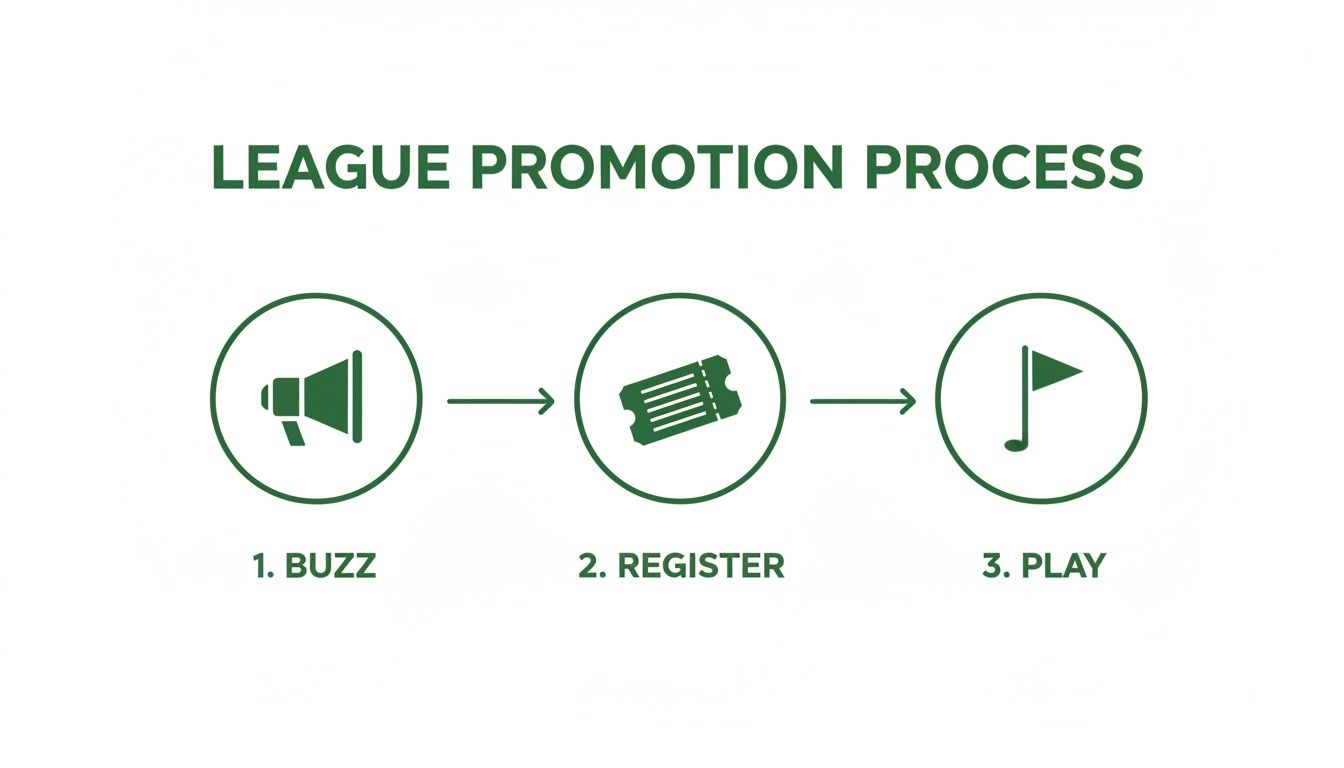
This simple flow shows how a good plan moves players from initial interest to active participation. That gameday experience is the final, crucial piece that ensures they stick around.
Putting It All Together for a Professional Feel
When all these pieces work together, you're delivering a polished, organized experience that feels like a high-end club event, week after week. It signals to your players that you value their time and are committed to giving them the best league possible.
Tools like Live Tourney, used at top courses for over 10,000 events with 1M+ holes scored, are built for this. They deliver 40% higher live scoring adoption and 3x faster setups because they skip the app and use instant, web-based scoring that players actually enjoy using.
This level of organization isn't just a time-saver; it builds trust. Players know the handicaps are fair, the payouts are right, and the competition is legitimate. That trust is the foundation of a successful league that keeps its roster full year after year. For a deeper look, check out our guide on golf tournament scoring software, which dives into many of these concepts.
By embracing modern tech, you can run a flawless gameday that feels effortless for your players and is remarkably efficient for your staff.
Building a Loyal Community That Comes Back Every Year
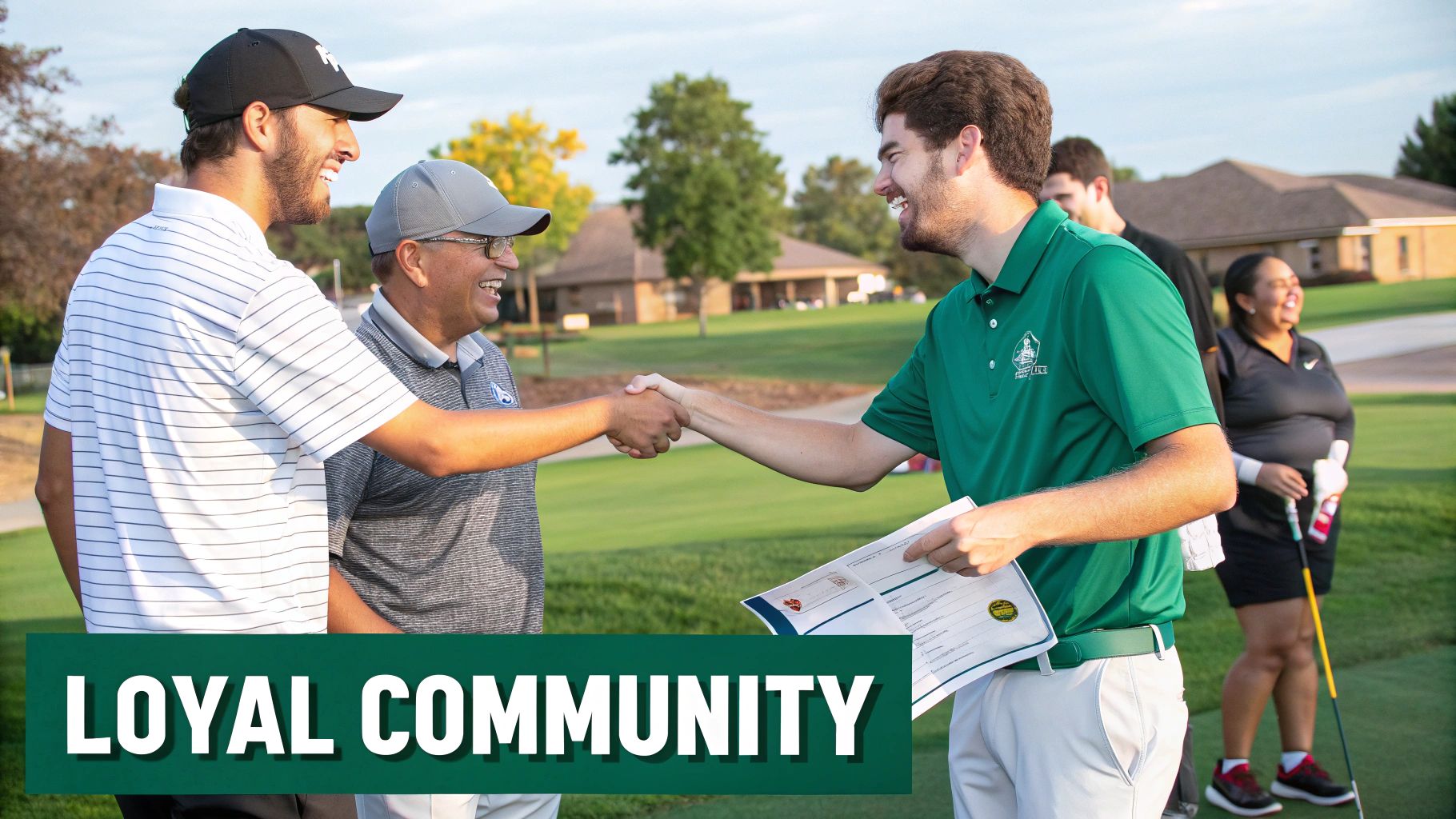
Here's the real measure of a great golf league: it’s not just a full roster in week one, but a full roster next season, and the season after that. True success is all about retention.
It means you’ve built something more than just a series of tee times. You’ve created a community players feel a part of—something they genuinely look forward to rejoining. That kind of loyalty doesn’t just happen. You have to transform your weekly game from just another golf event into the can't-miss highlight of your players' week.
Communication Is the Glue That Holds It Together
Consistent, professional communication is probably the most underrated part of keeping league members around. When players feel like they're in the loop, they feel valued. This is where a little bit of automation can be a league manager’s best friend.
Imagine the impact of a sharp, timely email hitting every player's inbox right after the round.
Instant Results: Don't make them wait. Automated emails can fire off final standings, individual results, and updated handicap info the moment the last score is in.
Weekly Highlights: Use these emails to celebrate more than just the lowest scores. Give a shout-out to the week’s skins winners, closest-to-the-pin champs, or even just include a fun photo from the course.
Next Week's Preview: Build some buzz for the next round by including a quick look at pairings and tee times.
This simple, consistent touchpoint keeps the league top-of-mind and reinforces that professional, organized feel you established on game day.
Keeping the Fun and Competition Fresh
While the season-long race is the main event, it's the weekly excitement that keeps players hooked. Side games and transparent prize pools are absolutely essential for maintaining a fun, competitive vibe all year.
Popular Side Games That Add Excitement:
Skins: A classic for a reason. It keeps every player in the game, hole by hole, even if they're having an off day.
Closest to the Pin (CTP): A simple, fun contest on par-3s that gives everyone a legitimate shot at winning something.
Longest Drive: Rewards the big hitters and adds another layer of friendly competition and bragging rights.
Team Quotas or Stablefords: These formats reward aggressive play and are way less punishing than straight stroke play, making them perfect for leagues with a wide range of skill levels.
The key here is transparency. Always be crystal clear about how the prize money is calculated and paid out. Modern league software can automate these payouts, which guarantees accuracy and builds a ton of trust. When people know the games are fair, they’re far more likely to jump in and come back for more.
Listening, Adapting, and Improving for Next Season
Want to know what your players really want? Just ask them. Gathering feedback isn't a sign of weakness; it shows you're committed to making the league the best it can be. You don't need some complex, 50-question survey—just a few targeted questions can give you incredible insight.
When the season wraps up, send out a simple online survey with questions like:
What was your favorite part of the league this year?
What's one thing we could do better next season?
Were the rules and payouts clear and fair?
Any new formats or side games you'd like to see us try?
Acting on this feedback is what really builds loyalty. When players see their suggestions turn into reality—whether it’s a new side game or a tweak to the pace-of-play policy—they feel heard and invested. This feedback loop is what turns a good league into a great one.
The numbers back this up. Registered golfers worldwide have grown from 7.4 million in 2020 to 8.4 million in 2024, and golf league programs are a huge reason why. They provide the structure that turns casual golfers into dedicated members, helping drive total adult golf engagement to 64.1 million globally. You can see more insights on this global golf growth on The Golf Business. By focusing on community, you tap directly into this trend and create an experience that keeps them coming back.
Common Questions (and Straightforward Answers) About Running a Golf League
Even the most buttoned-up league plan will have a few loose ends. Whether you’ve been running leagues for years or are just getting started, questions are part of the deal. Here are a few of the most common ones we hear from course operators and league managers, along with some practical advice.
Our goal is to give you the confidence to handle these things head-on so your league runs smoothly and your players have a great time. Let's get into it.
How Much Should We Charge for League Dues?
This is always a tricky one. You have to find that sweet spot between what feels like a great deal for the player and what actually covers your costs. Remember, you're not just selling rounds of golf; you're selling an entire experience—prizes, organized competition, and a community.
The best place to start is by figuring out your hard costs per player for the whole season. Break it down simply:
Greens & Cart Fees: The basic cost of getting them on the course.
Prize Fund: How much of each entry fee goes directly back into the prize pool.
Food & Beverage: Any included post-round specials or meals.
Admin Fee: A small amount to cover things like software or staff time.
A serious golfer can easily spend $5,000 a year on their hobby. When you frame your league fee—say, $400 for a 12-week season—as an all-in-one package, it suddenly looks like a fantastic value. Being transparent about where their money goes builds a ton of trust.
What’s the Best Way to Handle No-Shows and Substitutes?
Nothing throws a wrench in the works like a no-show. It messes up pairings, slows down the pace of play, and can create a real headache. That's why having a clear, fair, and consistently enforced substitute policy isn't just nice to have—it's essential.
Your sub policy needs to be front and center during registration and in the official league rules. Getting ahead of this prevents arguments later and shows everyone you're running a professional operation.
Here are a few solid approaches to a sub policy:
Player-Managed Subs: The most common and hands-off method. Players are responsible for finding their own fill-ins.
League-Managed Sub List: You create a "sub pool" of available golfers. When someone can't make it, they let you know, and you find a replacement from the list.
Scoring Rules for Subs: Be crystal clear about how a sub's score is handled. Does it count for the team? Are they eligible for weekly games like skins?
How Can We Keep a League Fair with Varying Skill Levels?
This might be the single most important question you answer. If the same scratch golfers win every single week, your higher-handicap players will lose interest—fast. The fix is a combination of a solid handicap system and smart format choices.
A dynamic, league-only handicap that adjusts each week based only on league scores is the fairest way to go. It keeps people honest and reflects how they're actually playing right now, not six months ago.
Beyond that, pick formats that give everyone a chance.
Net Scoring Formats: A Best Ball or Scramble is perfect because one bad hole from one player won't sink the whole team.
Stableford or Quota Games: These point-based systems reward good play but don't punish players as harshly for a blow-up hole, which keeps more people in the game until the very end.
When you focus on fair handicapping and inclusive formats, you create an environment where every player steps onto the first tee feeling like they have a real shot to win.
Ready to run your golf leagues with less effort and more engagement? Live Tourney provides the modern, app-free tools you need for registration, live scoring, and flawless gameday management. Start your free trial today.





