
Feb 13, 2026
Discover how to design, manage, and grow successful golf league programs. This guide offers actionable strategies for formats, tech, and player engagement.

Let's be honest, modern golf leagues are much more than just a schedule of weekly tee times. They're the heart of a vibrant golf community. When you get them right, these programs become a powerful way to keep players coming back, boost revenue, and build the kind of loyalty that lasts for years.
Why Modern Golf League Programs Are a Core Asset
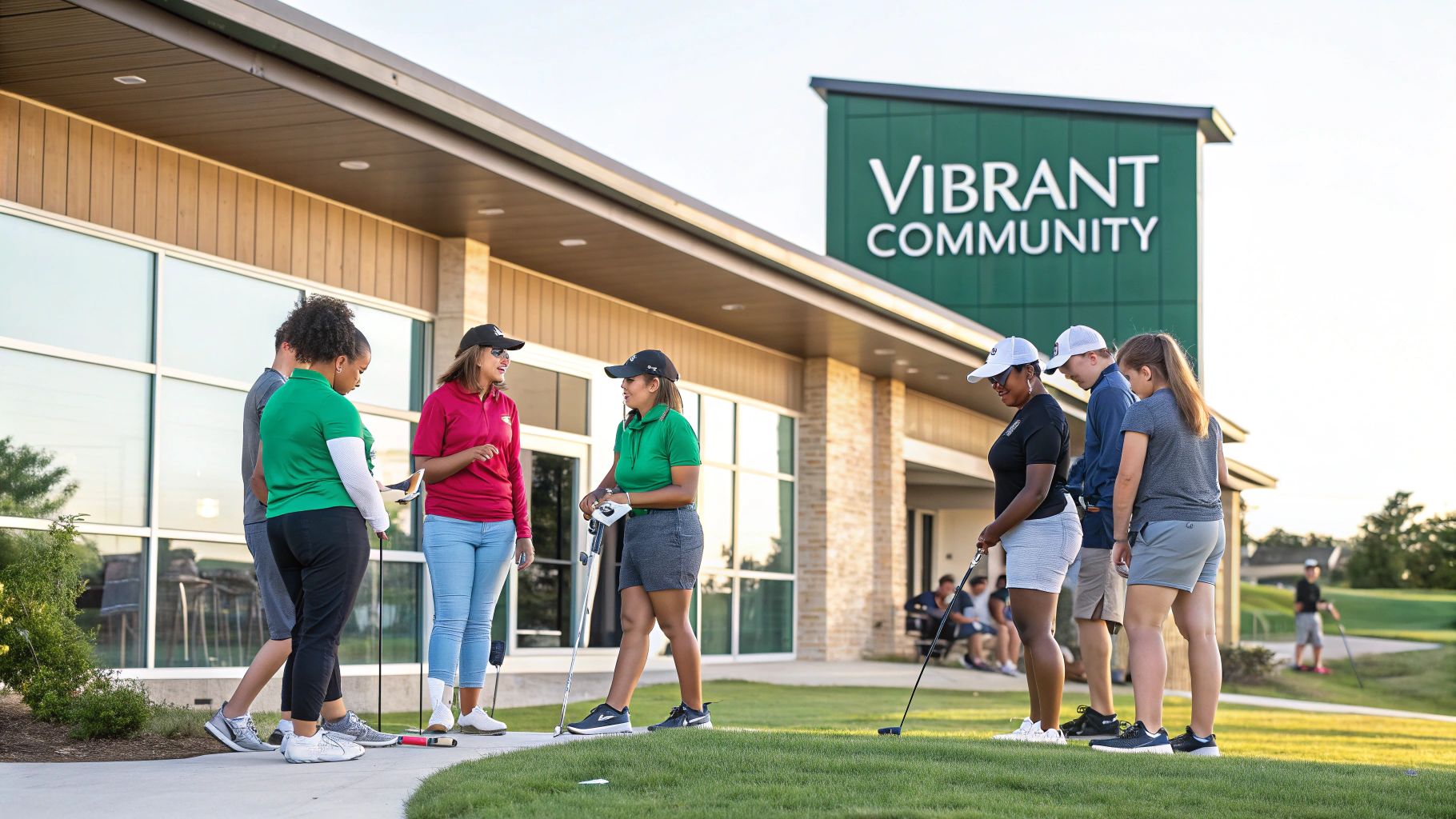
Any successful course operator knows this: a full tee sheet is great, but a predictable tee sheet is a game-changer. This is exactly where well-managed golf league programs become one of your most valuable assets. They turn scattered, one-off rounds into a consistent, reliable stream of revenue you can bank on, week after week.
And it's not just about the tee times. A league creates a whole ecosystem at your facility. Players don't just show up to play—they're showing up early for range balls, sticking around for a beer and a burger afterward, and grabbing a new sleeve of balls from the pro shop. Every league player is driving that crucial ancillary revenue that really impacts your bottom line.
Meeting the Needs of Today’s Golfer
The game is changing, and so are the players. If your programs aren't keeping up, you're falling behind. The days of catering to a single demographic are long gone. Today’s golfers are younger, more diverse, and they expect a smooth, tech-driven experience in everything they do—golf included.
The numbers back this up. In the US, we've seen eight straight years of growth in on-course participation. The real story, though, is the surge in diversity—we're seeing huge increases among juniors, women, and people of color. This new wave of players, with 57% of on-course golfers now under 50, has different expectations. They want leagues that are inclusive, flexible, and easy to manage. You can dig into more of these trends over at The Golf Director.
This generation won't put up with clunky spreadsheets, messy communication, or waiting around for someone to manually tally scores. They expect:
Effortless Registration: Simple online sign-ups and payments. No more paper forms.
Clear Communication: Automated reminders, tee time notifications, and instant results.
Instant Gratification: Live leaderboards that make every round feel like a real competition.
A well-run league does more than just fill tee times; it builds a community. It creates the rivalries, friendships, and memorable moments that turn a golf course into a second home for its players.
From Administrative Burden to Strategic Advantage
For years, the biggest hurdle to running a great league was the administrative nightmare behind it. Juggling rosters, calculating handicaps, scheduling formats, and trying to communicate with everyone was a massive time-suck. It led to staff burnout and, frankly, a pretty mediocre experience for the players.
Thankfully, that's all changed. Modern league management platforms have completely flipped the script. By automating all those tedious tasks, they free up your staff to focus on what actually matters—creating an amazing experience for your golfers.
Moving from scattered spreadsheets to a single, centralized system isn't a luxury anymore. It's a critical step for any facility that's serious about building a thriving community around its golf league programs.
Designing Your League Blueprint With Formats and Scheduling
Once your goals are locked in, it’s time for the fun part: building the actual structure of your golf league programs. This is where you decide on formats and create a schedule that keeps players hooked from the first tee shot of the season to the very last putt. The right blueprint can turn a simple weekly game into a can't-miss event.
A common trap is just defaulting to the same old stroke play format every single week. Sure, it’s a classic for a reason, but it can get stale and might not be the best fit for every golfer at your club. The most successful leagues mix things up to create variety that speaks to different skill levels and competitive mindsets.
Choosing Formats That Drive Engagement
The format you pick sets the entire tone for the league. Are you going for a serious, highly competitive vibe where every shot counts? Or is the goal a more social, team-based atmosphere perfect for corporate groups or a casual weeknight league? Each format brings a completely different energy.
Think about who's playing. A group of low-handicap sticks will love the head-to-head pressure of individual Match Play. On the other hand, a corporate league with a wide range of abilities will have a blast in a Scramble where everyone gets to contribute and no one person is put on the spot.
Here’s a look at some of the most popular options for golf league programs and when to use them.
Choosing the Right Golf League Format
Selecting the perfect format is less about what's traditional and more about what will create the best experience for your specific group of players. This table breaks down the most common formats to help you decide what will make your league thrive.
Format Type | Best For | Key Benefit | Management Tip |
|---|---|---|---|
Scramble | Casual, corporate, or mixed-skill leagues. | Minimizes individual pressure and encourages teamwork, making it great for socializing. | Use A/B/C/D player flights to create balanced teams and keep the competition fair. |
Match Play | Competitive leagues with consistent players. | Creates exciting head-to-head drama every week, hole by hole. | Requires accurate handicap management. Best for leagues where most players have an established handicap. |
Stroke Play | Traditional leagues and championship events. | Rewards consistency and is the purest test of individual skill against the field. | Can be less engaging for higher-handicap players. Consider using net scoring to level the playing field. |
Ryder Cup Style | Large leagues looking for a big team event. | Builds incredible camaraderie and team spirit over a multi-day or multi-week event. | Complex to organize but creates a highly memorable experience. Use it as a season-ending championship. |
Ultimately, the best leagues often use a blend of these formats throughout the season to keep things fresh and give every type of player a chance to compete and have fun.
Building a Dynamic Season Schedule
After you’ve picked a few formats, the next step is to arrange them into a full-season schedule. The real key here is to build momentum. A great schedule should balance your regular weekly competitions with a few "major" events that create peaks of excitement.
For instance, a 12-week men's league could be structured like this:
Weeks 1-4: Kick things off with a four-week Match Play segment to spark some early rivalries.
Week 5: Change the pace with a fun Two-Person Scramble. It’s a perfect mid-season social mixer.
Weeks 6-9: Switch to a team-based Best Ball competition, grouping players into foursomes.
Week 10: Throw in a fun "oddity" event like a Stableford or a Red-White-Blue tee day to break things up.
Weeks 11-12: Finish strong with a two-week, flighted Stroke Play championship to crown the league champion.
This kind of variety prevents the season from feeling monotonous. By introducing new formats, you give different players a chance to shine and keep everyone invested, even if they stumbled out of the gate. For a deeper dive into scheduling, especially for round-robin play, check out our guide on how to create a round robin schedule.
Your schedule is the story of your season. A well-designed schedule with varied formats and key events gives players a compelling reason to show up every single week, not just when it’s convenient.
Modern software makes mapping out these kinds of intricate schedules ridiculously simple. This screenshot from Live Tourney shows just how easy it is to manage different formats and events from one central dashboard.
The clean interface lets you quickly set up different competition types, manage your rosters, and communicate with players, turning what used to be a complex puzzle into a quick and easy task.
The Importance of Fair Handicapping
No matter what formats you choose, fair and transparent handicapping is the bedrock of any good league. It’s the magic ingredient that lets a 20-handicap have a legitimate match against a 5-handicap. Let me be blunt: poor handicap management is one of the fastest ways to kill a league.
Make sure you have a clear policy from day one. Will you require official USGA handicaps? Or will you run a league-specific system calculated by your software? Modern platforms can automatically calculate and adjust handicaps based on league scores, which not only keeps things fair but also eliminates manual errors. This automation is a massive time-saver and adds a layer of professionalism that your players will definitely appreciate.
Streamlining Operations With Smart Automation
Once your league’s format and schedule are locked in, the real work begins: turning plans into action without burying your team in paperwork. Too often, leagues stall under the weight of manual sign-ups, payment follow-ups, and endless reminder emails. That administrative grind saps energy and pulls everyone away from what really counts—delivering a top-notch player experience.
Smart automation isn’t about swapping out personal service. It’s about removing the busywork that slows you down. By automating repetitive tasks, you not only look more polished and professional but also give your staff room to focus on creating memorable moments for your golfers.
Automating Registration And Payments
I remember when our Thursday night league at Pine Ridge CC relied on paper forms and checks—chasing signatures felt like herding cats. Moving everything online changed the game. Here’s what a digital registration does for you:
Guaranteed Commitment: Collecting fees upfront slashes no-shows and discourages last-minute dropouts.
Tidy Finances: All payments funnel into one dashboard, making accounting a breeze.
Accurate Data: Player names, emails, and handicaps come in clean and ready for future outreach.
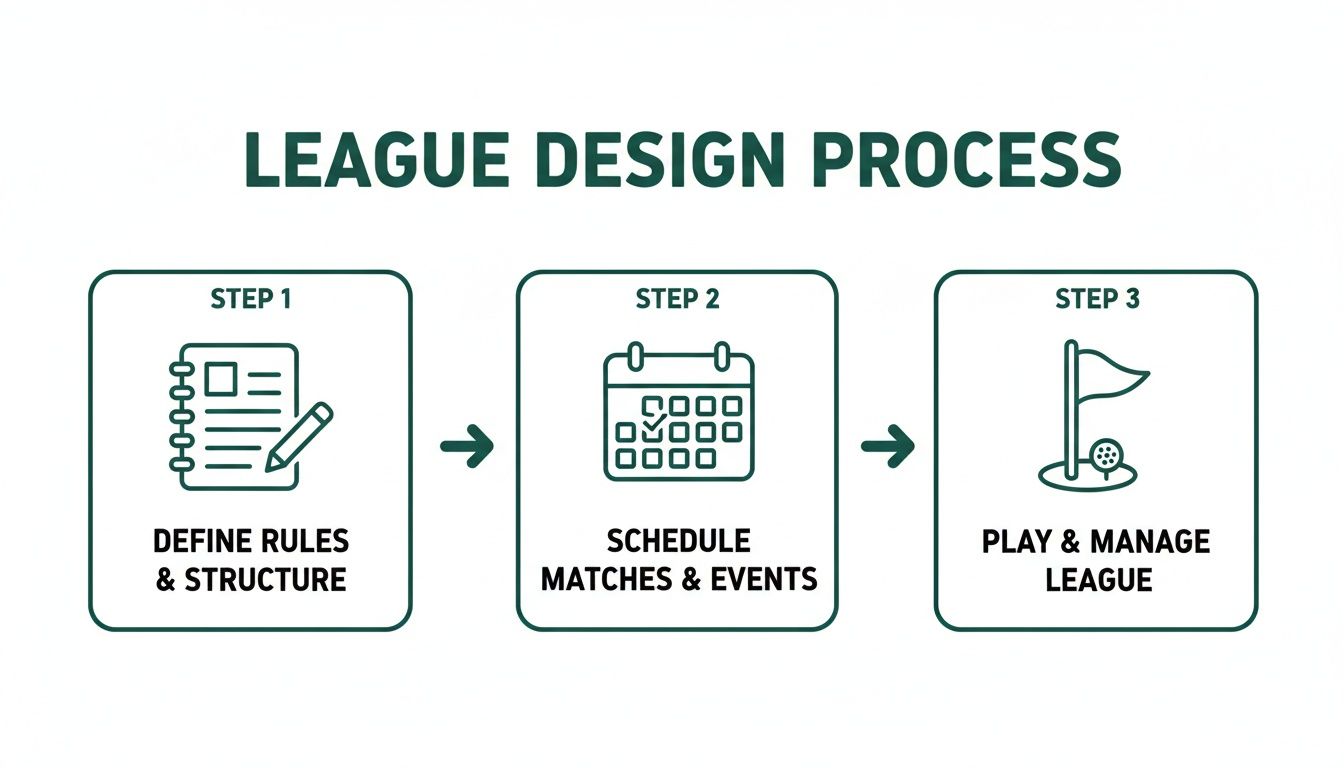
You’ll notice how a solid plan—paired with the right automation—keeps every piece moving in harmony.
Creating A Central Communication Hub
With registrations in hand, the next hurdle is consistent, clear communication. I’ve seen leagues scatter information across texts, emails, and bulletin boards—and end up with frustrated players. A central hub in your league software solves that.
Automated notifications ensure everyone gets the right message at the right time. You can draft updates weeks in advance, then sit back while reminders drop automatically. To compare platforms and their automation capabilities, check out this event management software comparison.
Automated communication shifts you from reactive admin to proactive host. Players feel informed, valued, and more connected.
Picture players opening their inbox 48 hours before tee-off to find a beautifully formatted email with their tee time, pairings, and a direct link to the live scoring portal. Want to see how top courses are doing this? Explore dedicated golf league management software for advanced features and best practices.
Sample Communication Timeline
Keep momentum high and questions low with a simple, repeatable schedule:
Wednesday (2 Days Pre-Play): Final pairings, tee times, and a link to the live scoring portal drop into inboxes—no last-minute calls needed.
Friday Morning (Day Of Play): A friendly “welcome” note reminds players of formats and any on-course contests, such as closest-to-the-pin.
Friday Evening (Post-Round): Instant results email with leaderboards, skins winners, and highlights keeps the buzz going.
This cadence does more than deliver updates. It builds anticipation before each round and extends excitement long after the final putt drops—cementing that sense of community at the heart of any thriving golf league.
Executing Flawless League Days With Live Scoring

This is where all your careful planning pays off—on the course, during league play.
A flawless league day isn't just about getting everyone around the course on time. It’s about creating a professional, exciting, and memorable experience that makes players feel like they're part of something special. It’s the small, polished details that separate an average league from a premier one.
Modern golf league software acts as your day-of-play command center. Instead of scrambling to print generic tee sheets, you can generate a full suite of professional, custom materials with just a few clicks. This includes everything from cart signs and bag tags with player names to scorecards pre-populated with handicaps. This level of detail instantly elevates the feel of your event.
The Power of App-Free Live Scoring
The true centerpiece of the modern league day is live scoring. Forget about players constantly asking, "How are we doing?" or staff huddling around a crumpled scorecard after the round.
Real-time, app-free scoring transforms a standard round of golf into a dynamic, interactive competition. Players enter scores on their own phones via a simple link—no downloads, no sign-ups, no friction.
This simple change dramatically boosts player engagement. Suddenly, every putt matters, and everyone can follow the action on a live leaderboard. It brings the thrill of a professional tournament to your weekly golf league programs.
A Tale of Two Leagues
To truly understand the impact, let's look at a common scenario. Imagine two leagues running on the same night.
League A (Manual Scoring): Players keep score on paper cards. After the round, there's a chaotic bottleneck at the scoreboard as your staff tries to collect, decipher, and manually enter scores. It takes 30-45 minutes to determine the winners, by which time half the players have already gone home, missing the awards and camaraderie.
League B (Live Scoring): As each group finishes a hole, a player taps the score into their phone. The leaderboard in the clubhouse and on everyone's device updates instantly. By the time the last group walks off the 18th green, the results are final. Winners are announced immediately, and the post-round celebration begins without delay.
The difference is stark. League B eliminates post-round headaches for your staff and creates a buzz that keeps players engaged and spending money at your facility long after their round is over.
This instant feedback loop isn't just a convenience; it's a fundamental shift in the player experience. It fosters a more competitive and social atmosphere, making each week's event more compelling. Our deep dive into golf tournament scoring software explores more ways this technology can benefit your operations.
Driving Player Adoption and Engagement
Of course, the best technology is only effective if people use it. Encouraging players to adopt live scoring is easier than you might think, especially with an app-free system. The key is clear communication and making it part of the league's routine from day one.
Here are a few actionable tips that have proven incredibly effective:
Pre-Round Instructions: Send an email the day before with a direct link to the scoring portal and a simple, one-sentence instruction.
Day-Of Reminders: Place QR codes on cart signs or at the check-in table that link directly to the scoring page for that day's event.
Clubhouse Leaderboard: Display the live leaderboard on a TV in the bar or clubhouse. This is the single most powerful tool for driving adoption, as it creates a focal point for conversation and competition.
This approach capitalizes on a massive trend. The United States has seen a huge increase in participation, with a record 82 million scores posted last year by golfers with a Handicap Index—a 46% jump since 2020. This data shows players are more engaged with score tracking than ever, making them prime candidates for live scoring that enhances their competitive experience.
By making live scoring an integral part of your golf league programs, you’re not just offering a cool feature—you're creating a superior on-course experience that keeps players coming back.
Boosting Engagement and Building a Thriving Community
A truly successful league is more than just a weekly schedule of tee times. It's a community. When players are engaged, they're more invested, they show up every week, and they can't wait to sign up again next season. This is where you can use technology for more than just administration—you can use it to build the human connections that make golf league programs special.
The secret is to layer in extra bits of fun beyond the main competition. This way, even players having an off night still have something to play for and a reason to hang around the clubhouse afterward. The social fabric you weave is what turns a good league into a great one.
Injecting Fun With Side Games
Weekly side games are probably the single best way to boost day-of engagement. They're low-stakes, high-fun contests that give everyone a shot at winning something, no matter their handicap.
Trying to manage these with pen and paper used to be a real headache, but modern software automates the whole thing. You can easily set up and track popular games like:
Skins: A classic game where a player wins a hole outright with the lowest score. Net skins are even better because they give higher-handicap players a legitimate chance to win some cash.
Closest-to-the-Pin (KP): Just pick a par-3 and put out a marker. It’s a simple, exciting challenge that gets everyone talking as they compare shots throughout the day.
Longest Drive: Find a wide-open fairway and let 'em rip. This one is always a hit and becomes a major source of bragging rights.
These little games create more winners to celebrate each week, which is huge for building a positive, inclusive vibe. You can even mix in special events like fun golf for groups to shake things up and keep the energy high.
Transparent and Easy Payouts
If you're running cash games like skins or a weekly prize pool, transparency isn't just nice—it's everything. Players have to trust that the prize money is being handled fairly and accurately. But calculating payouts by hand, especially with multiple games running, is slow and asking for mistakes.
A built-in payouts calculator is a must-have for any modern golf league. It automatically does the math based on the number of players and the results, giving you an instant, clear breakdown of who won what.
This feature saves your staff a ton of time, but more importantly, it builds trust. When you can post the results and payouts right after the round, it shows your league is professional and run with integrity.
Fostering Community Through Communication
What you do between rounds is just as important as what happens on the course. This is your chance to build a narrative for the season, celebrate winners, and keep the conversation going all week long.
Don't just be the person who sends out tee times. Create a weekly wrap-up email that actually tells a story. Use your league data to pull out fun stats and interesting highlights.
Your weekly email could feature things like:
A Quick Recap: A short, engaging summary of what went down.
Leaderboards: Show the updated season standings and the results from the weekly side games.
Player Spotlights: Highlight a great round, a new player's first skins win, or a funny moment someone shared.
A Look Ahead: Briefly mention next week's format to get people thinking about it.
This kind of consistent communication makes players feel connected to the league, even when they're not at the course. That sense of belonging is a powerful reason for them to come back year after year.
Your Golf League Management Questions, Answered
Let's be honest, switching up how you run your golf leagues can feel like a big leap. It’s natural to have questions. We hear them all the time from course operators and league admins: How much time will this actually take? Will my players even use it? How do I know if it’s working?
We've got you covered. Here are some straight-up answers to the most common concerns we hear.
How Much Time Does It Really Take to Set Up a League With Modern Software?
A lot of us get a little nervous about learning new software. We've all been there—staring at some complicated dashboard, wondering where the heck to start. But this isn't that. With a modern, intuitive platform, you can get a full league built and ready to go in minutes, not hours.
That includes your rosters, the full schedule, your unique formats, and even a slick-looking registration page. The best systems are designed to be simple, letting you get an entire league live and ready for sign-ups in well under an hour. You spend less time fighting with the software and more time talking to your players. The key is finding a platform with a clean layout and features like bulk roster uploads that get rid of all that tedious data entry.
How Do I Get Players Who Aren't "Tech-Savvy" to Use Live Scoring?
This is probably the number one question we get, but it’s an easier hurdle to clear than you might think. The single most important thing is to use an "app-free" system. When all a player has to do is click a link—no downloads, no passwords, no hassle—the battle is already won.
From there, a little communication goes a long way.
Give a Heads-Up: Send a simple email before the season starts explaining how it works.
Use On-Course Reminders: Put QR codes on carts or at the check-in desk that link players right to the scoring page.
Show Them in Person: Have a staff member do a quick, 30-second walkthrough at the first event to show everyone just how easy it is.
But you want to know the most powerful motivator? Put the live leaderboard up on a TV in the clubhouse. The moment players see scores updating in real time, a competitive buzz fills the room. It’s natural. Everyone wants to be a part of it. We’ve seen this strategy alone lead to a 40% jump in live scoring because it makes the experience fun and effortless.
It’s a simple change that completely transforms the energy of a league and makes the post-round hangout way more engaging.
What Are the Most Important KPIs to Track for a Successful League?
It's tempting to just look at the final revenue number, but to understand the real health of your league, you need to look a little deeper. Tracking the right Key Performance Indicators (KPIs) gives you the insight to make smarter decisions and prove just how valuable your league is to the entire facility.
Here are the big ones you should be watching:
Player Retention Rate: This is the big one. What percentage of players sign up again next season? A high number is the ultimate sign of a happy league.
Average Weekly Participation: How many of your registered players are actually showing up each week? This tells you a lot about player engagement and whether your schedule is working.
Ancillary Spend Per Player: Don't forget to track food, beverage, and pro shop sales on league nights. This is where you can quantify the full financial impact.
Registration-to-Start Time: How fast are you filling up all your spots? If your league sells out quickly, it's a clear signal of high demand and great marketing.
Good management software should give you automated reports that make tracking these metrics dead simple. With that data, you can stop guessing and start making targeted improvements that demonstrate the massive value your leagues bring to the course.
Ready to stop wrestling with spreadsheets and start running exceptional golf leagues? Live Tourney makes it easy to automate registrations, engage players with live scoring, and manage every detail in minutes. See how top courses save time and elevate their player experience. Start your free trial at https://livetourney.com.





