

Jan 7, 2026
Discover a proven guide to running a golf tournament scramble with formats, scoring tips, and fun side games that boost player satisfaction.

Anyone who's run a golf tournament scramble knows it’s about more than just picking a date and a golf course. To pull off an event that people actually talk about for weeks, you need a solid game plan—one that covers everything from the format to the final handshake.
Your Blueprint for an Unforgettable Scramble
This guide is for anyone in the trenches, whether you're organizing a charity event, a laid-back corporate outing, or a competitive club championship. We're cutting straight to the practical advice that works in the real world. Forget the overwhelming spreadsheets and last-minute chaos. You're about to learn how to host a professional, engaging, and genuinely fun tournament.
Here's a simple way to visualize the process.
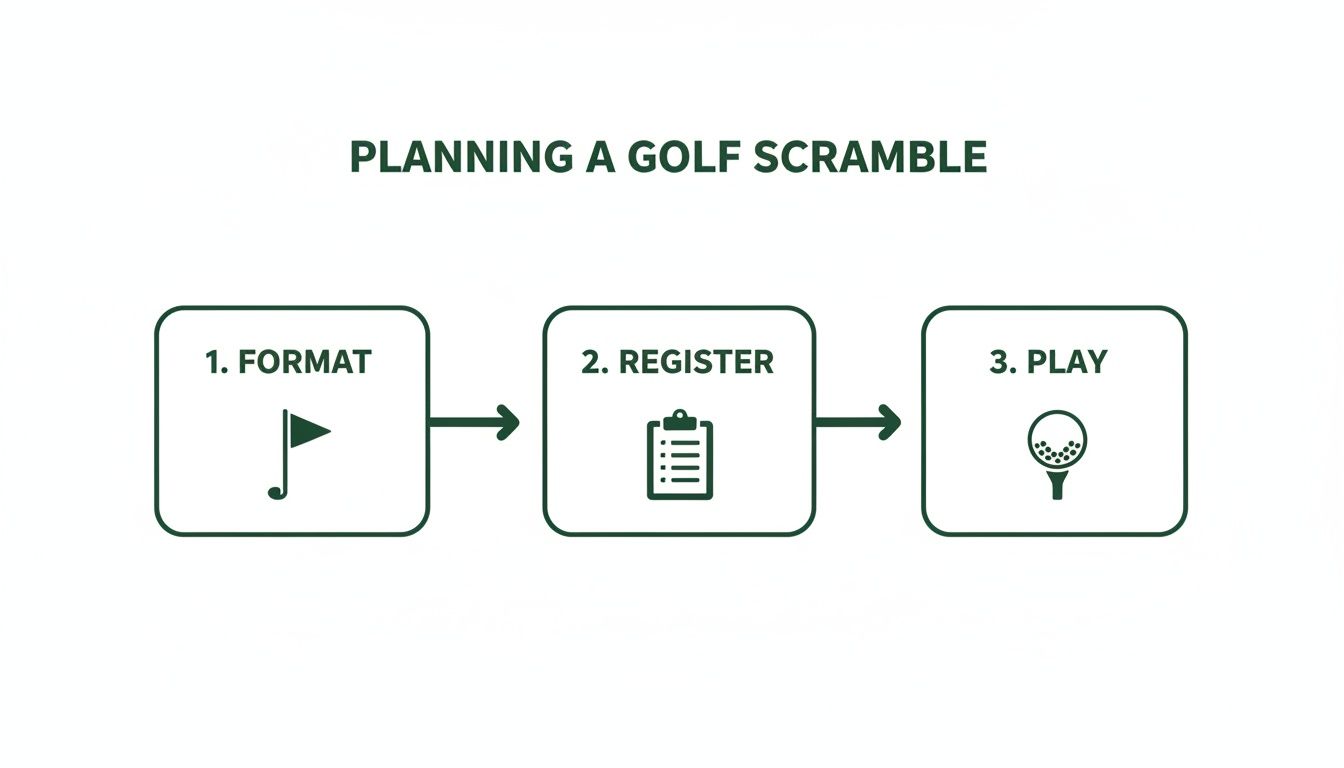
As you can see, a great scramble is built on three core pillars: locking in the right format, making registration a breeze, and executing a flawless day on the course.
The Foundation of a Great Scramble
We’ll get into the nitty-gritty of choosing a scramble format that fits your group’s vibe and setting up fair handicaps without needing a math degree. The whole point is to create an atmosphere where golfers of every skill level can have a good time and feel like they’re contributing to their team.
A well-organized golf tournament scramble doesn't just happen. It's the result of thoughtful planning focused on the player experience, from the moment they sign up to the final putt.
We'll give you real-world tips for modernizing a few key areas:
Registration and Payments: Ditch the paper forms and checks. A simple online sign-up process makes life easier for everyone.
Side Games and Contests: We'll show you how to set up fun on-course games that create buzz and can even bring in a little extra revenue.
Day-of Operations: Learn how a little bit of tech can make the entire event—from check-in to live scoring—run like a well-oiled machine.
Focusing on these elements is what turns a standard golf outing into a must-attend event. For an even deeper dive into the logistics, check out our complete guide on how to run a golf tournament. Now, let’s get into the details for each of these steps.
Choosing the Right Scramble Format and Rules
The scramble format you pick sets the entire tone for your event. Get it right, and everyone from scratch golfers to total beginners will have a great day. Get it wrong, and you might have frustrated players on your hands. The real goal is to match the rules to your audience's skill and competitive spirit.
For most events, especially charity outings and corporate gatherings, the classic four-person scramble is the go-to. It's simple and inclusive. All four players tee off, the team picks the best drive, and everyone hits their next shot from that spot. You repeat this all the way until the ball is in the hole.
This format is so popular because it takes the pressure off. A less experienced golfer can hit a terrible shot and it doesn't matter one bit—their teammates are there to pick them up. It's all about fun and teamwork.

Exploring Popular Scramble Variations
While the classic scramble is a fantastic default, sometimes adding a small twist can inject a little more strategy and excitement. Scrambles have become the dominant format for big outings precisely because they're so flexible. For instance, you could check out the popularity and statistics of scrambling in golf to see just how prevalent this style of play is.
Let's look at a few common variations:
Florida Scramble: This format introduces a clever rule: the player whose shot is selected has to sit out the next one. This prevents one ringer from carrying the entire team and forces everyone to contribute on every hole. It's a great way to keep things balanced.
Texas Scramble: Here, you add a minimum drive requirement. For example, the team might have to use at least three tee shots from each player during the round. This is perfect for ensuring the big hitter doesn't dominate every par 4 and par 5.
Shamble (or Bramble): This one is a hybrid. Everyone tees off and the team chooses the best drive. From there, each player plays their own ball into the hole, like a normal round. You then take the best one or two individual scores for the team score.
A Shamble is an excellent choice for a group of more skilled golfers who enjoy individual play but still want the team-based fun of a scramble off the tee.
Comparing Popular Scramble Formats
So, which one is right for you? To help you decide, here’s a quick breakdown of how these formats stack up. Think about your players—are they super competitive, or is the day more about networking and having a good time? The answer will point you in the right direction.
Use this table to quickly compare common scramble variations and find the best fit for your tournament's goals and player skill levels.
Format Type | Key Rule | Best For | Strategic Complexity |
|---|---|---|---|
Classic Scramble | All players hit from the "best ball" location on every shot. | Casual events, fundraisers, and groups with a wide range of skill levels. | Low |
Florida Scramble | The player whose shot is selected sits out the next shot. | Mixed-skill teams where you want to guarantee participation from everyone. | Medium |
Texas Scramble | Each team member's tee shot must be used a minimum number of times. | Groups that want to ensure every player contributes off the tee. | Medium |
Shamble (Bramble) | After the best drive is chosen, each player plays their own ball in. | More skilled golfers who enjoy individual play within a team context. | High |
Choosing the right format is half the battle. The other half? Communication.
No matter which one you land on, make sure the rules are spelled out clearly on your registration page, in your pre-event emails, and again during the opening announcements. When everyone knows exactly how to play, they can stop worrying about the rules and start focusing on having fun.
Mastering Pairings, Handicaps, and Scoring
Creating balanced teams and a fair playing field is what separates a good scramble from a great one. How you handle pairings, handicaps, and scoring directly impacts the competitive integrity and the overall vibe of the day. Get these details right, and you'll have a smooth, dispute-free event.
First up, building the teams. If players sign up as a complete foursome, your job is easy. But for all those individual sign-ups, you'll need to build teams strategically.
The last thing you want is to group all the scratch golfers together. A common and effective practice is to create A, B, C, and D player categories based on handicaps and assign one player from each category to a team. This simple method promotes balance and gives every team a fighting chance.
Demystifying Scramble Handicaps
Once your teams are set, it's time to tackle handicaps. This is often the most intimidating part for organizers, but it doesn't have to be. For a USGA-sanctioned event, there's a specific formula, but for most charity and corporate outings, a simpler approach works just fine.
The whole point of a scramble handicap is to adjust a team's gross score to account for everyone's skill level. Without it, the teams stacked with low-handicap golfers would almost always win, which isn't fun for anyone else.
Key Takeaway: A well-calculated team handicap ensures that skill, not just the luck of the draw in pairings, determines the winner. It keeps the event competitive and fun for everyone involved.
For a standard four-person scramble, a widely accepted and easy-to-use formula is:
20% of the A-player's handicap
15% of the B-player's handicap
10% of the C-player's handicap
5% of the D-player's handicap
Just add these percentages together to get the total team handicap. You subtract that number from their final gross score. Of course, modern tournament software like Live Tourney automates this entire process, calculating handicaps instantly and saving you from manual errors and hours with a calculator.
Best Practices for Scoring and Tiebreakers
With a fair system in place, the focus shifts to accurately collecting scores. While traditional paper scorecards still get the job done, the trend is definitely moving toward live scoring. It not only speeds up the post-round chaos but also adds a professional, engaging element to the day.
Players can enter their scores on their phones after each hole, and a live leaderboard can be displayed in the clubhouse and on everyone's device. This creates a real buzz and lets teams know exactly where they stand throughout the round. If you want to dig deeper into the benefits, our detailed guide on golf tournament scoring offers more insights into making the process seamless.
Even with perfect scoring, ties are pretty much inevitable in a scramble. You absolutely must have a clear tie-breaking procedure established before the first tee shot is hit. Announce it during the opening remarks to avoid any confusion or arguments later.
A standard method that works great is the scorecard playoff. Here’s how it works:
Back Nine: Compare scores on the back nine (holes 10-18). The team with the lower score wins.
Last Six: Still tied? Compare scores on the last six holes played (13-18).
Last Three: If you still don't have a winner, use the scores from the last three holes (16-18).
Final Hole: As a last resort, the team with the lower score on the 18th hole takes the win.
This tiered approach is fair, easy to explain, and gives you a definitive way to crown a champion. By mastering pairings, applying a logical handicap system, and having a clear scoring and tie-breaker plan, you set the stage for a flawlessly executed and memorable scramble.
Making Registration and On-Course Operations Effortless
A great player experience starts long before anyone even thinks about their first tee shot. The little things—how players sign up, the materials they find on their carts—are what separate a good golf tournament scramble from a truly professional one. A clunky, disorganized process creates frustration and can easily sour an otherwise perfect day on the course.
The very first touchpoint for your players is almost always the registration page. This is your chance to nail that first impression. Gone are the days of paper forms and endless email chains. Modern tournaments use a clean, dedicated online registration page. This isn't just about looking sharp; it's about pure efficiency.
When you use a well-designed portal, players can sign up, add their teammates, drop in their handicap info, and pay their entry fees all in one go. This brings all your player data into one place, saving you hours of painful manual entry and cutting down the risk of making a costly mistake.
Setting Up a Flawless Registration Experience
The goal here is simple: make signing up so easy it takes less than five minutes. Your registration page should be clear, concise, and feel like your event.
Take a look at this example from the Live Tourney platform. It shows how a clean interface can lay out all the key info—event details, pricing, and a clear call-to-action—without feeling cluttered or overwhelming.
An organized setup like this builds instant confidence. It tells players they're signing up for a well-managed event right from the jump.
To make sure you get all the info you need without causing any friction, your registration form should include a few key fields:
Player Names: For individuals or full foursomes.
Handicaps or Average Scores: This is essential for fair pairings and flights.
Contact Information: At a minimum, you need an email for pre-tournament communication.
Payment Options: Let players pay with a credit card right on the site. It’s secure and simplifies everything.
Your Pre-Tournament Communication Checklist
Once you have players signed up, keeping them in the loop is the key to building excitement and ensuring a smooth tournament day. A simple communication schedule prevents that last-minute flood of questions every organizer dreads.
A great golf tournament scramble is all about managing expectations. Clear, timely communication before the event ensures everyone arrives prepared, excited, and ready to play. That means a better day for them and a lot less stress for you.
Keep your pre-event emails short and to the point. Try a schedule like this:
Confirmation Email (Immediate): As soon as someone registers, send an email confirming their payment and a few key details.
One Week Out: Send a reminder with the event schedule, the course address, and a link to the pairings sheet.
Day Before: Fire off a final "get excited" message. Include the weather forecast, check-in instructions, and a quick rundown of the side games.
This steady drumbeat of information keeps your event top-of-mind and shows a level of organization that both players and sponsors will notice and appreciate.
Day-Of Materials and Logistics
Using a single, integrated system for your day-of materials just makes you look polished. Instead of fumbling with different files for tee sheets, cart signs, and scorecards, a platform like Live Tourney generates all of them automatically from your registration data. This consistency not only looks pro but saves a ton of prep time.
It's always interesting to see how the term "scramble" pops up in both our events and at the highest levels of the sport. While we focus on the team game, "scrambling percentage" on the PGA Tour is a crucial stat that measures a player's ability to save par after missing the green. The tour average is around 60.16%, but the top guys like Scotty Scheffler push that number above 71%—a testament to an incredible short game under pressure. If you want to see how the pros have mastered the art of the scramble, check out their performance statistics.
Boosting Engagement with Fun Side Games and Contests
A standard golf scramble is always a good time, but let's be honest—it's the side games and on-course contests that really make an event memorable. These little competitions inject a ton of energy into the round, create a buzz among the players, and open up some fantastic sponsorship opportunities.
Sure, Longest Drive and Closest to the Pin are staples for a reason, but getting a little creative is how you build an event that people are still talking about years later. The trick is to offer a mix of games that appeal to everyone, so even the high-handicap players feel like they've got a shot at walking away with a prize.

Fresh Ideas for On-Course Contests
Let's move beyond the basics. The best side games are simple to explain and quick to play, keeping the pace of play moving and the frustration low.
A guaranteed hit is the Marshmallow Driving Contest. It’s exactly what it sounds like. Players tee up a marshmallow and let it fly. It’s hilarious, completely levels the playing field, and the prize can be something fun like a s'mores kit or a local gift card.
Another great one is the "Beat the Pro" Challenge. Just station a local golf pro (or a really solid amateur) on a Par 3. Players can chip in $10 or $20 for a chance to stick their tee shot closer than the pro. If they win, they get a prize. If they lose, their donation goes straight to your event's cause. It's a win-win.
The best side games never disrupt the flow of play. A great tip is to position your contests on holes where a slight backup might naturally occur, like the first Par 3. It keeps everyone entertained instead of just waiting.
Here are a few more ideas you can easily pull off:
Pot of Gold Putting Contest: Set this up on the practice green for before or after the round. Make a circle of golf balls around a single hole (the "pot of gold"). Players pay a small entry fee for one putt from a set distance. Anyone who sinks it splits the pot. Simple and effective.
Poker Hand Run: Designate five holes on the course. A volunteer at each hole gives every team a random playing card after they finish. At the end of the round, the team with the best five-card poker hand wins.
The String Game: This is a fun alternative to mulligans. Sell teams a length of string—say, three feet for $20. They can use the string to move their ball to a better spot without costing them a stroke. They can even use it to "hole out" a putt that's just short. Once a piece of string is used, they have to cut it off.
Managing Prizes and Payouts Effectively
All the excitement from the side games comes to a head at the awards ceremony, so having a smooth payout process is critical. This is all about planning ahead. Know exactly what prizes you're offering—cash or merchandise—and have everything organized and ready for a quick presentation.
For cash games like skins or the Pot of Gold, your tournament software should do the heavy lifting. A tool like Live Tourney can instantly calculate the payouts based on the number of entries and winners. This saves you from scrambling with a calculator when you’re trying to wrap things up.
When you're sourcing prizes, especially for corporate events, think outside the box. Unique corporate gift ideas that go beyond a sleeve of balls or pro shop credit can leave a lasting impression on players and sponsors alike.
Here’s a quick checklist for handling your contest prizes:
Assign Prizes Beforehand: Match every contest with its specific prize before the tournament begins.
Organize by Hole: Group the prizes for on-course contests (Longest Drive, CTP, etc.) by their hole number. This makes distribution a breeze.
Use a Payout Calculator: Lean on your software for skins and other cash games to guarantee accuracy and speed.
Announce Winners Clearly: Give winners their moment. Acknowledging them publicly during the awards ceremony makes them feel recognized and adds to the event's atmosphere.
By mixing in a few creative games and having a solid plan for the prizes, you can turn a simple round of golf into an interactive and genuinely engaging experience.
Using Live Scoring to Create a Pro-Tour Vibe
Want to really wow your players? The single best way to bring the buzz of a professional tournament to your scramble is with live scoring. This is what transforms a standard charity outing into a dynamic, unforgettable event where every single shot feels like it matters.
Imagine it: a real-time leaderboard up on the big screen in the clubhouse and on every player's phone. As scores come in, teams can track exactly where they stand, figure out what they need to shoot on the last few holes, and feel that competitive energy build. It's not just a feature; it's an experience.

Making Live Scoring Effortless
I get it—the biggest thing holding organizers back is the fear of technical headaches. You're picturing players fumbling with clunky apps and your staff getting swamped with questions. But modern systems have completely solved this problem.
The key is app-free live scoring. Instead of forcing anyone to download an app, players just click a link you send them. It opens a clean, simple scoring page right in their phone's browser. It’s as easy as opening a website. You just need one person per foursome to enter the team's score after each hole, and the system handles the rest.
This simplicity is a game-changer. It means you get 100% of the impact with none of the usual friction, which is how you get everyone to actually use it.
Driving Player Participation
Even with a simple system, a little push helps. Announce the live scoring during your opening remarks, explain how easy it is, and build some hype around the live leaderboard. A great move is to put a small instruction card with a QR code on every golf cart that links directly to the scoring page.
Here's my favorite pro tip: tie live scoring directly to your on-course contests. Announce that only scores entered live will be eligible for the skins game payouts. This one simple rule will often take participation from under 50% to over 90% in an instant.
This creates an immediate feedback loop that's incredibly powerful. Teams see scores pop up in real-time, fueling that competitive fire throughout the entire golf tournament scramble. When players are engaged, they're having more fun, period. For a deeper dive, check out our guide on picking the best golf tournament scoring software.
The Big Payoff: Instant Results
Beyond the player experience, live scoring makes your job as the organizer infinitely easier. The second the last putt drops, the tournament is over. All the scores are already in, handicaps have been applied, and any tiebreakers are automatically resolved.
No more scrambling to collect soggy scorecards. No more frantic, error-prone data entry while everyone is waiting.
You can walk right into the awards ceremony and announce the winners, ending the day on a high note while the excitement is still in the air. It’s a professional finish that makes your entire event look top-notch.
Fielding Common Scramble Questions
No matter how well you plan your scramble, you're going to get questions. It just comes with the territory. After helping run hundreds of these events, we’ve heard them all. Here are the most common ones and how to handle them.
What Is the Best Way to Determine Handicaps?
If you want to be by the book and ensure total fairness, the USGA system is your best bet. It calculates a team handicap by taking a certain percentage of each player's course handicap (25% of the A-player, 20% of the B, 15% of the C, and 10% of the D). It works beautifully for competitive events.
For a more relaxed charity or corporate outing, a simpler formula is often all you need. The goal is just to balance the teams so everyone feels like they have a shot. Of course, good golf tournament software handles all these calculations automatically, which takes the pressure off you and keeps things fair without any manual math.
How Can I Speed Up the Pace of Play?
Nothing kills the vibe of a scramble faster than slow play. The easiest fix? Set a maximum score per hole. A double bogey limit is pretty standard and keeps teams from spending 15 minutes searching for a lost ball on a hole that's already a wash.
Before the tournament kicks off, make sure to remind everyone about "ready golf." It's also a good idea to double-check that your on-course contests—like long drive or closest to the pin—aren’t set up in a way that creates a logjam on the tee box or green.
A great pace of play isn't just about speed; it's about maintaining the event's energy. When groups are moving well, everyone stays engaged and has a better time.
What Is the Easiest Way to Manage Registration?
It’s time to ditch the paper forms and chasing down checks for good. The single most effective way to handle sign-ups is with a dedicated online registration portal for your event.
This lets players sign up, plug in their handicap info, and pay securely all in one go. Everything is centralized, you eliminate the risk of typos from manual entry, and it gives your scramble a professional feel right from the start. It sets the perfect tone before anyone even steps onto the course.
Ready to run a flawless golf tournament scramble without the usual headaches? Live Tourney offers app-free live scoring, automated handicapping, and effortless online registration to make your event a standout success. See how it works at Live Tourney.





