

Jan 5, 2026
Discover how to launch and manage a thriving golf league program. This guide covers formats, scheduling, and technology to boost engagement and revenue.

A great golf league doesn't just happen. It's built on a solid plan long before the first player tees off. This is the part that separates the leagues that people talk about all year from the ones that fizzle out after a few weeks. It’s all about figuring out what success looks like for you and building your league around that vision.
Laying the Groundwork for a Successful League
First things first: you need to define your goals. Are you trying to fill up the tee sheet on a slow Tuesday afternoon? Is the main goal to get more people into the restaurant and bar? Or maybe you just want to build a stronger community feel at your club.
Your "why" is going to shape every other decision you make.
Think about it. If you’re just trying to drive weekday traffic, you might set up a 9-hole, 5:30 PM shotgun start. That makes it super easy for the after-work crowd to jump in. Without a clear target, you're just guessing.
Defining Your League's Purpose
Once you know what you want to achieve, it's time to figure out what your players actually want. And whatever you do, don't just assume you know the answer. The best way to find out is to ask them directly.
A simple online survey sent to your members and local golfers can give you some incredible insights. Ask them about their preferences:
Day and Time: Do they prefer weekday evenings or weekend mornings?
Format: Are they looking for serious competition, a social scramble, or a season-long points race?
Price Point: What are they comfortable paying for entry fees and weekly games?
Motivation: Is it about competition, networking, or just having a fun, regular game?
This feedback is gold. It lets you build a league that people are genuinely excited to join, which means a full roster and way less marketing work for you. A little effort upfront saves you from launching a league into a chorus of crickets.
A well-run league isn't just another event on the calendar; it's one of your best retention tools. When you create an experience that's organized and engaging, you give golfers a powerful reason to make your course their home.
Modern league management platforms make all of this way easier, creating a professional feel for players from the get-go while cutting down on the admin headaches for you.
Building Your Financial Blueprint
With your goals set and player feedback in hand, the last piece of the foundation is your budget. A detailed financial plan ensures your league is profitable (or at least sustainable) and helps you avoid any nasty cost surprises later on.
This isn't just about greens fees. You need to account for everything—from the prize fund and F&B to the software you use and the end-of-season party.
And the investment is worth it. Organized play is a huge driver behind golf's recent growth. The number of on-course players in R&A markets shot up 44% from 29.6 million in 2016 to 42.7 million in 2023. That data proves that building a quality league program is a surefire way to keep players coming back and grow your community. You can dig into more insights about global golf participation trends.
Designing Engaging League Formats and Structures
Let’s be honest: the heart of any great golf league isn't the prize money or the post-round beers. It’s the weekly format. This is the engine that drives engagement, sets the competitive tone, and ultimately decides if everyone—from scratch players to high-handicappers—feels like they have a real shot at winning. Just defaulting to standard stroke play every week is a huge missed opportunity.
Your league's purpose, which you should have already nailed down, needs to be the guiding star for your format choice. A league built for networking is going to look a lot different than one designed for serious, low-handicap competition. The goal is to match the format to the players, not the other way around.
This decision tree helps visualize how your main goals can steer you toward the right structure and even promotional tactics.
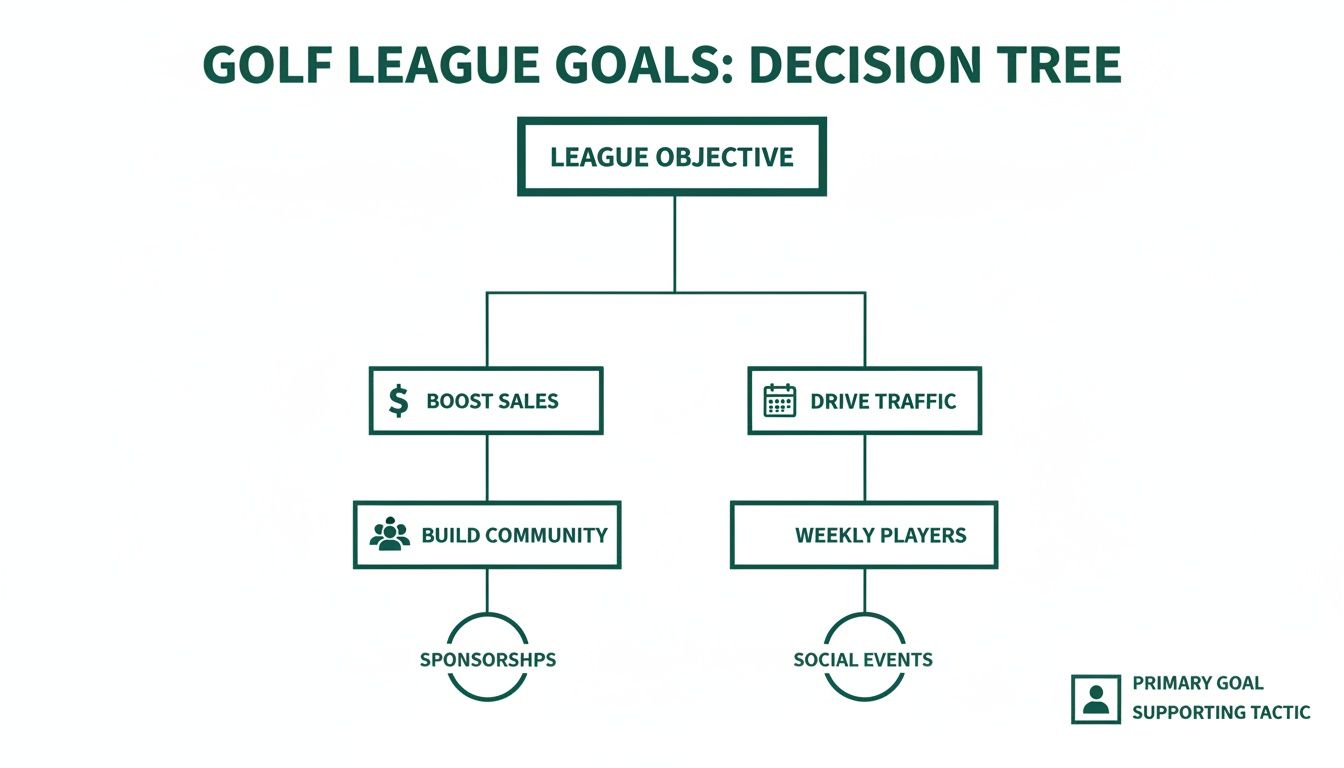
As you can see, if your goal is boosting sales, you might lean into team formats that get people sticking around afterward. But if you’re just trying to drive traffic, more flexible formats that appeal to a wider range of golfers could be the ticket.
Choosing Formats That Keep Players Invested
To keep things from getting stale, you should seriously consider rotating formats or using a points system that rewards different kinds of success. This is the secret to preventing the same handful of sticks from dominating every single week and keeps the entire field motivated.
Here are a few popular formats we see work time and time again:
Scramble: Perfect for social, corporate, or beginner-heavy leagues. Teams of two or four pick the best tee shot and everyone plays from there. It's low-pressure, keeps the pace of play up, and is fantastic for building camaraderie.
Four-Ball (Best Ball): This is a great choice for more competitive team leagues. Two partners each play their own ball, and the lower score on each hole counts for the team. It strikes a nice balance, allowing for individual play within a team framework.
Stableford: This format awards points based on the score relative to par (e.g., 1 point for a bogey, 2 for par, 3 for a birdie). We love it because one blow-up hole won't kill a player's round, which encourages more aggressive—and fun—golf.
Comparing Popular Golf League Formats
Choosing the right format can feel overwhelming, but it really comes down to your league's personality. Are you all about friendly competition and post-round beers, or is it a more serious, competitive vibe? This table breaks down the most popular options to help you decide what fits best for your players and your course's goals.
Format | Best For | Pros | Cons |
|---|---|---|---|
Scramble | Social, corporate, and beginner-friendly leagues. | Low-pressure, fast-paced, great for all skill levels and team building. | Doesn't reflect individual skill; less appealing for serious golfers. |
Four-Ball (Best Ball) | Competitive leagues with a team-based, season-long structure. | Blends individual play with team strategy; allows for risk-taking. | Can be slow if not managed well; requires four-person groups. |
Stableford | Leagues with a wide range of handicaps. | One bad hole doesn't ruin the round; encourages aggressive play; easy to understand. | May not feel like "traditional" golf to some purists. |
Stroke Play (Net) | Highly competitive leagues where individual skill is paramount. | The purest form of competition; rewards consistency. | Slow pace of play; can be discouraging for higher handicaps. |
Match Play | Head-to-head competitive leagues, often with a bracket structure. | Creates exciting one-on-one drama; good for season-long rivalries. | A player's day can end early; can be complex to schedule. |
Ultimately, mixing these formats can create a really dynamic season. For instance, you could run a round-robin schedule where teams face off in different formats each week. For a deeper dive, check out our guide on how to create a round robin schedule. It can add a compelling competitive arc that keeps players hooked all season long.
The Great Equalizer: A Fair Handicap System
Without a fair and transparent handicap system, your league is doomed. I’ve seen it happen. It's the only way a 20-handicap can feel like they have a legitimate chance against a 2-handicap. While official USGA or R&A handicaps are the gold standard, many casual leagues do just fine creating their own internal system.
A common approach is using the first three rounds of the season to establish a baseline handicap for every player. From there, you just adjust it weekly based on their most recent scores.
The most critical part of any league handicap system is transparency. Be crystal clear about how handicaps are calculated, when they get updated, and where players can see them. This builds trust and shuts down disputes before they even start.
Modern golf league software automates this entire headache. It calculates handicaps on the fly, applies them to scores in real-time, and pushes the net results to a live leaderboard. This not only lifts the administrative weight off your shoulders but also gives your players a professional, tour-like experience they’ll love.
Automating Registration, Scheduling, and Communication
A smooth, professional operation is what separates a decent golf league from a truly great one. The difference often comes down to mastering the administrative side—registration, scheduling, and communication. This is where many league managers get bogged down, spending way too much time chasing payments and updating spreadsheets.
Thankfully, modern tools have completely changed the game, offering simple automation that saves hours of work while seriously upgrading the player experience.
Forget about wrestling with paper forms and tracking down checks. The goal is to make signing up for your league as easy as booking a dinner reservation. A dedicated online registration portal isn't a luxury anymore; it's a must-have for any successful league.
This single hub lets players sign up, pay their fees, and provide all their info in one shot. Not only does it look more professional, but it also kills the manual data entry that always leads to mistakes.
Nailing the Sign-Up and Payment Process
An automated system immediately solves the awkward "chasing money" problem by collecting all league fees upfront. Even better, it gives you a clean, accurate roster from day one, which is the foundation for everything else—from pairings to handicap management.
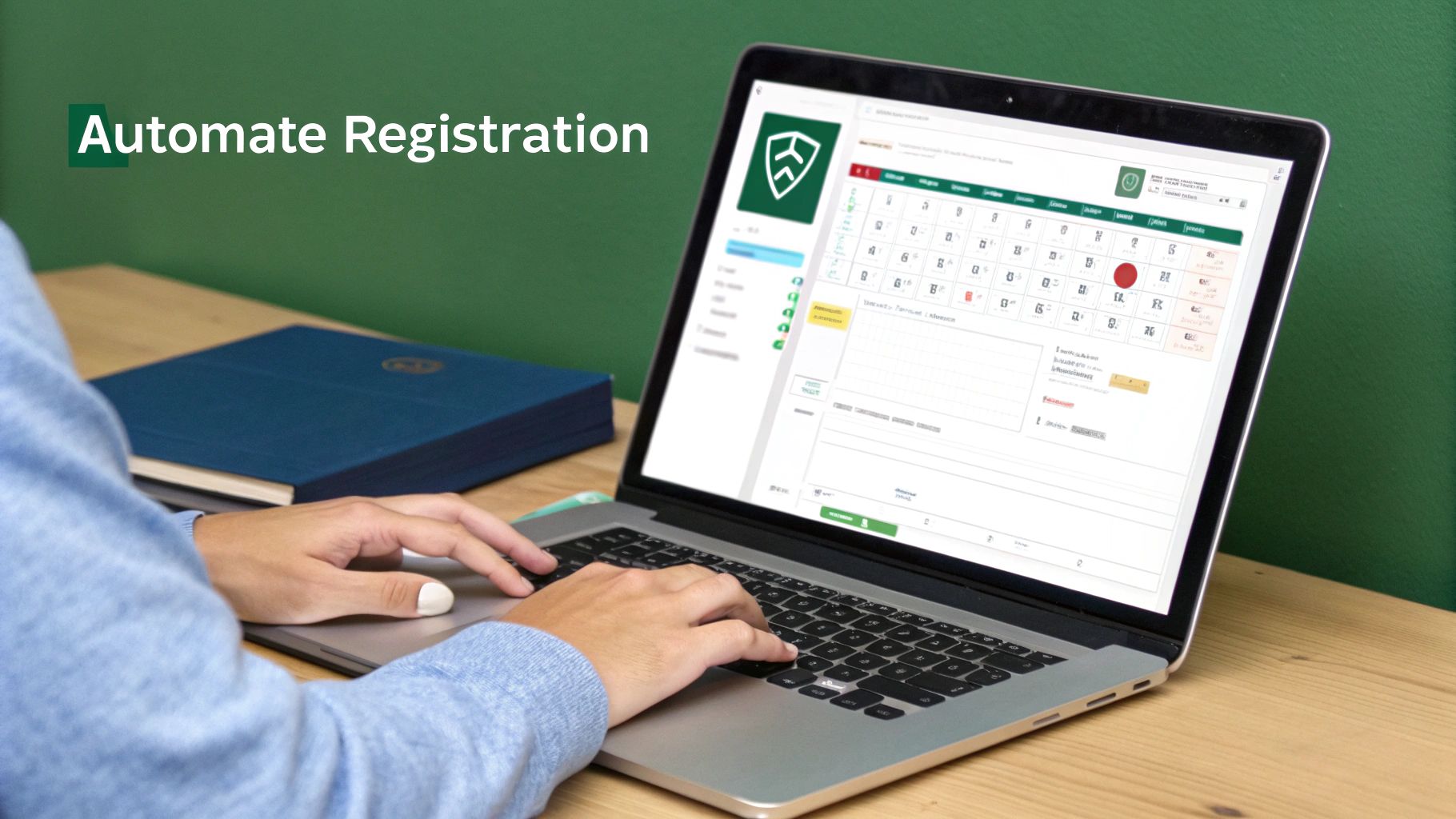
To make things even easier on event days, modern QR code event registration systems can simplify check-ins. Players just scan a code with their phone to let you know they've arrived, cutting down on administrative friction.
Your registration setup should include:
Secure Online Payments: Use a system that accepts credit cards and provides instant confirmation for both you and the player.
Custom Fields: Collect everything you need—handicap index, shirt size for league swag, or requests to be paired with a buddy.
Automated Confirmations: Set up emails that automatically send a welcome message and receipt the second someone registers.
This level of organization sets a professional tone from the very first interaction a player has with your league.
A frictionless registration process does more than just save you time—it sends a clear message to your players that your league is well-organized, professional, and worth their investment. It's the first step in building player trust and excitement for the season.
Mastering the Schedule and Weekly Tee Times
With your roster locked in, building the schedule is the next big job. Creating a master schedule for the entire season is great for giving players an overview so they can plan ahead. But the real grind is managing the weekly tee sheet and dealing with the inevitable last-minute changes.
This is where a centralized management platform becomes a lifesaver. Instead of endless email chains and phone calls to handle dropouts or find subs, you can manage everything from one dashboard. Look for a system that lets players easily RSVP for each week's event.
This gives you a real-time headcount, making it way easier to finalize pairings and tee times. For instance, if a player marks themselves as "out," the system can automatically notify a sub list, often filling the spot without you lifting a finger. An organized approach like this is a cornerstone of effective golf league management software, turning a logistical nightmare into a simple workflow.
Building a Proactive Communication Plan
Consistent, clear communication is the glue that holds a league together. Your players should never have to guess what's going on. A solid communication plan keeps everyone in the loop and engaged, which means you won't have to answer the same questions over and over again.
Your plan should be built around automated, timely updates sent directly from your league platform. This ensures every single player gets the same information at the same time.
Key communications to automate:
Welcome Email: Send it right after registration to confirm their spot and share key info for the season.
Weekly Pairings: Get the tee sheets and pairings out 24-48 hours before each event.
Event Reminders: A quick reminder the morning of the event can dramatically reduce no-shows.
Results and Standings: The day after, send a summary with the results, prize winners, and updated season standings.
By automating these touchpoints, you create a professional rhythm for your league. Players learn to expect and rely on your updates, building their confidence and keeping them connected to the action. This consistent flow of information is what makes a good golf league feel like a premier event.
Executing a Flawless Gameday Experience
All your planning and prep work boils down to this: the weekly gameday. This is where your league really comes to life. A smooth, professional on-course experience is what turns a good league into one players rave about for weeks. It’s all about creating an exciting vibe from the moment they pull into the parking lot until that last putt drops.
The little things you do beforehand set the whole tone. When pairings are finalized in your software, you can pre-print professional materials that make a huge difference. Think customized scorecards with player names and handicaps, official tee sheets for the starter, and cart signs that guide everyone to their spot. It's a simple touch, but it signals a level of organization that players really appreciate.
Unlocking the Power of Live Scoring
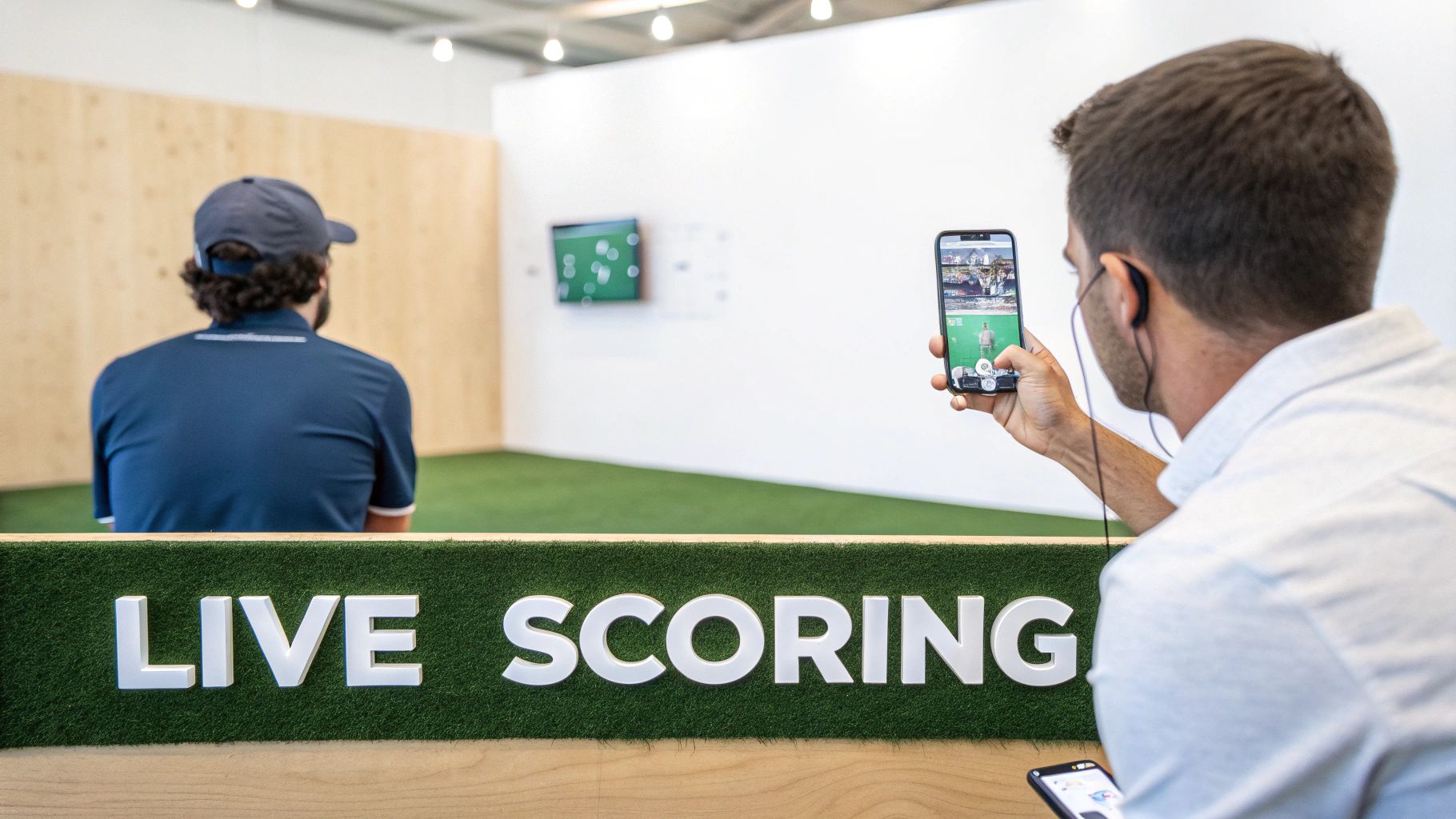
If there's one thing that has completely changed the gameday experience, it’s app-free live scoring. Seriously, forget the days of chasing down soggy, unreadable scorecards and then spending an hour trying to tally up the results. Now, players can punch in their scores right on their phones using a simple link—no app downloads, no logins, no fuss.
This immediately powers a real-time leaderboard you can throw up on a TV in the clubhouse or pro shop. It creates this electric, PGA Tour-style atmosphere as groups finish their rounds. Players can see exactly where they stand, which fuels that friendly competition and keeps everyone hanging around until the last group is in.
Live scoring does way more than just speed up the results. It completely transforms the post-round vibe. Instead of players scattering once they're done, they'll gather around the leaderboard, creating a buzzing social scene that's great for food and beverage sales and even better for building a strong league community.
Platforms like Live Tourney have seen just how much modern tools can elevate this experience. They've powered over 10,000 events and seen 1 million holes scored, leading to 40% higher live scoring participation and setups that are 3x faster. For a busy head pro juggling a full roster and real-time scores, that kind of efficiency is a lifesaver and a direct driver of player retention.
Managing Side Games and Payouts with Ease
Let’s be honest, side games are the lifeblood of most leagues. They add that extra layer of excitement each week. Games like skins, closest-to-the-pin (CTP), and long drives keep everyone invested, even if their team isn’t lighting up the leaderboard.
But managing these games by hand? It's a massive headache. Calculating skins winners, running out to measure CTPs, and making sure the payouts are right is not only time-consuming but also wide open for mistakes.
This is where a solid golf league platform really proves its worth. Good software handles all of it for you:
Automated Skins Calculation: The system instantly figures out the winning skins from the live scores, whether you're playing gross or net. No more manual cross-referencing.
Digital Proximity Markers: Players can enter CTP or long drive measurements right into the scoring link. You can finally ditch the paper markers on the course.
Instant Payouts: The software crunches the numbers for all side games and the main competition, spitting out a clean payout report. Distribute it as cash, pro shop credit, or even digital payments.
Automating this stuff doesn't just save you a ton of time; it ensures 100% accuracy. That’s absolutely critical for maintaining the integrity of your league and the trust of your players. Getting these details right is a huge part of learning how to organize a golf tournament from start to finish.
When you combine professional on-course materials with the thrill of live scoring and automated side games, you deliver a gameday experience that feels seamless and keeps your players coming back for more.
Keeping Players Coming Back: Promotion, Retention, and Sponsorships
A truly successful golf league doesn't just run smoothly—it grows. And that growth comes from a smart mix of promoting your league to new players, keeping the ones you already have happy, and landing sponsorships that make the whole experience better for everyone.
This isn't just about sticking a flyer in the pro shop. It’s about building a sustainable community that both golfers and local businesses want to be a part of.
Getting the Word Out (and Bringing People In)
Effective promotion starts with a simple question: who are you trying to reach? Are you building a league for serious competitors, the after-work social crowd, or corporate teams looking for a weekly outing? Your marketing has to speak their language.
Use your club’s email list and social media channels to show off what makes your league different. Don't just list the price and start time. Highlight the fun formats, the side games, and the professional organization that makes everything run like clockwork.
And don't be afraid to look beyond your own walls. Partner up with local businesses—think restaurants, real estate agents, or even car dealerships—to cross-promote. They get access to your members, and you get your league in front of a brand-new audience. It's a classic win-win that can seriously expand your reach.
It’s All About Community
Getting someone to sign up is one thing. Making them a loyal, long-term member is something else entirely. The real secret to retention is building a genuine community, and that happens in the moments before and after the rounds.
This is where the post-round hangout becomes absolutely critical. Your live scoring and leaderboard display are the perfect centerpiece for this. When players gather around to watch the final results roll in, it creates a natural social hub.
You can easily build on this with a few simple weekly traditions:
Weekly Awards: A quick ceremony to announce the winners and hand out prizes—even small ones—makes each week feel like a real event.
Player Shout-Outs: Publicly recognize an "eagle of the week" or a player who shot their personal best. A little recognition goes a long way.
End-of-Season Banquet: This is non-negotiable. It’s your chance to celebrate the whole season, hand out trophies, and start building excitement for next year.
The best leagues feel like more than just a weekly golf game. When you create a strong sense of community and friendly rivalry, players become invested. They aren't just showing up to play—they're showing up to be part of something.
Creating Sponsorship Packages That Actually Sell
Sponsorships can bring in serious revenue for your league, letting you offer better prizes and a more premium experience without jacking up player fees. The key is to stop thinking about it as asking for a handout. You're offering a valuable marketing opportunity to local businesses.
Your members are an attractive audience. You just need to package that access into simple, tiered sponsorship deals that offer clear value.
Sample Sponsorship Tiers
Tier | Price Range | What They Get |
|---|---|---|
Title Sponsor | $1,000 - $2,500 | Their company name in the league title (e.g., "The Acme Inc. Men's League"), logo on all emails, cart signs, and a banner in the clubhouse. |
Weekly Sponsor | $250 - $500 | Their logo featured as the sponsor for a specific week's prizes (e.g., "Closest-to-the-Pin sponsored by Smith's Deli"). |
Hole Sponsor | $100 - $200 | A sign with their company logo placed on a designated tee box for the entire season. |
To sweeten the deal, think about what else you can throw in. Maybe it's a complimentary foursome in your end-of-season event or a feature in your league newsletter. To really maximize brand visibility, consider adding some effective promotional products like branded balls, hats, or towels that keep your league—and your sponsors—top of mind long after the season ends.
Got Questions? We've Got Answers
No matter how buttoned-up your league plan is, questions always pop up. We've been there. Here are some straight answers to the most common challenges league managers run into, based on what we've seen work time and time again.
What’s the Best Way to Handle Handicaps?
Let's be honest, getting this right is crucial. A verified system like GHIN is always the gold standard, no question. But for a more casual league with players who don't have an official index, your best bet is to create a simple, league-specific handicap that everyone can understand.
For new players, start them off with a temporary handicap using a Callaway or Stableford system for their first round or two. Once they have a couple of scores logged, you can generate a running handicap that adjusts each week. A good golf league platform often does this for you automatically, maybe applying a percentage like 90% to net scores to keep the competition tight.
The key is transparency. Walk everyone through the system before the first ball is in the air. When players know how their handicap is calculated, it builds trust and kills any potential arguments before they even start.
How Do I Get Players to Actually Use Live Scoring?
If it's complicated, they won't use it. It's that simple. The trick is to find an app-free system where players just tap a link. No downloads, no passwords, no excuses. That immediately removes the biggest barrier to getting people on board.
Before your first event, sell them on the benefits:
Instant Leaderboards: Everyone loves knowing where they stand in real time.
Faster Results: No more hanging around for someone to tally up soggy scorecards.
Quicker Payouts: Winners get paid almost as soon as the last putt drops.
Here’s a simple pro tip: just ask one person in each group to be the official "scorer." It eliminates any confusion. You can even sweeten the deal by offering a free drink ticket to the designated scorer in each foursome. It's a small gesture that gets you a huge boost in participation.
What Are Some Smart Ways to Find League Sponsors?
Look close to home. Start with the businesses your members are already loyal to—local real estate agents, financial advisors, the go-to restaurant for a post-round beer, or even car dealerships. These businesses are always looking for ways to connect with an engaged local audience, and your league is a perfect fit.
Don't overcomplicate it. Create a few simple, tiered packages:
Title Sponsor: Their brand gets top billing on all emails, scorecards, and signage.
Weekly Sponsor: Their logo is featured on that week's prizes or CTP contest.
Hole Sponsor: They get a sign on a tee box for the whole season.
When you pitch them, focus on the value you're giving them. And at the end of the year, hosting a "sponsor appreciation" scramble is a fantastic touch that builds goodwill and makes it a no-brainer for them to sign up again next season.
How Should I Structure the League Fees and Payouts?
First things first, map out a simple budget. Tally up all your expected costs: greens fees, the prize fund, any software you're using, and the end-of-season party. A solid target for your prize fund is somewhere between 30-40% of the total money you collect from players.
Once you know your total cost, divide it by the number of players to land on your entry fee. The most important part? Be completely transparent about where their money is going. Show them a simple breakdown (e.g., 50% for golf, 35% for the prize pool, 15% for admin/banquet). This kind of clarity builds a ton of trust and proves you're giving them great value for their money.
Ready to run a better golf league with less hassle? Live Tourney gives you modern, app-free tools for easy registration, live scoring, and professional gameday execution. Save yourself time and give your players an experience they'll talk about. Start your free trial today at https://livetourney.com.





