
Jun 5, 2026
tpc river highlands scorecard, tpc river highlands yardage, travelers championship course, golf tournament setup, printable golf scorecard
Get the complete TPC River Highlands scorecard with all tee yardages, pars, and handicaps. Includes a printable version and tips for players and organizers.
You're usually looking for a TPC River Highlands scorecard for one of three reasons. You've got a round coming up and want to know what you're facing from your tee. You're watching the Travelers Championship and want a cleaner reference than the broadcast graphics. Or you're setting up an event and need the right yardages, pars, and ratings in front of you before one bad entry turns into a scoring mess.
That last one is where most scorecard pages fall short. They show the PGA Tour setup, skip the practical tee information everyday golfers need, and leave tournament staff piecing together details from multiple tabs. At a course like TPC River Highlands, that's a problem because the scorecard isn't just a reference sheet. It drives handicaps, net scoring, pace expectations, side games, and the overall feel of the event.
Your Guide to the TPC River Highlands Scorecard
A lot of golfers search for this course expecting one clean answer and end up with fragments. One page shows the Travelers Championship yardage. Another lists public tee boxes. A third has ratings, but not in a format that's useful when you're trying to build pairings or confirm a scorecard before players arrive.
TPC River Highlands deserves a better reference than that. It's a par-70 course that has hosted the PGA Tour's annual Travelers Championship every year since 1984, and the pro setup is listed at 6,835 yards with a 73 course rating and 131 slope on the TPC River Highlands overview. That combination tells you a lot about the place. It isn't long by modern tour standards, but it still demands precise golf.
Why the scorecard matters here
At some courses, players can get away with a generic view of the card. TPC River Highlands isn't one of them. The course asks for club selection discipline, smart angles into greens, and realistic expectations about where birdies are available.
Practical rule: At River Highlands, the wrong tee choice creates more tournament problems than the wrong format.
For players, the scorecard shapes strategy. For organizers, it shapes fairness. If you run a net event and load the wrong tee set, every course handicap downstream gets distorted. If you print cards that only reflect the championship setup, the field spends the day asking the golf shop for corrections.
That's why this guide is built as a working resource. It keeps the tournament setup in view, but it also accounts for the full multi-tee reality golfers and event staff use.
Printable TPC River Highlands Scorecard
If you need something you can save, print, or hand to staff, start here. Most online versions focus only on the tournament yardage, but everyday play involves multiple tee sets. Public listings show tees ranging from 6,841 yards on the Black tees down to 5,873 yards on the White tees, with distinct rating and slope values by player category on the 18Birdies TPC River Highlands listing.
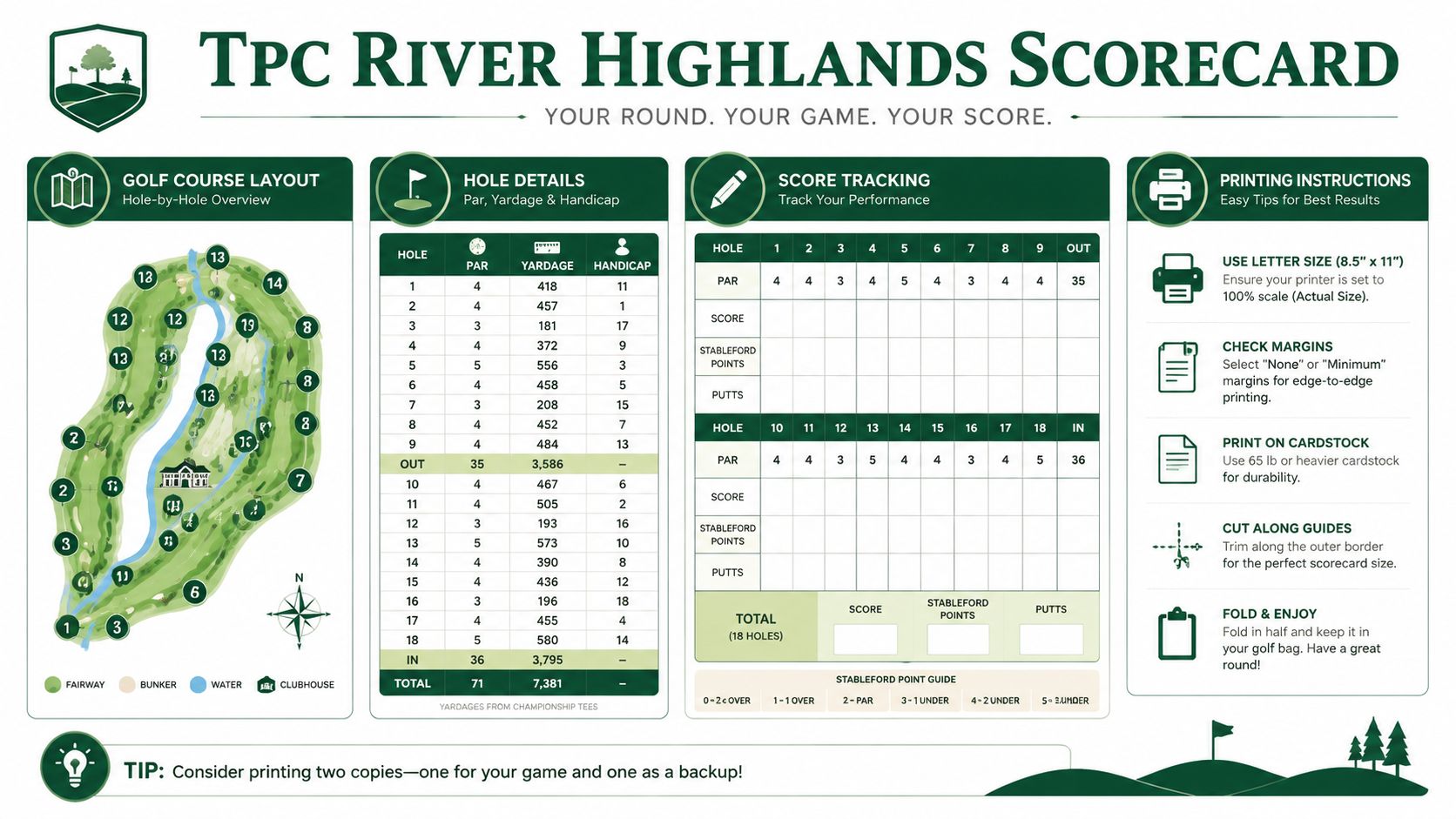
How to use a printable card well
A printable card does more than help a player track gross scores. It gives tournament staff one clean reference for:
Tee verification: Confirm the field is playing the intended set before scorecards go out.
Rules sheets: Match local rules and pace notes to the same card players carry.
Cart packets: Keep one master scorecard in each cart packet for quick checks.
Back-office setup: Use the printed card as your final comparison when entering course data.
If you want to compare scorecard formats before making your own event version, this guide to golf scorecard layouts and practical design choices is useful.
Keep one print version for players and one master version for the shop. The player card should be simple. The shop copy should include every tee note you may need during scoring review.
For home printing, use a crisp single-page format and avoid scaling that shrinks hole data into unreadable type. If the goal is tournament use, readability matters more than fitting extra notes onto the sheet.
TPC River Highlands Full Scorecard Data Table
The most useful digital reference is one that separates hole-by-hole structure from tee-level setup. That lets players scan the routing and lets organizers confirm they've attached the right tee data to the event.
The championship Gold tees measure 6,841 yards with a 73.0/131 rating/slope, while the Blue tees play at 6,518 yards with a 71.5/127 rating/slope, according to the Golfify course page for TPC River Highlands. That difference is exactly why tournament software should never treat this course as a single generic scorecard.
Hole-by-hole card structure
The public source material available here confirms the full course card includes a hole-by-hole par distribution and handicap mapping, but it does not provide a verified complete set of per-hole yardages across every tee in the approved data for this article. When you build a working event file, preserve each tee set separately and map handicap indexes to the exact tee players will use.
Scorecard Field | What to Store | Why It Matters |
|---|---|---|
Hole Number | 1 through 18 | Keeps live scoring and printed cards aligned |
Par by Hole | Official par for each hole | Required for gross, net, and points-based formats |
Handicap Index | Men's and women's hole handicaps where applicable | Needed for net allocation and side games |
Gold Tee Data | Championship tee yardages and ratings | Used for top-flight or championship setups |
Blue Tee Data | Member-event tee yardages and ratings | Often the practical setup for competitive amateur fields |
Additional Tee Sets | White, Red, or other listed tees | Essential for mixed fields and accessible event design |
What works and what doesn't
What works is a tee-specific setup. Build the event around the exact tee each division will play, then attach the right course rating and slope before you import players.
What doesn't work is copying one scorecard image into a system and assuming all players can use it. That shortcut causes net scoring errors, awkward first-tee corrections, and avoidable disputes once the leaderboard tightens.
Understanding Course Rating and Slope by Tee
Raw yardage tells only part of the story. Course Rating estimates what a scratch player is expected to score from a given tee. Slope reflects how much harder that tee tends to play for a bogey golfer compared with a scratch player. For players, that affects handicap conversion. For organizers, it affects whether a mixed-tee event feels fair.
Verified tee data
Tee | Yardage | Course Rating | Slope |
|---|---|---|---|
Gold | 6,841 yards | 73.0 | 131 |
Blue | 6,518 yards | 71.5 | 127 |
For a deeper explanation of how those numbers affect handicaps and competition setup, this plain-English guide on what a course rating means in tournament play is a solid reference.
How to use the numbers in practice
If a player moves from Blue to Gold, don't treat that as a simple yardage change. It changes the playing difficulty profile and should change the course handicap calculation tied to that tee.
The cleanest tournament check is simple. Confirm the tee, confirm the rating and slope, then confirm the player's course handicap before pairings are final.
That process matters most in member-guest events, leagues, mixed divisions, and any format using net scoring. A course like TPC River Highlands can feel playable from several tees, but the rating and slope tell you whether two players are competing on equal terms.
A Player's Guide to Navigating Key Holes
A TPC River Highlands scorecard gets more interesting the closer you get to the finish. This is one of the shorter PGA Tour venues at about 6,844 yards, yet the tips are also described with a 74.1 rating and 138 slope in the GolfPass hole-by-hole course overview. That's the clue serious players should pay attention to. The course doesn't overpower you with length. It pressures your decisions.

The closing stretch rewards discipline
Holes 15 through 17 get most of the attention for good reason. They create score swings fast, and they do it in different ways.
Fifteen asks for restraint: It tempts aggressive play, especially if a player feels behind late in the round. The mistake isn't always hitting driver. The mistake is choosing the aggressive line without accounting for the next shot if the drive finishes in the wrong spot.
Sixteen punishes a half-committed swing: Water changes club selection and target choice immediately. Players who stand over the shot undecided usually make the worst move available.
Seventeen tests distance control into the green: By this point, adrenaline is up, and leaderboard pressure is real. A number on the scorecard might look manageable, but approach distance alone doesn't tell you how exact the shot needs to be.
What good players do differently
Good rounds at River Highlands usually look boring on paper. Players choose conservative lines, leave approach shots in preferred zones, and avoid the one double bogey that resets the entire card.
On this closing stretch, taking one less risk often produces the lower score.
That matters for amateurs more than they think. Chasing a heroic finish because the course looks short is how players turn a steady round into a salvage job. The smart approach is to use the scorecard as a planning tool, not a challenge invitation.
Notes for Tournament and Event Organizers
Tournament setup at TPC River Highlands is mostly about matching the field to the right experience. This course can host a serious competitive event, but it can also punish the wrong tee choice quickly. If your format and tee setup don't match the player group, the round gets slower, scoring gets messy, and the finish feels more frustrating than memorable.
Tee selection should fit the field
For a strong amateur field, a back or near-back setup can work if players are comfortable with long approaches and you want the event to feel championship-oriented. For a member outing, mixed league day, or charity scramble, a more forward setup usually creates better pace and more enjoyable scoring opportunities.
A few practical rules help:
Competitive net event: Pick a tee where players can still reach regulation targets without forcing long-hole survival golf.
Charity scramble: Favor the tee set that keeps the field moving and creates realistic birdie chances.
Mixed-skill corporate outing: Use a setup that minimizes forced carries and keeps the card readable for occasional golfers.
Multi-division tournament: Separate divisions by tee and build scoring files accordingly. Don't merge everyone into one default card.
Side games depend on correct handicap mapping
At courses with multiple relevant tee sets, side games break first when setup is loose. Skins, Stableford, and net presses all depend on accurate hole handicap allocation and tee-specific handicap conversion. If the base data is wrong, the payout sheet won't survive the first challenge.
What works is building the event from the scorecard outward. Choose tees first. Confirm ratings and slopes. Then assign divisions, flights, and side games.
What doesn't work is selecting tees after registration closes and hoping the software can absorb the change cleanly. It usually can, but the cleanup takes longer than making the right call early.
Pace of play needs local planning
River Highlands has the kind of closing stretch that can create backups if players wait too long over high-risk shots. Organizers should brief the field on ready golf expectations, station volunteers where decision-heavy holes tend to stall, and make sure score-entry procedures are simple enough that the end of the round doesn't become another bottleneck.
Importing Scorecard Data into Tournament Software
Manual scorecard entry is where avoidable errors start. The common failure points are predictable. Wrong tee selected. Rating and slope entered from the wrong source. Hole handicaps attached to a generic card. Then the staff notices the issue after scores are posted.
A clean import workflow
The practical workflow is short:
Choose the exact tee set each division will play.
Confirm the rating and slope before player handicaps are calculated.
Verify hole structure so live scoring matches the printed scorecard.
Test one sample player before publishing pairings or score links.
That process is straightforward in any system if the underlying course database is accurate. Some platforms preload course information so staff can select the venue and tee set instead of keying in every field manually. One example is Live Tourney's golf tournament scoring software, which is built around web-based event setup, live scoring, and printable reports.

What to verify before you go live
Before players ever see a leaderboard, check these items:
Division tee assignments: Make sure every flight is tied to the intended card.
Handicap source consistency: Don't mix one tee's rating with another tee's player list.
Print output review: Scorecards, cart signs, and starter sheets should all reflect the same setup.
Mobile scoring labels: Hole order and par values should match the physical card players hold.
If those four pieces line up, the event usually runs cleanly. If one doesn't, staff spend the day explaining corrections instead of managing the tournament.
Frequently Asked Questions about TPC River Highlands
Is TPC River Highlands only relevant if you follow the Travelers Championship
No. The tournament setup gets most of the attention, but the broader value of the TPC River Highlands scorecard is its multi-tee usefulness. Everyday golfers, club staff, and outing organizers all need a version that reflects the tee they're using, not just the one seen on television.
Why does this course play tougher than the yardage suggests
Because scorecard length doesn't capture the full challenge. At River Highlands, angle of attack, exact distance control, and smart target selection matter more than people expect when they first look at a relatively short par-70 layout. That's why players who rely only on total yardage often misjudge how the course really scores.
What's the most common scorecard mistake organizers make here
Using a single default card for the whole field. That causes problems in mixed-tee events, especially when net scoring or side games are involved. The fix is simple. Separate tee sets early, attach the right rating and slope, and test the setup before pairings are final.
Do players need the full hole-by-hole card if they already know the total yardage
Yes, if they want to manage the round well. Total yardage tells you almost nothing about where you should attack, where you should accept par, and where a bad decision can cost two shots. The full scorecard helps players pace the round and helps staff explain the setup clearly.
Is a printable scorecard still useful if scoring is digital
Absolutely. Digital scoring is faster during play, but a printable card still matters for starters, rules sheets, cart packets, backup verification, and post-round score checks. In well-run events, print and digital don't compete. They support each other.
If you run golf events and want scorecards, tee sheets, live scoring, and tournament setup in one web-based workflow, Live Tourney is worth a look. It's built for courses and organizers who need practical tournament operations without adding app downloads or a complicated setup process.





