
Jun 9, 2026
tournament games, golf formats, scramble golf, golf tournament ideas, live scoring
Explore 10 essential golf tournament games and formats, from Scramble to Ryder Cup. Learn the rules, scoring, and how to run them for your next event.

Planning your next club championship, charity outing, or corporate event usually starts the same way. You've got a date, a field, a sponsor sheet, and a staff that's already juggling carts, pairings, food, signage, and scorecards. Then someone asks the question that affects almost everything else. What game are we playing?
That choice matters more than most organizers expect. The format shapes pace, scoring, fairness, player satisfaction, and how much work falls back on the golf shop after the first group tees off. A scramble can keep mixed-skill groups engaged. A match play bracket can create great drama but requires tighter administration. A net-and-gross setup can make a member event feel fair, but only if handicap handling is clean from the start.
The timing for getting this right is good. Participation pressure is real. The National Golf Foundation reported that 3.4 million people played on-course golf for the first time in 2023, and 10.2 million people under age 30 played on-course golf in the U.S., which points to larger and more varied tournament fields for clubs to manage (National Golf Foundation participation discussion). That means tournament games aren't just about fun. They're an operations decision.
This guide breaks down 10 golf tournament games and formats that work in practice, with practical notes on when to use each one, where organizers get tripped up, and how to run them cleanly with a modern, app-free platform like Live Tourney.
1. Scramble

If you run charity outings or corporate days, scramble is usually the safest choice. Everyone hits. The team picks the best shot. Everyone plays again from that spot. It keeps weaker players involved without forcing them to carry a score all day, and it helps stronger players contribute without making the event feel exclusionary.
It also solves a pace problem. In mixed fields, stroke play can drag when half the group is grinding over every double and triple. A scramble moves faster because one good shot often saves the team.
Where Scramble Works Best
Scramble is built for events where the experience matters as much as the competition. Think sponsor outings, fundraising tournaments, association socials, and large company events with guests who play a handful of times a year.
A few practical guardrails make it better:
Balance teams early: Don't let one foursome stack all the low handicaps.
Define mulligans and string rules upfront: Side contests are fine, but only if the scoring rules are clear before the first tee.
Show scores live: Teams care more when they can see movement on the board.
A web-based platform helps here because staff can avoid chasing paper cards for half an hour after the round. With Live Tourney, organizers can set up scramble scoring and publish a live leaderboard while groups are still on the course. If you want a deeper look at setup choices, this guide on how to run a golf tournament scramble is a useful reference.
Practical rule: Scramble is the right answer when your field is wide, your event is social, and you need the day to stay on schedule.
2. Best Ball / Four Ball

Best ball, often called four ball in team competition, asks more from players than a scramble does. Each golfer plays their own ball for the full hole, and the side records the lowest score among partners. That keeps the team element but preserves individual accountability.
This format shines when your players want a real competition without giving up the social value of a partner event. It's common in member tournaments, interclub play, and better-player events because one bad hole doesn't sink the entire side.
What Organizers Need to Watch
Best ball is simple on paper, but scoring gets messy if your process is loose. Staff need to capture every player's hole score correctly, then identify the counting score for the side. That's where old paper workflows create avoidable errors.
Use best ball when:
You want strong players to play their own ball: It rewards consistency and clutch holes.
You need team camaraderie without a pure team score every shot: Partners still matter.
You expect competitive members: This format feels more legitimate to serious players.
The operational trade-off is that score entry is more detailed than a scramble. A platform like Live Tourney helps because players or staff can enter multiple individual scores per hole, while the leaderboard reflects the team result without manual math. If you're running flights, it also helps to separate standings by division so a mid-handicap team has something meaningful to watch, not just the overall board.
3. Stroke Play (Medal Play)
Stroke play is still the standard when the competition itself is the main event. Every stroke counts, lowest total wins, and there's very little ambiguity about what the format is asking players to do. If you're running a club championship, qualifier, state event, or junior competition, this is usually the baseline.
The reason organizers keep coming back to stroke play is that it's honest. It rewards complete golf, not just timely birdies or one hot partner. It also produces results that players understand immediately.
Why It Still Matters
Tournament golf has become a much larger commercial and spectator category over time. One industry dataset shows esports prize money rising from $115.51 million in 2017 to $159.34 million in 2018, then to more than $500 million in 2023, illustrating how competitive formats scale when the structure is clear and stakes are visible (esports prize and audience growth data). Golf tournament games work the same way operationally. Simple formats are easier to follow, easier to administer, and easier to trust.
That doesn't mean stroke play is always easy to run. It just means the complexity sits in setup, not in explaining the game.
Use flights when the field is broad: Gross-only boards can lose half the room.
Publish both hole-by-hole and total views if your platform supports it: Players want context, not just a final number.
Decide tie procedures before the round: Sudden death, scorecard playoff, or split payout should never be improvised.
For most golf shops, stroke play is also the cleanest format to modernize. Pairings, score entry, net overlays, and leaderboard filtering all fit naturally. If your staff is moving off spreadsheets, this is usually the easiest place to start.
4. Match Play
Match play changes the emotional rhythm of a tournament. Players aren't chasing a total score. They're trying to win holes. A quadruple on the 3rd only costs one hole, which keeps matches alive longer and creates more comeback chances than stroke play ever will.
That's why players love it and staff sometimes dread it. The format is exciting, but the administration can get messy if you haven't defined pairings, handicap allocation, concessions, and advancement rules before round one.
The Format Lives or Dies on Administration
For club championships, member knockouts, and invitational brackets, match play creates a different kind of energy. Spectators can follow a tight match more easily than a full-field medal event, and players stay emotionally engaged because every hole resets the contest.
The hard part is handling all the branching paths cleanly:
Bracket updates: Winners need to advance without staff rebuilding draws by hand.
Timing: Some matches end early, some go extra holes.
Communication: Players need to know where and when the next round starts.
A scoring platform only helps if it handles those moving parts with ease. Live Tourney is useful here because organizers can manage match results, reflect current match status, and keep bracket progress visible without bouncing between paper cards and text threads. If your event includes handicaps or member questions about concessions, it helps to point players to a plain-language overview of golf match play rules.
Match play rewards preparation more than improvisation. If your rules sheet is vague, the first disputed hole will expose it.
5. Ryder Cup Format
Ryder Cup style events work because they create layers of pressure and team identity. You're not just running one tournament. You're stitching together multiple formats, usually some combination of alternate shot, four ball, and singles, then rolling all of it into a team competition that feels bigger than any one match.
For member-guest weekends, staff matches, and corporate team showdowns, that can be exactly the right kind of theater. It gives captains something to manage, players something to rally around, and spectators a standings board that changes throughout the event.
Use It When the Event Needs Energy
This format is best when the field knows each other or wants to. Team colors, captains' picks, opening announcements, and live standings all matter here more than they would in a standard shotgun scramble. The golf is only part of the product.
The trade-off is administrative load. Pairings across sessions have to be intentional. You need a system for points. You need scorecards or digital entry that reflect the correct match type in each segment. You also need a clean way to show cumulative team standings without asking players to do arithmetic in the grill room.
Modern tournament software earns its keep. Live Tourney can support multi-round structures and different scoring setups inside one event, which makes Ryder Cup style tournament games much less painful to operate. If you're still trying to run this format through static spreadsheets, the event can still succeed, but your staff will feel every update.
6. Round Robin
Round robin is one of the best answers for leagues and season-long member play because everyone gets repeated, meaningful competition. Instead of a one-and-done bracket, players or teams cycle through the field and face multiple opponents over time.
That structure is good for retention. Players who lose early in a bracket can disappear. Players in a round robin still have another match next week.
Best for Leagues and Ongoing Programs
This format fits men's leagues, women's leagues, junior programs, mixed leagues, and member-versus-member ladders. It's especially strong when your goal is ongoing engagement, not just crowning one winner on one day.
What works well in practice:
Set tie-breakers before the season starts: Head-to-head, points, and total holes or strokes all work if they're defined.
Automate the schedule: Manual round robin scheduling becomes a headache fast.
Send standings often: Players stay engaged when the table is visible and current.
A web-based, app-free scoring flow matters here because league participation depends on convenience. Players won't tolerate unnecessary friction every week. Organizers need them to submit results quickly, and players need a simple link that works on any device. That's where Live Tourney fits naturally. It can handle league standings, recurring schedules, and score submission without asking every participant to adopt a separate app workflow.
7. Two-Person Scramble (Partners)
Two-person scramble is a useful middle ground. It keeps the fun and speed of a scramble but creates more accountability because there are only two players per side. One strong player can't cover for three others, and one weak player can't disappear into the group.
That makes it ideal for twilight events, partner series, quick club competitions, and smaller charity formats where you want energy without committing to a full-day structure.
Faster to Play, Harder to Hide
This format tends to produce a better competitive balance than a four-person scramble. Teams still choose the best shot, but with only two swings to choose from, strategy becomes more noticeable. Partner selection matters more. So does alternate contribution on pressure holes.
A few things improve the experience immediately:
Clarify tee shot minimums if you use them: Without that, some events become too dependent on one player.
Pair thoughtfully: Similar personalities often work as well as similar skill levels.
Use a live board: Small-field partner events feel more active when teams can watch movement.
Two-person scramble is also one of the easiest tournament games to fit into an evening window. If you're trying to create more events for younger members, busy professionals, or players who won't commit to a full Saturday, this format gives you a lot of flexibility without feeling casual.
8. Net vs Gross (Handicap-Adjusted Play)
Net and gross scoring solve a common event problem. You want the best players to have a real championship inside the tournament, but you also want the 14-handicap and the 22-handicap to show up believing they can compete.
Running both leaderboards at once is often the cleanest answer. Gross rewards raw scoring. Net opens the door to a much broader field. Most clubs don't need to choose between them.
Fairness Depends on Good Setup
The mistake isn't offering net competition. The mistake is handling handicaps casually. If indexes are outdated, allowances aren't explained, or players don't know whether they're competing by flight or overall, the format can create more questions than enthusiasm.
Good execution usually includes:
Verified handicap data before pairings go out
Visible net and gross boards during the round
A clear explanation of allowances and flighting
A written tie-breaking policy
Players also need to understand what they're seeing. If your field includes newer golfers or corporate guests, a plain-language explanation helps. This overview of what net score means in golf is a practical resource, and players who want to think more about handicap improvement can also review strategies for improving your game.
Common mistake: Organizers talk about fairness, then wait until scoring closes to explain how net was calculated.
A platform like Live Tourney is useful here because it can calculate and display both views without forcing staff to rebuild results manually after the round.
9. Nine-Hole / Executive Golf Tournaments
Nine-hole tournaments are no longer a fallback option. For many facilities, they're one of the smartest formats on the calendar. They fit after-work schedules, reduce the commitment barrier for newer players, and work well for juniors, leagues, short courses, and executive layouts.
They also line up with how people increasingly choose recreational competition. In digitally mediated gaming, demand continues to favor fast, accessible participation. The American Gaming Association reported that online gaming revenue rose 27.5% year over year to USD 2.19 billion in May 2025, with iGaming up 33.0% and online sports betting up 21.4%, signaling strong demand for real-time experiences that are easy to access on mobile (American Gaming Association commercial gaming tracker). Golf event organizers see the same behavior pattern. If the commitment is lighter and the scoring is easy to follow, more people say yes.
Why Shorter Events Often Fill Faster
Nine-hole events work especially well when you need to create frequency. A club that struggles to fill one monthly 18-hole event may have no trouble filling recurring nine-hole competitions.
Operationally, they're strong because:
Setup is simpler: Fewer holes, fewer opportunities for confusion.
Turnaround is faster: Results can be posted quickly.
Participation broadens: New golfers are much more likely to enter.
Live scoring matters even more in a short event because the tournament moves quickly. If the leaderboard updates in real time, the back nine on a full round isn't required to create tension. The event still feels alive.
10. Skins Game / Side Game Formats
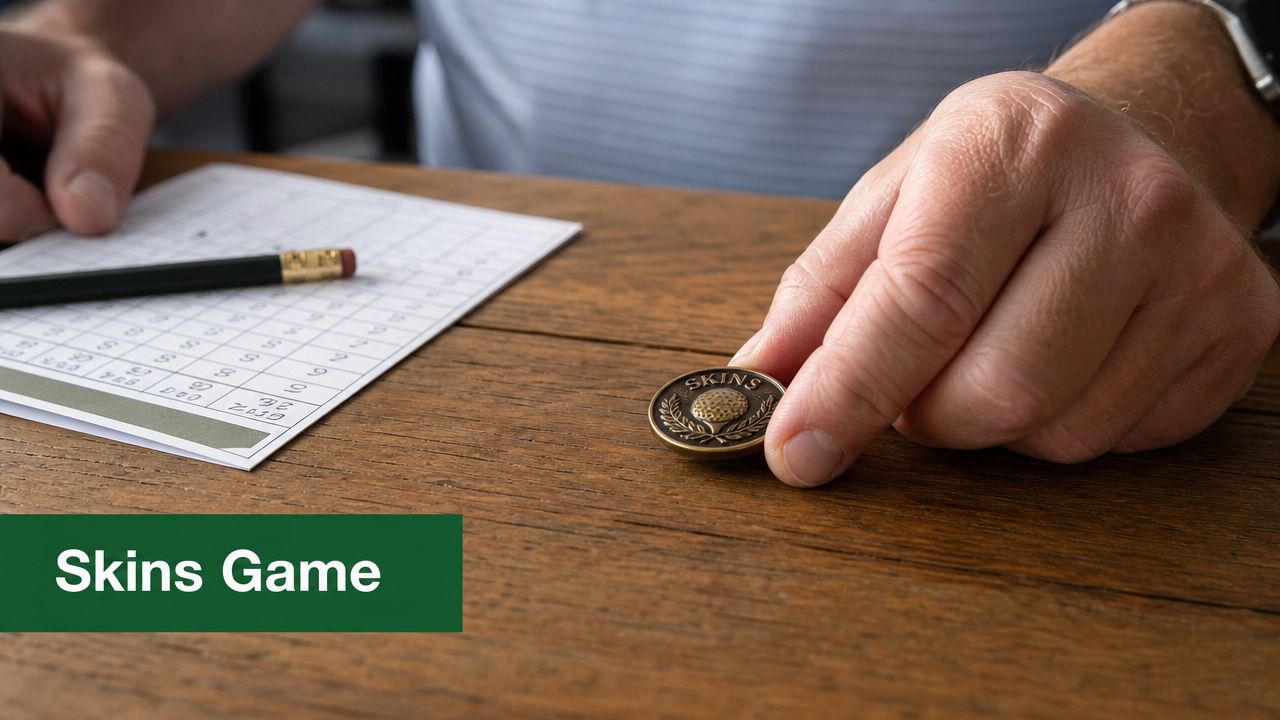
Skins are often the easiest way to make a standard event more interesting. Instead of focusing only on the final leaderboard, each hole becomes its own contest. A single birdie can matter even if the player has no chance to win the tournament overall.
That's why skins work so well beside another format. They keep mid-pack players engaged, create conversation throughout the day, and give organizers another prize structure without changing the main competition.
Add Energy Without Rebuilding the Event
Skins fit naturally into stroke play days, member games, charity outings, and invitational weekends. They also pair well with contests like closest to the pin or long drive, especially when you want more winners.
The main thing to define is carryovers. If no one wins a hole outright, does the value roll to the next hole? If so, players need to know that before the round.
Use skins when you want to:
Keep non-contenders interested: A player out of the gross race can still win money or prizes.
Create hole-by-hole tension: Especially effective on reachable par 5s and signature par 3s.
Layer value onto an existing event: No need to change the base tournament.
A platform like Live Tourney helps because side games can sit inside the main tournament workflow instead of being tracked on a separate sheet behind the golf shop counter.
Top 10 Tournament Game Formats Comparison
Format | 🔄 Implementation complexity | ⚡ Resource requirements | ⭐ Expected outcomes | 📊 Key advantages | 💡 Ideal use cases / tips |
|---|---|---|---|---|---|
Scramble | Low–Medium, simple team rules but needs pre-event rule clarity | Moderate, teams (2–4), extra score entry per team | High engagement; inclusive for mixed skills | Encourages participation; faster pace; great for social/fundraisers | Corporate outings, charity events, set team handicap limits |
Best Ball / Four Ball | Medium, individual tracking per hole, handicap rules | Higher, per-player scores and accurate handicaps | Strong competitive integrity; skilled players rewarded | Clear scoring; works for match or stroke play championships | Member clubs, leagues, use flight divisions and automated multi-score entry |
Stroke Play (Medal Play) | Low, simplest to administer and score | Low, individual score entry; standard handicap support | Reliable championship results; scalable to any field size | Official USGA format; straightforward scoring and reporting | Championships, daily tournaments, use net vs gross toggles |
Match Play | Medium–High, bracket & match management required | Medium, head‑to‑head scheduling and adjudication | Very engaging; dramatic finishes common | Intense head‑to‑head competition; strong spectator appeal | Club match play, single‑elimination events, use bracket automation |
Ryder Cup Format | High, multi-session (foursomes/fourball/singles) coordination | High, large teams, multi-day scheduling, admin load | Very high engagement; team-based excitement | Combines team chemistry and individual drama; multiple match types | Club Ryder Cups, fundraisers, elite team events, pre-assign pairings and automate rounds |
Round Robin | Medium–High, complex scheduling for all-vs-all | Medium, multi-week tracking and tie‑breakers | Fair standings; every match matters | Equitable ranking; ideal for leagues | League play, multi‑week competitions, auto-generate schedules and define tie-breakers |
Two-Person Scramble (Partners) | Low–Medium, alternation rules must be clear | Low, pairs, simpler admin than larger teams | Fast play with partnership dynamics | Quick format; accessible; good for pro‑ams | Twilight events, pro‑ams, communicate alternation rules clearly |
Net vs Gross (Handicap-Adjusted) | Medium, requires accurate handicap application | Medium, handicap data verification and calculations | Balanced competition across skill levels | Enables fair mixed‑skill contests; supports multiple prize categories | Mixed-skill tournaments, member events, verify handicaps and show both leaderboards |
Nine-Hole / Executive Tournaments | Low, same scoring with shortened holes | Low, shorter time window and fewer resources | Shorter event duration; good participation | Time-efficient; ideal for juniors and working players | Evening tournaments, junior programs, adjust handicap calculations for 9 holes |
Skins Game / Side Game Formats | Medium, per‑hole rules and payout config | Low–Medium, prize pool and payout tracking | Strong engagement; keeps interest on every hole | Boosts excitement and fundraising; configurable payouts | Charity/corporate events and side competitions, set carry‑over rules and display live payouts |
Elevate Your Tournament Experience
The best tournament games aren't the ones with the fanciest rules or the most tradition behind them. They're the ones that fit your field, your staff capacity, and the kind of day you're trying to deliver. A club championship needs a different structure than a sponsor outing. A member league needs a different rhythm than a one-day fundraiser. The format should serve the event, not the other way around.
That matters even more now because tournament participation is part of a larger competitive entertainment shift. The scale is obvious outside golf too. The Esports World Cup 2025 in Riyadh drew 3 million on-site visitors over seven weeks, global esports viewership reached 640.8 million, up 5% from 2024, and tournament ticket sales generated $420 million, equal to 14.5% of total esports industry revenue (esports tournament attendance and revenue trends). Different category, same lesson. Structured competition attracts people when the experience is easy to join and easy to follow.
Golf organizers feel that pressure in practical ways. More varied player pools mean more questions about handicaps, pairings, and fairness. Staff shortages make manual scoring and paper-heavy workflows more painful. Players expect live results, quick communication, and less friction. If your process still depends on collecting every card, updating a spreadsheet, and reading winners off a printout twenty minutes later, the event can still work, but it won't feel current.
That's why format choice and tournament operations should be treated as one decision. Scramble works when inclusion and pace matter most. Best ball works when you want partner competition with real golf intact. Stroke play is still the standard for serious championships. Match play and Ryder Cup formats create drama, but only if your administration is tight. Round robin keeps leagues alive. Net and gross broaden the field. Nine-hole events lower the commitment barrier. Skins give players a reason to care on every hole.
Software won't fix a bad format choice, but it can remove a lot of preventable friction. A web-based platform like Live Tourney is one relevant option for courses and organizers that want app-free scoring, live leaderboards, and simpler event administration across different formats. The primary win isn't just speed. It's giving players a tournament that feels organized from the first email to the final payout.
If you want better tournaments, start with the game. Then make scoring and event management simple enough that your staff can enjoy running it.
If you're ready to run cleaner, faster golf tournaments with app-free live scoring, take a look at Live Tourney. It gives golf courses and event organizers a practical way to manage formats, leaderboards, pairings, side games, and player communication without the usual spreadsheet chaos.





