Jun 26, 2026
longest drive competition, golf tournament ideas, golf event management, live golf scoring, run a golf tournament
Run a flawless longest drive competition golf event. Our guide covers rules, setup, safety, prizes, and how to use live scoring for a modern player experience.

You're probably staring at the same problem most tournament directors run into. The outing is booked, sponsors are lined up, players love side games, and someone says, “Let's do a longest drive hole.” On paper, that sounds easy. On the course, it often turns into a mess of handwritten signs, vague rules, backups on the tee, and arguments over whether a ball in the rough should count.
That's why longest drive competition golf needs to be treated like an operation, not a novelty. The contest has to move fast, stay fair, protect the course and the players, and still feel exciting enough that people keep checking the board to see who's leading. When it's run well, it becomes one of the few side games people remember after the event is over. When it's run poorly, it creates more staff work than the rest of the tournament combined.
Beyond Grip It and Rip It The Modern Long Drive Event
A badly run longest drive contest usually looks the same. One volunteer has a clipboard. Another has a tape measure. The marker sign flips over in the wind. Three groups ask different officials three different rule questions. Half the field has no idea what the current leading drive is, so the contest loses momentum before the back nine.
A modern event feels different. Players know the scoring zone. Staff know what counts. The lead changes are visible. The contest creates noise in the clubhouse instead of confusion on the tee.
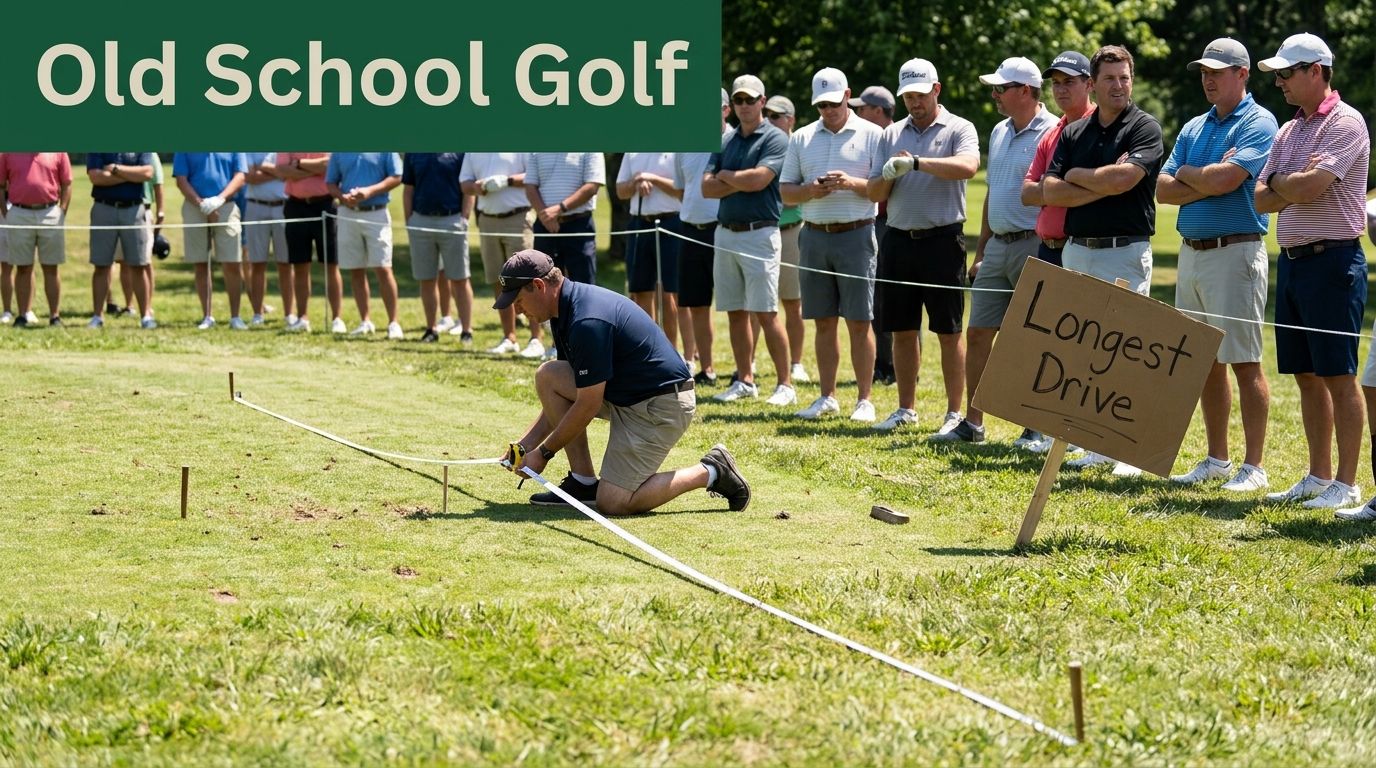
Why the contest deserves professional handling
The easiest mistake is treating longest drive as a throw-in. It isn't. At the elite level, long drive is its own discipline. The World Long Drive Championship record context makes that clear: Justin James won the 2017 championship with a tournament-record 435 yards, and professional long drivers now consistently average over 356 yards, compared with 305-yard driving averages for top PGA Tour players. That gap matters because it shows the event is built on power plus control, not just wild swinging.
If the sport itself demands structure, your contest should too.
A longest drive hole only feels simple until the first disputed ball lands outside the expected line and two players want different rulings.
What players actually remember
Players rarely remember the exact sponsor banner on a tee box. They remember moments. They remember hearing someone in the cart say the lead just changed. They remember stepping onto a hole where the contest looked official, not improvised.
The operational difference usually comes down to a few practical upgrades:
Clear validity rules: Players know whether the ball must finish in the fairway or in a marked scoring area.
Visible contest branding: A tee sign, hole card note, and leaderboard reference keep the game front of mind.
Reliable staffing: Spotters and hole officials remove guesswork.
Fast updates: The leader changes in real time, not after the round is over.
That last point changes the entire feel of the day. A live contest creates tension. A stale contest feels like paperwork.
The shift from side game to event feature
The strongest tournaments don't bury the longest drive hole as a side note. They package it as part of the day's entertainment. That means the contest should have a real setup, a real process, and a real finish.
Treat it that way, and you'll get more than a winner. You'll get player engagement, fewer rules disputes, and far less cleanup for your staff at the end of the round.
Designing the Competition Rules Formats and Eligibility
The contest gets easier to run when the rules fit on one sheet and nobody has to interpret them on the fly. Most disputes don't come from bad behavior. They come from fuzzy setup.
Start with the most important choice: what counts as a valid drive.
Fairway only or a marked grid
For traditional charity and member events, many organizers default to fairway only. It's familiar, and players understand it immediately. The downside is that some holes have fairways that narrow in the landing area, which can turn the contest into a luck test rather than a clean measure of distance.
A better option on many courses is a marked grid. Elite long drive uses this concept. According to long drive competition format guidance, success in the World Long Drive Championship requires the ball to land within a 45 to 60 yard wide and 420 to 450 yard long grid during a 2-minute-30-second window with 6 balls per round. For amateur events, organizers can adapt that concept by clearly marking a wide part of the fairway as the scoring zone.
That's practical because it gives you room to fit the contest to the hole instead of forcing the hole to fit a rigid rule.
Quick comparison
Format choice | What works | What can go wrong |
|---|---|---|
Fairway only | Easy to explain, easy to market | Can punish strong drives that barely miss a narrow landing area |
Marked grid | Clearer for measuring, more inclusive on wider holes | Requires visible stakes or paint and a briefing for spotters |
Practical rule: If players can't tell from the tee whether a ball is still live for the contest, your rule is too vague.
Pick a format that matches the event
Not every outing needs the same contest structure. The best format depends on pace of play, field size, and whether the contest is purely recreational or part of fundraising.
Consider these common setups:
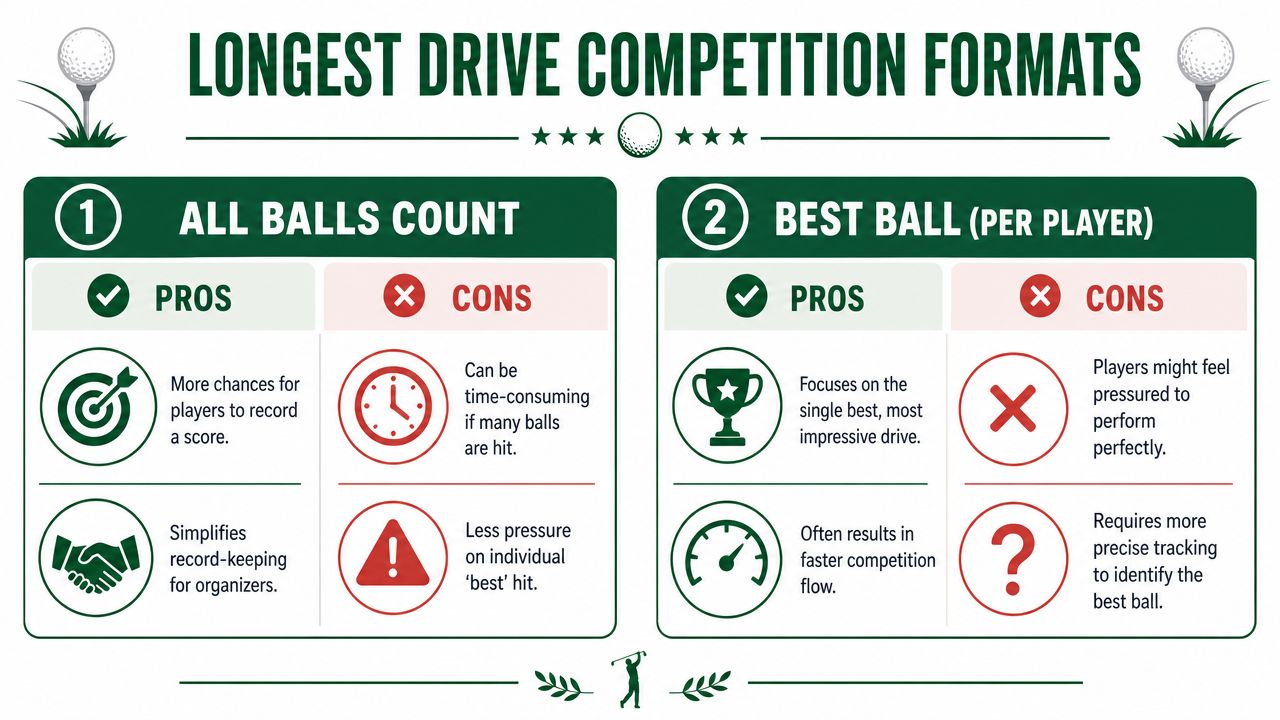
Single attempt during the round: Cleanest format for corporate outings and club events. Each player gets one swing on the designated hole and the best valid drive wins.
Best ball per player: Useful when players can hit more than once in a skills challenge setting. It creates a real “one shot to beat” atmosphere but demands tighter record-keeping.
All balls count: Better for a standalone contest area than for an on-course hole. It's easier administratively in one sense, but it can drag if too many shots are allowed.
Paid mulligan model: Works for charity events if you state the purchase and replay rules before tee-off. The warning here is pace. If the box gets crowded, the revenue upside disappears into slow play complaints.
For a standard tournament round, I'd keep it simple. One designated drive per player, one valid scoring zone, one leader at any given time.
Eligibility and divisions
One open division sounds efficient. In practice, it can suppress participation. More players engage when they believe they have a real category to win.
Use divisions only when the field supports them, and publish them in advance. The common ones are straightforward:
Men's division
Women's division
Senior division
Junior division
If the field is small, combine divisions and say so upfront. What matters is consistency, not complexity.
For the rest of your event framework, a practical planning checklist from how to run a golf tournament helps line up side games, registration flow, and day-of staffing before rules start drifting between departments.
Equipment rules you should settle before anyone swings
At the amateur level, your event doesn't need to mimic elite equipment in full, but you do need a policy. If you allow any conforming driver, say that. If you want a more formal standard, state it on the rules sheet and in pre-event emails.
The key is simple: don't let the first equipment ruling happen live on the tee box.
Course Setup Safety and On-Course Logistics
The hole selection usually decides whether the contest runs smoothly or causes trouble all day. A poor hole creates safety issues, bad rulings, and backups. A good hole makes the contest feel almost self-managing.
For most events, the right starting point is a long, straight Par 5 with a clean landing area and one designated teeing ground. That setup gives players room to swing, gives staff sightlines, and gives you a fair lane for measurement.

Choose the hole for safety first
Many organizers choose the longest hole available. That's not always the right call. The better hole is the one that minimizes lateral trouble and keeps the landing area visible.
According to guidance on longest drive contest setup, the lack of standardized terrain guidance is a real operational gap, and wind speeds greater than 5mph can reduce accuracy by 40% in dry conditions. The same source notes that using a long, straight Par 5 helps reduce some of those variables.
That means your checklist should include more than yardage.
Hole selection checklist
Straight ball flight corridor: Avoid sharp doglegs and crossing hazards in the landing zone.
Clear downrange visibility: Spotters need to identify the winning ball quickly.
Room outside the tee box: Players waiting to hit shouldn't crowd active swings.
Low conflict with adjacent holes: You don't want misses entering another fairway or crossing player traffic.
Mark the scoring area so there's no debate
A longest drive contest should never rely on “everyone knows what counts.” Mark it. Stakes, paint, or highly visible ground markers all work if they're placed before the first group starts.
Use a center line if the hole shape allows it, then mark left and right limits clearly. The cleaner the geometry, the easier the ruling. If the fairway fans out or narrows late, adjust the grid so the contest rewards a playable drive rather than a random bounce.
If your spotter has to guess where the valid zone begins, players will guess too.
Staff the hole like it matters
The designated contest hole needs assigned roles, not just warm bodies.
A reliable setup looks like this:
Tee official: Confirms which player's contest ball is in play and keeps the order moving.
Downrange spotter: Watches the landing area, marks likely leaders, and flags balls near the edge of the scoring zone.
Support runner or roving official: Handles questions, replaces markers, and keeps the contest from stalling if traffic builds.
If you're short on staff, don't fake coverage. Use fewer divisions or a simpler rule set instead. Sparse staffing plus complex rules is the fastest route to conflict.
Flow matters as much as safety
A contest can be safe and still feel clumsy. That usually happens when players don't know where to stand, where mulligans happen, or whether the official needs to witness every shot.
Keep the teeing ground organized. Put the rule sign where players see it before stepping onto the tee. If sponsors are involved, keep their signage outside the swing and staging area. Nothing slows a hole faster than participants reading the rules after someone has already teed up.
Good logistics are quiet. That's the point.
Accurate Measurement Verification and Tie-Breakers
The contest loses credibility the second players think the winning drive was estimated instead of measured. Most complaints ultimately aren't about the concept of the game. They're about whether the process looked fair.
The fix isn't complicated. It's discipline.
Build a measurement routine and repeat it every time
You need one official method for all contenders. Whether you use a tape measure, a laser rangefinder, or fixed course reference points, the same method has to apply to every leading ball.
The reason is simple. Precision matters in long drive. The USGTF discussion of long-driving precision notes that even a half-degree error at 300+ yards means missing the scoring grid, comparing elite long drive to throwing darts. If precision matters that much to the athlete, it has to matter to the contest official too.
A clean field procedure
When a ball looks like a new leader, your staff should follow a sequence that doesn't change:
Mark the resting point immediately. Use a flag, tee, or marker before anyone approaches nearby balls.
Confirm the ball is valid. Check the scoring area first. Don't waste time measuring a non-qualifying ball.
Measure from the agreed line. Use the hole's designated reference point and measure consistently.
Record the result at once. Don't trust memory for a contested lead.
Update the board only after verification. That keeps the leaderboard clean and avoids walk-backs.
If you let staff improvise the line of measurement, you'll eventually get two different numbers for the same ball.
Tape vs laser
Both can work. The deciding factor is not the tool by itself. It's how well your staff can use it under tournament conditions.
Tool | Best use | Limitation |
|---|---|---|
Tape measure | Final confirmation for a close lead | Slower on a busy hole |
Laser rangefinder | Fast checks from a known point | Needs a clear, repeatable reference |
Fixed course markers | Helpful for fast screening | Not accurate enough alone for a disputed winner |
A practical setup is to use fast reference checks during play, then use your official method to confirm the winning position before prizes are announced.
Write the measurement rule before the tournament, not after the first tie.
Tie-breakers should never be invented at the podium
A tie-break rule belongs in the event sheet. If it isn't there, players will assume the ruling was made to fit the result.
Good options include:
Second-longest valid drive wins: Works if you're tracking more than one valid result per player.
Sudden-death playoff: Good for a featured finish when finalists are still on site.
Earliest recorded distance holds: Simple, but only fair if it was published before the round.
My preference is to avoid theatrical tie-breakers unless the event is built for them. Most outings need speed, clarity, and a prize table that moves.
Structuring Prizes Payouts and Event Promotion
A weak prize makes the contest feel like filler. A smart prize structure makes players care before they ever reach the hole.
Cash can work, but it's usually not the only answer. In many events, pro shop credit, a lesson package, branded equipment, or sponsor-backed merchandise creates more visibility and fewer headaches than handing someone an envelope after scoring is done. For club events, credit often keeps value inside the facility. For charity outings, donated prizes protect margin and still feel worthwhile.
Build prizes around the type of field
A mixed field needs different motivation than a competitive member-guest. The simplest way to handle that is to match the prize to the audience.
Corporate outings: Use recognizable prizes that don't require golf expertise to appreciate.
Member events: Pro shop credit and lesson packages usually land well.
Charity tournaments: Sponsor-donated items reduce cash handling and can be promoted before the event.
Junior or family formats: Keep the reward visible and age-appropriate, not purely monetary.
If you're organizing a fundraiser, this guide to a successful golf tournament fundraiser is useful for thinking through sponsor value, participant experience, and how side contests fit the larger event revenue plan.
Payout rules should be boring on purpose
Excitement belongs on the tee, not in the accounting. Players should know exactly who can win, when payouts are final, and what happens if a winner is absent at the awards ceremony.
That means settling a few issues early:
Division-specific awards: If you offer separate categories, don't merge them at the last minute because one result was more impressive.
One person, one prize or multiple prizes: Decide whether the same player can win longest drive and other side games.
Verification cutoff: Make it clear when measurements become official and no further claims will be reviewed.
For events that need a cleaner payout process across contest holes and flight results, a practical reference on payouts for golf tournaments helps standardize the back-office side.
Promotion starts before the first tee time
Most longest drive contests are under-promoted. Organizers mention them once in a flyer, then hope the players notice the sign on the hole.
Do more than that. Give the contest a reason to matter.
A simple promotional stack works well:
Pre-event email: Name the hole, state the prize, and publish the validity rule.
Registration desk mention: Remind players where the contest sits in the round.
Cart card or scorecard note: Keep the contest visible after announcements fade.
Clubhouse display: Post the current leader or final winning mark where players gather.
Promotion doesn't need to be loud. It needs to be repeated. Players engage with side games they understand before they reach them.
Modernize Your Contest with App-Free Live Scoring
The hardest part of longest drive competition golf isn't measuring one ball. It's keeping the whole field aware of what's happening while the round is still live.
Manual systems break down fast. The volunteer on the hole writes down a new leader. Someone texts the shop. The clubhouse board updates late. Players on the front nine still think an earlier number leads. By the time the final group comes in, the contest has generated more admin than excitement.
That's why live scoring changes the character of the event. It turns the longest drive hole from an isolated side game into a visible, active competition.

Where manual scoring starts to fail
The pressure point is usually participation volume. According to contest and events planning guidance, a frequently unaddressed problem is managing scoring and payouts for 50+ participants without manual overhead. The same guidance notes that real-time, app-free scoring tools can fill that gap and improve engagement with live scoring.
That lines up with what most operators see in practice. Once enough players are in the field, the issue isn't whether staff can track the contest at all. It's whether they can track it without slowing other jobs down.
What the better workflow looks like
The strongest setup is simple. The official at the hole enters a new leading drive into a mobile-friendly scoring page. The leaderboard updates immediately for staff and players. No app download. No rekeying at the shop. No lag between what happened on the course and what the field sees.
That creates practical benefits right away:
Less radio and text traffic: Staff stop relaying the same update through multiple people.
Fewer leaderboard disputes: Everyone sees the current leader from the same source.
Stronger player attention: Golfers check standings during the round instead of waiting for the banquet.
Cleaner payouts: Verified winners flow straight into the prize process.
For tournaments already looking at digital operations, golf score tracking options are worth reviewing because side games become much easier when they sit inside the same scoring environment as the main event.
One tool can remove two headaches at once
The gain isn't just live updates. It's the combination of scoring plus payout readiness. When the contest data is already organized, staff don't have to rebuild the result sheet after the round.
One option organizers use for this is Live Tourney, a web-based platform that supports app-free live scoring and tournament management from a phone or other device. For a longest drive contest, that means the hole official can update the lead from the course, while players and clubhouse staff see the result without waiting on manual transfer.
Good contest tech doesn't replace rules, spotters, or measurement discipline. It removes the clerical work that usually buries those systems.
That's the shift that matters. The event still needs a proper hole, valid rules, and clean verification. But once those pieces are in place, app-free live scoring is what makes the contest feel modern instead of patched together.
If you're running events and want a cleaner way to handle side games, live leaderboards, and payout-ready results, Live Tourney is worth a look. It gives tournament staff a web-based, app-free way to manage scoring without adding another layer of work for players or the golf shop.