
Mar 13, 2026
Searching for local golf tournaments near me? This guide shows you how to find, evaluate, and prepare for amateur events that match your skill level and goals.

Ready to test your game outside of the usual weekend fourball? The thrill of competitive golf is a lot closer than you might think, with hundreds of events happening all the time. This guide is your starting point for finding them, moving you beyond a simple "local golf tournaments near me" search to the methods seasoned players use.
Your Search for Local Golf Tournaments Starts Here
The itch to compete is a natural part of golf. For a lot of players, though, the idea of entering a tournament sounds intimidating—something reserved for scratch golfers or country club members.
The reality? A huge number of events are actually designed for everyday players of all skill levels. The real challenge isn't a lack of tournaments; it's just knowing where to look.
This guide will give you a clear roadmap. We’ll start with some simple search strategies to get you going, then show you how to zero in on the right event, whether you’re a serious player looking for a challenge or just want to join a fun scramble.
Understanding the Tournament Landscape
Before you start digging, it helps to know what’s even out there. Most local tournaments fall into a few common categories:
Charity and Corporate Outings: These are almost always scrambles or best-ball formats focused on fun and fundraising. They’re a perfect, low-pressure entry point for your first event.
Club Championships and Member-Guests: Hosted by private or semi-private clubs, these are more competitive but usually have flights for different handicap levels.
Regional and State Association Events: Run by groups like your state golf association, these are structured, competitive tournaments for amateurs who carry an established handicap.
Local Tour Series: Many areas have independent golf tours that host a string of events throughout the season. They offer a great way to compete regularly.
The key is to match the tournament type to what you want out of it. Are you looking to network, test your game under pressure, or just enjoy a fun day on a new course? Figuring that out first makes your search way more effective.
Think of this as your pre-round warmup. Once you understand the landscape and know where to look, you can confidently find the perfect event for your game and your schedule. The next sections will get into the specific tools and platforms you can use to start finding them today.
Mastering the Search for Nearby Golf Events
Finding the right tournament is a game in itself. A quick online search might turn up a few options, but the best events—the ones seasoned players talk about—are often found through more specific channels. If you really want to find a great local golf tournament near me, you need to know where the organizers and regulars are looking.
Your first stop should always be your regional and state golf associations. Groups like the USGA or your state’s GA maintain official calendars packed with sanctioned events. These are usually more competitive, require a handicap, and are perfect if you’re serious about testing your game against a proper field.
Broaden Your Search Horizons
Beyond the official associations, a handful of dedicated online platforms have popped up to pull tournament listings into one place. These sites are great because they often have filters that let you zero in on exactly what you’re looking for.
This decision tree gives you a good visual for how to narrow things down based on what you want out of the day.
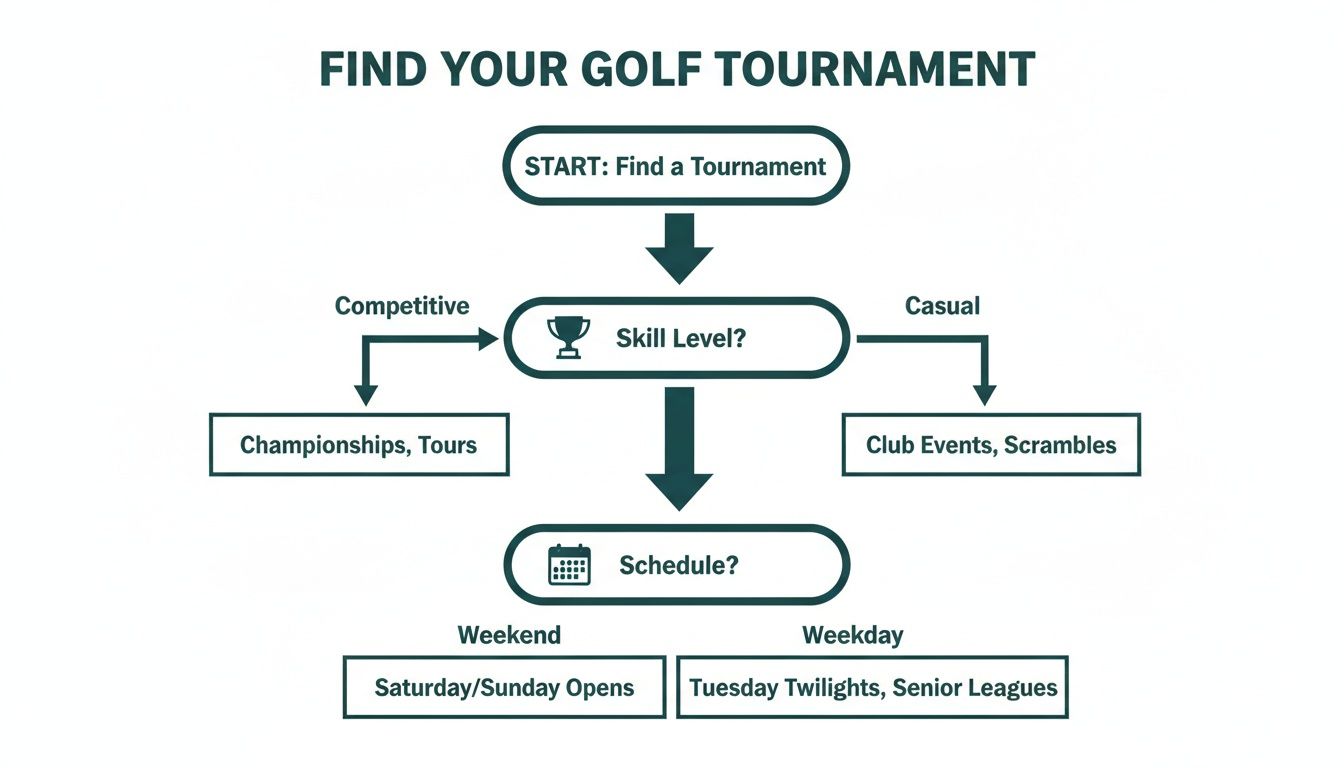
As you can see, the most important first step is deciding what you’re after: a casual day of fun or a serious competitive round. That one choice immediately points you in the right direction and filters out the noise.
Another spot that's often overlooked is social media. Facebook, in particular, is full of local and regional golf groups. Just search for things like "[Your City] Golfers" or "[Your State] Golf Tournaments." Organizers love posting here because they can reach a bunch of engaged players directly.
Pro Tip: Don't forget to just ask around. The pro at your local club and the staff at your favorite golf shop hear everything. They’ve got the inside scoop on charity outings, club championships, and smaller events that never even get posted online.
Comparing Your Search Options
To help you figure out where to spend your time, it helps to know the pros and cons of each resource. Different platforms are built for different needs, and using the right one will make your hunt for a "local golf tournament near me" a lot faster. For instance, if you're looking for competitive events in a specific city, our guide on finding golf tournaments in Atlanta is a great place to start.
Here's a quick breakdown to help you compare the most effective resources for finding your next event.
Comparison of Golf Tournament Search Resources
Resource | Best For Finding | Ease of Use | Key Benefit |
|---|---|---|---|
State Golf Associations | Sanctioned, competitive amateur events | Moderate | Official, structured, and credible tournaments |
Tournament Finder Apps | A wide variety of all tournament types | High | Centralized database with powerful filters |
Social Media Groups | Casual, last-minute, and niche events | High | Direct access to organizers and player feedback |
Local Club Pros/Shops | Unadvertised charity and club events | Easy (in-person) | Insider info and personalized recommendations |
By mixing and matching these resources, you'll get a full picture of all the competitive golf happening in your area. Start with the official sites for structured play, keep an eye on social media for more casual rounds, and build a good relationship at your local course to hear about everything else.
How to Evaluate Tournaments Like a Pro
Alright, you’ve found a few potential tournaments. But don't just smash that "Register" button yet. The real trick is learning how to look past the event title and figure out what you're really signing up for.
There’s nothing worse than showing up for what you thought was a casual charity outing, only to find yourself in the middle of a hyper-competitive qualifier. Spending a few minutes to evaluate the details ensures your time and money go toward an event you'll actually enjoy.
The first clue is always the format. A scramble or best ball almost always signals a more social, beginner-friendly vibe since you’re not grinding over every single shot on your own. On the flip side, if you see stroke play or match play, you can bet it’s a more serious competition where your individual score is all that matters.
Read Between the Lines of the Registration Page
Your best intel is hiding in plain sight on the registration page. You just have to know where to look. Don’t just glance at the entry fee—dig into what it actually covers. Are the greens fee, cart, and range balls included? What about food and drinks? Those "extras" can add up fast.
Look for specific details that tell you about the event’s value:
Food and Beverage: Is there a pre-round breakfast or a post-round awards dinner mentioned?
Prizes and Giveaways: Do they talk about a guaranteed prize pool, trophies, or even just some welcome swag?
On-Course Contests: Details about a "longest drive" or "closest to the pin" contest are a dead giveaway for a more fun-focused event.
This quick check helps you figure out the true cost and decide if the event matches what you’re willing to spend for a day on the course.
Understand the Vibe and Skill Level
Next, try to get a feel for the tournament's atmosphere. Is there a handicap requirement? Any event that asks for an official USGA Handicap Index is going to be on the more competitive side. If an event is "flighted," that’s a good sign—it means you'll compete against players with a similar skill level, which is a great way to dip your toes into competitive golf without getting overwhelmed.
Pay attention to who's running the show. An event hosted by a major corporation or a state golf association is probably going to feel more formal and structured than a local bar’s annual scramble. The event's purpose—whether it’s a fundraiser, a club championship, or a tour qualifier—is your best clue to its overall vibe.
Golf's popularity has created a massive, diverse tournament scene. Recent data shows a record 29.1 million on-course golfers and over 82 million handicap scores posted, so the demand for all kinds of events is at an all-time high. In fact, a whopping 94.4% of rounds are played just for fun, which is exactly why so many "local golf tournaments near me" are designed for pure recreation. You can read more about these trends over at the National Golf Foundation's research hub.
A Guide for Promoting Your Local Golf Tournament

For anyone running a golf tournament, a full field is the only scorecard that matters. While players are out there searching for "local golf tournaments near me," your job is to make sure your event is the one they find, get excited about, and actually sign up for.
A successful tournament doesn’t start with the first tee shot. It starts with smart promotion long before anyone steps on the course.
Let's be honest, a flyer in the pro shop isn't going to cut it anymore. Your event needs a clean, professional event page that acts as the central hub for everything. It should be simple to navigate and clearly lay out the format, schedule, entry fee, and exactly what players get for their money.
Building Your Promotional Playbook
Once that page is live, it's time to get people to it. The best approach is to hit multiple channels to make sure you're reaching every potential player. Start with your most valuable asset: your email list of past participants and members. It's the most direct and effective way to get the word out.
Next up is social media. Post high-quality photos or videos of your course—show them what they're in for. Use relevant hashtags and be sure to tag any sponsors or partner organizations to amplify your reach. For a real leg up, look into dedicated golf club society marketing strategies to drive bookings from larger organized groups.
Here are a few core tactics we see work time and time again:
Early Bird Registration: Offer a small discount for players who sign up early. This creates urgency and builds momentum right out of the gate.
Sponsor Cross-Promotion: Your sponsors have an audience, too. Work with them to promote the event through their social media, email newsletters, or even in-store signage.
Local Media Outreach: Don’t sleep on local news outlets, community calendars, and golf blogs. A quick press release can land you a surprising amount of free publicity.
Modernize Your Tournament Management
Today's tech makes running a tournament easier than it's ever been. Ditching the manual spreadsheets and paper forms doesn't just save you from hours of admin headaches; it also makes your event look way more professional to players and sponsors.
Platforms like Live Tourney are built to handle the entire process. You can spin up a branded registration page in minutes, securely take payments online, and automatically print everything from tee sheets and scorecards to cart signs and bag tags.
The goal is to make the entire process, from discovery to registration to tournament day itself, as seamless as possible. When players have a smooth, professional experience, they are far more likely to return and recommend your event to others.
This taps directly into a huge trend. Golf participation recently shot up to over 108 million adults and juniors worldwide—a 44% jump since 2016. A lot of that growth is coming from more accessible, fun formats, which is exactly what local tournaments deliver. Women are also a massive part of this boom, now making up 31% of adult golfers and 50% in alternative formats, which is a huge opportunity for inclusive events.
One of the biggest game-changers for the player experience is app-free live scoring. It gets rid of the friction of making people download an app. Instead, they can enter scores and see a live leaderboard instantly from any phone's browser. This feature seriously elevates the competitive buzz and works as a powerful marketing tool for attracting both players and sponsors who want to be part of a modern, well-run event.
And if you want to take your revenue to the next level, check out our guide on creative golf outing sponsorship ideas.
How to Prepare for Tournament Day
You’ve found your event, paid your entry fee, and circled the date on your calendar. Awesome. But showing up prepared for a tournament is about more than just having clean clubs. It’s about setting yourself up for a stress-free day where you can actually focus on playing your best.
The real prep work starts now.

If you only take one piece of advice, make it this: arrive early. Seriously. Give yourself at least an hour before your tee time. This gives you a nice buffer to check in, find your cart, hit the range, and roll a few putts without that rushed, frantic feeling.
Pre-Round Essentials
A smooth check-in process really sets a positive tone for the day. Have your confirmation email ready on your phone and know your handicap if one is needed. This is your chance to ask the tournament staff about any quirky local rules or clarify the format.
Once you’re all checked in, it's go-time for you and your gear.
Strategic Bag Check: Go beyond the usual. Pack extra balls, plenty of tees, your rangefinder, and maybe even a rule book. Always check the forecast and throw in weather-appropriate stuff like rain gloves or an extra towel.
Structured Warm-Up: Don't just whack balls aimlessly on the range. Start with your wedges, work your way up through the bag, and finish with the driver. Most importantly, spend at least 10 minutes on the putting green. Your goal is to get a feel for the speed—that’s it.
Here's the thing about a warm-up: its purpose isn't to magically find the perfect swing you lost last week. It's just to get your body moving and build a little confidence. Trust the swing you brought with you.
On-Course Strategy and Etiquette
Playing in a local tournament feels different than your usual weekend round. The pace can be slower, and the rules are definitely stricter. Always be prepared to play "ready golf" when it's appropriate, stay aware of the groups around you, and read the local rules sheet they usually hand out.
Getting all this right is a huge part of the experience. A great deal of preparation can be simplified with the right tools, and you can get more familiar with the entire process with our comprehensive golf tournament planning guide.
This kind of preparation is more important than ever as more players jump into the competitive scene. In fact, golf participation has been booming—in 2023, a record-breaking 3.68 million golfers in the United States maintained a Handicap Index. That 8.2% jump shows just how popular accessible tournaments have become for new and busy players alike.
Common Questions About Local Golf Tournaments
Whether you’re a player hunting for your first event or an organizer trying to pack the field, a few questions always seem to pop up. We’ve covered the big picture of finding, evaluating, and promoting tournaments, but sometimes you just need a quick, straight answer.
Let's dig into some of the most common ones we hear.
Finding Your First Tournament
The biggest hurdle for a lot of new players is just feeling like they belong. It's easy to assume all tournaments are built for scratch golfers, but that’s just not the case.
What Is the Best Way to Find Amateur Golf Tournaments if I Don't Have a Handicap? You’re in luck—tons of events, especially charity scrambles, don’t require an official handicap at all. Your best bet is to check the community boards at your local public courses, follow those same courses on social media, and keep an eye on websites for local charities you care about. These events are built for fun, not for the pros.
If you’re looking for something with a bit more structure, search for "flighted" tournaments. They’ll group you with players of a similar skill level based on your typical scores, which keeps the competition fair and fun for everyone involved.
How Much Does It Typically Cost to Enter a Local Golf Tournament? The price tag can swing pretty wildly. A casual weekly league night might only set you back $20-$40 plus your greens fees. A standard weekend club tournament usually lands somewhere in the $75 to $150 range.
Bigger charity or corporate events often have higher entry fees, sometimes from $150 to $500+. But that price almost always includes everything: greens fees, a cart, food, drinks, some player swag, and a donation. Always read the fine print to see what you're getting for your money.
Understanding Formats and Organization
The format you choose pretty much defines the entire vibe of the day. For organizers, picking the right one—and running it well—is how you get a full field of happy golfers.
What Are the Most Common Formats and Which Is Best for Beginners? You'll mostly see Scrambles, Best Ball (or Four-Ball), and individual Stroke Play.
For beginners, the Scramble is the undisputed champion. It’s the most popular format for a reason. Everyone on the team tees off, you pick the best shot, and everyone plays from there. It takes the pressure off any one player and keeps the round social and moving.
Best Ball is another great team option, while individual Stroke Play is usually saved for more serious, competitive events.
How Can I Make My Tournament Stand Out to Attract More Players? It all comes down to the player experience. Offer modern perks like dead-simple online registration and a live leaderboard they can follow from their phones. App-free scoring is a massive bonus since nobody wants to be forced to download another app.
Think about unique twists, too—maybe a 9-hole shootout or a night golf event. High-quality player gifts, fun on-course contests, and a well-organized after-party with good food go a long way. When you promote these standout features in your marketing, you won’t just get more sign-ups; you can often justify a higher entry fee.
Trying to juggle all those details can feel overwhelming, but Live Tourney makes it simple. Our platform helps you build a professional event page, handle registrations and payments, and run an engaging live scoring experience that players actually enjoy—with zero app downloads required. Elevate your next tournament and get hours of your time back. Discover how Live Tourney can transform your events.





