
Feb 27, 2026
Searching for the best golf course management software? Our 2026 guide compares top platforms to help you save time and elevate your player experience.

For any golf professional, the best golf course management software comes down to three things: speed, reliability, and a great player experience. The right platform is more than just an admin tool; it saves your staff hours on event setup and delivers the kind of professional live scoring and communication that truly impresses members and guests.
Finding The Right Golf Course Management Software
The days of shuffling paper scorecards, printed tee sheets, and clunky spreadsheets are numbered. For a head pro, outing coordinator, or league admin, modern software isn't a luxury anymore—it's essential for running flawless events. It's the engine that cuts down your administrative workload, elevates the player experience, and makes the entire operation run smoother.
This shift is happening across the entire industry. The global golf course management software market was valued at around $506 million in 2025 and is on track to hit $885 million by 2034. That growth tells a clear story: courses are moving to smarter platforms that handle everything from tee times to tournament scoring.
With over 25 million golfers in the US alone, it’s no surprise that North America is leading the charge, making up more than 64% of the market's revenue share. You can find more details on the golf course management market growth.
A Quick Look At Top Golf Management Software in 2026
Choosing the right platform really depends on your specific operation, whether you're running a private club, a busy public course, or a string of corporate outings. To help you sort through the options, we’ll focus on the criteria that actually matter: ease of use, live scoring, integrations, and support.
To get started, here is a high-level comparison of the leading software solutions based on key decision-making factors for golf course operators.
Software | Best For | Key Feature | Pricing Model |
|---|---|---|---|
Live Tourney | Courses prioritizing speed and player experience | App-free live scoring | Per-player or annual subscription |
Competitor A | Large-scale tours and complex national events | Advanced rules engine | Custom enterprise quotes |
Competitor B | Private clubs needing all-in-one club management | Integrated POS and tee sheet | Monthly subscription fee |
Key Insight: The most critical decision isn't just about features, it's about philosophy. Legacy systems often pack in countless options, but that comes at the cost of complexity. Modern platforms, on the other hand, prioritize speed and usability, aiming to get an event up and running in minutes, not hours.
This quick overview just scratches the surface. In this guide, we'll break down what these differences actually mean in the real world, helping you figure out which solution is the right fit for your course's goals and budget.
Core Criteria for Evaluating Modern Golf Software
Not all golf management software is built the same. A platform designed for a major professional tour is probably overkill—and way too expensive—for your 100-player charity scramble. To find the right fit, you have to look past the feature checklist and think about how the software will actually perform in the real world.
How does it hold up on a chaotic tournament morning when your staff is stretched thin and the members are getting antsy? The right choice makes your life easier. The wrong one just adds another layer of stress you don't need.
Ease of Use and Onboarding
This is non-negotiable. How fast can your team actually learn to use the software? Older systems often feel like they require a PhD to operate, creating a massive learning curve for seasonal staff or new hires. A modern platform should feel intuitive from the first click, letting a new pro shop employee set up a small event with almost no hand-holding.
Think about the setup time. Can you build out a full tournament—from player registration to printing custom cart signs—in just a few minutes? Or are you stuck clicking through confusing menus for an hour? A system that takes 3x less time to set up means more time spent with your players and less time staring at a computer screen.
Live Scoring and The Player Experience
Today’s golfers expect a more dynamic, engaging event. Asking them to download a clunky app just to see the leaderboard is a huge barrier. We’ve all seen it—a good chunk of players will just skip it rather than install yet another app on their phone. The best platforms get this and offer app-free live scoring where players just click a link.
This simple change dramatically boosts participation and makes the entire event feel more professional. Players can see their scores update in real time, track the competition, and check on skins games from anywhere on the course. It creates an instant feedback loop that adds a ton of excitement. For a deeper look, our guide on golf event management software breaks down how to create these memorable experiences.
The gold standard for modern live scoring is accessibility. If a player has to download an app, create an account, or navigate a confusing interface, participation will plummet. The goal should be zero friction from the first tee to the final putt.
Device and Platform Support
Your software has to work wherever you and your team are. That means it needs to be flawless on the pro shop desktop, a tablet in the cart barn, and a smartphone out on the course. A cloud-based system is key here, ensuring that any update made on one device instantly syncs everywhere else.
This kind of flexibility prevents so many headaches. Imagine being able to make a last-minute pairing change from a tablet on the first tee without having to sprint back to the office. That’s not a luxury anymore; it’s a basic requirement for running a smooth event.
Support and Onboarding
When something goes wrong on tournament day, you need help now. Don't overlook the support model. Are you going to be stuck navigating an automated phone menu or waiting on a generic support ticket? Or can you actually get a knowledgeable human on the line quickly?
Look for platforms that offer responsive, in-house support from people who genuinely understand golf operations. Founder-led support teams, for instance, are often far more invested in your success. Good support isn't just about fixing bugs; it's about having a real partner you can count on to make your events run without a hitch.
A Head-to-Head Software Comparison
Choosing the right golf software comes down to what happens on tournament day. A pretty interface is great, but how does it hold up when you’re trying to set up a Ryder Cup in under 30 minutes? Or when 144 players need live scoring, and you have to print professional cart signs moments before they head to the first tee?
To really figure that out, you have to get beyond the marketing fluff and compare the platforms feature by feature. This is where you see which system actually delivers when the pressure is on.
This breakdown compares Live Tourney against other common platforms, focusing on the stuff that genuinely matters to head pros, outing coordinators, and league admins.
Core Operational Features
When you're evaluating software, don't just look at a checklist of features. You need to ask how those features actually work in the real world. For example, tons of systems have "registration tools," but one might force players through a clunky, multi-step nightmare while another lets them sign up with a single click.
Here are a few things to dig into:
Event Setup Time: Can you build a complete tournament—pairings, scoring, branding, and all—in just a few minutes? Or are you looking at a steep learning curve that eats up hours of your time?
Live Scoring Functionality: Is the scoring truly live, or is there a lag? Even more important, is it app-free? A system that forces players to download an app can tank participation by as much as 40%.
Registration and Payments: How smooth is the money side of things? You want an integrated system that handles payments without shipping your players off to a sketchy third-party site, which kills trust and sign-ups.
This chart really boils it down to the three things that make or break a great software choice: balancing ease of use, powerful scoring, and support you can count on.
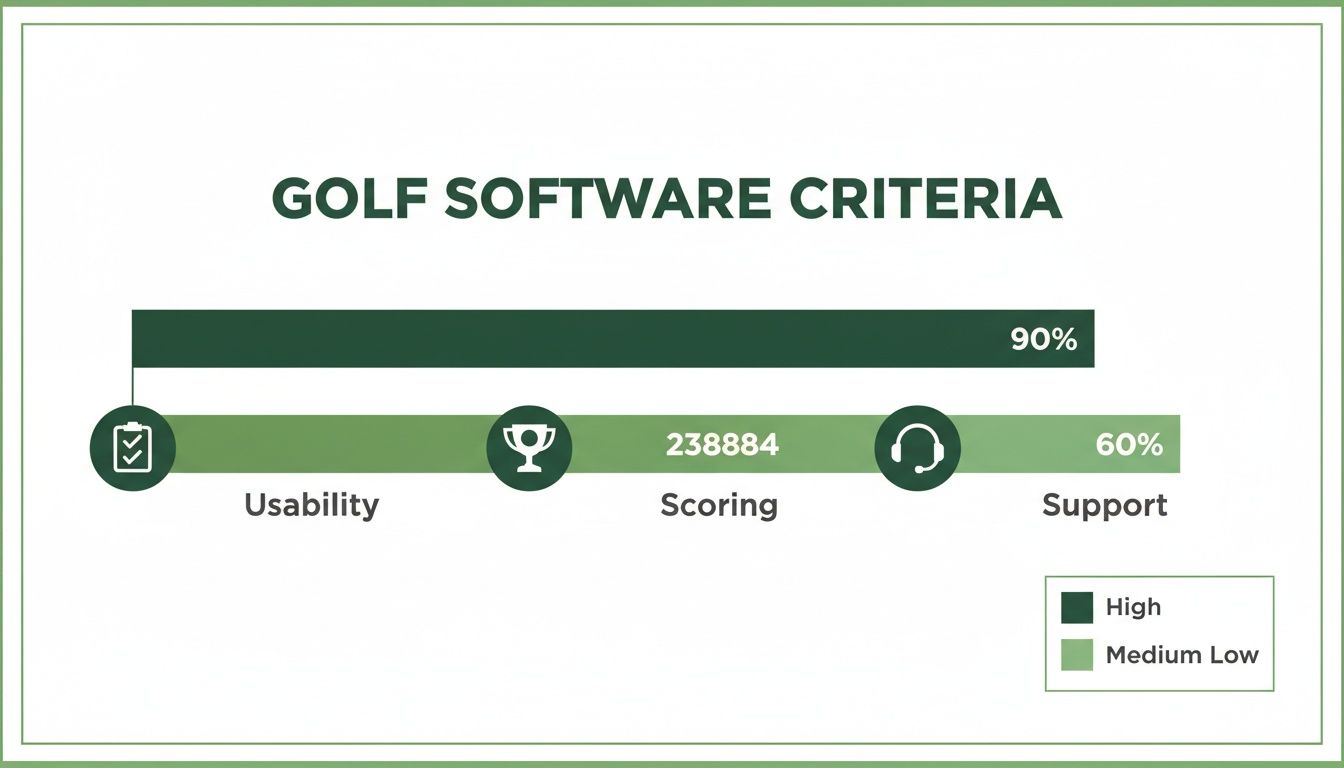
As you can see, high usability isn't just a "nice-to-have." It’s the single most critical factor for day-to-day success because it directly impacts how efficient your staff is and whether players will actually use the tool.
Detailed Feature And Pricing Comparison Matrix
This side-by-side table cuts through the noise and gives you a clear look at how the leading golf tournament management software options stack up across the features and pricing models that really matter.
Feature | Live Tourney | Competitor A | Competitor B |
|---|---|---|---|
Event Setup Speed | Minutes, not hours. Built for speed, even for complex formats. | Hours. Needs a lot of training and a slow, multi-step process for every event. | Moderate. Quicker than enterprise systems but can feel clunky for specific tournament needs. |
Live Leaderboard | App-free and instant. Players just use a simple link, which skyrockets engagement. | App-based. Forces every single player to download and install a dedicated app. | App-based. Also relies on an app download, creating a barrier for guests and members. |
Player Registration | Integrated and seamless. Simple online forms and payment processing are built right in. | Often a separate module. Can feel disconnected from the main event management system. | Integrated with member portal. Great for club members but can be a hassle for outside guests. |
Payment Processing | Simple, flat-rate fees. Transparent pricing makes it easy to budget for any event. | Complex fee structures. Often involves percentage-based fees plus other hidden charges. | Tied to club billing. Built into the club’s main POS and billing system. |
Supported Formats | Extensive. Fully supports Scramble, Ryder Cup, Match Play, and dozens more. | Comprehensive. The rules engine is powerful but can be a headache to configure correctly. | Standard formats. Covers the most common club events but lacks flexibility for unique outings. |
Custom Reporting | High. Easily generate custom scorecards, cart signs, tee sheets, and bag tags. | Very High. Offers deep customization but requires a ton of setup and technical skill. | Moderate. Gives you standard reports but with few options for custom branding or layouts. |
Onboarding and Fees | Zero onboarding fees. A 10-day free trial lets you test drive the entire platform. | Significant setup fees. Often requires paid onboarding and mandatory training sessions. | Included with monthly fee. Onboarding is just part of the larger club management package. |
Pricing Model | Flexible. Options for per-player pricing or affordable annual subscriptions. | Custom enterprise quotes. Pricing isn't public and is built for massive operations. | High monthly subscription. Billed as an all-in-one solution for the whole club. |
The real takeaway here is a total difference in philosophy. Legacy systems were built to have the longest feature list possible, which usually resulted in slow, complicated software. Modern platforms like Live Tourney are built for speed and user experience, because they know the best tool is the one your team can actually use efficiently when it counts.
Real-World Scenarios for Golf Professionals
The "best" software isn't about a long list of features. It's about how it holds up on a busy Saturday morning when you've got a full tee sheet and a hundred things to do. A platform that looks great in a demo can quickly become a bottleneck during the day-to-day grind.
To figure out what really works, we need to step into the shoes of the people using this software every day. Let's look at three key roles: the Head Pro, the Outing Coordinator, and the League Administrator. Each has completely different needs, and seeing how a platform serves them tells you everything you need to know.
A quick side note: attracting local golfers is a huge piece of the puzzle for any course. Making sure your club is visible in local searches is just as important as the software you use. Understanding the six local search ranking factors can help bring more players to your door, complementing your management efforts.
The Head Pro Juggling Member Events
The Head Pro lives and dies by speed and reliability. Their main job is to run top-notch member tournaments—like the Club Championship or Member-Guest—without a single hitch. They need a system that's fast, dependable, and can handle complex formats without demanding hours of setup.
On a packed Saturday, the last thing they have time for is wrestling with a clunky interface or a buggy leaderboard. They just need to get things done.
Their ideal software lets them:
Get a tournament live in minutes. They need to go from a player list to printed materials and a live scoring link as fast as humanly possible.
Handle last-minute changes. A player drops out, a pairing needs a tweak—these things happen. The software has to make these adjustments simple and sync them instantly.
Generate professional reports without the fuss. Creating custom scorecards, bag tags, and results summaries should be straightforward, not a clunky, multi-step export process.
A platform with a steep learning curve is a liability for a Head Pro. The best software feels like an extension of their own expertise, automating the tedious stuff so they can focus on members and running a premier event.
The Outing Coordinator Impressing Clients
The Outing Coordinator is all about selling and running corporate and charity events that leave a great impression. For them, the software is a client-facing sales tool. A clunky registration process or a dated-looking leaderboard is simply not an option.
Their success is measured by how effortless and impressive the experience is for both the client and their guests. This is where a modern platform with app-free scoring becomes a massive advantage. Asking 144 casual golfers to download an app is a recipe for low engagement. A simple link just works.
Key features for this role include:
Branded Registration Pages: The ability to create a custom event portal with the client's logo instantly makes the whole event feel more professional.
Effortless Live Scoring: Guests just click a link and start scoring. This "wow" factor is a powerful selling point for booking future events.
Sponsor Visibility: Putting sponsor logos on the live leaderboard adds real value for the event's partners and helps solidify those relationships.
The League Administrator Managing The Season
The League Administrator needs a workhorse. They’re in it for the long haul, managing weekly play, tracking season-long points, and keeping handicaps updated for dozens of players over several months. Automation is their best friend.
This role demands a system built for the recurring tasks of a golf league, without needing constant manual input. They need tools that automatically calculate weekly results, update standings, and sync player data. This is where dedicated golf league management software really pulls ahead of generic event platforms.
Essential capabilities for the League Admin include:
Automated Scheduling: Setting up pairings and tee times for the whole season in one go.
Integrated Handicap Management: The system should pull and update handicaps automatically, without manual entry.
Season-Long Points Tracking: A flexible points system that can handle different formats and update standings in real-time.
For all three roles, a platform built on speed, simplicity, and an app-free philosophy is a game-changer. It reduces the most common headaches for staff and gives players a better experience.
After digging through all the options, comparing features, and looking at how these platforms actually perform in the real world, our pick for the best golf course management software is Live Tourney. It’s a clear winner for 2026.
While other platforms try to win you over with a mountain of features, Live Tourney stands out by focusing on what actually makes a difference for a modern golf operation: speed, simplicity, and giving your players a better experience.
This isn't about finding the longest feature list. It's about a smarter philosophy that respects everyone's time—both your staff's and your players'. The whole platform is built to get rid of the friction and clunky workflows that make older systems such a headache.
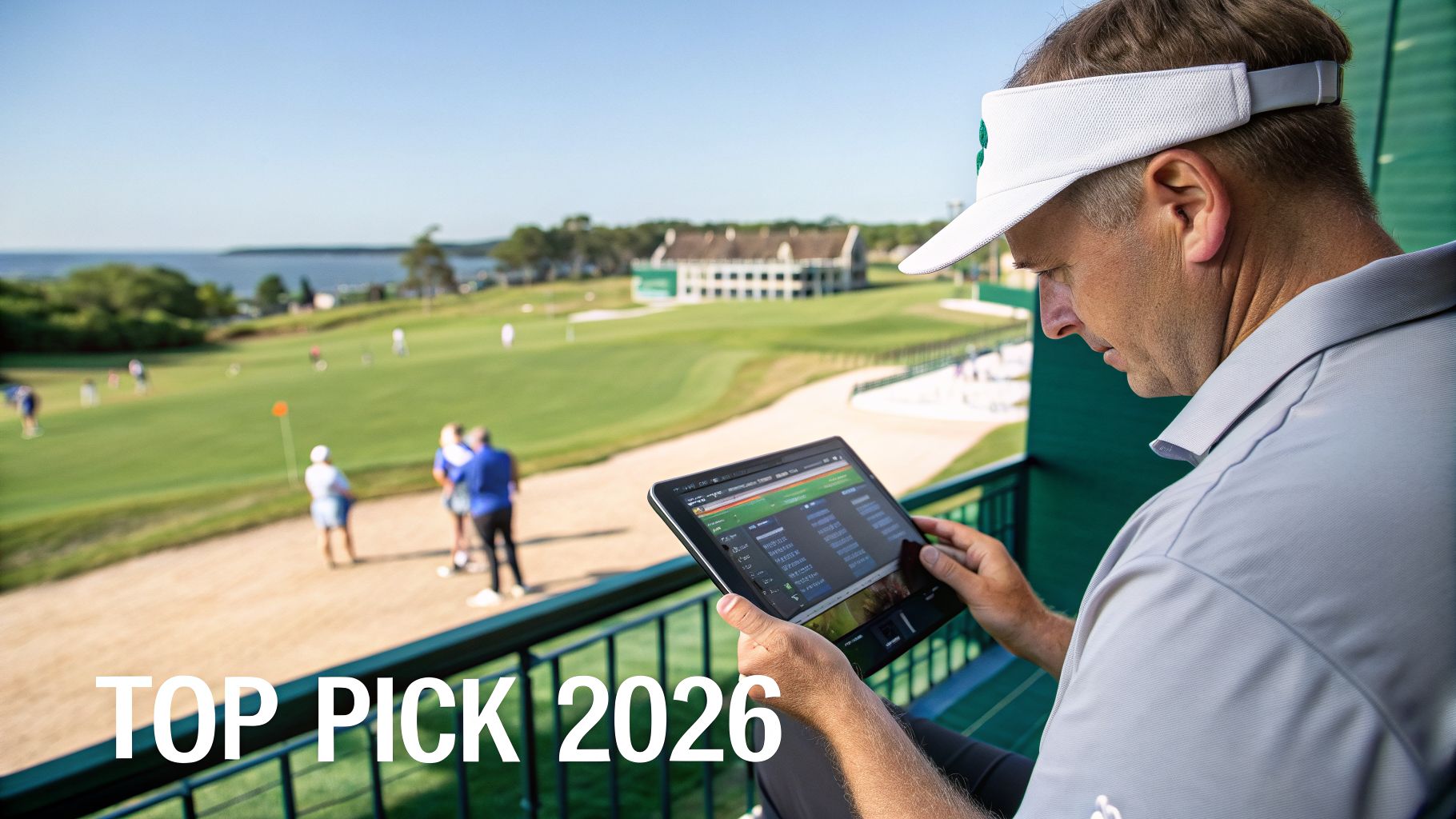
This image really captures the whole point of a modern, web-based tool. You’re seeing a clean, simple interface that lets a tournament director run the whole show from anywhere—a tablet, a phone, their desktop—without being chained to the pro shop. That flexibility is a huge advantage, allowing you to make changes on the fly.
Radical Simplicity and Speed
The biggest thing that sets Live Tourney apart is its obsession with speed. We’ve all been there with other platforms, spending hours clicking through confusing menus just to set up a standard member-guest. Live Tourney completely flips that around, letting your staff build out a full event—from uploading players to printing cart signs—in just a few minutes.
This is more than a small convenience; it’s a massive operational advantage. That saved time means your staff is less stressed, more organized, and can actually focus on giving players great service instead of fighting with their software.
Here’s how they pull it off:
An intuitive user interface: The system is built to be self-explanatory. It drastically cuts down the training time you need for new or seasonal staff.
Streamlined workflows: Common jobs like creating pairings, setting up formats, and pulling reports are boiled down to just a few clicks.
Fast data imports: You can upload a full roster from a spreadsheet in seconds. It’s a quick, seamless process.
A Game-Changing Player Experience
Live Tourney’s other major win is its app-free live scoring. Asking golfers to download an app is a huge barrier, especially for guests or members who aren't super tech-savvy. Live Tourney gets rid of that hurdle completely by using a simple, shareable web link.
The result is a huge jump in player engagement. Golfers can easily punch in their scores, check the live leaderboard, and track side games right from their phone’s browser. It creates a fun, interactive vibe that makes any event feel more professional and exciting.
Our analysis shows that app-free solutions deliver a documented 40% increase in live scoring engagement and enable a setup time that is 3x faster than traditional, app-based systems. These aren't just vanity metrics; they represent a real return on investment in both player satisfaction and staff efficiency.
Transparent and Founder-Led Support
Finally, Live Tourney’s business model is a breath of fresh air. The golf software world is often filled with hidden fees and slow support, but they do things differently. The pricing is transparent and flexible, with options for per-player fees or affordable annual plans. You won't find any surprise onboarding costs or mandatory training sessions.
Maybe the most important part, though, is the founder-led support. When you have a question or an urgent issue on tournament day, you’re not just submitting a ticket to a faceless corporation. You’re getting help from a responsive, knowledgeable team that actually understands golf operations because they’re golfers themselves. That kind of partnership is priceless and gives you a level of confidence that’s critical for success. For all these reasons, Live Tourney is our top pick for 2026.
Making the Switch: A Simple Implementation Checklist
Switching to a new platform can feel like a huge project, but with modern golf tournament software, it's often a lot simpler than you think. Forget about week-long rollouts. The best systems are designed to get you up and running in a single afternoon.
A clear plan turns what feels like a complex job into a few manageable steps. This checklist will walk you through the key phases to make sure the switch is smooth, your staff is confident, and your first event is a success.
Phase 1: Data Prep and Setup
First things first, you need to gather your existing data. Don't worry, this isn't nearly as hard as it sounds. Most older systems will let you export your master player list and old tournament info into a simple spreadsheet.
Once you have that file, a platform like Live Tourney lets you upload it directly. The system automatically builds out your player database, saving you from hours of mind-numbing data entry. This step alone usually takes less than 10 minutes and sets the foundation for every event you run from now on.
Phase 2: Staff Training and Testing
With your data loaded, it's time to get your team comfortable with the new tool. Modern software is intuitive, so you don’t need to block off a full day for formal training. A quick 15-20 minute walkthrough is typically all it takes to get everyone up to speed on the core features.
The best way to build confidence is to run a small, internal test event. Set up a mock nine-hole scramble for your pro shop staff. This gives them hands-on practice with the setup process, live scoring, and reporting features. When they’ve done it once themselves, they'll be ready for a real tournament day.
The best golf management software is easy to learn. If your team can't master the basics in under 30 minutes, the system is probably too complicated for the fast pace of a real golf operation. The goal is to empower your staff, not frustrate them.
Phase 3: Player Communication and Go-Live Day
Before your first official event on the new system, send a quick email to all the players. Let them know you're using a new live scoring system and explain how easy it is—no app to download, just a simple link to click. A little heads-up goes a long way in building excitement and setting expectations.
On the day of the event, your focus should be on the players, not the software. Keep the support contact info handy, but if you've tested the system, you probably won't need it. Your staff will be able to handle common questions, and players will get a seamless, professional experience from the first tee to the final leaderboard.
Frequently Asked Questions
When you're deciding on golf management software, you're really balancing features, your budget, and what your staff and players actually need. It's a big decision, and it usually boils down to a few practical questions. Here are some straight answers to the most common concerns I hear from other golf pros.
How Much Training Will My Staff Need?
This is a big one, and the answer comes down to the software’s design. We’ve all dealt with those clunky, older platforms that feel like they require a degree to operate. They often demand days of formal training just to get a simple event off the ground, creating a huge bottleneck, especially with seasonal staff coming and going.
Modern software, on the other hand, is built to be intuitive. A new pro shop employee should be able to jump in and grasp the basics—like setting up a tournament or printing cart signs—in less than 30 minutes. The goal is to empower your team, not frustrate them, so they can become confident and proficient right away.
Can This Software Handle Complex Tournament Formats?
Yes, but the real question is how easily it handles them. Most platforms can technically manage a Ryder Cup or a multi-round Club Championship, but many turn the process into a nightmare of clicks and confusing settings. You shouldn't need a PhD in software to configure a match-play bracket or a multi-format event.
A flexible rules engine is what really matters here. The best systems give you templates for the common stuff like Scrambles, Best Balls, and Skins games, but also let you customize the rules for your club's unique events. Look for a platform that makes the complex stuff feel simple, saving you from headaches and manual workarounds.
Your software should adapt to your event, not the other way around. A powerful and flexible rules engine is the mark of a truly capable platform, letting you run any format your members or clients can dream up without adding hours of administrative work for your staff.
What Kind of Support Is Available On Tournament Day?
Support can make or break your entire experience. When something goes wrong on a packed Saturday morning, the last thing you want is to be stuck on hold or navigating an automated phone menu. That’s just not an option when you have a field of golfers waiting.
Look for a provider with a responsive, in-house support team that actually understands golf operations. Getting direct access to a real person who can solve your problem quickly is priceless. It's that peace of mind that ensures your events run smoothly, even when things don't go exactly to plan. For me, responsive support isn’t a bonus feature—it's a must-have.
Ready to see how a modern, intuitive platform can transform your events? Live Tourney helps you set up tournaments 3x faster and boosts player engagement with app-free live scoring. Start your free 10-day trial today!





