Aug 13, 2026
links at galloway, memphis golf, memphis public golf, golf tournament planning, tournament software
Explore Links at Galloway with our guide to the course, tee time booking, and tournament tips for a memorable round.

You've got a foursome lined up, the coffee's still hot, and somebody in the group is asking the same question he always asks before the first tee. Is this a quick municipal round, or is the day going to turn into a real test? At The Links at Galloway, the answer usually lands somewhere in the middle, which is why the course keeps working for casual players and event organizers who need a place that feels approachable but still has structure.
The venue carries unusual weight for a public course because it was built in 1926 and now sits inside a Memphis golf market that has seen plenty of turnover over the years. That age matters more than nostalgia. A course with that kind of history has had time to define what it is, who it serves, and how it handles traffic without pretending to be something it isn't. For players, that often means a calm, playable day. For organizers, it means a property with enough identity to anchor a real outing plan.
A Saturday Morning at Links at Galloway
A normal Saturday here doesn't feel rushed the way many busy public tracks do. You show up, check in, and the morning unfolds at a municipal pace that suits players who want golf without a lot of ceremony. The foursome in front of you might be a men's league group, the one behind you could be a charity scramble, and the rhythm still holds because the course has a clear public-golf identity.
Why the setting matters
What gives The Links at Galloway staying power is that it isn't trying to be an exclusive destination. It's a long-established Memphis golf venue with a full 18-hole layout and a history that reaches back nearly a century, which gives it more texture than a typical utility course. Golfers don't just come here for the scorecard. They come because the round fits into a normal weekend without a lot of friction.
That matters in a city like Memphis, where players have choices and tournament hosts are always balancing access against quality. A venue survives by being reliable. Galloway fits that role because it offers a public-round rhythm that works for the player who wants a straightforward tee time and for the organizer who needs a site that can support a controlled event without overwhelming staff.
Practical rule: the best municipal courses are the ones that make a simple round feel easy and a planned outing feel manageable. Galloway's appeal sits right in that overlap.
The historical layer also helps explain the course's character. Golf is often sold as a present-tense experience, but older venues carry the benefit of continuity. At Galloway, that continuity gives the place enough identity that a first-time visitor can sense they're not just at another stop on a city schedule.
Course Layout, Par, and Difficulty
The scorecard at The Links at Galloway sets the tone before the first tee shot. GolfPass lists the course at 6,013 yards from the black tees with a par 68 layout. That matters because many modern courses sit at par 70, 71, or 72, so this one asks for a different kind of round from the start. With fewer par opportunities on the card, there is less room to assume the score will sort itself out later.
What the yardage says
The routing is split 3,041 yards on the front nine and 2,972 yards on the back nine. Those numbers do more than describe distance. They shape pace, club selection, and how much pressure a player feels after a loose tee ball. A golfer who tries to force the issue early can still get stretched, but the overall setup favors placement and repeatable contact over pure length.
GolfPass also lists tee ratings and slopes that show how the course plays from different boxes. The black tees are 68.8/114, while the white tees are 61.6/99 for men and 65.4/106 for women. That spread affects every group decision. A stronger player can treat the black tees as a fair test, while a mixed-ability foursome usually gets a better round by moving up a set so the group can keep pace and still have a realistic chance to score.
How to choose a tee
The right tee is the one that fits the group's actual scoring range, not the most ambitious player in the foursome. If your group is steady but not long, the white tees can keep the round moving and make the par 68 structure feel fair. If you are setting up a competitive outing, the black-tee numbers give you a clean base for flights and payouts without pretending the course plays easier than it does.
A practical way to judge that fit is to look at course rating basics before you assign tees. That matters because a course can look short on paper and still play demanding if the setup is tight, firm, or exacting.
Practice Facilities, Pro Shop, and Player Amenities
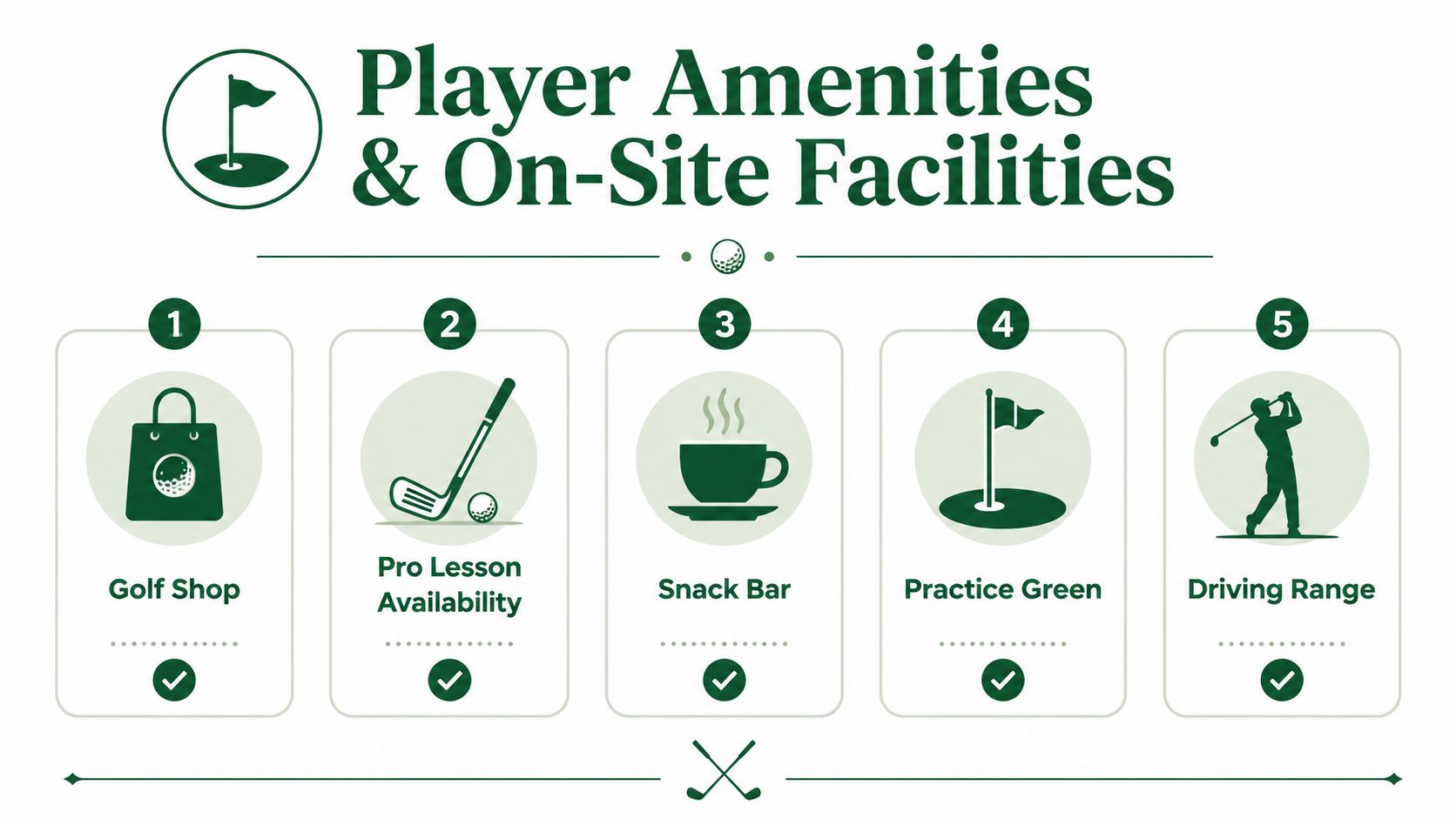
Before you commit to a tee time, it helps to know what's on site. Memphis Parks lists a golf shop, snack bar, lessons, and tournament packages at The Links at Galloway, which is exactly the kind of support a public course needs if it wants to handle everything from a solo round to a fundraiser.

What to check before you leave
A solid pre-round routine here is simple.
Golf Shop: confirm you've got tees, balls, gloves, and any small fixes you forgot at home.
Lesson Availability: if your group includes a newer player, booking instruction ahead of time is smarter than trying to teach on the first tee.
Snack Bar: plan for something quick, not a full restaurant experience.
Practice Time: show up early enough to loosen up instead of using the first three holes as your warm-up.
Tournament Support: if you're hosting, ask what the course can handle on the day, especially for registration and small event logistics.
That's the difference between a round that starts smoothly and one that begins with someone borrowing everything from everyone else. Municipal golf works best when players arrive self-sufficient, but a course with these amenities can still cover the gaps.
If you're bringing a mixed group, the lesson option and the shop matter more than most organizers admit. A newer player who gets one quick pointer before the round is usually easier to manage than one who spends six holes trying to catch up.
The snack bar matters too, especially in a Memphis summer. You're not planning a dining experience, you're planning a reset point between holes. For event groups, that's enough. For casual players, it's the difference between a comfortable stop and a round that feels like work.
Booking Tee Times and Green Fees
A small municipal tee sheet only works if the booking rules stay tight, and The Links at Galloway is set up that way. Memphis Public Links limits online booking to one tee time per day with up to four golfers per tee time, so one player cannot stack the schedule and leave everyone else guessing. That affects casual rounds and event planning in the same way, because the reservation system is built for control, not for scrambling later.
How the cap changes planning
The cap helps fairness, but it forces discipline. If you are organizing a group, you need the headcount, the preferred start window, and the payment plan sorted before you book. A single person cannot hold multiple slots and sort the roster afterward, which means the pro shop is not stuck untangling a half-finished plan on the day of play.
For tournament admins, that is a real trade-off. The rule protects access for regular players, but it also means outings have to be built around the booking limit instead of around wishful thinking. If you are used to larger municipal sheets, this is the kind of setup where tee time strategies for busy courses matter, because the first clean decision is usually the one that keeps the whole day on track.
The green fees are simple enough to quote without a lot of guesswork. Memphis Public Links lists $27 Monday through Thursday and $35 Friday through Sunday and holidays for 18 holes (booking and rates). Weekday golf is the better value if price matters. Weekend play costs more because you are paying for the convenience of higher-demand times.
Day | 18-Hole Green Fee | Max Group Size | Booking Limit |
|---|---|---|---|
Monday to Thursday | $27 | 4 golfers | 1 tee time per day |
Friday to Sunday and holidays | $35 | 4 golfers | 1 tee time per day |
What works best in practice
For individual players, the cleanest approach is to book early and keep the group compact. For organizers, the booking cap means the invite list should be finished before registration opens, not after people start asking to be added. If you are setting up a league night or a small outing, build the format around the booking rule instead of trying to force the course into a bigger pattern.
That is why this venue rewards organized groups more than casual improvisation. The tee sheet stays readable, the front desk can handle check-in without constant revisions, and the day runs better when the roster is settled in advance. A course like this does not need complicated software, it needs a booking and scoring process that keeps names, pairings, and start times in order.
Why the Venue Works for Outings and Leagues
The municipal listing calls The Links at Galloway an 18-hole, par 71 course, while the scorecard data tied to the property shows the par 68 layout described earlier. That kind of difference isn't unusual when listings come from different systems, but it does tell you something important. Organizers need to verify the setup they're booking, then build the event around the confirmed yardage and tee sheet.
The event fit
What makes the venue attractive for outings is the combination of a defined course, a strict four-golfer maximum per tee time, and on-site tournament packages. That creates a controlled environment. You're not dealing with a free-for-all tee sheet, and you're not trying to stage a large event at a property that doesn't support structure.
That's also why this kind of course pairs well with lighter-weight tournament software. You want registration, pairings, side games, and leaderboards handled without creating more work for the pro shop. If the staff has to manually chase every roster change, the day gets slower for everyone. A clean digital setup keeps the front desk focused on check-in, not on spreadsheet rescue.
The course does its part by controlling access. The organizer has to do the same by controlling communication, pairings, and scoring.
A municipal venue like this is especially useful for charity scrambles, league nights, and corporate outings because the expectation is clarity, not luxury. Players want to know when they go off, who they're with, and what game they're playing. Staff want a smooth day that doesn't require constant repair work. That's the value proposition here.

If you're choosing between venues, Galloway makes sense when you want a practical course identity, stable access rules, and enough built-in support to host an outing without reinventing the day.
Running a Tournament Step by Step
A solid tournament at Galloway starts before anyone reaches the parking lot. The first job is to match the format to the group size and the tee-sheet limit. With only one tee time per day available online and a four golfers per tee time cap, the structure has to be set before event morning. There is no room to build the field on the fly and hope it holds.
The format choices that fit
For smaller charity events, a scramble is the most practical fit because it keeps the pace under control and takes pressure off newer players. Best ball gives you more individual accountability without turning the round into a slog. Match play and round robin formats can work for league setups, but only if the bracket, pairings, and start order are communicated clearly before the first group tees off.
A simple operating sequence
Set registration first. Open sign-ups only after the group cap, start time, and scoring format are confirmed.
Confirm pairings early. One late shuffle can be handled. Repeated changes create confusion for players and staff.
Add side games deliberately. Skins, closest to the pin, and long drive work when they are announced in advance and paid out in a clear way.
Assign one person to score control. Even a small event needs a single owner for results, disputes, and final posting.
Close the loop after the round. Post results, handle payouts, and collect feedback before people leave.
For organizers who want a software layer that handles registration, roster management, live scoring, and tournament workflows without making every player download an app, Live Tourney fits that job. It reduces the manual cleanup that usually falls on the pro shop after pairings change or scores come in late.
For a planning framework that keeps the day aligned with the venue's tee-sheet rules and group-size limits, the tournament planning guide is a useful reference point. The real test is whether your setup matches what the course can support.
Directions, Parking, and Course Logistics
The Links at Galloway sits inside the Memphis parks system, so the main logistics question isn't whether the course is hidden, it's whether you arrive organized. Memphis Parks' facility page is the most useful source for the basics, and the public booking pages are the ones to check when you need the current tee-time rules and course status.
Parking is on site, which makes early check-in easier for both players and organizers. If you're running a shotgun or a staggered start, build in enough time for people to unload, check in, and get to the first tee without rushing. That's especially true when a group is carrying raffle items, scorecards, or event signage.
Pace of play, walking versus carts, beginner-friendliness, and weather-delay handling aren't clearly answered in the public coverage, so don't assume them. Ask before you book, especially if you're sending mixed-ability golfers or planning an outing that depends on a tight schedule. The course's practical reputation comes from what it can support on the day, not from generic directory listings.
For first-time visitors, the cleanest approach is simple. Confirm your tee time. Confirm your group size. Confirm whether your event has any special support needs. That removes the most common last-minute surprises and keeps the day centered on golf instead of guesswork.
Is Links at Galloway the Right Course for You
If you want a historic public course with a clear identity, The Links at Galloway makes a strong case. It has 1926 roots, a course setup that can play differently depending on tee choice, and a booking system that forces order in a way many municipal venues never manage. That combination works for golfers who want a straightforward round and for organizers who need predictable access.
If your group needs a loose, open-ended day with lots of tee-sheet flexibility, this probably isn't your best fit. If you want a venue that rewards planning, respects structure, and can support modest tournament activity without pretending to be a resort, it fits well.
The short version is this. Players get a playable public course with enough challenge to stay interesting. Organizers get a venue that rewards discipline. When those two things line up, the day usually runs the way it should.
If you're planning a tournament, league night, or outing at a course with tight tee-time rules, Live Tourney can help you keep registrations, pairings, and live scoring in one place. Visit Live Tourney to see how it handles the event side while the course handles the golf.